The Silent Victims of Bushfires

Australian summer is the peak season of bushfires. The CSIRO, a leading scientific body, said bushfire is a natural phenomenon no less than the sun and rain, and it occurs frequently all-year-round. When the mercury hits over 40 degrees Celsius (140 F), heat ignites wildfires that spread extensively engulfing farms, forests,  and communities,  including sanctuaries of wildlife. While many animals can survive, bushfires put pressure on many species to the verge of extinction. Plant and trees, however, have more power to regenerate.

A kangaroo hops through a burnt paddock in Melbourne West. (Photo: AAP)

Fire authorities across states have issued fire warnings , maps, and  precautions. Three states were under red alert early this week: Tasmania, New South Wales, and Victoria.  But temperatures dipped on Wednesday easing total the fire ban in threatened areas.

Fire brigades, community workers, and volunteers help in rescue operations while authorities assess the extent of damage.

Beyond the ashes are the silent victims of the catastrophe–  animals and endangered species.

The past bushfires had left many animals dead, their habitats destroyed. In Victoria, among the endangered species are the state bird emblem, the Helmeted Honeyeater and Leadbeaters Possums. According to Zoo Victoria, the Healesville Sanctuary is still reeling from the effects of Black Saturday in 2009. The Sanctuary itself was under threat and many animals were evacuated. The Vet team worked around the clock treating fire- affected animals in the wildlife hospital and in rescue centres in the community.

Threatened by bushfires (Photo: Supplied)

In Western Australia, many species of native animals and birds are feared to have been completely wiped out, according to Australian Geographic. Conservationists and animal carers note that populations of highly endangered possums, black cockatoos and other native species may now be locally extinct in the Margaret River, Nannup and Augusta regions. About 90 percent of wildlife in these areas are already presumed extinct.

Another endangered bird is the Red-tailed black cockatoo especially those the endangered Baudin’s red-tailed black cockatoos which are only found WA’s southwest. The number is estimated to be less than 10,000.

The ground parrot used to be a common bird seen in Australia, but the specie is disappearing. (Photo: Supplied)

The Wilderness Society has listed top five endangered species which could become extinct in the coming few years. These species are considered the most threatened by the fires: the Leadbeater’s Possum, Sooty Owl, Barred Galaxias, Ground Parrot. and Spotted Tree Frog.

Bushfires are wiping out the Spotted Tree Frog. (Photo: Supplied)

Koalas, kangaroos, sheep, and cattle are not spared from pain and suffering. The Department of Environment and Sustainability works with qualified and experienced wildlife care organisations and rehabilitators to assist with the recovery, treatment, rehabilitation and release of wildlife affected by fire.

This photo of CFA firefighter David Tree and Sam the koala became a bushfire icon of the Black Saturday in 2009. (Photo:Reuters)

Mobile animals, such as birds, kangaroos and wallabies, may be able to move out of burning areas to safer grounds. Other wildlife can take refuge underground, in tree hollows and logs, unburnt patches of vegetation, wet gullies, rocky areas and on leeward slopes.

Many perish in the fires while some badly burnt animals await DSE ‘s advice for their immediate ‘destuction’. Survivors are treated in vet clinics.

Plant species usually regenerate a few seasons after a bushfire. From the charred tree trunks and ashes from the earth, new life re-emerge–more resilent to face the evolutionary changes in the environment.

Many plant species resprout from protected buds, at or below ground level, and many others regenerate from soil-stored seed even if the adult plants were killed by the fires.

A wildfire near Deans Gap, New South Wales, Australia, crosses the Princes Highway. Pic: AP.

Links to Animal Rescue:

Department of Environment and Sustainability

Wildlife Victoria

Blog Link : Asian Correspondent

Greens, Sea Shepherd intensify anti-Woodside gas campaign

Former Senator Bob Brown will be the star celebrity on Fathers’ Day when he gathers a throng of supporters to see the Sea Shepherd’s Steve Irwin ship docked onto the Circular Quay in Sydney, Sept 2.

Sea Shepherd’s Steve Irwin sail for Ganthueme Point to launch Operation Kimberley Miinimbi. (Photo: Anabelle Sandes)

The ship has just arrived from its voyage to the remote coast of Kimberley in Western Australia to intervene on behalf of 10,000 or so humpback whales said to be threatened by Woodside’s Petroleum’s gas factory in the Browse Basin off western Kimberley.

Sea Shepherd is known as the champion-defender of marine animals. It goes against man-made predators including the well-known Japanese whalers in the southern oceans. In July, the Goolarabooloo people invited the marine group to help drive away Woodside and its partners from the Kimberley region.

The Browse Basin off western Kimberley is home to the Humpback Whale (Photo: Paul Souders/National Geographic)

In the letter to Jeff Hansen, Sea Shepherd Australian director, the “Senior Law Bosses” said the industrialisation project located 50km north off Broome will destroy 30 sq km of land and 50 sq km of seabed. It will destroy the Law of Culture and songcycle which provides health and vitality of the people.

Hansen responded positively, and with Brown, the Operation Kimberly Miinimbi was launched. Sea Shepherd’s Steve Irwin left the port of Melbourne in early August and sailed for Ganthueme Point to assess the area.

The Kimberley region is home to the world’s largest population of humpback whales. The Wilderness Society estimates the Kimberley whale population to stand at an estimate of 16,000 to 20,000 individuals. Every year the whales congregate along the Kimberley coast, an arc stretching from Broome and the Dampier Peninsula to Camden Sound where they mate, give birth and nurture and train their young. The whales then migrate south from their ‘home base’ in the Kimberley region, along the Western Australian coast, until they reach their Antarctic summer feeding grounds.

Former Senator Bob Brown, Melissa Park – Federal MP for Fremantle, and Jeff Hansen – Sea Shepherd Australia director flash a banner on the rocks of Ganthueme Point (Photo: seashepherd.org)

Other marine wildlife in area include dolphins, penguins, whale sharks, and turtles.

Brown admitted that whales are the only larger species to ever move on the planet along with the now extinct dinosaurs. The Kimberley coastline is home to the world’s biggest humpback whale nursery, the so-called Group IV humpback population.

The Sea Shepherd claims that since 1 July this year, more than 259 whales have already been recorded by scientific survey just a few kilometers south of James Price Point and 23 calf and cow (mother and baby) pairs have been sighted already, with over 70% found within 5 kilometers of the coast.

The Browse Basin lies entirely offshore north of Broome and covers about 140 000 sq km. The basin is bounded by the Leveque Shelf in the south, the Kimberley Block to the east, and the Ashmore Platform and Scott Plateau in the north, and grades into the offshore Canning Basin to the southwest. The area can be serviced from Broome, which has adequate port and air facilities. The Browse Basin is one of Australia’s most hydrocarbon-rich basins. The most significant hydrocarbon fields of the Browse Basin occur in the Caswell Sub-basin.

The breeding ground for humpback whales is under threat from the massive LNG gas development project. (Photo: wilderness.org.au)

Gas exploration in the area began in 1970. However, the Woodside’s LNG Development marks the largest ever with an investment of $45 billion within the next 30 years. The LNG development seeks to process $200 billion worth of gas and 360 million barrels of condensate from three fields in the Browse Basin, approximately 400km north of Broome off the Western Australian coast.

Woodside has the largest interest in the Browse permit areas held by the Browse LNG Development joint venture, with approximately 46 per cent working interest. The other joint venture participants are Shell Developments Australia Pty Ltd, BP Developments Australia Pty Ltd, and BHP Billiton (North West Shelf) Pty Ltd. Chevron Australia Pty Ltd, however, recently withdrew its interest in the Browse project for a swap deal with Shell.

The gas would be shipped to Asia. James Price Point will become a transmogrified industrial precinct fed by a new highway from Broome. Hundreds of tanker ships will take the processed gas to China, Japan and elsewhere.

Woodside Petroleum unveils its $45 billion LNG plan (Photo: woodside.com.au)

The Goolarabooloo people, traditional owners of the James Price Point (Walmadan) coastline, oppose Woodside’s project. However, the Kimberley Land Council, in a split vote, endorsed it after Woodside committed to paying the council $1.3 billion over 30 years, Brown told Crikey.

The Conservation Council of Western Australia warned that exploitation of this gas field will bring a major environmental impacts from drilling in sensitive marine environments, dredging and blasting of coral reefs and other sensitive marine environments for pipeline construction and construction of new ports.

The massive scale project with offshore emission facilities will produce formation water containing hydrocarbons and heavy metals and flared gas. Over 10 million tonnes of greenhouse gas emissions per year is also in place.

The area, to be transformed into a megaport, will significantly increase shipping movements that will potentially interfere with the migration and breeding of humpback whales and other marine life, and risking the introduction of marine invasive species.

If it go head, the Bowse Basin will cost irrepairable damage which include:

4 gas pipelines coming ashore at James Price Point; 4 oil pipelines coming ashore at James Price Point; 4 export pipelines (2 with monoethylene glycol—anti-freeze— going to Scott Reef, 2 with carbon dioxide (if Woodside decides it wants to ‘geo-sequester’ it); 8 huge LNG tanks, 4 LPG storage tanks, 4 oil tanks;  Construction camp for 3,500 – 6,000 workers;  1,000 permanent onsite staff; Desalination plant; 1000 – 1,500 LNG tanker movements year

Whales are natural attractions of Kimberley (Photo: Anabelle Sandes)

The Conservation Council of Western Australia noted that EPA Chairman Dr Paul Vogel even admitted “that turbidity from dredging, oil spills, industrial discharges, noise, light and vessel strikes could adversely affect whales, dolphins, turtles, dugong and fish. Western Australian Premier Colin Barnett is pushing ahead with gas factories at James Price Point, just north of Broome, on one of the world’s most unspoiled coastlines, even though whale deaths are inevitable.”

Blog Link: Asian Correspondent

Tarkine Wilderness begs Govt protection

What’s the fuss about Tarkine?

“Here, some of the tallest and oldest trees in the world are being logged for woodchips — irreplaceable virgin forests converted into toilet paper.” – The Green Left

Discover the hidden treasures of the Tarkine (Photo: Carol Haberie/Tarkine Wilderness of Tasmania)

This is one of the uncomfortable truths about the current state of the Tarkine, one of the last remaining pristine wilderness of Tasmania and claimed to be disturbed by logging and open cut mining operators.

Tarkine could be an unfamiliar destination to most intrepid travelers, but to those who know this place by heart, Tarkine can match the beauty and historical significance of iconic spots such as the Ayers Rock (Uluru), Sydney Opera House, or Bondi Beach.

The Tarkine is the largest wilderness in the north-west region of Tasmania sprawling over 477,000 hectares. It is dominated by pristine rainforests with dramatic view of wild rivers, deep gorges, and waterfalls. About 70 percent of the total area is rainforest, 90 percent of which is regarded as old-growth forest.

Arthur River rainforest in the Tarkine (Photo: Tarkine.org)

The Tarkine is considered by conservationists as one of world’s oldest rainforests. It hidden treasures contain relics from the ancient super-continent, Gondwanaland. It is home to more than 60 rare species. Unique animals include the Giant Freshwater Lobster – the world’s largest freshwater crustacean; the Tasmanian Wedge Tailed Eagle – Australia’s largest Eagle; and the famous Tasmanian Devil.

However, environmental groups lament its lack of government protection. Increased commercial activities in area are claimed have posed a serious threat to various species, some of which are now considered endangered.

Green groups believe Tarkine should be given equal importance like other great Australian landmarks. As such, Tarkine has been pushed for listing in the World Heritage Site. But its listing faces no paved road – hampered by the Government’s dilemma between conservation and economic pursuits.

The fact is both the Federal and State governments do not think Tarkine should be listed.

The Tasmanian Devil is one of the species under threat.

The Federal Government said it has enough protection while the Tasmanian State Government said logging and mining will create and sustain jobs and livelihood.

Early on, The Mercury reported the State Government supports mining ahead of the environment in a submission to the Federal Government on whether the Tarkine Wilderness Area should be protected by national heritage laws.

The report said Energy and Resources Minister Bryan Green admitted the State Government “desperately wanted to see lucrative projects such as the multi-million-dollar Mt Lindsay tin mine reach fruition.”

Dollars generated by mining can surpassed dairy, beef, and wine combined. The mining ventures of St Lindsay mine, for one, aims to target the world’s second-largest tin deposit that overlaps part of the Tarkine in the state’s North-West. It could generate up to $250 million annually, the report added.

Tasmania Priemiere Lara Giddings also admitted mining industry is a crucial source of income for the Government. The ABC reported she is adamant the Tarkine’s proposed listing should not compromise future mining operations.

She says low impact operations similar to MMG’s new Southern Hercules open cut mine at Rosebery can occur in the Tarkine without compromising the region’s environmental values.

“Mining is an essential part of the Tasmanian economy, it has a royalty benefit to the State Government which helps to contribute to our state budget as well, so we’re keen to see mining continue.”


Rare species inhabit the Tarkine (Photo: Discovertarkine.com)

The Age has traced back the history of the campaign to protect the Tarkine. It says it started from Tasmanian forests disputes way back the 1980s. Former Green Senator Bob Brown suggested the name “Tarkine” to honour the memory of the local indigenous Tarkiner people. The campaign was initially dubbed “For the Forests”. Since then frequent skirmishes over its protection have become common.

Ever since there has been skirmishing over its protection – no more so than in the case of the ”Road to Nowhere”. This 70-kilometre, north-south link road cutting across the wilderness’ western side took seven years to build – and was stopped and restarted by successive governments.

When the road opened in 1995, then Premier Ray Groom claimed it as proof the tide was turning against environmentalists. It remains little used.

Logging into the northern fringes of the Tarkine has a long history and has met few protests. Its most contentious timber is the rainforest myrtle – a deep-red cabinetmaker’s delight. Under the Howard government, 70,000 hectares of myrtle rainforest was reserved in 2005.

Guided tours are provided in the Tarkine (Photo:tarkinelodge.com)

The Tarkine Wilderness has been waiting for enlistment as a national park for the past three decades, but the Federal Government is delaying it for further consideration.   UK-based The Independent noted the Government is unconvinced of its listing while the the WWF, among with other Green groups have been watching for the development of  the Tarkine’s listing. View timeline here.

While the Tarkine awaits, the Tarkine National Coalition fears ten new mines will put up over the next five years.

Blog Link: Asian Correspondent

The Tasmanian wedge-tailed eagle

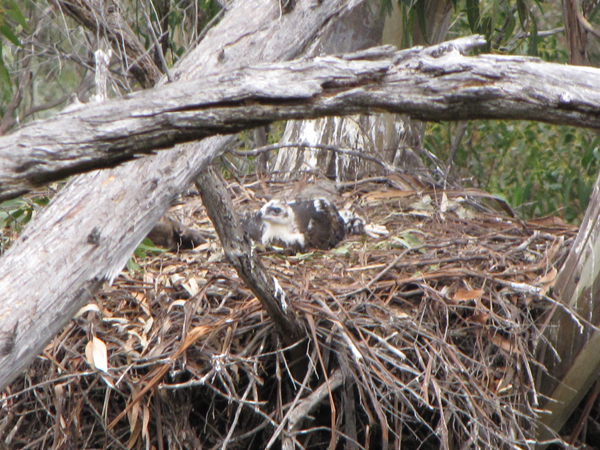
Wedge-tailed eagle chick, 2-3 weeks old (Photo: Leigh Walters)

The Tasmanian Midlands is recognised as one of 15 areas in Australia as a “biodiversity hotspot”.  These are areas of national significance, with high concentrations of threatened species and vegetation types.

On a recent visit to a private grazing property on the banks of the Macquarie River, north-east of Campbell Town, Matt Taylor, TLC Conservation Scientist and  ecologist Matt Appleby of Bush Heritage Australia were lucky enough to catch a soaring wedge-tailed eagle on video.

The Tasmanian wedge-tailed eagle is perhaps the Midlands’ most recognisable threatened animal species. This huge and majestic bird is often seen circling above woodlands and grasslands in search of prey.

This short video was taken when the Matt’s were completing an ecological assessment.  The eagle was riding an updraft that was formed as a strong north-westerly wind swept over a low hill.

If you would like to view the video click here.

To read more about our work please visit our website.

Interesting Facts:  The Tasmanian wedge-tailed eagle is brownish-black to almost black when mature. The feathers are wedged with a lighter brown. The legs are feathered and the bird has a long, wedge-shaped tail. It is a massive bird, standing over a metre tall, weighing up to 5 kg, and with a wing span of up to 2.2 m.

Tasmanian wedge-tailed eagles have been isolated for 10, 000 years from their mainland counterparts and have become a separate subspecies. With only about 130 pairs successfully breeding each year in Tasmania, the wedge-tailed eagle is listed as endangered.(1) (1) Parks and Wildlife, Tasmania

Australian Koalas on danger list

Oprah Winfrey cuddles a koala during her trip to Australia in 2010. (Photo: AP)

Australia’s iconic bear– the koala –will become extinct in 10 years unless a national protection is given, Green activists have warned.

The Friends of the Earth and the Gippsland Bush have slammed the Federal Government for its failure to enlist the koala in the Gippsland region of Victoria under the nationwide endangered species list.

Minister for Sustainability, Environment, Water, Population and Communities Tony Burke said on Monday koalas in Victoria and South Australia should not be listed due to their abundant numbers in the said regions.

He admitted though that the marsupial is facing possible extinction in three states such as Queensland, New South Wales and the Australian Capital Territory. Real estate developments in recent years are said to have primarily displaced them from their natural habitat.

More than 40 percent of the specie is reported to have disappeared in Queensland while it dropped by third in NSW over the past 20 years. In the ACT region, koalas have completely disappeared, the SMH also reported.

Sam the koala became famous around the world after this photo was taken during the Victorian bushfires. (Reuters)

Koala advocates led by the Australia Koala Foundation have been pushing for the enlistment of the specie under endangered category since 1996, but the federal government has been ignoring the issue.

Last year, Greens Senator Larissa Waters had pushed for the marsupials to be listed as a nationally-threatened species believing that they are threatened. She said that with fewer than 5000 koalas left in south-east Queensland, for example, the senator believes that koalas along the koala coast may become extinct during the next 10 years.

However, until now, the Environment Minister is not convinced that the specie should be listed under the national endangered list. He said out that that while koalas have disappeared in the three states, the animals abound in Victoria and South Australia.

He, therefore, announced that koala has been listed under endangered species category covering the three states, but not a national listing following a three year scientific assessment by the Threatened Species Scientific Committee He said a species is usually not considered endangered if it is bountiful in some locations.

Following the announcement, the FOE and the Gippsland Bush blasted Burke for not listing the Gippsland’s Strzelecki Ranges koala as endangered or vulnerable.

In a media statement, the Green activists said the future of the Strzelecki Koala is “bleak” adding that the specie has lost 50 percent of its habitat in the past decade due to logging and fire.

FOE spokesperson Anthony Amis said almost the entire habitat of the Strzelecki koala is in private hands. He said the Hancock Victorian Plantations has converted close to 10,000 hectares of koala habitat over the past 14 years. Add to this was the 2009 Churchill and Boolarra bushfires which burnt out approximately 20,000ha of koala habitat.

Hundreds, if not thousands, of Strzelecki koalas were killed during those fires. After 14 years of logging key koala habitat, Hancock Victorian Plantations still do not have a koala management plan, and 75% of logs from the Strzelecki Ranges end up at Maryvale Pulp Mill owned by Nippon Paper.

The activists groups claim that most of Victoria’s koalas are translocated from the South Gippsland to the French Island in the 1880′s. These koalas are said to have a low genetic diversity compared to the only native koala population which is based in the Strzelecki Ranges.

Amis is convinced that the “genetically superior Strzelecki koala” holds the key to the preservation of the species in Victoria, because translocated koalas suffer from a range of problems, many of which are the result of inbreeding.

The Strzelecki koala does not suffer from the problems of inbreeding which makes it more robust than its translocated cousins. “Its population is clearly unique in the context of Victorian and South Australian koalas. This simple fact appears to have eluded the Minister.”

Environment Minister Tony Burke during a media ambush interview. (Photo: News Corp)

In a related development, the Envronment Minister lashed out at the new Queensland Priemere Campbell Newman who released a statement claiming the koala protection law as a “needless duplication” and a “mindless red tape.” Newman claims that the environmental law will only serve as a red tape to potentially slow down the construction industry.

Blog Link: Asian Correspondent

Against native forests’ logging and retailing

Here’s from the email inbox: The Last Stand announced its new anti-Ta Ann Group website to discourage Japanese clients from buying Tasmania’s plywood disputedly harvested from native old-growth forests.

The banner design of the new cyber campaign

Likewise, here from the website of Market for Change which posted the list of local retailers of Tasmania’s native forests.

Tasmanian native forests' local retailers

The activists’ group has drawn a map on the extent of forest destruction in Australia– in which some of Australia’s most unique and species-rich forest habitats are still being logged including:

  • Tasmania’s native and old growth forests including the Tarkine, Blue Tier, Styx, Weld, and Upper Florentine Valley areas
  • Victoria’s Central Highlands – identified as some of the most carbon-dense forests on earth and areas in East Gippsland
  • New South Wales’ highly biodiverse sub-tropical and temperate native forests in the state’s north-east and south-east coastal regions
  • Western Australia’s native forests in the southwest of the state have been named a global biodiversity ‘hotspot’ yet logging in the state’s endemic karri, jarrah, marri, tingle, and tuart  forests continue despite new threats from drought and disease.

It speculates that there are 1,287 forest-dwelling species accross Australia that are listed as vulnerable, threatened or endangered under the Australian Environment Protection and Biodiversity Conservation Act (EPBCA) 1999. They include:

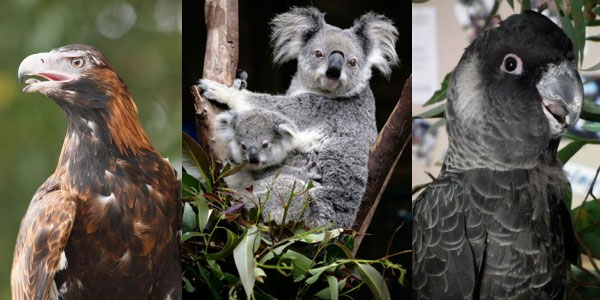
  • The Tasmanian Wedge-Tailed eagle
  • Carnaby’s Black cockatoo of WA.
  • Victoria’s Leadbeater’s possum
  • The koala population of southern NSW.

These species are losing their homes

This campaign has hit the media big time, with the launch featured in the Australian – a rare event indeed!  It is also a hot topic in Tasmania with regular mentions in the local press.

Our online action is doing great, heading up to 1500 emails now, and crew in Hobart have maintained a strong visual presence, letterboxing key areas and, most recently with the Ta Ann

We are continuing to work with Markets for Change and the Huon Valley Environment Centre as well as heaps of other good folks, and have also appreciated the support of the most excellent peoples at DoGooder.

So spread the message to your friends to jump on board!

For the forests,

THE LAST STAND CREW

New species found in Skullbone Plains,Tasmania

From the email loop circulated by the Tasmanian Land Conservancy which was dropped into my inbox today:

The recent Bush Blitz at our fabuolous Skullbone Plains reserve has been a tremendous success — with between 520 to 550 species of plants and animals collected during the week.

Phil Hurle, Australian National Botanical Gardens preparing specimens collected from Skullbone Plains (Photo: TLC)

Now that the fieldwork is now over, the team of 20 scientists are back in their labs identifying the specimens. This can often take many months, if not years to complete. Each specimen will be painstakingly described and documented before being entered into the collection of the Tasmanian Museum and Art Gallery and the Tasmanian Herbarium, as well as other museums, universities and herbaria around Australia. They will be carefully preserved and made available for research.

A recent exhibit of the Australian National Botanical Gardens

Why the Blitz ? There are many plants and animals still to be discovered by science. There are an estimated 566,398 species in Australia – but three-quarters of this biodiversity is yet to be identified. Forty-five per cent of continental Australia and over 90 per cent of our marine area have never been comprehensively surveyed by scientists.

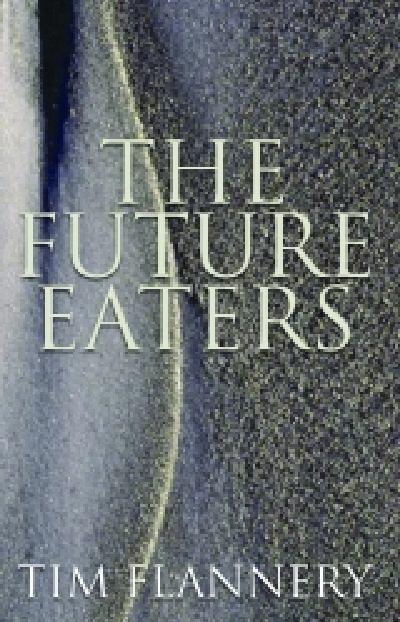
Published by Reed Books Australia, 1994

Interesting stuff. I have just read the introduction of Tim Frannery”s book, The Future Eaters, which brings into light how the waves of settlement and immigration have changed Australia’s biodiversity. Many of the native animal and plant species have become extinct in the course of influx of foreign species and foreign environmental practices.