A Threat to Renewables?

What’s going on with Australia’s sustainable energy resources? Here’s from GetUp:

Australia’s renewable energy future is on the line.

Windpower generators are also considered but its feasibility is under study.

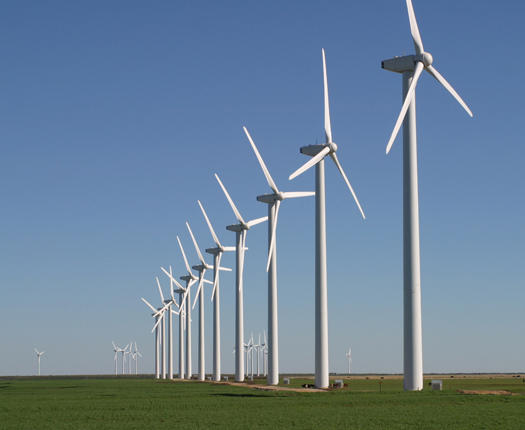
Windpower generators as part of Australia’s sustainable energy future.

On Tuesday Coalition MPs will take the stage outside Parliament House with radio personality Alan Jones to demand a halt to wind power development and to advocate for the scrapping of Australia’s Renewable Energy Target.

Never before in Australia have we had organised opposition to renewable energy. That means it’s no longer enough to just support renewable energy. We need to demonstrate it. On Tuesday we can counter fear-mongering with hope, look to the future, not the past and show the way to a clean energy future.

Join us in Canberra on Tuesday and show your support for renewable energy.

www.getup.org.au/rally4renewables

What: Rally for Renewables
Where: Garema Place, Canberra.
When: 12 noon, Tuesday 18 June.
RSVP: www.getup.org.au/rally4renewables

The last few months have marked a disturbing turn against renewable energy by the Coalition. Tony Abbott has described climate change as “absolute crap”3 and vowed to repeal the price on carbon that makes polluters pay for the real environmental cost of their emissions. Coalition MPs threatened the head of the Clean Energy Finance Corporation, which offers market rate loans for renewable energy projects and demanded that she stop investment by the fund. They even said that if elected that they would “tear up” the contracts signed with renewable energy companies despite the uncertainty it would create for jobs and investment in the renewable energy industry.

And now Coalition anti-renewables “crusaders” – Alby Schultz, Craig Kelly and Chris Back –  are peddling misinformation to try and erode support for renewables. The research has comprehensively debunked the health claims about the negative impacts of wind turbines4. But those facts aren’t important to these MPs. They know that without strong community support for more investment in renewable energy, it creates space for Australia to walk away from its promise to get 20% of our power from renewable sources by 2020. Tony Abbott and Shadow Environment minister Greg Hunt should condemn these MPs as a rogue element but instead they have been silent.

Right now, renewable energy has overwhelming community support, even among Coalition voters. It’s our one clear opportunity to reduce carbon emissions and do our bit to limit global warming to 2 degrees. We can’t let community support for renewable energy be undermined by lies and spurious claims.

www.getup.org.au/rally4renewables

I hope to see you there on Tuesday.
Carl, for the GetUp team.

Bob Brown joins fight to save Sarawak rivers

Re-blogging:

Former Australian Greens Senator Bob Brown flew to Kuching, the capital of the Malaysian state of Sarawak, this week to give his backing to a large group of local communities opposing the controversial mega dam projects in the region.

Former Greens Senator Bob Brown addresses delegates to the SAVE Rivers’ alternative conference.

More than 300 local indigenous people held a rally in Kuching amid the International Hydropower Association’s (IHA) biannual conference – the IHA World Congress on Advancing Sustainable Hydropower  – which runs from May 20-25.

The congress is the world’s largest gathering of dam builders and financiers to discuss industry issues. It is also a venue to share practical experiences, policies, and solutions to climate, water, and energy challenges.

Australian-owned Hydro Tasmania (HT) is involved in the controversial dams and is also a sponsor of the event.

HT joined the project as a technical adviser to Sarawak Energy, the dam-building authority of the multi-billion Sarawak Corridor of Renewable Energy (SCORE).  The project involves 12 highly controversial dams projected to produce 28,000 MW of power.

Bob Brown poses with dam activists during the IHA Congress.

SAVE Sarawak Rivers Network (SAVE Rivers), which organised an alternative conference, said the dams would affect tens of thousands of indigenous people and flood over 2,000 square kilometres of rainforest.

The project is said to be lacking environmental impact assessments despite repeated demands from the affected communities. SAVE Rivers also says that China’s Three Gorges Corporation “began construction on the 944 megawatt Murum Dam in 2012 before its environmental impact assessment had even commenced, leaving affected communities with no option to negotiate resettlement outcomes.”

SAVE Rivers said the dams would be the energy backbone of the Sarawak government’s SCORE Initiative, the plan to rapidly industrialize the state primarily through the expansion of aluminium smelting facilities, palm oil plantations, and other commodity sectors.

Brown, accompanied by Jenny Weber of the Huon Valley Environment Centre, addressed the SAVE Rivers’ alternative conference while HT Chair David Crean and CEO Roy Adair are taking part in the IHA conference.

At the alternative conference,  indigenous communities were given a voice to oppose the dams being built on their land. On Wednesday, they arrived carrying banners saying ‘Respect Native Rights’, ‘Stop Baram Dam’, ’IHA Stop Collaborating With Corrupt Regime’, and ‘No More Dams,’ among other signs.

Protesters flash banners opposing the dams in Sarawak.

The dams are project of the Sarawak state government of Abdul Taib Mahmud who is under investigation by the Malaysian Anti-Corruption Commission after amassing a fortune of billions of dollars while in office.

Brown said in a statement: “Hydro Tasmania’s senior officers are addressing this conference of the world’s biggest dam builders on ‘sustainability’ while the indigenous people of Sarawak are protesting outside and while HT has four consultants working on these megadams which international organizations have condemned as involving gross corruption.”

In 2011, the IHA launched a voluntary auditing tool for dam builders to assess their social and environmental performance, called the Hydropower Sustainability Assessment Protocol (HSAP). Zachary Hurwitz, Policy Program Coordinator at International Rivers, said  HSAP may be useful to guide dam builders and governments on sustainability. However, he admits the risk that “dam builders could use it to greenwash the worst dams, especially given such a context of heavy-handed repression and corruption.”

More protesters say ‘no to dams’.

In December last year, Peter Kallang, chairman of the SAVE Rivers group of Sarawak Indigenous leaders and James Nyurang, village headman from the Baram River Region, led a tour to Australia and called on Hydro Tasmania to pull their support out of the controversial dams. Related article HERE.

Blog Link: Asian Correspondent

Kimberley’s gas hub collapsed

Western Australia’s fantasy of making Kimberley the next Dubai and the world’s largest gas hub suddenly came crumbling down following Woodside Petroleum’s announcement today it is dumping its $45 billion LNG investment in James Point Price.

Broom Community No Gas Campaign flashes a banner to celebrate win outside Woodside’s Office. (Photo: BCNG)

Woodside CEO Peter Coleman admitted the gas project is economically unviable saying the company has been under cost pressure. He said James Point Price does not meet the company’s commercial requirements for a positive investment decision.  A major review of the proposed LNG processing plant near Broome was found it would not deliver the returns the company needed.

While this development is a cause for elation among traditional land owners and local communities who have fought day in and day out to block the project, the WA state government is now pointing fingers amid  the “dismal failure” of the project.

Theresa Roe embraces her granddaughter after Woodside’s announcement. (Photo: BCNG)

WA Opposition Leader Mark McGowan blamed Premier Colin Barnett, saying his constant interfering and meddling caused the project to be lost. Barnett has opposed offshore processing and has intervened in the decision of the onshore site which is unviable, McGowan claimed.

Woodside also announced it will immediately engage with the Browse joint venture to recommend evaluation of other development concepts to commercialise the Browse resources. Woodside would consider floating technologies, a pipeline to existing LNG facilities in the Pilbara or a smaller onshore option at the proposed Browse LNG precinct near James Price Point, a statement said.

Coleman said the company supports floating technology, but this will need to be determined by the joint venture. Woodside’s partner like Shell Australia, for example, supports the onshore floating technology.

A photo showing an alternative technology for the project. (Photo: Golarabooloo- Lurujarri Heritage Trail)

“Floating LNG can bring significant long-term, sustainable jobs to Western Australia, Australia, and the Kimberley, as well as providing employment and business opportunities for Kimberley indigenous people,” Shell spokesperson Ann Pickard said in a statement. She added Shell would work closely with the Browse joint venture and government to keep the Browse project on track.

Premier Barnett laments the failure to develop a gas hub project at James Price Point is a “tragedy and a missed opportunity.”

Greens celebrate death of Barnett’s gas hub

The Wilderness Society said the gas fiasco should serve as a warning to governments and businesses not to go ahead with any project without a social licence forcing communities to accept unwanted and unsustainable developments. He notes Barnett’s failure also proves that WA can not be trusted with environmental assessments.

Traditional owners and local communities march in Freemantle. (Photo: Save the Kimberley)

Wilderness Society National Director Lyndon Schneiders said, “Woodside and its joint-venture partners have avoided possibly the biggest environmental battle in Australia’s history by walking away from Barnett’s folly at James Price Point.”

In January this year, Woodside started bulldozing ancestral burial sites in Walmadan, an act that enraged indigenous communities. “Hundreds if not thousands of people were prepared to stop Woodside from working in the sand dune area at Walmadan, which has great cultural significance to the Traditional Owners,” Schneiders said.

Schneiders, in a statement, also calls for Barnett to end this “appalling project” for good and asks him for a time to heal the pain of the indigenous people in WA. He said,

This development was opposed by people all around Australia and the world, but nowhere stronger than by the brave Broome community who stood up to hundreds of police alongside the Traditional Custodians who wanted to treasure their cultural heritage.

The Wilderness Society still wants answers on why a compromised Western Australian Environment Protection Authority was allowed to approve the project when there were so many flaws in the environmental and social impact assessment.

An aerial view of the LNG site/ (Photo:AAP/Mike Gray/Environs Kimberley)

Victory, but the fight is not yet over

The Australian Conservation Foundation (ACF) said the battle to save the Kimberley has come to define a new generation of Australian environmental activists, many of whom have taken the opportunity to visit the Kimberley, get the red dirt on their feet, and will now feel personally connected to it for life.

The ACF also notes how rallies and festivals brought the Kimberley to the nation’s capital cities where hundreds of thousands of exceptional Australians have collectively said: ‘No, the Kimberley is too precious to lose.’ It adds the project lost its social license long ago and with Woodside’s announcement, it has now lost its economic licence.

Former Greens Senator Bob Brown joins in a Freemantle rally to oppose the planned gas hub. (Photo: Save the Kimberley)

While Woodside is exploring other alternative options to salvage what remains in the project, the AFC warns the battle is not yet over. ”Put simply, this means that the industrialisation of James Price Point and west Kimberley remain a possibility,” it said, concluding:

We will continue to update you on what this means, but for today at least take a moment to feel proud that because of Australia’s standing strong for the Kimberley ancient songlines, dinosaur footprints, monsoon thickets, bilby colonies and the world’s largest humpback whale nursery remain protected from a gas hub.

Related articles

Kimberley’s sacred sites destroyed for a large-scale gas venture

Western Australia is one of the last remaining frontiers of the Indigenous Australians. Series of land grabs pushed them to this territory. But now, even their ancestral graveyards have to go.

Western Australian Indigenous Affairs Minister Peter Collier approved Woodside Petroleum to start bulldozing Aboriginal heritage sites, including the sand dunes area at James Price Point, in order to give way to a $30-40 billion  LNG project. Below the sand dunes are the remains and fossils of Aboriginal ancestors.

The company stopped working in sand dunes last year pending application of a clearance under the Heritage Act. The clearance would allow holders to work at sites registered by local Aboriginal people. The lack of earlier approvals underpinned protesters’ claims the project is illegal.

The State Government fancies this sacred land to emerge as the “Saudi Arabia of Gas,” the world’s largest gas hub. And this could be the ultimate act of Aboriginal dispossession.

Tracks on James Price Point (Photo: Kimberley Media)

James Price Point, originally named Walmadany, is located at the apex of the Lurujarri Heritage trail, the sacred place where several of the revered Goolarabooloo and Jabirr Jabirr men and women were buried, including the highly respected traditional custodian Walmadany.

Woodside claims a Native Title Agreement was executed on 30 June 2011 to enable the establishment of the Browse LNG Precinct near James Price Point, 60 km north of Broome. The Indigenous people, however, said the agreement was based on fraud.

When the Colin Barnett Government approved the multi-billion gas project, the Traditional Owner Taskforce (TOTF) was not consulted. The TOTF drew on the best practices in traditional governance and decision-making structures. It incorporates procedures in contemporary meeting, decision-making and information transfer practices to “create a unique, culturally appropriate, consistent and comprehensive consultation and engagement process.” (p.41)

Protests continue to oppose the gas hub. (Photo: nationalunitygovernment.org)

The principle of Indigenous Free Prior Informed Consent (IFPIC) was ignored. It also reinforces the decision of West Australian Supreme Court Chief Justice Martin that the process of compulsorily acquiring land from Goolarabooloo and Jabirr Jabirr traditional owners was unlawful.

The Wilderness Society said allowing Woodside to start work in the sand dunes at James Price Point is like sanctioning the bulldozing of St George’s Cathedral in Perth or St Mary’s Cathedral in Sydney and all of the grave sites associated with these religious institutions.

The Society joins the Traditional Custodians in condemning the approval of Woodside’s request to enter and destroy thousands of years of Indigenous Heritage in the area to pursue its proposed gas processing complex.

Wilderness Society WA Campaign Manager Peter Robertson said,

This approval by the Minister for Indigenous Affairs yet again demonstrates the willingness of the WA Government to put unnecessary and unwanted development ahead of the people of the region and the values of the community. We call on the other Browse joint-venture partners to make it clear whether they support the destruction of these ancient burial grounds.

He added it is worth noting that the proponent for the James Price Point gas processing complex is Premier Colin Barnett in his role as Minister for State Development, and that Indigenous Affairs Minister Peter Collier is also the Minister for Energy.

Heritage trail in Broome, WA (Photo: Kimberley Media)

The Society further accused the Government of  incompetence and multiple conflicts of interest in pursuing the project from its botched attempts at compulsory acquisition through to the environmental approval process and now the approval for Woodside to destroy sand dunes of the highest cultural and religious significance.

James Price Point is one of the fiercest battlegrounds between the Indigenous people and the Australian Government in contemporary times. With the support of the local communities, Green and civic groups, the Indigenous people are fighting to protect the “Law Below the Top Soil” – the law handed down from many generations to another that governs their ancestral rights.

Barricades, clashes between police and civilians, and arrests are expected to continue in the course of the project.

“I can feel the pain coming through this ground. This country is screaming from hurt.” –Albert Wiggan’s powerful monologue from OLD COUNTRY NEW COUNTRY on Woodside Energy’s proposed gas plant at James Price Point.

Blog Link: Asian Correspondent

Hydro Tasmania called to pull out of Sarawak

Trouble never ends in this tiny bit of island, south of mainland Australia. If you don’t know Tasmania, you probably need to watch Hollywood blockbuster, The Hunter, to get a clue. Tasmania covers a pristine wilderness where exploiters could miraculously disappear and would never come back alive. Of course, this is an exaggeration.

Protestors at Hydro Tasmania daming it involvement in Sarawak (Photo: Sarawak Report/ FB)

However, there is an interesting turn of events. The trouble is not about the local Green groups accusing Forestry Tasmania, Ta Ann or the Gunns Ltd. of Tasmania’s forest destruction. Instead, the state-owned dam builder, Hydro Tasmania, is implicated in a colossal environmental threat in the Province of Sarawak on the island of Borneo in Malaysia.

Hydro Energy is commissioned to “provide technical support” to Sarawak Energy who is currently building the multi-billion dollar Sarawak Corridor of Renewable Energy (SCORE).  The project involves 12 highly controversial dams projected to produce 28,000 MW of power.

Local and international indigenous groups and communities denounced the project saying the dams will “flood huge swathes of the Borneo Jungle and destroy the lives of tens of thousands of indigenous people along with their cultures.” Exodus of people have begun.

The Sarawak Report said Sarawak Energy has a link to the Ta Ann Group– also maliciously imputed in the crime of exploiting Tasmanian forests and the jungle of Borneo. They are said to have a close link with the Tasmanian government, the report adds.

Both Sarawak Energy and Ta Ann have the same Chairman in Hamed Sepawi, the cousin and close ally of Sarawak Chief Minister, Taib Mahmud, who exercises an iron grip over this notoriously corrupted East Malaysia state.

The Borneo Project, a forerunner of environmental campaigns in Sarawak said Sarawak Energy is “not consulting with communities in good faith, and is not getting the Free, Prior, and Informed Consent of the affected communities.”

There is an overall lack of transparency; Sarawak Energy is not sharing their environmental or social impact assessments, feasibility studies, and resettlement plans. Meager compensation benefits will force communities into poverty.

International civic organisation have thrown support to condemn the dams. Groups include the Borneo Project (USA), the Bruno Manser Fund (Switzerland), the Rainforest Action Network (USA), International Rivers (USA), the Rainforest Foundation Norway and the Sarawak Report (UK), and many more.

Save Rivers Network stage a protest against the dams (Photo: Save Rivers Network)

These groups demand that the Federal Government of Australia and the State Government of Tasmania to live up to their commitments to protect indigenous rights and the environment. They asked Tasmania Premiere Lara Giddings  to immediately pull Hydro Tasmania and all its subsidiaries out of Sarawak. Read their petition to Giddings HERE.

These groups said that despite Australian Government’s commitments to indigenous rights, Hydro Tasmania shares responsibility for the destruction of Sarawak communities. They also demand that the Tasmanian government severe all ties with Sarawak Energy and take a stand for environmental conservation and indigenous rights. Sarawak is home to over 40 indigenous communities, as well as many vanishing  species, including the orangutan. Conservationists said the proposed dams threaten to destroy some the last remaining rainforests in Borneo.

Sarawak Delegates visit Canberra (Photo: Sarawak Report/FB)

The Australian Greens have joined the activism and have launched a national campaign in November calling for the withdrawal of Hydro Tasmania and the Tasmanian Government from the controversial project.

Australian Greens Leader Senator Christine Milne and Lee Rhiannon said Hydro Tasmania cannot walk away from their responsibility for the damage these dams will cause to thousands of villagers in Sarawak. Milne said “Hydro Tasmania continues to supply staff and technical expertise to push these projects along despite a growing campaign in Sarawak against the dams. I am calling on Hydro Tasmania to walk away from this destructive project.”

In other development, delegates from Sarawak arrived in Australia to have dialogues with Hydro Tasmania and local officials.

Indigenous leaders from the Sarawak met with Hydro Tasmania’s CEO Roy Adair in Launceston and Tasmania’s Deputy Premier Bryan Green. The final public event will be held in Hobart on December at the Republic Bar in North Hobart at 7 pm.

Sarawak delegates flash a banner denouncing Hydro Tasmania in Sydney (Photo: Sarawak Report/FB)

Peter Kallang, chairman of the Save Rivers group of Sarawak Indigenous leaders and James Nyurang, village headman from the Baram River Region, joined the Australian tour and called on Hydro Tasmania to pull their support out of controversial dams.

Adam Burling, spokesperson for the Save Sarawak Rivers Tour said,

Meeting with the CEO of Hydro Tasmania has meant that the people of Sarawak could directly request Hydro Tasmania to withdraw from the controversial dam projects.  Hydro Tasmania continues to supply staff and technical expertise to push these projects along despite a growing campaign in Sarawak against the dams, and deplorable human rights violations.

Kallang added Australians need to know Hydro Tasmania is involved in massive dam proposals that stand to affect up to 20,000 people who live along the Baram River in Sarawak.


Anti-Hydro Tasmanian protest in Melbourne (Photo: Sarawak Report/FB)

Nyurang said, “If the dams go ahead I will lose my home, my land. I have no idea where my family will be moved to or how we will make our livelihood.

Hydro Tasmania’s involvement in Sarawak will help to flood thousands of hectares of land belonging to the indigenous peoples of Sarawak. This will spell the end of our heritage, our means of livelihood, custom and culture. We will not stand by while our homes, our rice fields, our fruit trees go under water, James Nyurang said.

Sites of 12 controversial dams in Sarawak (Photo. Borneo Project)

Sites of 12 controversial dams in Sarawak (Photo. Borneo Project)

The delegates will continue to have public events in Sydney, Canberra, Melbourne, and Launceston.  They met some members of the Parliament in both Upper and Lower Houses, including Victorian and New South Wales members from the Australian Greens. Watch the press conference HERE.

Blog Link: Asian Correspondent

Greens, Sea Shepherd intensify anti-Woodside gas campaign

Former Senator Bob Brown will be the star celebrity on Fathers’ Day when he gathers a throng of supporters to see the Sea Shepherd’s Steve Irwin ship docked onto the Circular Quay in Sydney, Sept 2.

Sea Shepherd’s Steve Irwin sail for Ganthueme Point to launch Operation Kimberley Miinimbi. (Photo: Anabelle Sandes)

The ship has just arrived from its voyage to the remote coast of Kimberley in Western Australia to intervene on behalf of 10,000 or so humpback whales said to be threatened by Woodside’s Petroleum’s gas factory in the Browse Basin off western Kimberley.

Sea Shepherd is known as the champion-defender of marine animals. It goes against man-made predators including the well-known Japanese whalers in the southern oceans. In July, the Goolarabooloo people invited the marine group to help drive away Woodside and its partners from the Kimberley region.

The Browse Basin off western Kimberley is home to the Humpback Whale (Photo: Paul Souders/National Geographic)

In the letter to Jeff Hansen, Sea Shepherd Australian director, the “Senior Law Bosses” said the industrialisation project located 50km north off Broome will destroy 30 sq km of land and 50 sq km of seabed. It will destroy the Law of Culture and songcycle which provides health and vitality of the people.

Hansen responded positively, and with Brown, the Operation Kimberly Miinimbi was launched. Sea Shepherd’s Steve Irwin left the port of Melbourne in early August and sailed for Ganthueme Point to assess the area.

The Kimberley region is home to the world’s largest population of humpback whales. The Wilderness Society estimates the Kimberley whale population to stand at an estimate of 16,000 to 20,000 individuals. Every year the whales congregate along the Kimberley coast, an arc stretching from Broome and the Dampier Peninsula to Camden Sound where they mate, give birth and nurture and train their young. The whales then migrate south from their ‘home base’ in the Kimberley region, along the Western Australian coast, until they reach their Antarctic summer feeding grounds.

Former Senator Bob Brown, Melissa Park – Federal MP for Fremantle, and Jeff Hansen – Sea Shepherd Australia director flash a banner on the rocks of Ganthueme Point (Photo: seashepherd.org)

Other marine wildlife in area include dolphins, penguins, whale sharks, and turtles.

Brown admitted that whales are the only larger species to ever move on the planet along with the now extinct dinosaurs. The Kimberley coastline is home to the world’s biggest humpback whale nursery, the so-called Group IV humpback population.

The Sea Shepherd claims that since 1 July this year, more than 259 whales have already been recorded by scientific survey just a few kilometers south of James Price Point and 23 calf and cow (mother and baby) pairs have been sighted already, with over 70% found within 5 kilometers of the coast.

The Browse Basin lies entirely offshore north of Broome and covers about 140 000 sq km. The basin is bounded by the Leveque Shelf in the south, the Kimberley Block to the east, and the Ashmore Platform and Scott Plateau in the north, and grades into the offshore Canning Basin to the southwest. The area can be serviced from Broome, which has adequate port and air facilities. The Browse Basin is one of Australia’s most hydrocarbon-rich basins. The most significant hydrocarbon fields of the Browse Basin occur in the Caswell Sub-basin.

The breeding ground for humpback whales is under threat from the massive LNG gas development project. (Photo: wilderness.org.au)

Gas exploration in the area began in 1970. However, the Woodside’s LNG Development marks the largest ever with an investment of $45 billion within the next 30 years. The LNG development seeks to process $200 billion worth of gas and 360 million barrels of condensate from three fields in the Browse Basin, approximately 400km north of Broome off the Western Australian coast.

Woodside has the largest interest in the Browse permit areas held by the Browse LNG Development joint venture, with approximately 46 per cent working interest. The other joint venture participants are Shell Developments Australia Pty Ltd, BP Developments Australia Pty Ltd, and BHP Billiton (North West Shelf) Pty Ltd. Chevron Australia Pty Ltd, however, recently withdrew its interest in the Browse project for a swap deal with Shell.

The gas would be shipped to Asia. James Price Point will become a transmogrified industrial precinct fed by a new highway from Broome. Hundreds of tanker ships will take the processed gas to China, Japan and elsewhere.

Woodside Petroleum unveils its $45 billion LNG plan (Photo: woodside.com.au)

The Goolarabooloo people, traditional owners of the James Price Point (Walmadan) coastline, oppose Woodside’s project. However, the Kimberley Land Council, in a split vote, endorsed it after Woodside committed to paying the council $1.3 billion over 30 years, Brown told Crikey.

The Conservation Council of Western Australia warned that exploitation of this gas field will bring a major environmental impacts from drilling in sensitive marine environments, dredging and blasting of coral reefs and other sensitive marine environments for pipeline construction and construction of new ports.

The massive scale project with offshore emission facilities will produce formation water containing hydrocarbons and heavy metals and flared gas. Over 10 million tonnes of greenhouse gas emissions per year is also in place.

The area, to be transformed into a megaport, will significantly increase shipping movements that will potentially interfere with the migration and breeding of humpback whales and other marine life, and risking the introduction of marine invasive species.

If it go head, the Bowse Basin will cost irrepairable damage which include:

4 gas pipelines coming ashore at James Price Point; 4 oil pipelines coming ashore at James Price Point; 4 export pipelines (2 with monoethylene glycol—anti-freeze— going to Scott Reef, 2 with carbon dioxide (if Woodside decides it wants to ‘geo-sequester’ it); 8 huge LNG tanks, 4 LPG storage tanks, 4 oil tanks;  Construction camp for 3,500 – 6,000 workers;  1,000 permanent onsite staff; Desalination plant; 1000 – 1,500 LNG tanker movements year

Whales are natural attractions of Kimberley (Photo: Anabelle Sandes)

The Conservation Council of Western Australia noted that EPA Chairman Dr Paul Vogel even admitted “that turbidity from dredging, oil spills, industrial discharges, noise, light and vessel strikes could adversely affect whales, dolphins, turtles, dugong and fish. Western Australian Premier Colin Barnett is pushing ahead with gas factories at James Price Point, just north of Broome, on one of the world’s most unspoiled coastlines, even though whale deaths are inevitable.”

Blog Link: Asian Correspondent

GetUp shakes up with a new leadership

A bit delayed to post this, but here’s from the inbox. GetUp National Director Simon Sheikh has stepped down while introducing incoming National Director, Sam McLean.

Simon Sheikh (right) with incoming National Director, Sam McLean (left).

Dear friends,

I wanted to let you know that I have decided the time is right to step down as National Director. Of course, GetUp will continue its work, and I can’t wait to see what comes next.

When I first took on this role in September 2008, many were still wondering whether this movement of ordinary people could continue to make a difference, or whether it would invariably prove a momentary trend; a flash in the political landscape.

Over the years you have proven that this movement of everyday Australians has the capacity to take on and win tough fights and strengthen democracy in the process.

GetUp is driven by its members. Over and over again we’ve demonstrated unequivocally that all of us working together can change things for the better. It has been an honour to stand alongside you over these last four years.

While we celebrate what we have won we should remember what we’re still campaigning for: a nation that better reflects the generosity of spirit, innate sense of fairness, strong community pride and ever-ready humour of its people. A nation that does not shrink back and buy into fear or division. A nation unafraid to aim higher and to understand its place in the world.

Expressing our belief in these ideals by collectively organising will be even more crucial as we approach the next election, a time when our movement can demonstrate its creativity and passion and make a huge impact along the way.

I’ll forever remember walking out of the High Court with two GetUp plaintiffs in a victory that gave over 150,000 Australians the opportunity to vote; standing alongside GetUp members in the Senate gallery the moment the clean energy bills passed; or the night I learned, in a budget lock-down inside the bowels of the Commonwealth Treasury, that, along with our partner organisations, we had won a massive increase in mental health funding. These moments are your victories: they would not have happened without your passion, actions, contributions and presence at every step. And they are just a taste of what this movement can achieve into the future.

Thank you.

It is my great honour to formally introduce to you GetUp’s new National Director, Sam McLean. Sam walked through GetUp’s doors as a volunteer over five years ago, and long-time members will remember the very first initiative he led: ‘Oz in 30 seconds,’ the ground-breaking competition that gave ordinary Australians the chance to create and air their own political ads during the 2007 federal election. Sam is a person of rare talent, energy and proven commitment to GetUp members and all that we fight for. You will have seen many emails from him, especially in his time as GetUp’s Deputy National Director over the last two years. His commitment to serving GetUp’s membership makes my decision to leave much easier.

I’ve suspected for a while now that it’s time in my own life for a change of pace. So while I’m fortunate to be back in good health, my next plan is to pack up the car and head out to see more of this remarkable country with my wife Anna, who has offered me so much support during my time at GetUp. After all, there are plenty of extraordinary places our movement has worked hard to protect. Now I’m personally keen to spend some time enjoying them!

GetUp is not, and never will be, the achievement of its small group of staff. It is the alchemy of many people becoming more than the sum of its parts: people united by common values, committed not just to reading the news, but to changing it.

I’m not going anywhere just yet; I’ll stick around for a while to ensure a smooth transition. But I wanted to make sure you heard this news from me first. And I wanted to take this chance to pay tribute to you – to thank you for all that you are, and all that you do 

Here’s to tomorrow, Simon

P.S. Over the last few years I have been supported by a huge number of volunteers, interns and staff. I wanted to particularly thank our current talented team who continue to drive so much of our work: Sam, Darren, Erin, Paul, Rosie, Rohan, Kieran, Kelsey, Justine, Simon DW, Jarra, Sara, Richard, James, Adri and Jess.

Carbon tax gaining public support, poll says

Right-winged politicians continue to employ scaremongering tactics to thwart public support for the carbon tax which took effect on July 1. The public has also feared the new tax would hurt households.

However, the Climate Institute Chief John Connor said the misunderstanding is caused mainly by ineffective communication strategy implemented by the Government. Although advertising and promotional campaigns were put up, “the message hasn’t got through,” the Herald Sun reported.

According to new report by the Institute, the carbon tax gained more public support after the compensation package was explained more clearly.

In a poll conducted this week by Ipsos Social Research, the Institute released a report that shows an improved support for the carbon tax package— almost doubled after the compensation package is explained.

Earlier surveys showed that out of 1131 people, a significant 52 per cent opposed the carbon tax with only 28 per cent supporting it. But when it was explained the money raised goes to low and middle income households, businesses, and towards renewable energy, support jumps to 47 per cent while those opposing it tumbles to 29 per cent.

Other findings include:

  • 67 percent wants the Government to take a lead role in fighting climate change while 11 percent wants the Government out;
  • 61 percent were fearful the new tax would hurt the economy, but 43 percent believes it would dirve investment in renewable energy;
  • 36 per cent believe their households will be much worse off and 29 per cent say they will be a little worse off. One in five say they will be about the same and 10 per cent think they will be better off.
  • Opposition Leader Tony Abbott vowed a “blood pledge” to scrap the law if elected in 2013, but only 44 percent believe Abbott and the Coalition would repeal it.
  • The Government says about four million households will be better off, two million will come out even and three million will be worse off.

    Anti-carbon tax protesters march to show their opposition to the tax in Sydney, July 1 (Photo: AAP)

Meanwhile, Gujji Muthuswamy, adjunct lecturer and faculty of Business and Economics at Monash University said the carbon tax continues to create confusion because it has not been explained in “plain language.”  The Conversation carries Muthuswamy’s mock letter addressed to Prime Minister Julia Gillard explaining to the Australian public what the tax is all about.

Blog Link: Asian Correspondent 

Australia’s mining goddess acquires Fairfax media

Mining magnate Gina Rinehart grabbed the largest stake at Fairfax Media with additional 42 million shares costing $25 million which she bought in just one transaction today. This increased her total share at the company to almost 15 per cent from 13 per cent, The Australian reported.

Gina Rinehart grabs Fairfax. (Photo: Patrick Hamilton/Perth Now)

Rinehart bought the shares at a price of 60 cents per share. The trade was worth $25.2 million representing 1.8 per cent of Fairfax’s total issued shares, the AAP said at noon.

Perth Now, however, is following up latest developments including a dramatic approached for 235 million shares which was made after the local sharemarket closed, with the offer available till 8pm.

Fairfax is one of the two biggest and most influential media conglomerates in Australia, along with the News Limited owned by the old-rich Rupert Murdoch’s clan.

Perth Now also noted Canberra Media analyst Peter Cox who believes Rinehart is increasing her stake to boost her influence in national affairs. He said Rinehart has already acquired Ten News as a financial investment.

“So this has to be driven by her view on politics in Australia…What’s the point of spending that money on it if you’re not going to have influence?”

The latest stake must be a way to go forward fulfilling the prophesy of climate sceptic Lord Christopher Monckton who advised the rich to capture the media to advance free-market agenda.

Australia’s mining magnates: Clive Palmer, Gina Rinehart, Andrew Forrest

Monckton spoke last year to free-market think tanks in WA on “How to better capture the Australian media to help push a right-wing, free-market and climate sceptic agenda.” It was a boardroom meeting hosted by the Mannkal Economic Education Foundation, a group chaired by mining “Hall of Fame” member Ron Manners to promote free-market ideals and low government intervention.

ABC’s The Drum said Manners is a member of Gina Rinehart’s lobby group ANDEV, which has been joined by the Institute for Public Affairs to lobby for a separate low-tax low regulation economic zone for the north of Australia to make mining projects easier to develop.

The original version of the video has been deleted from You Tube, but GetUp reposted it with transcription capturing Monckton’s verbatim sinister claims:

Is there an Australian version of Fox News?… No….

Frankly whatever you do at a street level, which is what you are talking about here, is not going to have much of an impact compared with capturing an entire news media.

You look at the impact that Andrew Bolt has had since he was rocketed to fame and that is the way to do it, you have to capture the high ground of what are still the major media, and what will remain for quite some time.

And until we crack that one both in the UK and Australia, we’re going to suffer from an disadvantage, against the more libertarian right-wing minded people in the United States…who have got Fox News and have therefore got things like a Tea Party, have at last put some lead into the pencil of the republican Party.

And it seems to me that putting some time into encouraging those we know who are super rich to invest in perhaps even establishing a new satellite TV channel is not an expensive thing, and then get a few…Joe Novas and Andrew Bolts to go on and do the commentating everyday—and keep the news free and fair and balanced, as they do on Fox. That would be breakthrough and give to Australia as it has for America a proper dose of free market thinki

The Australian said Rinehart admitted her desire to control two board seats at the media company which publishes The Sydney Morning Herald, The Age in Melbourne, and the Australian Financial Times. The company also controls the auction website TradeMe, as well as the Southern Cross Broadcasting network of radio stations.

Amid mining boom, Rinehart was also the first mining magnate to get the approval from the Federal Government to import 1715 foreign workers under a new type of 457 visa for the three-year construction phase of Roy Hill iron ore mine in Western Australia.

Caricature to mock Rinehart’s foreign workers (By Nicholson)

The scheme angered local workers and labour unions. Labour observers said Rinehart will take advantage of skilled foreign workers that come with cheaper wages.

This year, the BRW magazine named Rinehart as theworld’s richest woman with $29 billion mining fortune making her $3 billion richer  than Christy Walton’s, the widow whose inherited wealth springs from US retail giant Wal-Mart.

The ABC said “Ms Rinehart has ridden Australia’s resources boom like no-one else; her wealth ballooning by an unparalleled $18.87 billion in the past year….That equates to $1,077,054 every 30 minutes of every day.

Blog LInk: Asian Correspondent

Gas firm to finance West Australia’s new “Dubai”

Western Australia (WA) is set to defy all oppositions to chase its dream to turn Broome into a key tourist destination– including a court’s injunction order to stop gas giant, Woodside Petroleum, from drilling at a site in James Price Point. With Woodside offering big bucks to finance WA’s tourism promos, the State Government could not back down.

The North West Australian Tourism was more pleased to announce its intention to receive the $180,000 offered by Woodside to strategically position Broome as a major attraction that will enable WA to compete with other destinations Australia-wide.

The announcement sealed the fate of Broome, ignoring pleas from environmentalists, local residents, and indigenous land owners who have staged protests and demonstrations day in and day out against the proposed gas hub. Oppositions said gas is going to destroy the ecological, historical, cultural value of Broome.

The Australian Greens warned no one wants the project except Woodside and the Premiere Colin Barnett. The party also claimed Woodside’s partners were initially reluctant to the gas venture but have been “forced” to join in by the WA Premier and Federal Minister Martin Ferguson.

And who wants this hub? No one other than Woodside and the Government. Not the general public, not the local community, not the Aboriginal community, not the environment movement, not even Woodside’s business partners.

Woodside Petroleum has joint venture partners Shell, Chevron, BHP and BP in the project who are reluctant to go to the Kimberley but have been forced into it by the WA Premier and Federal Minister Martin Ferguson.

Broome residents said Woodside have purchased the souls of the locals with its money masquerading as charitable work.

Australia’s  North West Tourism welcomes the fund offer which will significantly help to promote Broome tourism amid a “tough domestic market, the WA newspaper reported adding that Chairman Chris Ellison believes the funding will help boost the image of Pilbara and Kimberley.

As the peak tourism marketing body for the Pilbara and the Kimberley, our members look to us to deliver a strong and engaging message to consumers about the positive tourism aspects of our region.

This additional funding will enable us to better tell the unique story of Broome, as the major tourism gateway to the region, and why it continues to be one of the best holiday destinations in Australia.

Police has become ubiquitous in James Price Point to suppress oppositions. The WA Government, however, said the police presence is aimed at maintaining peace.

Lyndon Schneiders, nationl director of The Wilderness Society wrote to The Australian saying. “the mini army has been assembled on the doorstep of the Kimberley wilderness for one purpose — to suppress the widespread opposition of the Broome community to the construction of the proposed $40 billion James Price Point industrial precinct.”

All this to move away and silence a dogged and growing band of locals who have stood in the way of the plans of a consortium of the world’s biggest companies, including Shell, Chevron, Woodside, BP and BHP Billiton, to build this massive gas plant in a beautiful and sensitive part of the remote Dampier Peninsula.

WA police commissioner Karl O’Callaghan admitted the police squad is costing Broome’s taxpayers $100,000 per day.

While the saga of Broome goes on, Woodside also awaits today the decision by the Perth’s Court of Appeal whether its drilling works at the contentious Browse gas project is legal or not.

A traditional owner and senior member of the indigenous Goolarabooloo people, Richard Hunter, has alleged the approval granted to Woodside in February was invalid because the Kimberley Joint Development Assessment Panel did not wait to receive an official report from the Shire of Broome.

Hunter applied for an injunction in the said court to stop major earthworks and geotechnical activities of the project. The company is also ordered to not do work in the beach or dune area.

Read related article here.

Blog Link: Asian Correspondent