1.2 million Malaysians send eviction notice to Lynas Corp

Australian-owned Lynas Corp cannot get away from its “socially unlicensed” operation in Kuantan, Malaysia, An eviction notice signed by 1.2 million Malaysians across the nation has been sent urging the company to shut down and leave the country immediately.

The signatories press the Australian company to respect local people’s basic human rights and dignity, and to do environmental justice.  They slammed the company for posing health and environmental hazards. Lynas’ operation involves toxic and radioactive rare earth, they said, and that they will fight to the end not to allow their children to be harmed or their land to be destroyed for profits.

Greens Senator Lee Rhiannon (left) and Natalie Lowrey (right) flash an eviction notice in Sydney. (Photo: Supplied)

Apart from health risks, they claim the operation is illegal, if not anomalous, for not having a proper licence. They said the business took off without a detailed Environmental Impact Assessment (EIA) put in place and not complying with the International Atomic Energy Agency (IAEA) recommendations. The signatories also pointed out the project lacks long-term plan for the permanent waste disposal of radioactive waste.

Sydney-based environmental activist Natalie Lowrey was released on June 30 after six days in detention. She was arrested along with 16 other Malaysians for joining a peaceful protest. She is back home and held a press conference with Greens Senator Lee Rhiannon at the Lynas headquarter located along Pitt Street.

In a statement, she thanked supporters of her release, including hundreds that joined vigils across the country, the 34 Malaysian non-governmental organisations (NGO), and other various groups and individuals.

She also appreciated the support of international colleagues and friends, especially Friends of the Earth International and Friends of the Earth Asia Pacific for their quick response in getting a petition going and networking across member groups across the world.

Greens Senator Lee Rhiannon (right) joins the press conference with environmental activists at the Lynas office in Sydney. (Photo: Supplied)

Lowrey said she has no regrets for her act of solidarity with Malaysian people. She also urged all Australian citizens and residents to take responsibility to hold Australian corporations accountable for the impacts of their developments and operations in other countries. She added:

As an international community we must start considering the impacts of rare earth refining and look at worlds-best-practice to contain and deal with the waste and move towards alternatives including urban mining and the recycling of rare earths, especially that rare earths are used in so many green technologies.

The Save Malaysia Stop Lynas activist group has also urged the Malaysian Government earlier not to extend Lynas licence which is due to expire in September this year. The group lamented and claimed Lynas has failed to disclose to the public the identification of the site for the Permanent Deposit Facility (PDF) for its radioactive Water Leach Purification (WLP) waste as required under the terms of its Temporary Operating License (TOL).

As early as 2012, the issue of radioactive waste storage disposal has never been resolved. It was suggested that wastes have to be shipped back to Australia.

However, even the former Western Australian Minister for Mines and Petroleum, Norman Moore, asserted at that time that “Australia does not support the importation and storage of other countries’ radioactive waste”. He passed on the responsibility to the Malaysian government to take care of the processing plant that is operating in its territory.

Rhiannon reiterated what Lowry had said that the Australian company has no right to destroy the home of Malaysians or to endanger their health and well-being. She also called for the immediate pullout of the company from Malaysia.

Blog Link: Asian Correspondent/The Green Journal

Gore, Palmer forge clean energy alliance

Former US Vice President Al Gore’s recent visit to Australia could be a saving grace to the country’s clean energy future. Gore did not only get the support of more than 500 new climate leaders from 24 countries, but more notably he got the backing of  controversial mining magnate, Clive Palmer, who leads the Palmer United Party (PUP).

Gore told his followers during the 3-day Climate Reality Leadership Corps Training in Melbourne last week he believes in Palmer’s genuine intention to help reduce dirty carbon emissions. He added he appreciated the opportunity to meet Palmer to discuss solutions to the climate crisis: 

“As a national leader, he clearly understands the critical importance of ensuring a sustainable future for generations to come. Mr. Palmer and I don’t agree on everything, but I’m very encouraged by his willingness, and that of his party, to preserve many of the climate policies in Australia.”

Al Gore and Clive Palmer hold a joint press conference in Canberra. (Photo supplied)

The announcement elicited media sensations describing the Gore-Palmer meeting as an inconvenient partnership. But grassroots are more than happy to welcome the alliance.

GetUp, for example, said people fought so hard to keep clean energy initiatives, but all environmental  laws are facing the chopping board;

Saving the price on pollution we fought so hard to achieve is unfortunately looking less and less likely – but Palmer’s Senators have announce that they have conditions…

Gore and Palmer reached a compromise on clean energy issues. Palmer vowed to support the Renewable Energy Target (RET), uphold the Clean Energy Finance Corp, and to save the Climate Change Authority.  PUP Senators are expected to block moves that will abolish these “clean three.” PUP,  however, is not supportive to carbon tax, but instead favours Emissions Trading Scheme (ETS). Palmer also dismissed Direct Action plan which he claims to be a waste of money.

Al Gore trains new climate leaders in Melbourne.

Kelly O’Shanassy, chief executive officer of the Australian Conservation Foundation (ACF) said Palmer has taken a big step towards securing a cleaner, healthier future for all Australians. But she is disappointed his party will support the repeal of the carbon tax, and the current emissions trading scheme structure could go with it.

The carbon price is working now. Pollution from electricity fell by 5% in 2013 alone. If Mr Palmer is serious about Australia tackling climate change, he must be serious about retaining the laws that are already doing the job.

Palmer has three Senate votes which is crucial in balancing the Senate. GetUp said, “ if our new Senate votes with Palmer, this will mean we can still make significant progress towards a clean energy future that will fund renewable energy projects, create jobs and stop Abbott from taking Australia back into the dark ages. “

The Senate will convene on July 7 to determine the fate of the clean energy future.

Gore recruits new climate leaders

Meanwhile, 525  new leaders are added into Gore’s climate army. Gore encouraged them in their resolve to help fight what matters to them: environment and climate change. The new leadership corps involve a wide range of professional demographics, including teachers, communicators, IT experts and technicians, farmers, artists, musicians, businessmen, and bureaucrats, among others as well as youth and students.

Al Gore leads the Climate Reality Q & A panellists.

It is the fourth training in Australia that calls for serious concerns on climate reality: severe heatwaves, bushfires, drought, and floods.  O’Shanassy said it is no coincidence that ACF are training leaders: “ We need them now more than ever. Over the next few weeks the government will try to bulldoze Australia’s climate laws. While some senators are pushing their support for clean energy, nothing can be taken for granted until the votes are counted on July 7th. The carbon price is still in peril and we must keep fighting.”

Pricing carbon sets the agenda.

Gore expects Australia to play a global leadership role on the most pressing issue of the time.  He said “We have more reasons than ever to believe we’re putting ourselves on a path to solve the climate crisis.”
He underscored initiatives of  US President Obama who has committed to cut carbon emissions and encouraging global action to tackle global warming. He also noted China to have established emissions trading schemes, along with the European Union and parts of the United States like California. He concluded that Australia is taking action as well:

Two million Australian households now have rooftop solar PV systems, just one example of the rapid growth of clean renewable energy worldwide. Australia and its citizens have long been leaders on this issue. It is my hope that its climate policies will continue to reflect that and serve as an example to the rest of the world.

Blog Link: The Green Journal/ Asian Correspondent

Gore praises Obama ahead of climate leaders training in Australia

Former US Vice President Al Gore is scheduled to visit Australia this month to lead a climate leadership training drive, shortly after US President Barack Obama’s historic announcement early this week directing the Environmental Protection Agency (EPA) to initiate massive cuts on dirty carbon emissions.

Climate Reality Project Chairman and former US Vice President Al Gore (Photo: CRP)

The 25th Climate Reality Leadership Corps training program will kick off on June 25-27 in Melbourne in partnership with Australian Conservation Foundation (ACF) to teach participants about the science of climate change and how to communicate its effects.

US President Barack Obama announces historic cuts in carbon emissions (Photo: AP)

Gore’s leadership training  will mark another important event following initiatives of various NGOs towards decarbonising Australia. Last month, US economist Jeffrey Sachs led the launch of a low carbon economy initiative.

Gore, the Climate Reality Project chairman, praised  Obama’s announcement to cut the nation’s dirty carbon emissions from the power sector by 30 percent nationwide below 2005 levels by 2030. This is equal to the emissions from powering more than half the homes in the United States for one year. The former VP said the clean energy initiative is the most crucial step towards combating the climate crisis.

We simply cannot continue to use the atmosphere as an open sewer for dirty and dangerous global warming pollution that endangers our health and makes storms, floods, mudslides and droughts much more dangerous and threatening – not only in the future, but here and now.

Gore reiterated that actions are taking place worldwide to address climate change but remained wary about special interest groups that continue to deny and spread misleading information to muddle and obfuscate the issue. He said denial of the linkage between carbon emissions and climate change is like denial of the link between tobacco and lung cancer. He warned that further inaction would be extremely dangerous and destructive for America and the rest of the world. He added that there are now technologies that can offer alternative sources of clean, efficient, and competitive renewable energy.

He backs Obama for facing challenges through a series of critical actions and empowering the EPA to enforce limits on CO2 emissions for new power plants and accelerating the shift to  renewable energy.  He said America has taken another historic step in leading the world towards a green and sustainable economy.

Not all businesses are happy

Smoke billow from coal-fired power plants (Photo: AP)

Not all businesses are happy and merchants of doubt are expected to block climate initiatives. Christopher Helman of Forbes notes the “casualties” of the plan: “Coal miners and owners of coal-fired power plants. Don’t expect their shares to sell off on today’s rule revelation though — EPA has been telegraphing its plans for months, so the bad news is baked in.”

…..it is clear to analysts that coal will bear the brunt of this anti-carbon crusade, while natural gas will be the big winner. Coal-fired power plants are responsible for about 25% of all greenhouse gas emissions in America. Per megawatt-hour, coal plants emit about 1 metric ton of carbon dioxide. Compare that to natural gas turbines, which emit just .4 metric tons per mWh.

The EPA reportedly estimates that investments needed to meet the emission limits will cost about $8 billion a year, but would save 6,600 lives and more than $50 billion a year in health care costs tied to air pollution.

While the announcement is widely praised, not everybody is positive. Bloomberg reported how the US zero emission would only be defeated by the rising emissions of China, India, and Indonesia, for example.

Burning fossil fuels in the U.S. released 5.3 billion metric tons of greenhouse gases in 2012. China emitted 9.0 billion tons and by 2020 is forecast by the U.S. Energy Department to reach 11.5 billion metric tons, while the U.S. stays flat. India, Indonesia and other developing nations are expected to grow, as well.

Were U.S. emissions cut to zero, “global emissions would continue to increase,” Robert Stavins, director of Harvard University’s Environmental Economics Program, said in an e-mail. “So, the direct impacts of the new power plant rules on atmospheric greenhouse-gas concentrations will be small.”

Optimism in the Pacific

Solar panels station on Port Augusta, Victoria (Photo: Supplied)

Scientists in the Pacific welcome Obama’s clean energy plan. Radio Australia interviewed Dr. Padma Lal,  an independent researcher on Climate Risk in the Pacific, who applauds the announcement and said it is urgent to take action to make the plan a reality.

She noted other countries – the major polluters – have already started taking action to reduce their carbon emissions, such as China, India, Brazil.

…..we would like to see other countries such as Australia and European nations to follow suit. Perhaps it’s a bit too early to say that this is actually going to happen, it’ll be interesting to see in tangible terms what actions are taken by the American state. From the Pacific point of view it really is urgent that they do take such measures…

Gore leads climate training in Australia

The former US VP will lead the leadership training in Australia, alongside world-class climate scientists, political strategists, communication experts, community organisers and activists. He said:

We have taken these trainings around the world, and in every community committed leaders are standing up to take action on the climate crisis. Our goal is to provide them with the best possible tools to become even more effective leaders in their schools, businesses, houses of worship, and local and national governments.

The intensive program is expected to formally train a new group of Climate Reality Leaders, who can become change agents in their own communities. They will emerge from the program as “energised and skilled communicators” with the knowledge, tools and drive to educate diverse communities on the costs of carbon pollution and what can be done to solve the climate crisis.

Australia leads the world’s highest per capita carbon emissions (Image: Supplied/ Carbonworks)

ACF CEO Kelly O’Shanassy said that is the absence of government support to educate and train leaders on the urgency of climate change, her organization welcomes Gore’s project to Australia.

Australia is on the front line when it comes to climate change impacts, yet our national government is unravelling hard-won progress to price pollution and boost renewable energy. In the absence of government leadership on climate change, the people need to lead the way.


Blog Link: The Green Journal/ Asian Correspondent

US economist launches low carbon mission in Australia

While the global community is stepping up plans and actions to respond to climate change, Australia is responding otherwise. Under the current political leadership, Australia’s attitude towards global cooperation has been recalcitrant.

The Tony Abbott’s budget cuts on environment , along with the anti-climate change initiatives, remain a controversial issue triggering non-stop protests and rallies nationwide. But in the midst of chaos, the budget welcomes the re-known economist and professor, Jeffrey Sachs, who arrived in Australia  to launch a clean energy initiative.

Professor Jeffrey Sachs leads the launching of low carbon project in Melbourne (Photo: Rowena Dela Rosa Yoon)

“This is not a great budget, but a great debate,” Professor Sachs quipped.

Noting the crucial role of Australia in preventing a tipping point of the planet, Sachs led the launching of ‘How Australia can Thrive in a Carbon World, Pathways to Prosperity in 2050’ in Melbourne on May 21. The launch was sponsored by Monash Sustainability Institute and The Myer Foundation.

Obviously disappointed and not amused with the budget, Sachs said Australia has a critical role in leading the world towards a low carbon and yet still a prosperous global economy. For one thing, Australia’s per capita emissions are amongst the highest in the world driven by agriculture, industry and coal-based electricity.

He said decarbonisation has been underway,  including Australia’s trading partners with a goal of economic prosperity – yet with improved air quality, energy security and improved standards of living. The project underlies a tough challenge for Australia’s competitiveness driven by emissions from the country’s key exports, including coal, gas, oil and beef. The Monash University team, however, underscores that Australian economy is resilient and diverse, besides the largest industry which occupies 52 percent of the  GDP is the service sector. The carbon emissions sector such as mining, manufacturing, agriculture and forestry share lesser portion to the GDP.

The mission of the project is to map up viable pathways to reduce dangerous carbon emissions. Pathways may include increasing energy efficiency, shift to low carbon resources, and non-energy abatement and sequestration. Sachs said there has been a lot of talks going on and what the global community needs to see is a showcase of a pathway that is viable and achievable. The working paper outlines:

This means that each country will gain insights such as what China is predicting in terms of renewable energy growth, what Europe and the US are assuming with regards to take up of energy efficiency, and what India’s demand for coal may be.

Decarbonization is coordinated globally but driven locally with the participation of 13 countries which collectively represent more than 75 per cent of global greenhouse gas emissions. The project is being coordinated by the Sustainable Development Solutions Network (SDSN) – which is an international network of universities and research institutions. Countries participating include Australia, Brazil, Canada, China, Europe, India, Indonesia, Japan, Mexico, Russia, South Africa, South Korea and the United States. 

SDSN appointed ClimateWorks Australia and the Australian National University to jointly lead Australia’s involvement, with modelling by CSIRO and the Centre of Policy Studies at Victoria University. After the launch, the project expects each of the participating countries to prepare summaries of example pathways modelled and demonstration of the technological solutions for deep decarbonisation. The summaries will be included in a SDSN ‘Phase 1’ report to be released in July 2014. It will be presented to UN Secretary General Ban Ki Moon in preparation for the UN General Assembly meeting and Climate Change Summit in New York City this coming September. Australia’s story will be presented to a global audience.  

Q & A during the launch. Professor Jeff Sachs is seated second from the right. (Photo: Rowena Dela Rosa Yoon)

Q & A during the launch. Professor Jeff Sachs is seated second from the right. (Photo: Rowena Dela Rosa Yoon)

Professor Sachs is known for his work on poverty eradication, including his bestselling books – Common Wealth: Economics for a Crowded Planet and The End of Poverty. He is the director of the Earth Institute at Columbia University and a special adviser to UN Secretary-General Ban Ki-moon.

Abbott’s 2014 budget: Climate change not a priority

It is not a big surprise when the Coalition Government of Tony Abbott sliced a huge amount of budget for the environment.

Reacting to the budget, mining magnate Clive Palmer, who leads the Palmer United Party, said the 2014 budget is delivered for the lobbyists and donors of the Liberal Party. He, however, failed to realise that the mining sector, which he likewise represents, is a big budget benefeciary.

Clive Palmer with Jim Mclnally and Sisie Douglas announcing the United Australia Party in Brisbane, 26 April. (Photo: Mark Calleja/ goldcoast.com.au)

Palmer wrote in  The Guardian:

As the government prepared its first budget, the spin doctors were working overtime, preparing for the moment when Tony Abbott and Joe Hockey would throw away the promises and the policies they took to the election. At parliament house, lobbyists queued to see ministers and bombarded new members of parliament with detailed submissions…

The budget, which was delivered in Parliament last week, hits the Green sector hard – not to mention a range of other victims under Australia’s welfare system.

Australia’s climate change policy and investments in renewables are now facing uncertain future.

Investment in renewables has been scaled down to save about $1.3 billion. The government has also turned its back from its commitment to the Renewable Energy Target (RET) with funding of $2.55 billion now set to spread out over 10 years instead of four years as promised.

Solar panels on Port Augusta, VIC (Photo: Supplied)


The Australian Renewable Energy Agency (ARENA) is no longer needed and its function will be streamlined under the environment department. ARENA was set up in 2012 to drive research and investment in renewable technologies. With bipartisan support, it was set up as an independent agency to improve the competitiveness of renewable energy technologies and their uptake. Ivor Frischknecht, the agency’s chief executive ,said abolishing the agency will reduce Australia’s ability to lower cost energy in the long term.

The Renewable Energy Target (RET) scheme is designed to ensure that 20 per cent of Australia’s electricity comes from renewable sources by 2020. The RET scheme is helping to transform Australia’s electricity generation mix to cleaner and more diverse sources and supporting growth and employment in the renewables.

More bad news comes with AGL backflipping from its commitment to renewables. It announced over the weekend Australia’s RET is not achievable.

Leading utility AGL Energy has called for the scrapping of federal government support for rooftop solar PV, and has indicated the large scale renewable energy target (RET) should also be diluted or deferred because it would be impossible to meet the current 41,000GWh target in the current timeframe. – Giles Parkinson, Renew Economy

This will make Australia to slip further as an enemy of clean energy Already, the country ranks ninth  in renewable investments last year ahead of Italy, but behind the likes of South Africa, Canada, India and Germany.

 In contrast to renewables, the mining sector get a big  boost with $100 million allotted over four years for minerals exploration. Small explorers will not make any taxable income access to a refundable tax offset for their Australian shareholders.

Abbott has also spared mining an increase in  the diesel fuel excise. Currently, commercial vehicles used in mining and agriculture get a rebate on the diesel fuel excise that drops it to six cents per litre. Before the budget there had been calls to raise this in line with the petrol fuel excise.

 Extreme heatwaves hit Australia (Image: ABM)


The Minerals Resource Rent Tax, otherwise known as mining tax, which was introduced during the Government of Kevin Rudd and passed the Parliament under Julia Gillard has been tabled in Abbot’s agenda. The abolition of mining tax is projected to save $3.4 billion over the next three years. Read ABC’s summation of the budget.

With the G20 summit to be held in Brisbane this coming November, Abbott has already informed the EU he wants environment and climate change to be taken off  from the agenda- besides he already informed the IPCC and the rest of the world he does not believe in climate change. 


WA election: a hope for the environment

Western Australians are going to the poll on Saturday, April 5,  to elect six senators to represent the State to Federal Parliament. Environmental groups nationwide are hoping it will be a historic day to defeat  Prime Minister Tony Abbott and his power over the Upper House.

Kimberley landscape

After six months or so in office, the Abbott’s Coalition Government has been under fire from various sectors due to what their call anti-human policies. These include  uncompassionate treatment of asylum seekers detained in Manus Island, unnecessary job cuts, gay rights and bigotry, ignoring child care workers, and reckless participation in TPP, among many other issues,

Conservation groups are especially disappointed at how the Government disregards pressing issues such as environment and climate change. They accused Abbott of callousness with “unprecedented attack on the natural environment.”

Among environmental attacks include:

  • the intention to log World Heritage forests in Tasmania;
  • the anomalous approval of the world’s biggest coal port next to the Great Barrier Reef which include dredging and dumping waste into the world heritage area; and
  • the slaughter of endangered marine life such as the great white shark

Former Greens Senator Bob Brown joins the crowd to oppose the gas hub project. (Photo: Supplied)

Perth protest against shark cull. (Photo: Stu Rapley /Flickr CC)

Wilderness Society (WA) campaigner Jenita Enevoldsen reminds voters that Abbott also wants to hand environmental approval powers to the States, which are incapable of handling nationally significant environmental matters.

A reminder of the Coalition Government’s free market thinking with no regard to legality and decency, Enevoldsen brings up WA’s Barnett Government which approved to bulldoze ancestral lands in James Price Point to build a gas hub.  The courts, however, ruled the multi-billion dollar project illegal.  She warns, “WA’s beautiful south west forests are also under threat given the Prime Minister’s recent extraordinary comments about logging and national parks.”

Last month, various groups across  political parties held a huge rally nationwide in protest to the Government’s policies. March in March , for one, is a demonstration against policies that degrade the most vulnerable. ”This signifies the people’s vote of no confidence in policies of the government that go against common principles of humanity, decency, fairness social justice and equity, democratic governance, responsible global citizenship and conserving our natural heritage,”  its website reads. March in March is just a beginning. Bigger assemblies are coming up.

But before West Australians are going to the poll this weekened, the Wilderness Society and GetUp are out to thwart Abbott’s grip of power over the Senate.

A gas exploration clearing in James Price Cook (Photo: Julia Rau)

They launched a new campaign made up of a TV ad and a website to gather supporters. The TV ad targets younger voters: “Do Australia a Favour – Don’t give Tony Abbott control of the Senate.” The Wilderness Society spearheaded Thunderclap .

Sam Mclean, National Director of GetUp, said West Australians had a second chance to create balance in the Senate this weekend.

There are 77 candidates contesting for the Senate with six candidate from the Greens, four from the Australian Labor Party, and four from the Liberal.  The rest come from a diverse political parties. View list HERE

Blog LInk: The Green Journal / Asian Correspondent


Heatwave engulfs Australia

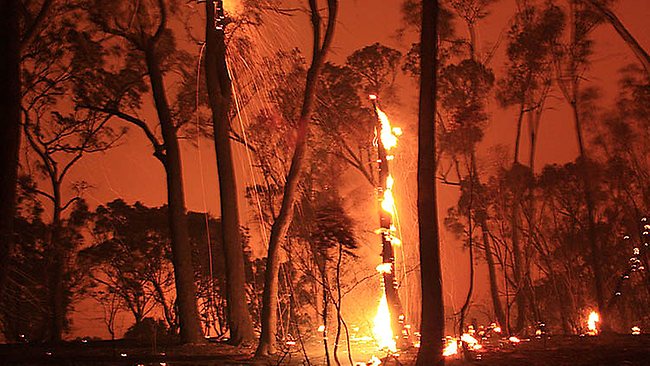
Mercury has risen to over 40 degrees Celsius for many days in most states of Australia this summer. Hard-it by the heatwave includes Victoria, South Australia and New South Wales igniting bushfires.

The Black Saturday flares up in Victoria (News Ltd)

The Black Saturday (2009) rages in Victoria. (News Ltd)

The ABC reports that several homes and farm properties have been destroyed as dozens of bushfires burn across large swathes of Victoria.

It said there is no confirmation yet on the exact number of losses, as Victorians faced their worst fire threat since Black Saturday just days after the fifth anniversary of the disaster.

High temperatures and strong winds fanned the intense and fast-moving blazes, as a weather change swept across the state bringing wind gusts up to 100 kilometres per hour.

By mid-afternoon yesterday, there were 70 fires burning across Victoria, and stretch from Goongerah in the far east of the state to the Latrobe Valley.

Fires are also burning in more densely populated areas around Melbourne.

Meanwhile in South Australia, a watch and act message remains in place for a large blaze at Bangor in the Southern Flinders Ranges.

Read on…..

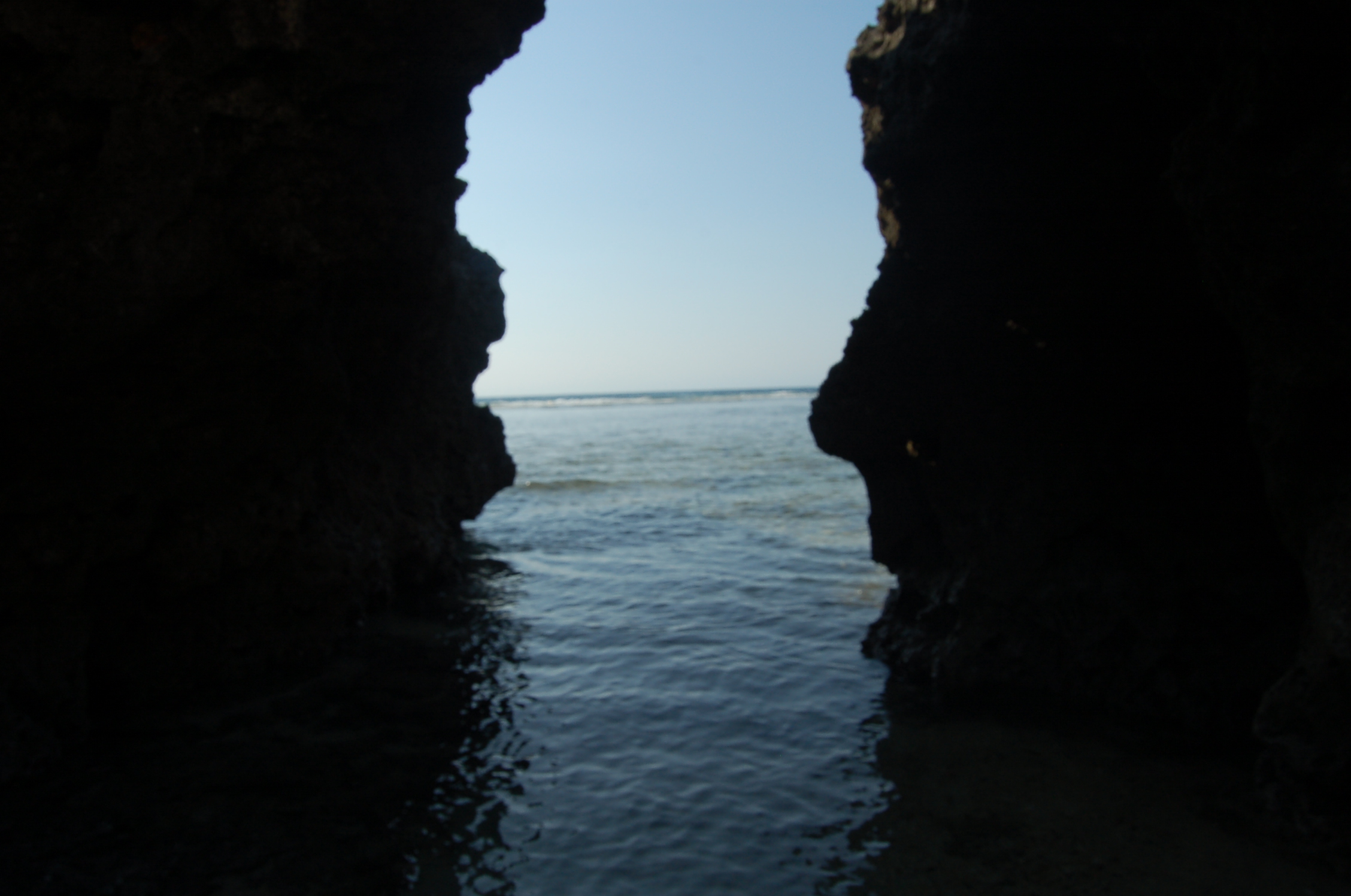
A spectacular rock formation at Pangil Beach in Currimao, Ilocos Norte, Philippines. (Photo: The Green Journal)

Finding refuge from heatwave in the cool water beneath the giant rocks. (Photo: The Green Journal)

The Green Journal has taken a break during this time as this blogger took a trip northbound to chill out. Islands in the Pacific – a perfect getaway! Write back soon!
 

2013 in review: And looking forward to a greater 2014!

The Green Journal kicked off and finished neatly in 2013 – thanks to its growing readership and supporters like you!

Not mentioned in this report, however, is the growing recognition of this platform by campaign leaders not only in Australia but leaders in the international community.

This year, The Green Journal is aiming higher to serve its purpose. Thank you all and have a great 2014!

The WordPress.com stats helper monkeys prepared a 2013 annual report for this blog.

Here’s an excerpt:

A New York City subway train holds 1,200 people. This blog was viewed about 6,900 times in 2013. If it were a NYC subway train, it would take about 6 trips to carry that many people.

Click here to see the complete report.

Largest port to kill the Barrier Reef

The “Asian Century” has arrived in Queensland. The world’s largest port will rise soon that will pave the link between the Australian state and Asian market– India in particular.

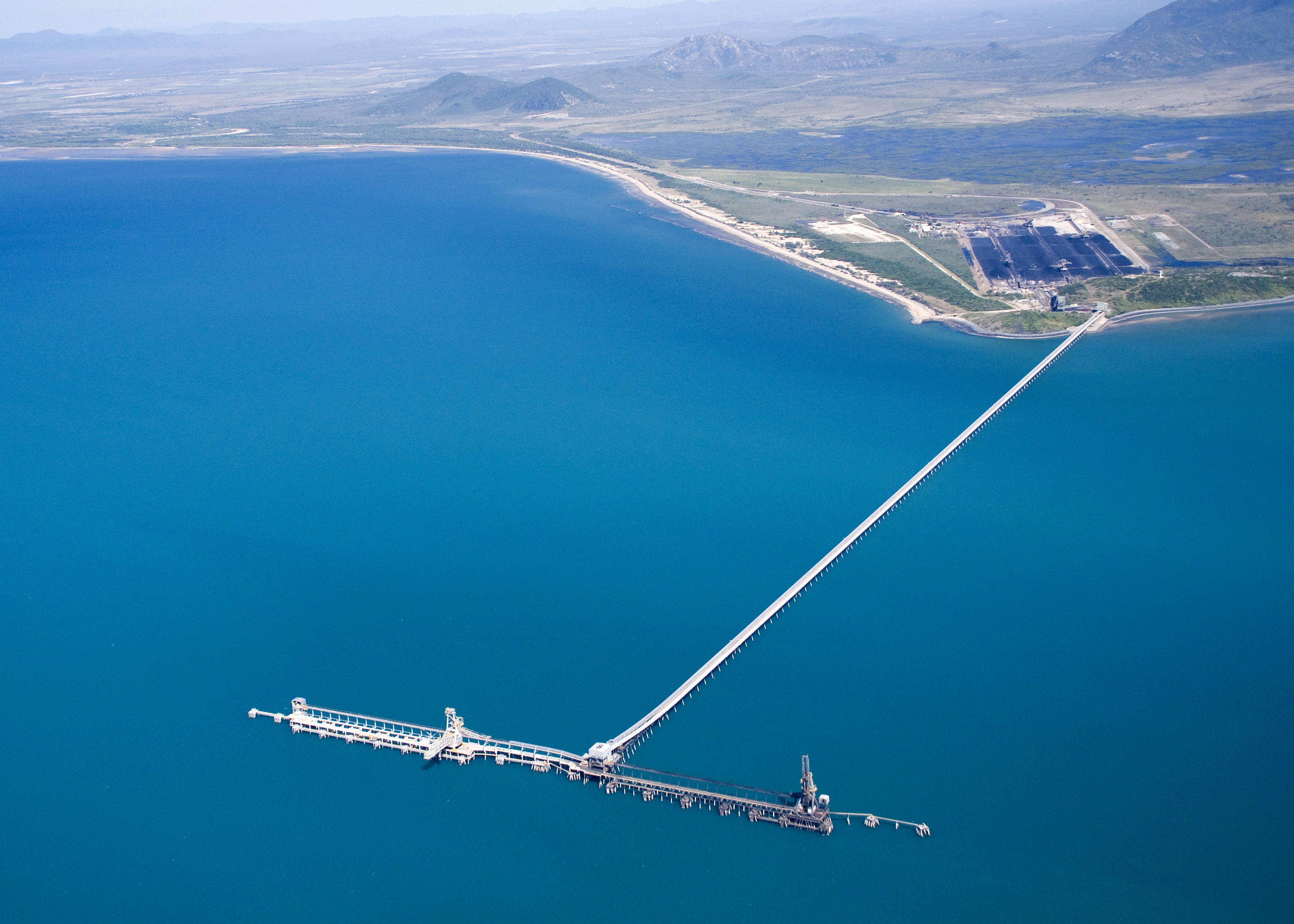
Aerial view Abbot Point T2 and T3

Aerial view Abbot Point T2 and T3

The Federal government gave the green light to the massive expansion of three major port terminals at Abbot Point, 26 km north of Bowen in Central Queensland– positioned to become one of the world’s largest industrial sea ports.

The approval gives Adani Enterprises Pty. Ltd. and GVK, among other mining companies, a breakthrough in the multi-billion coal industry which will exploit the potential of the coal-rich Galilee Basin.

Adani’s most recent performance at T0

Environment Minister Greg Hunt announced the decision on Tuesday after a ”rigid assessment” and the project’s environmental impacts. After a long delay, the minister approved four Queensland projects under the National Environmental Law, including the capital dredging program for the proposed Terminals 0, 2 and 3 at the Port of Abbot Point, the Adani T0 project, the Arrow Liquefied Natural Gas Facility on Curtis Island, and the Arrow Gas Transmission Pipeline to Curtis Island. The terminals will provide the necessary infrastructure to accommodate the ”bullish” coal industry within the Galilee Basin.

The approval of Terminal 0 (T0) is sure to boost Adani’s ambitious prospect to ship the coal to India. “Coal from this project will predominantly service the Indian market,”  Adani admitted. The group acquired the terminal for about two billion Australian dollars under a 99-year lease in 2011. T0 is estimated to have a 70 metric tonnes per annum mtpa (35 mtpa x two stages) handling capacity. T2 will be built by an Australian-own company, while T3 will be undertaken by GVK.

But the New York Times reported Adani bought the port in 2011 for 1.8 billion Australian dollars taking advantage of the area still recovering from a series of floods.

 “Abbott Point is our contribution to India’s global ambitions,” said Gautam Adani, chair of Adani. Adani. “An Indian billionaire and real estate magnate, runs the largest private sector coal importer in India, a country hungry for energy resources. He already has other investments in Queensland….”

The T0 alone is projected to generate  a financial value of A$ 1.4 – 2.8 billion annually in gross revenue which will contribute significantly to the Queensland and Australian economy. It will directly benefit Bowen locality and the wider Whitsunday region, Adani said in its presentation paper earlier this year.

Estimated employment stands at 500 jobs in construction and 200-250 jobs in operation, while it provides opportunity for expansion of permanent working population at the Port of Abbot Point. This projection, however, is based on the estimated export of thermal coal from Adani’s Carmichael Coal Mine and Abbot Point Coal Terminal 0 projects.

GVK, on the other hand, will undertake the expansion of  T3  port facilities and Galilee Basin coal assets including the Alpha, Alpha West and Kevin’s Corner coal projects. It will also construct a rail connection to the Abbot Point Port. “Together with the previously received clearances for the Alpha mine, the rail to Abbot Point ,GVK Hancock has solidified its leading position in the Galilee Basin of Queensland, Australia, ” the company said in a press release.

GV Sanjay Reddy, Vice Chairman  of the GVK Power & Infrastructure Limited, said the approval will enable the “provision of billions of tonnes of high quality, low sulphur, low ash, and cleaner burning coal for consumption in the Indian and Asian market.” He added, “this approval takes our projects in to the final stageof project development and we look forward to successfully developing and consolidating our position as the leading Indian infrastructure development company.”

The North Queensland Bulk Ports Corporation  (NQBC) has been commissioned as the port authority responsible for managing the project.

The extensive industrial projects along the eastern coast of Queensland. The darker blue line sketches the boundary of the world heritage area (Image: Fight for the Reef)

State Premier strengthens economic ties with India

The Galilee Basin is strengthening the economic ties between Queensland and India. Premier Campbell Newman admitted the potential of the region which could be a bigger contributor to Queensland’s economy than the coal seam gas industry.

Newman had visited Adani’s operation in India and believes in the export potential of the region. Further, he considers a long-term strategic business partnership with Indian companies. Mining Australia quoted him as saying, “They want coal to come for their thermal power stations day in, day out, week in, week out, month after month, for not 10 years or 20 years or 50 years; they want it to come for 70 to 100 years” .

On Gautam Adani, Newman is mesmerized with his business empire-building enthusiasm: “He owns the power lines, he owns the retail, he wants that coal. Now, the current coal price is not really a big thing in his calculations,” Newman said. “What he wants is supply security, and he wants to get that supply chain cost down as low as possible.”

Environmental concerns

Greenpeace lambasts the dredging and dumping of industrial waste into the vicinity of the reef.

Environmental groups, however, are enraged with the developments.

The terminals will require dredging of about three million cubic meters of sediments from the bottom of the sea. Local communities and environmental groups are outraged on how and where would the dredging spoils be dumped. The long-term effect after the area after the mining projects is also a matter of concern.

Hunt said he made an agreement with the Gladstone Ports Authority that they will not dispose of up to 12 million cubic metres of spoil within the Marine Park, but will instead use the material for land infill.

Hunt and Newman are already under fire from Green groups. The WWF, for one, is now pressing the Great Barrier Reef Marine Park not to issue a permit to the NQBPC to dump the dredge spoil into the reef waters.

The WWF-Australia, in partnership with the Australian Marine Conservation Society, has also launched a nationwide and international campaign, Fight for the Reef, that educates people about the implication of the large-scale industrialization of Australia’s east coast- more significantly its impact on the world-listed heritage site – the Great Barrier Reef.

Australia disappoints at global climate talks, grassroots take action

As the UNFCCC Conference of Parties 19 (COP 19) wraps up in Warsaw, Poland, close to a thousand activists have walked out , grossly disappointed with the results.

The rift between rich and poor nations intensified with no major compromise on key issues. Many developed countries turned their backs from their commitments,  including emission caps and funding mechanisms.

Oxfam International, joined by more than a dozen of civic international groups, released a statement saying the Warsaw Conference saw participants with conflicting interests. More notably, the interests of dirty energy industries were more visible than that of global citizens – with a “Coal & Climate Summit” being held in conjunction. It said corporate sponsorship from big-time polluters could be seen everywhere and that the Poland Presidency that is beholden to the coal and fracking industry.

Members of civil society movements walk out out of the U.N. talks on global warming held at the National Stadium in Warsaw, Poland on Thursday. Pic: AP.

From day one, Australia showed no interest to take part in the climate event; it did not send a minister representative. The Tony Abbott coalition government instead prioritised the repeal the carbon tax at its first parliamentary session. As the Warsaw Conference ends, the carbon tax repeal has already passed the Lower House, although it is still to go before the Senate.

The Climate Action Tracker (CAT) gave Australia a high ranking for creating the framework for strong action when it introduced the carbon tax in 2011. The CAT saw the new climate legislation as a historic breakthrough for the nation – putting a price on greenhouse gas emissions ranks alongside any of the “big” reforms of the past 30 years.

The CAT said the study is the first of a series of independent, science-based country assessments looking at each country’s international climate change action, comparing it to its pledge and to what’s needed to keep global warming to below 2°C (and 1.5°C, as called for by the most vulnerable countries).

In Doha last year, Australia made a non-binding pledge to reduce emissions by 5% on 2000 levels by 2020, irrespective of international action, and said it will reduce emission levels by 15-25% from 2000 levels by 2020 if other countries make significant commitments.

Greg Combet, then Minister for Climate Change and Energy Efficiency, told delegates at CarbonExpo in Melbourne on November 9, 2012 that Australia would sign on to a second commitment period under the Kyoto Protocol with specific conditions.

Most Australian economists agree that the country cannot achieve its voluntary target of reducing emissions by 5 per cent by 2020 without industry paying a price on carbon.

Under the new Abbott Government, however, the CAT ranked Australia’s climate change efforts as inadequate.

The CAT said repealing the carbon tax would dismantle most of the present policy framework, including present fixed carbon prices and the cap-and-trade system put in place in 2011.

The CAT speculates

Australian Coalition Government at present does not have the majority in the Senate for repeal and will not do so until at least July 2014, after which time it will need to be negotiated with minor Parties to achieve this. However, the Government has insisted that it will call a fresh general election should the Senate not support repeal.  Given this situation, it is clear that the present assessment may not stand, given the significant chance that present policies could be dropped or not implemented. The new Government has committed only AU$3.2 billion (capped) to meet the 5% reduction target and has indicated that no further funding will be made available should this fall short of meeting this goal. Several analyses indicate that this so-called ‘Direct Action’ policy will fall far short of the 5% goal.

Australia was already mocked for garnering the most Fossil of the Day awards during the summit. It has so far won half of the “illustrious accolades”, handed out on each day of negotiations by the Climate Action Network to the country who has done most to block progress at the UN climate negotiations.

During one of the sessions, Australia’s team was accused of lacking respect after delegates turned up to critical discussions wearing shorts and teeshirts. They also “gorged on snacks” during negotiations on whether developed states should make reparations to vulnerable countries as the impacts of climate change become more severe, according to a spokesperson for CAN International. Their behaviour caused over 130 developing nations to abandon discussions on the controversial issue of climate compensation at 4am last night.

Abbott is pushing to scrap the carbon tax following an election campaign promise. Repealing the carbon is an effort to keep Australia’s businesses competitive in the world market. The Australian noted Abbott saying:

… without the carbon and mining taxes, “and without the sovereign risk issues that this government has created”, Australia would once again be among “the most attractive places in the world to invest”.”The Olympic Dam mine expansion, Port Hedland Harbour expansion, and the Browse gas-field development can’t be guaranteed to go ahead — but they can almost certainly be guaranteed not to proceed while the carbon tax, mining tax and job-destroying industrial regulation remain in place.”Mr Abbott, who has threatened a double dissolution election if the Coalition’s repeal of the carbon tax is frustrated in the Senate, was “confident” Labor would learn the lessons of an election defeat.

A banner at Treasury Gardens in Melbourne during the National Day of Climate Action. (Photo: R. Yoon/the Green Journal)

Abbott abolished the Australia Climate Commission shortly after he took office in September. The Commission was set up to advise on the science and economics of carbon pricing.

Greens and grassroots movements have taken action in response to the new government’s actions. The National Day of Climate Action (November 17) saw more than 60,000 people gather in major cities and towns nationwide to urge the government to take action on climate change. The event was organised by GetUp, Australia Youth Climate Coalition, and the Australian Conservation Foundation.

GetUp supporters raise banners in Melbourne. (Photo: R. Yoon/The Green Journal)

“60,000 Australians from every corner of our sunburnt (and, in places, rain-soaked) country came together for climate action on Sunday, and as climate activists we’re now being described as ‘Abbott’s Worst Enemy’,” GetUp said.

GetUp is now spearheading a drive to raise $22m to keep up the fight.

 If we are going to keep up the fight, we need the resources to keep going. If all of us who came chipped in just $1 a day we’d have $22 million to fund a campaign for climate action – matching what the mining industry has spent to stop climate action. We have to step up and fight even harder on climate change. We believe that means we need a movement of people who are connected, empowered, inspired and informed. GetUp’s infrastructure allows us to connect and empower.

More photos: National Day of Climate Action (Melbourne)

Blog Link: The Green Journal at Asian Correspondent