Commissioner urges to protect Aboriginal children

Official poster of the 25th anniversary of National Aboriginal and Torres Strait Islander Children’s Day (NAICD)

We must do more to protect Aboriginal and Torres Strait Islander children

It is not acceptable that between 40 to 50 per cent of Aboriginal and Torres Strait Islander people still live in poverty across Australia, Social Justice Commissioner Mick Gooda said today on the eve of national Aboriginal and Islander Children’s Day.

Commissioner Gooda said National Aboriginal and Islander Children’s Day — like NAIDOC Week and Reconciliation Week — has become an increasingly important annual statement of Aboriginal and Torres Strait Islander cultural pride, identity and achievement.

“Since the first children’s day and the adoption of the United Nations Convention on the Rights of the Child, we’ve seen some encouraging gains for our children, including in the areas of education and health, especially infant mortality rates,” he said.

“However it is not enough when it remains the case that our children are 10 times more likely to be removed from their homes and families, or 26 times as likely to be in juvenile detention.”

Commissioner Gooda said that while it is evident that the will is there, backed up by considerable funding, governments have to do things better.

“Every child in Australia —including every Aboriginal and Torres Strait Islander child — has the right to grow up with their basic needs of shelter, food, health, family, care, culture, education, participation and protection,” he said.

“Governments have to do things better and differently if we are to see marked improvements in the development, wellbeing and protection of Aboriginal and Torres Strait Islander children.

“Our people need to own the solutions and genuine partnerships need to be created — partnerships which support and enable a place for Aboriginal and Torres Strait Islander cultures in every aspect of our children’s lives,” he said.

“National Aboriginal and Islander Children’s Day provides us with a moment to stop, to celebrate our children and to reflect on how we are doing in giving them the best start.”

Media contact: Louise McDermott (02) 9284 9851 or 0419 258 597

GetUp shakes up with a new leadership

A bit delayed to post this, but here’s from the inbox. GetUp National Director Simon Sheikh has stepped down while introducing incoming National Director, Sam McLean.

Simon Sheikh (right) with incoming National Director, Sam McLean (left).

Dear friends,

I wanted to let you know that I have decided the time is right to step down as National Director. Of course, GetUp will continue its work, and I can’t wait to see what comes next.

When I first took on this role in September 2008, many were still wondering whether this movement of ordinary people could continue to make a difference, or whether it would invariably prove a momentary trend; a flash in the political landscape.

Over the years you have proven that this movement of everyday Australians has the capacity to take on and win tough fights and strengthen democracy in the process.

GetUp is driven by its members. Over and over again we’ve demonstrated unequivocally that all of us working together can change things for the better. It has been an honour to stand alongside you over these last four years.

While we celebrate what we have won we should remember what we’re still campaigning for: a nation that better reflects the generosity of spirit, innate sense of fairness, strong community pride and ever-ready humour of its people. A nation that does not shrink back and buy into fear or division. A nation unafraid to aim higher and to understand its place in the world.

Expressing our belief in these ideals by collectively organising will be even more crucial as we approach the next election, a time when our movement can demonstrate its creativity and passion and make a huge impact along the way.

I’ll forever remember walking out of the High Court with two GetUp plaintiffs in a victory that gave over 150,000 Australians the opportunity to vote; standing alongside GetUp members in the Senate gallery the moment the clean energy bills passed; or the night I learned, in a budget lock-down inside the bowels of the Commonwealth Treasury, that, along with our partner organisations, we had won a massive increase in mental health funding. These moments are your victories: they would not have happened without your passion, actions, contributions and presence at every step. And they are just a taste of what this movement can achieve into the future.

Thank you.

It is my great honour to formally introduce to you GetUp’s new National Director, Sam McLean. Sam walked through GetUp’s doors as a volunteer over five years ago, and long-time members will remember the very first initiative he led: ‘Oz in 30 seconds,’ the ground-breaking competition that gave ordinary Australians the chance to create and air their own political ads during the 2007 federal election. Sam is a person of rare talent, energy and proven commitment to GetUp members and all that we fight for. You will have seen many emails from him, especially in his time as GetUp’s Deputy National Director over the last two years. His commitment to serving GetUp’s membership makes my decision to leave much easier.

I’ve suspected for a while now that it’s time in my own life for a change of pace. So while I’m fortunate to be back in good health, my next plan is to pack up the car and head out to see more of this remarkable country with my wife Anna, who has offered me so much support during my time at GetUp. After all, there are plenty of extraordinary places our movement has worked hard to protect. Now I’m personally keen to spend some time enjoying them!

GetUp is not, and never will be, the achievement of its small group of staff. It is the alchemy of many people becoming more than the sum of its parts: people united by common values, committed not just to reading the news, but to changing it.

I’m not going anywhere just yet; I’ll stick around for a while to ensure a smooth transition. But I wanted to make sure you heard this news from me first. And I wanted to take this chance to pay tribute to you – to thank you for all that you are, and all that you do 

Here’s to tomorrow, Simon

P.S. Over the last few years I have been supported by a huge number of volunteers, interns and staff. I wanted to particularly thank our current talented team who continue to drive so much of our work: Sam, Darren, Erin, Paul, Rosie, Rohan, Kieran, Kelsey, Justine, Simon DW, Jarra, Sara, Richard, James, Adri and Jess.

After carbon tax, coal to power the economy

Following economists’ recent prediction of the impending end of mining boom cycle, the Federal Government is scrambling to find an alternative solution to power the Australian economy and is now turning to seam gas and brown coal projects.

New South Wales and Victoria received the green lights to go ahead with the projects, respectively – stirring rounds of uproar from local industries, farmers, consumers, and environmental groups.

Hunter Valley in NSW is home to one of the world’s finest wineries and is now under seam gas exploration threat.

In January this year, the Federal Government created the Independent Expert Scientific Committee to provide impartial advice on the environmental effects of coal mining and coal seam gas projects. But ABC’s Lateline revealed that four out of the six members have financial links with the mining industry.

  • Professor Chris Moran – director of the Sustainable Minerals Institute at the University of Queensland. In 2010 the institute received $17 million, more than half of its funding, from coal seam gas and mining giants Santos, BHP Billiton, BG Group, Rio Tinto and many more.
  • Associate Professor David Laurence – head of the University of NSW Centre for Sustainable Mining Practices. It’s funded with a $1.1 million grant by Mitsubishi Development, a Japanese-controlled coal miner with significant investments in Queensland.
  • Professor John Langford – shareholder in coal seam gas and coal companies for his self-managed superannuation funds.
  • Professor Peter Flood –  a regular consultant for the resource industry.

Affected by the coal, the Hunter Thoroughbred Breeders Association represents stallion farms, broodmare farms, the largest equine hospital in the Southern Hemisphere.

The committee is chaired by Professor Craig Simmons who said the committee is made up of distinguished academics with long and credible public records. He rejected any suggestion that the committee’s work is influenced by industry.

Professor Gary Willgoose, a hydrologist who holds a prestigious position of Australian professorial fellow said it is virtually impossible to find an independent expert as the coal seam gas industry funds and provides the vast majority of research and consultancy work.

Larissa Walters, Federal Green Senator, however said, “These people have been appointed to scrutinise the impacts of coal seam gas and coal mining. You want to make sure that they’re not getting paid by the industry and therefore might turn a blind eye to some of the more dastardly impacts of the industry.” Read ABC TRANSCRIPT.

In Victoria, the brown coal investment is in full swing under the Ted Baillieu Government. The federal and Victorian governments today announced the creation of a $90 million fund for new brown coal projects in the Latrobe Valley.

North brown coal power station in Gippsland, Victoria. (Photo: Aaron Francis/The Australian)

The Sydney Morning Herald said each government will contribute $45 million to pay for the development and rollout of brown coal technologies, including drying for export, conversion into fuels and fertilisers, and reducing emissions from coal-fired electricity generation. The announcement comes ahead of the Victorian Government opening its controversial tender for new allocations of brown coal in the Latrobe Valley.

Federal Energy Minister Martin Ferguson said the program will create jobs in the LaTrobe Valley region, spur economic growth, and create a sustainable source of energy for Victorian industries and households.

The Minister also said,

There is a potential for brown coal to develop into a valuable export, which would not be possible without the technological innovation that may also assist in meeting the Government’s emissions reductions targets of five per cent fewer emissions than 2000 levels by 2020.”

Victorian Energy Minister Michael O’Brien said,

Our brown coal resource has for a long time benefited all Victorians, delivering a reliable and affordable power source that has underpinned our economic growth and been a competitive advantage for the state.

There is a long term viable future for the Latrobe Valley based on the sustainable use of brown coal.’

Expressions of interests for grants will close on November 19. The governments said construction of the  first funded project will be scheduled for 2013-14.

Meanwhile, Friends of the Earth campaign coordinator Cam Walker released a media statement to express his group’s disappointment over the government’s sneaky plan of scrapping clean energy projects.

The Yallourn brown coal power station in Victoria’s Latrobe Valley. (Photo: News Limited)

Last week, the Federal Energy Minister announced it will cancel the $100 grant to the proposed HRL coal-fired power plant in the Latrobe Valley. He said the announcement is devastating for the Victorian communities. The $45 million Victorian government contribution could be use to invest in clean energy technology. Walker said the announcement is a massive lost opportunity.

Instead of continuing to peddle the notion of ‘clean’ coal technologies, the government should be putting public funds into job rich renewable technology. The state government has shut off much of the state to wind energy, and refuses to listen to community concerns about coal and CSG. Having done a U Turn on climate action, it seems the government of Ted Baillieu is determined to take Victoria back into the 1950s by continuing to support the expansion of the obsolete brown coal industry.

Singapore: a new investment prospect for Australian mining tycoons

Australian mining billionnaires have got enough when it comes to exorbitant Government taxes. Now, they are looking for investment elsewhere.

Mining magnate Gina Rinehart is reportedly bought two condo units worth AU$43.8 million.

Gina Rinehart, owner of Hancock Prospecting Pty. Ltd. and known as the world’s richest woman, set her eyes on property investment in Singapore to avoid higher taxes on capital gains.

Fairfax Media said Rinehart purchased two condominium units costing $S57 million ($43.8 million) in the Seven Palms Sentosa Cove. One unit on the third floor of the four-storey complex costs about $S23.3 million while the top-floor unit fetches up to nearly $S33.9 million.

Mining magnate Gina Rinehart acquires the largest stake at Fairfax media. (Photo: Patrick Hamilton)

Along with Rinehart, coal magnate Nathan Tinkler of Whitehaven Coal Ltd. is also rumoured to have put off his plans for a $13 million beachfront home in Newcastle, New South Wales and “shipped his family off to Singapore.”  Tinkler is said to have bought in the Santosa Cove area as this is the only area on the island nation where foreigners can buy property, Yahoo Singapore reported.

Live Trading News said Tinkler’s Sydney-based public relations firm confirmed the tycoon’s relocation to Singapore to enable Tinkler to be closer to his Asian partners.  Although the main office remains in Brisbane, the Tinkler would allot his time 50 percent overseas, the report added.

According to Brisbane Times, his spokesman, Tim Allerton, said the principal place of residence would now be Singapore. “He just wants to be closer to the markets, to Asia.”  Tinkler’s wife and their four school-age children left Newcastle to join him, Allerton said.

This beachfront property beckons wealthy expat elites. (Photo: SMH)

Located near Tanjong Beach, Seven Palms is a four-storey residential development that features just 41 units. Nearing completion, it is designed by Perth-born architect Kerry Hill. Its website flaunts, “Located on the tranquil eastern coast of Sentosa Island, Sentosa Cove is Singapore’s first and most exclusive marina residential community that offers tropical resort living just minutes from the hustle and bustle of city life in mainland Singapore.”

Property investment speculators claim Singapore is Asia’s new Switzerland– a major financial hub with strict banking secrecy laws– besides it  is increasingly styling itself as an exclusive place to live. Non-Singaporean nationals can purchase properties on a 99-year lease program in the area under strict provisions that the property is owner-occupied and never rented out.

Singapore is the world’s lowest in personal taxes rate with a cap of 20 percent, compared to an atrocious 46.5 percent top tax rate in Australia.

Sentosa Cove to match a luxury lifestyle (Photo: SMH)

Whether facing the majestic South China Sea, the spectacular verdant fairways of the Tanjong golf course, or the calm serenity of the waterways, each generously-portioned land parcel represents a blank canvas upon which to design and build your dream residence.

Come and be among the discerning few to experience the epitome of luxury resort living at Sentosa Cove, Singapore’s most exclusive real estate.

Nathan Tinkler of Whitehaven Coal Ltd has moved to Singapore from Brisbane with wife and family. (Photo: Live Trading News)

Blog Link : ASIAN CORRESPONDENT

Access and Equity Policy for a Multicultural Australia

From the Priority List inbox:

The Race Discrimination Commissioner of the Australian Human Rights Commission has welcomed the report  and recommendations of the independent  Access and Equity Inquiry Panel.

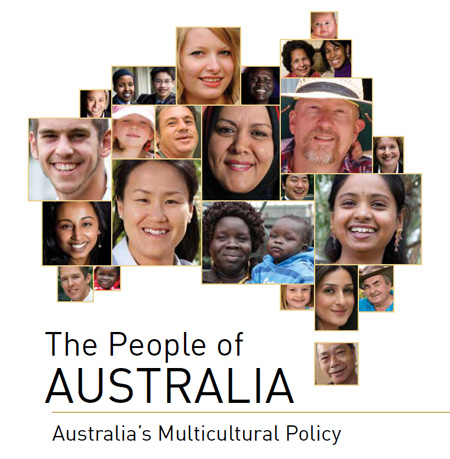
The Access and Equity policy has been an important policy  that defines Government services obligations to culturally diverse  communities.  The review of this policy  arises from the recommendations of the Australian Multicultural Advisory  Council, which recommended the formation of the Australian Multicultural  Council and ‘The People of Australia’ policy.

Dr Helen Szoke said, “The Access and Equity policy is an  important focus for government departments in all interactions with Australia’s  culturally and linguistically diverse population.  A focus on cultural responsiveness is an  investment in ensuring that all people in Australia can participate equally in  the community and receive the services and responses that they need to be part  of the broader Australian community.”

The Panel’s recommendations call for the strengthening of  this policy, through identifying clearer and more specific obligations that  departments and agencies are required to meet. There is also an expectation  that the principles of Access and Equity will influence all Government social  policy areas.

The Panel has proposed some important core minimum  obligations for Australian Government departments and agencies in relation to  the Access and Equity policy, with an emphasis on a whole-of-government  approach to better engage with the country’s increasingly diverse community.  The recommendations, if adopted, will encourage better participation of people from different backgrounds in  Australian community life.

The Australian Human Rights Commission’s research conducted  with African Australian and Arab and Muslim Australian communities has  identified that often members of these communities are reluctant to report on  negative experiences when dealing with programs and services due to a lack of  knowledge about the law and complaints processes, or the perceived difficulty  in making complaints.

Dr Szoke said, “The panel’s recommendation to review the  accessibility of complaints mechanisms, in consultation with communities, will  help to address some of these barriers and make the process of providing  feedback both easier and more effective.”

“I look forward to the Australian Government’s response to  the report and in particular, to learning what mechanisms will be identified to  enhance the governance, accountability and implementation of the policy,” Dr Szoke said.

The full report of the Access &  Equity Inquiry is available at  www.immi.gov.au/living-in-australia/a-multicultural-australia/government-approach/government-services/AandEreport.pdf

Tent Embassy’s 40th year highlights Aboriginal struggles

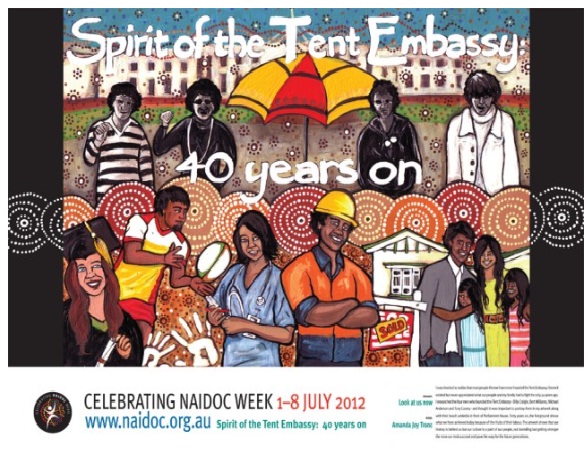
The official poster of NAODIC Week 2012

The National Aborigines and Islanders Day Observance Committee (NAIDOC) observes the spirit of Aboriginal struggles this week since the founding of the Tent Embassy 40 years ago.

Social Justice Commissioner Mick Gooda said NAIDOC Week should be a reminder that despite inroads made to  date, there’s still a long journey ahead to ensure equality between Aboriginal  and Torres Strait Islanders and non-Indigenous Australians,

Speaking ahead of the start of NAIDOC Week with the theme, Spirit of the Tent Embassy: 40 years on, Commissioner  Gooda said it was an opportune time to refocus energies and pursue the dream of  a fair and equal Australia.

“The Tent Embassy has maintained a presence in Canberra over  the past 40 years and remains a powerful symbol for advocacy in Indigenous  affairs,” Commissioner Gooda said.

“It provides a constant reminder to us to keep the  challenges faced by Aboriginal and Torres Strait Islander people in the  forefront of our leaders’ minds and adds much needed visibility for our  struggle for equality and justice.

“It is crucial that we acknowledge the legitimacy of the  discrimination, disempowerment and frustration experienced by many Aboriginal  and Torres Strait Islander people and focus our efforts and our energies on  securing the equal enjoyment of rights for Aboriginal and Torres Strait  Islander peoples.”

The Tent Embassy was established on 26 January 1972 when  four men placed a beach umbrella into the lawn of Parliament House in Canberra  in an iconic protest against the refusal to acknowledge Aboriginal land rights.

This act represented for many a symbol of strength and  defiance against injustice. The Tent Embassy’s protest on government policy,  along with the Wave Hill walk off by the Gurindji people and the Gove land  rights case of 1971, have been cornerstones in the history of the land rights  movement in Australia.

“The Tent Embassy has helped to make self-determination an  overriding factor in the thinking about Aboriginal and Torres Strait Islander  affairs. However, of most significance is the place of the Embassy in the  collective understanding of Aboriginal and Torres Strait Islander recent  history,” Mr Gooda said.

“It is a symbol of struggle, of Aboriginal and Torres Strait  Islanders’ power as a people to protest for positive change and to reclaim the  pride undermined by centuries of dispossession and discrimination.

A series of events was held to mark the 40th founding year of the tent embassy earlier this year.

“It also reminds us of Aboriginal and Torres Strait Islander  people’s ability to unite to campaign for better outcomes, bringing concerns  and the struggles for equality to the forefront of public attention and  political debate.”

Source: Australian Human Rights Commission

Australia finds no deal to help asylum seekers

The Senate upheld a High Court’s decision to scrap an extra-territorial solution to  people smuggled by boat into Australia in a dramatic vote, 39 against 29.

This is a nail in the coffin of Prime Minister Julia Gillard’s benchmark policy to solve human smuggling. It also puts to rest Gillard’s “Malaysian Solution”—a deal that allows Australia to take in 4,000 genuine refugees from Malaysia in exchange for the deportation and processing of 800 boat arrivals within four years.

The High Court ruled out the deal in August last year on the grounds that Malaysia has no legal obligation to protect asylum seekers, a requirement under Australia’s Migration Act.

Refugee coalition groups in Australia also noted Malaysia rejected any responsibility in the protection of refugees and asylum seekers.

In Malaysia, the Lawyers for Liberty based in Selangor earlier supported a memorandum endorsed by various organisations against Australia’s “misguided refugee outsourcing deal.”

We, the undersigned civil society organizations, wish to express our opposition to the proposed Australia-Malaysia bilateral agreement, in principle, to transfer the next 800 asylum seekers seeking asylum in Australia to Malaysia.

Although the terms of the joint agreement remain vague, we are of the view that the Australian Government is making a mistake in arranging this joint agreement with the Malaysian Government which is not a signatory to the 1951 Convention Relating to the Status of Refugees (“Refugee Convention”). This proposed exchange is a misguided approach in dealing with a complex issue that will cause serious ramifications as Malaysia has a long record of abuse and mistreatment of people seeking protection. This arrangement, if implemented, may lead to the violation of the rights of transferred individuals to Malaysia.

Two boatloads of asylum seekers arrived on Christmas Island, north off Australia in just 10 days.  Media reports counted about 130 people were rescued, one body was recovered and three people went down with the vessel. Wednesday’s incident came just days after another boat capsized, with 110 people saved but an estimated 90 killed.

Toddlers are among the latest boat arrivals. (Photo: Danile Wilkins)

The twin tragedies alerted the Federal government. The Lower House convened and passed a bill on Wednesday to allow offshore processing of asylum seekers. However,  the breakthrough was immediately dashed off by the Senate on Thursday. Heated debates lasted up to the wee hours of Friday morning.

The bill authored by Independent Rob Oakeshott is called the Migration Legislation Amendment (The Bali Process) Bill 2012. It allows Australia to send asylum seekers to Malaysia and the island of Nauru in the South Pacific for processing.

The Opposition reached a compromise, but the Australian Greens were against the proposed deal and therefore voted against the bill in both houses.

The Parliament will go into a winter recess while more boats are expected to arrive within the next few weeks.

Immigration Minister Chris Bowen pronounced a macabre prediction that more boat people are expected to die while politicians are having a 6-week holiday break, the SBS reported.

A boatload of people is spotted approaching Christmas Island. (Photo: Express MV Bison)

Independent MP Andrew Wilkie also said parliamentarians should not be going into recess when such an important matter remained unresolved.

“We should be sitting today, we should have continued sitting last night, we should sit next week, we should sit until we get a solution,” he told state broadcaster ABC.

“I think there is every chance in the world that more people will die during this six-week recess,” he said.

Gilliard earlier blamed the High Court for Australia’s failure to deal with human smugglers. She said the High Court-Senate is sending a message to people smugglers to load more people to come to Australia.

Amid prolonged parliamentary processes, Gillard announced the formation of a panel composed of “experts” such as former defence chief Angus Houston, former top diplomat Michael L’Estrange and refugee advocate Paris Aristotle. She said the panel will assess all asylum policy options. The “Multi Reference Group of MPs” will also work in consultation with the panel.

Since 1976, more than 27,000 people have risked their lives on boats in a desperate bid to arrive in Australia, a signatory to the 1951 UN Refugee Convention.

Self-anointed saint supports Gay Marriages

From my inbox in time of the coming Easter:

To Members, Friends and Associates of St Michael’s,

Very recently six Catholic Bishops have made a public statement and plea, that gay marriages be outlawed on the basis it would undermine family life or damage society.

Many at St Michael’s express a more accepting stance on the issue of Gay Marriages and do not agree with this recent statement. If you agree with Dr Macnab and others at St Michaels, would you please express your opinion and make it public. Pass this link onto others or ‘Like’ this in your facebook. At no other time in history has the actions of one individual had such significant power. Please make your voice heard.

Facebook: http://www.facebook.com/stmichaelsmelbourne
Blog: http://stmichaelsmelbourne.tumblr.com/
Twitter: www.twitter.com/stmichaelsmelb

Kind regards,
St Michael’s Uniting Church

Francis Macnab, the reverend minister of one of the largest non-denominational congregations in the heart of Melbourne, is responding to one of the major issues of our times– gay rights or equal gender marriages.

Unorthodox and heretic, he has long debunked the divinity of Christ as well as the authority and authenticity of the Holy Scriptures.

In 2010, Andrew Bolt noted Macnab as a self-proclaimed saint aligning himself with Florence Nightingale and Martin Luther King Jr.

Even my own children couldn’t help but laugh at the effrontery:

A stamp postage of Francis Macnab (Photo: Herald Sun)

Dissident Uniting Church minister Francis MacNab has posted a giant billboard over the Monash Freeway with pictures of Florence Nightingale, Martin Luther King and himself as model leaders.

Dr MacNab, minister of St Michael’s in Collins Street, launched his ‘’new faith’’ in late 2008 with another controversial freeway billboard: ‘’The Ten Commandments, the most negative document ever written.’’ He rejects the idea of a divine Christ and a personal God….

’Every morning I drive past and think ‘what an impertinence’,’’ said commuter Geoff Slattery, a Catholic.

Photo at the link. More on MacNab’s self-canonisation on his website. Just who is in his “liberal and progressive” congregation?

New species found in Skullbone Plains,Tasmania

From the email loop circulated by the Tasmanian Land Conservancy which was dropped into my inbox today:

The recent Bush Blitz at our fabuolous Skullbone Plains reserve has been a tremendous success — with between 520 to 550 species of plants and animals collected during the week.

Phil Hurle, Australian National Botanical Gardens preparing specimens collected from Skullbone Plains (Photo: TLC)

Now that the fieldwork is now over, the team of 20 scientists are back in their labs identifying the specimens. This can often take many months, if not years to complete. Each specimen will be painstakingly described and documented before being entered into the collection of the Tasmanian Museum and Art Gallery and the Tasmanian Herbarium, as well as other museums, universities and herbaria around Australia. They will be carefully preserved and made available for research.

A recent exhibit of the Australian National Botanical Gardens

Why the Blitz ? There are many plants and animals still to be discovered by science. There are an estimated 566,398 species in Australia – but three-quarters of this biodiversity is yet to be identified. Forty-five per cent of continental Australia and over 90 per cent of our marine area have never been comprehensively surveyed by scientists.

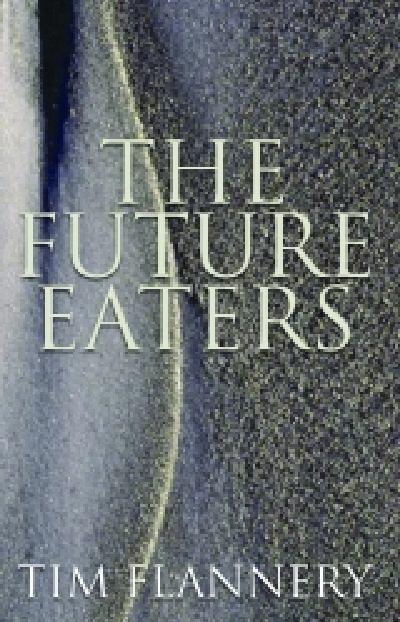
Published by Reed Books Australia, 1994

Interesting stuff. I have just read the introduction of Tim Frannery”s book, The Future Eaters, which brings into light how the waves of settlement and immigration have changed Australia’s biodiversity. Many of the native animal and plant species have become extinct in the course of influx of foreign species and foreign environmental practices.

Darwin’s pessimism and Flannery’s hope

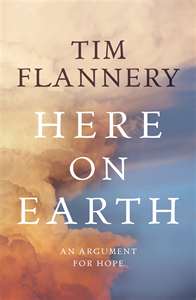
Published in 2010, the year when the author reaped the distinguished award as Australian of the Year, Tim Flannery’s book, Here on Earth: an Argument for Hope, offers a ray of hope in salvaging the last remaining species of the planet and in regaining the lost functioning of the Earth’s life-support systems.

Published by The Text Publishing Company, Vic 2010

The battle to avert an impending apocalype is to resuscitate Gaia– derived from John Lovelock’s theory that all organisms and their inorganic surroundings on Earth are closely integrated to form a single and self-regulating complex system, maintaining the conditions for life on the planet. This self-support system, however, has been imperiled by men’s greed. Flannery argues that men have waged war against nature. Men have turned Gaia-killers. Among the notable examples is detailed in Rachel Garlson’s book, Silent Spring. The book inllustrates the entent of how capitalists have murdered birds and other species when DDT was used as pesticide in the US in the 1950’s. Certainly, there are other human follies that destroyed the life support systems of the earth such as through massive carbon emissions and wanton logging. Although many NGOs have convened and proposed solutions, the inactivity of many advanced nations are delaying the action that help avert an impending apocalypse.

Flannery outlines the theories of Charles Darwin and Alfred Russell Wallace focussing on the origin of species, the concept of natural selection and the survival of the fittest. Species evolve through time and they differentiate through time and according to their environment; and those who adapt well survive and those who do not perish.

The survival of the fittest in the animal kingdom that has prevailed throughout history. The war is not only man against man but man against nature. Darwinian theory is devoid of morality and spirituality.

Time has changed though. There is a universal awakening that believes only love and compassion can save what is remaining on earth. Flannery is offering the wisdom of ancient past. Only love can heal humanity and can perhaps bring back the life-support system of Gaia.

Meanwhile, I picked a DVD from the video shop to see a movie related to Darwin, and lucky enough I got this: CREATION

Paul Bettany as Charles Darwin

Opened in 2009, Creation portrays Darwin as a man who suffered anguish resulting from his work and discovery. A responsible family man, he knew however, that although “there is no God’, the church and religion hold the fabric of society together. He was haunted by the death of species such as a tiny bird which could be eaten and consumed by worms so that that the food chain will continue. From decomposed species give life to plants and so on. The death of his child pushed him to see phantoms and led his body to exhaustion.

If Darwin’s remarkable contribution to science is to be reckoned with, indeed, the entire humanity is plagued into an abyss of pessimism. Flannery’s book, however, takes flight uplifting the spirit offering the world with new-found hope.

More about the movie:

Creation is a psychological, heart-wrenching love story starring Paul Bettany (A BEAUTIFUL MIND, MASTER AND COMMANDER: THE FAR SIDE OF THE WORLD) as Charles Darwin, the film is based on “Annie’s Box,” a biography penned by Darwin’s great-great-grandson Randal Keynes using personal letters and diaries of the Darwin family. We take a unique and inside look at Darwin, his family and his love for his deeply religious wife, played by Jennifer Connelly (A BEAUTIFUL MIND, REQUIEM FOR A DREAM), as, torn between faith and science, Darwin struggles to finish his legendary book “On the Origin of Species,” which goes on to become the foundation for evolutionary biology. The film co-stars Toby Jones (FROST/NIXON, INFAMOUS) and Jeremy Northam (GOSFORD PARK, AMISTAD), and was produced by Jeremy Thomas (THE LAST EMPEROR, SEXY BEAST) at Recorded Picture Company with BBC Films and Ocean Pictures. From director Jon Amiel (“The Singing Detective,” ENTRAPMENT) and writer John Collee (MASTER AND COMMANDER: THE FAR SIDE OF THE WORLD) comes CREATION. Source: http://creationthemovie.com/