After carbon tax, coal to power the economy

Following economists’ recent prediction of the impending end of mining boom cycle, the Federal Government is scrambling to find an alternative solution to power the Australian economy and is now turning to seam gas and brown coal projects.

New South Wales and Victoria received the green lights to go ahead with the projects, respectively – stirring rounds of uproar from local industries, farmers, consumers, and environmental groups.

Hunter Valley in NSW is home to one of the world’s finest wineries and is now under seam gas exploration threat.

In January this year, the Federal Government created the Independent Expert Scientific Committee to provide impartial advice on the environmental effects of coal mining and coal seam gas projects. But ABC’s Lateline revealed that four out of the six members have financial links with the mining industry.

  • Professor Chris Moran – director of the Sustainable Minerals Institute at the University of Queensland. In 2010 the institute received $17 million, more than half of its funding, from coal seam gas and mining giants Santos, BHP Billiton, BG Group, Rio Tinto and many more.
  • Associate Professor David Laurence – head of the University of NSW Centre for Sustainable Mining Practices. It’s funded with a $1.1 million grant by Mitsubishi Development, a Japanese-controlled coal miner with significant investments in Queensland.
  • Professor John Langford – shareholder in coal seam gas and coal companies for his self-managed superannuation funds.
  • Professor Peter Flood –  a regular consultant for the resource industry.

Affected by the coal, the Hunter Thoroughbred Breeders Association represents stallion farms, broodmare farms, the largest equine hospital in the Southern Hemisphere.

The committee is chaired by Professor Craig Simmons who said the committee is made up of distinguished academics with long and credible public records. He rejected any suggestion that the committee’s work is influenced by industry.

Professor Gary Willgoose, a hydrologist who holds a prestigious position of Australian professorial fellow said it is virtually impossible to find an independent expert as the coal seam gas industry funds and provides the vast majority of research and consultancy work.

Larissa Walters, Federal Green Senator, however said, “These people have been appointed to scrutinise the impacts of coal seam gas and coal mining. You want to make sure that they’re not getting paid by the industry and therefore might turn a blind eye to some of the more dastardly impacts of the industry.” Read ABC TRANSCRIPT.

In Victoria, the brown coal investment is in full swing under the Ted Baillieu Government. The federal and Victorian governments today announced the creation of a $90 million fund for new brown coal projects in the Latrobe Valley.

North brown coal power station in Gippsland, Victoria. (Photo: Aaron Francis/The Australian)

The Sydney Morning Herald said each government will contribute $45 million to pay for the development and rollout of brown coal technologies, including drying for export, conversion into fuels and fertilisers, and reducing emissions from coal-fired electricity generation. The announcement comes ahead of the Victorian Government opening its controversial tender for new allocations of brown coal in the Latrobe Valley.

Federal Energy Minister Martin Ferguson said the program will create jobs in the LaTrobe Valley region, spur economic growth, and create a sustainable source of energy for Victorian industries and households.

The Minister also said,

There is a potential for brown coal to develop into a valuable export, which would not be possible without the technological innovation that may also assist in meeting the Government’s emissions reductions targets of five per cent fewer emissions than 2000 levels by 2020.”

Victorian Energy Minister Michael O’Brien said,

Our brown coal resource has for a long time benefited all Victorians, delivering a reliable and affordable power source that has underpinned our economic growth and been a competitive advantage for the state.

There is a long term viable future for the Latrobe Valley based on the sustainable use of brown coal.’

Expressions of interests for grants will close on November 19. The governments said construction of the  first funded project will be scheduled for 2013-14.

Meanwhile, Friends of the Earth campaign coordinator Cam Walker released a media statement to express his group’s disappointment over the government’s sneaky plan of scrapping clean energy projects.

The Yallourn brown coal power station in Victoria’s Latrobe Valley. (Photo: News Limited)

Last week, the Federal Energy Minister announced it will cancel the $100 grant to the proposed HRL coal-fired power plant in the Latrobe Valley. He said the announcement is devastating for the Victorian communities. The $45 million Victorian government contribution could be use to invest in clean energy technology. Walker said the announcement is a massive lost opportunity.

Instead of continuing to peddle the notion of ‘clean’ coal technologies, the government should be putting public funds into job rich renewable technology. The state government has shut off much of the state to wind energy, and refuses to listen to community concerns about coal and CSG. Having done a U Turn on climate action, it seems the government of Ted Baillieu is determined to take Victoria back into the 1950s by continuing to support the expansion of the obsolete brown coal industry.
Great Barrier Reef awaits UN verdict

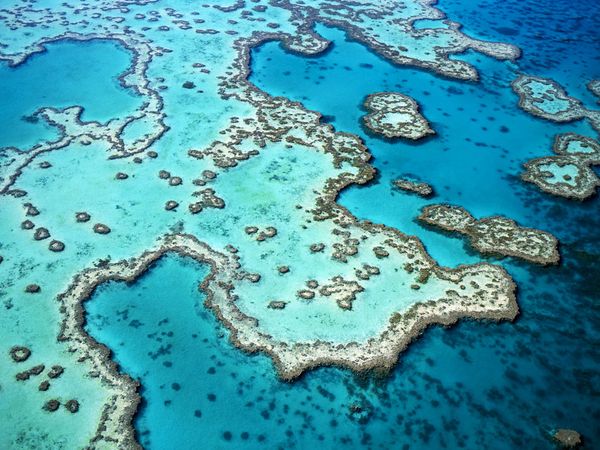
The Great Barrier Reef World Heritage Area covers an area of 348,000 square kilometres and more than 2300 kilometres long

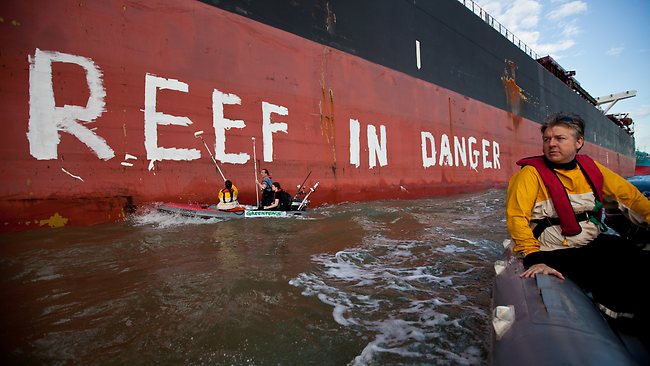
Green activists are expecting to hear the results of investigation on the Great Barrier Reef conducted by the joint mission of the UNESCO World Heritage Centre (WHC) and the International Union for Conservation of Nature (IUCN). The experts visited Australia from March 4-14 to probe into the current park’s environmental conditions, including alleged man-made threats posed by seam gas exploration projects.

The Greenpeace is nearly completing a signup campaign of 15,000 people while GetUp! intensifies it drive to gather a strong 75,000 strong petition to stop developmental aggressions.

“Imagine if the Pyramids were being bulldozed or the Grand Canyon mined – the global community would be furious,” GetUp!, a major environmental activists, said  in an email loop.

GetUp! is trying to construct a simile to compare these World Heritage sites to Australia’s Great Barrier Reef.

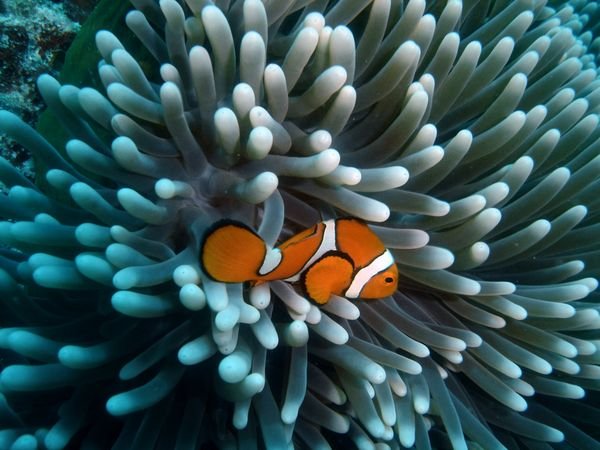
Beautiful marine lives under threat (Photo: National Geographic)

Earlier, the UN team has already warned the Great Barrier Reef is posed “to die a thousand cuts” with various threats including growing population, mining boom, and gas explorations.  The team also intended to re-assess the overall outstanding value of the reefs.

The Australian committee of the IUCN has warned of a tenfold increase in shipping on the World Heritage Site associated with existing and proposed port development projects. Much of it will be going through channels within a marine park far narrower than the English Channel, the Crickey claimed.

The Gladstone Ports Corporation (GPC) approved the project in 2011 allowing  private contractors “to dredge 46 million cubic metres from within the harbour boundaries,  inside the World Heritage area, over the next 20 years…a volume equivalent to 27 Melbourne Cricket Grounds,” GetUp! argued.

Greenpeace welcomes underwater investigation

 News reports claimed the Federal Government and the Queensland State Government approved the project amid strong protests from local residents. Further, they said the United Nations which holds custody to the Heritage Park was not consulted on the project which is a breach of World Heritage guidelines.

A private law firm for Gladstone commercial fishing businesses warned that the Western Basin Dredging and Disposal Project has significant long term environmental impacts on a national scale.

Ridiculous as it may sound, but the lawyer’s group said the massive dredging activities occurs 24 hours per day, 7 days per week, for about 18 months.  It is estimated that 42,300,000 cubic metres of material is to be dredged over the construction phase which cause turbidity plumes in the Port area. Contaminants are also speculated to spread in the Port area which can destroy the Port’s ecosystems.

The lawyers estimated that dredging will cause the direct loss of around 902 ha of benthic habitat (including 258.8 ha of seagrasses).  An additional 5416 ha of benthic habitat (including 1406 ha of seagrasses) may be indirectly lost in the short to medium term. In summary, the group said close to 1,700 hectares of seagrass will likely be lost and 6,300 hectares of benthic habitat likely to be lost.   There are additional obstructions of the northern Western Basin due to construction and increased vessel traffic, including massive dredges may impede the migratory pathways of marine fauna using The Narrows and the entire Port Curtis region, the lawyers claimed.

Greenpeace intensifies on-site campaign

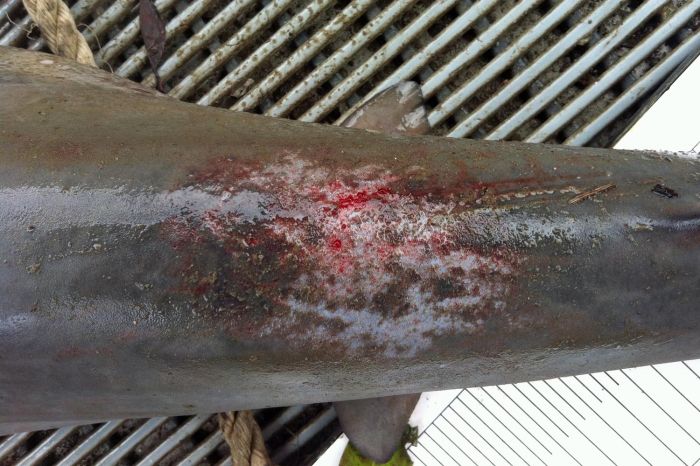
In 2011, a three-week fishing ban was imposed around the Gladstone area after sightings of fishes infected by unknown disease. Barramundi, for instance, were reported to have suffered from ‘sore’ and ‘cloudy’ eyes, while other fish appeared deformed and had bruises

The project is a partnership venture between Santos, Petronas, Total, and KOGAS. Santos is Australia’s largest domestic gas producer while PETRONAS is Malaysia’s national oil and gas company and the second largest LNG producer in the world. French energy major, Total, on the other hand, is the world’s fifth largest publicly traded integrated international oil and gas company; and South Korea’s KOGAS is the world’s largest buyer of LNG.

The partners announced the Gladstone Liquified Natural Gas (GLNG) project creates more than 5000 jobs during construction and about 1000 ongoing positions in the operational phase. They added that the project stimulates businesses and employment opportunities in the Gladstone and Roma regions through increased demand for goods and services.

Santos builds a LNG export facility in Gladstone for commercialised QLD seam gas resources. The facility is expected to  produce 3-4 million tonnes per annum (Mtpa) of LNG with future potential expansion to nominal 10 Mpta. The project is consists of CSG field development; gas transmission pipeline construction; and LNG liquefaction and export facility development.

The facility – built on Curtis Island (Hamilton Point area) – is close to the industrial deepwater port of Gladstone. The Project sources gas from Santos CSG fields around the Comet Ridge and Roma project areas, with gas being transported to the Gladstone LNG facility via subsurface 425 km gas transmission pipeline. Santos is planned to drill and complete the development wells to supply 53000 petajoules (PJ) (140 billion3) of CSG to the proposed LNG facility. There are about 600 wells to be dug prior to 2015 and 1400 or more wells after 2015 (excluding exploration wells). Installation of related infrastructures are constructed including access roads, accommodation camps, water gathering networks, water management facilities, in-field gas gathering networks (to transport gas from the wells to the field compression stations, gas compression stations and pipeline compressor stations).

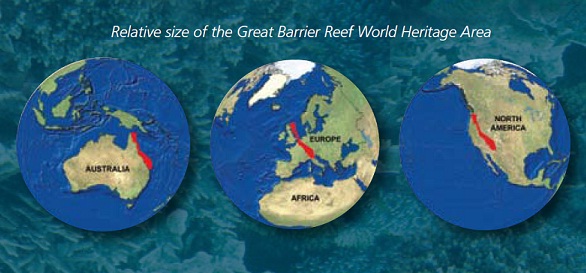
A comparative size on the Great Barrier Reef

The gas transmission corridor is 425 km long underground gas transmission pipeline corridor will accommodate one or more pipelines for the delivery of fas from the CSG resouces to the facilty. Transmission pipelines nominal diametere 650-800 mm.

The Great Barrier Reef World Heritage Area covers an area of 348,000 square kilometres — the equivalent size of Italy or Japan, more than 2300 kilometres long. It extends to the low water mark on the mainland coast along northern Australia. It Includes more than 3000 separate coral reefs, some 900 islands and all the waters within the outer boundaries of the Marine Park.

It is designated as national park in 1975 and listed in the UNESCO world heritage list for its invaluable in 1981

The UN report will be presented to the World Heritage Committee in June, which will then decide whether to list the reef as a World Heritage Site in Danger.

News Link: Asian Correspondent

Australia’s largest living treasure at risk

Forgive the few seconds of ad. This is the most spectacular video shot I have ever found on Australia’s largest living structure– the Great Barrier Reef– which spans more than 1,200 miles (2,000 km) of islands and submerged reefs.

It is a massive water kingdom containing thousands of marine species. It became a national park in 1975 and after six years, it was named as UNESCO’s World Heritage Site. About 33 percent of the area is banned from fishing.

But this heritage site has been at risk — not with natural causes such as climate change but threatened by man-made disaster. Gas exploration and dedging on the sea floor has been going on.

A team from the UNESCO has embarked on a mission to Australia this week to re-assess the outstanding value of the Great Barrier Reef.

Stay tuned for more updates!