Unknown's avatar

About rowenadelarosayoon

Communications strategist encompassing a broad scope of print and online journalism, public relations, marketing, campaign and developmental writing, research, website planning, social media strategy, and all related areas.

Gillard fights offshore, onshore human smuggling

As of this writing, Prime Minister Julia Gillard has negotiated a deal with New Zealand for the intake of 150 asylum seekers a year from Australia. This is insane. The Gillard Government cannot face its responsibility and passing it on to third parties, including Malaysia, Indonesia, Nauru, Manus, and now New Zealand. Why not simply revoke the commitment made to the 1951 UN Convention on Refugees and admit Australia does not want to take them?The Green Journo reiterates that neither Pacific Solution Mark 2 nor Kiwi Deal can stop human smuggling.

Reposting yesterday’s blog entry:

Prime Minister Julia Gillard will stand by the advice of the Expert Panel on Asylum Seekers to enforce Pacific Solution Mark 2 as a way to deter people smuggling.

The solution, which took effect in September last year, sends a clear message to people who are arriving by boat: No advantage. They will to be locked up in the tent city of  Nauru or Manus in the Pacific.

Boat people are assigned to live in these tents in Manus or Nauru. (Photo: DIAC)

ABC’s Lateline on Tuesday aired a testimony of Marriane Evers on the deplorable conditions endured by asylum seekers in Manus. Evers is a trained counsellor and a veteran nurse with more than 40 years experience. She signed up to work in Manus but quitted on the third week.

Nauru is like a concentration camp, she said, except that the Australian Government has not exterminated the detainees. The asylum seekers instead resort to self-harm, while others have turned suicidal.

New Matilda also published open letters of asylum seekers in Manus providing minute details of their harrowing experiences.

Human rights activists stage a rally at the DIAC building in Melbourne. (Photo: R. Yoon/ The Green Journo)

Human rights activists took the streets in October-November following a prolonged hunger strike of detainees in Nauru. Several groups staged protests nationwide to lambast the return of Pacific Solution Mark 2, which violates human rights. This also underscores Australia’s inability to meet its obligation under the 1951 UN Convention on Refugees.

Australian Parliament admits the number of unauthorized people arriving by boat is small compared to the numbers arriving in other parts of the world, like the USA, Canada and Europe.

The Refugee Action Coalition Sydney said:

It would take 20 years to fill the MCG with the number of refugees who come to Australia. The United Nations Refugee Agency, the UNHCR, estimates that there were 10.4 million refugees worldwide at the start of 2011. In 2010–2011, Australia’s refugee intake was just 13,799 people, less than 0.14%. Australia was one of the only countries in the world to have fewer refugee claims in the first half of 2011. In those six months alone, the USA received 36,400 applications for asylum; France 26,100 and Germany 20,100.

The Coalition added most new migrants in Australia are not refugees. Latest statistics available shows that boat arrivals constituted less than two percent of Australia’s total migration program and much less than one percent of the increase to the Australian population by birth and migration in a given year.

The Government turns frantic every time a boat is spotted heading towards Christmas Island. It accuses asylum seekers who arrive by boat of being queue jumpers, an accusation that human rights organisations reject.

Can Pacific Solution Mark 2 effectively deter human smuggling?

The answer is no. While the Gillard Government has given much attention to offshore smugglers, it misses the large-scale operation of onshore smugglers who are bringing more people into Australia.

Onshore human smugglers are underground intermediaries who are luring people offshore to come to Australia– with promises of jobs, better education, and excellent living conditions, among other promises of a “dream destination.”

These intermediaries are linked to a complex chain of networks such as those arranging sham marriages, forged English-language exams, bogus courses, and other immigration rackets. The DIAC have found these are often involved in various frauds such as taxation and welfare, breaches of industrial, health and safety laws and other unlawful conduct.

Student visas are reported to be the most common form of visa and it is being exploited to smuggle people into Australia via a network of unscrupulous migration and education agents, landlords and employers. Students are promised to get a visa as a launching pad to get into Australia.

The Australian interviewed Tony Pollock, the chief executive of IDP Education Australia, the main recruiter for Australia’s $16 billion industry in foreign students. Pollock described the operation as a “chain of exploitation” which “could be construed as people-smuggling.”

The Herald Sun reported hundred of international students are buying the right to live in Australia by paying criminals for fake work references in a racket worth millions.

The massive scam, based in Melbourne and involving local restaurant and small business owners, has been described by officials as “an organised and lucrative criminal enterprise

In August last year, the Department of Immigration and Citizenship (DIAC) announced the Migration Amendment (Reform of Employer Sanctions) Bill 2012 which sets out the penalties for employers hiring illegal workers. This amendment bill opened a can of worms exposing the extent of onshore people smuggling. The number of illegal migrants could now be over 100,000.

Stephen Howell who led the review of the bill suggests that non-citizens working in Australia has been growing since 1998. These people do not have permission to stay and work and their presence is very often organised by intermediaries who exploit their legal status.

As part of the strategy to encourage compliance, DIAC has planned to ramp up an awareness campaign and help employers to gain access to information about prospective employees’ visa work status.

Is DIAC ready to launch a crackdown after announcing the bill?

Eye witnesses to a big-time smuggling operation, who requested anonymity, said DIAC is not interested in doing a crackdown. Underground operations in the suburbs of Sydney and Melbourne, for example, appear to be insignificant. These agents ran immigration-related businesses, including an English-testing system to bridge the requirements in fixing illegal statuses of migrants and their families.

While people who arrived by boat languish to death in the Pacific islands, people who made it onshore en route the aid of well-connected agents continue to multiply and flourish– degrading the integrity of Australia’s immigration system.

Activism against offshore processing at the DIAC, Melbourne. (Photo: R. Yoon/The Green Journo)

Demonstration at the DIAC building Melbourne. (Photo: R. Yoon/The Green Journo)

Kimberley’s sacred sites destroyed for a large-scale gas venture

Western Australia is one of the last remaining frontiers of the Indigenous Australians. Series of land grabs pushed them to this territory. But now, even their ancestral graveyards have to go.

Western Australian Indigenous Affairs Minister Peter Collier approved Woodside Petroleum to start bulldozing Aboriginal heritage sites, including the sand dunes area at James Price Point, in order to give way to a $30-40 billion  LNG project. Below the sand dunes are the remains and fossils of Aboriginal ancestors.

The company stopped working in sand dunes last year pending application of a clearance under the Heritage Act. The clearance would allow holders to work at sites registered by local Aboriginal people. The lack of earlier approvals underpinned protesters’ claims the project is illegal.

The State Government fancies this sacred land to emerge as the “Saudi Arabia of Gas,” the world’s largest gas hub. And this could be the ultimate act of Aboriginal dispossession.

Tracks on James Price Point (Photo: Kimberley Media)

James Price Point, originally named Walmadany, is located at the apex of the Lurujarri Heritage trail, the sacred place where several of the revered Goolarabooloo and Jabirr Jabirr men and women were buried, including the highly respected traditional custodian Walmadany.

Woodside claims a Native Title Agreement was executed on 30 June 2011 to enable the establishment of the Browse LNG Precinct near James Price Point, 60 km north of Broome. The Indigenous people, however, said the agreement was based on fraud.

When the Colin Barnett Government approved the multi-billion gas project, the Traditional Owner Taskforce (TOTF) was not consulted. The TOTF drew on the best practices in traditional governance and decision-making structures. It incorporates procedures in contemporary meeting, decision-making and information transfer practices to “create a unique, culturally appropriate, consistent and comprehensive consultation and engagement process.” (p.41)

Protests continue to oppose the gas hub. (Photo: nationalunitygovernment.org)

The principle of Indigenous Free Prior Informed Consent (IFPIC) was ignored. It also reinforces the decision of West Australian Supreme Court Chief Justice Martin that the process of compulsorily acquiring land from Goolarabooloo and Jabirr Jabirr traditional owners was unlawful.

The Wilderness Society said allowing Woodside to start work in the sand dunes at James Price Point is like sanctioning the bulldozing of St George’s Cathedral in Perth or St Mary’s Cathedral in Sydney and all of the grave sites associated with these religious institutions.

The Society joins the Traditional Custodians in condemning the approval of Woodside’s request to enter and destroy thousands of years of Indigenous Heritage in the area to pursue its proposed gas processing complex.

Wilderness Society WA Campaign Manager Peter Robertson said,

This approval by the Minister for Indigenous Affairs yet again demonstrates the willingness of the WA Government to put unnecessary and unwanted development ahead of the people of the region and the values of the community. We call on the other Browse joint-venture partners to make it clear whether they support the destruction of these ancient burial grounds.

He added it is worth noting that the proponent for the James Price Point gas processing complex is Premier Colin Barnett in his role as Minister for State Development, and that Indigenous Affairs Minister Peter Collier is also the Minister for Energy.

Heritage trail in Broome, WA (Photo: Kimberley Media)

The Society further accused the Government of  incompetence and multiple conflicts of interest in pursuing the project from its botched attempts at compulsory acquisition through to the environmental approval process and now the approval for Woodside to destroy sand dunes of the highest cultural and religious significance.

James Price Point is one of the fiercest battlegrounds between the Indigenous people and the Australian Government in contemporary times. With the support of the local communities, Green and civic groups, the Indigenous people are fighting to protect the “Law Below the Top Soil” – the law handed down from many generations to another that governs their ancestral rights.

Barricades, clashes between police and civilians, and arrests are expected to continue in the course of the project.

“I can feel the pain coming through this ground. This country is screaming from hurt.” –Albert Wiggan’s powerful monologue from OLD COUNTRY NEW COUNTRY on Woodside Energy’s proposed gas plant at James Price Point.

Blog Link: Asian Correspondent

The Silent Victims of Bushfires

Australian summer is the peak season of bushfires. The CSIRO, a leading scientific body, said bushfire is a natural phenomenon no less than the sun and rain, and it occurs frequently all-year-round. When the mercury hits over 40 degrees Celsius (140 F), heat ignites wildfires that spread extensively engulfing farms, forests,  and communities,  including sanctuaries of wildlife. While many animals can survive, bushfires put pressure on many species to the verge of extinction. Plant and trees, however, have more power to regenerate.

A kangaroo hops through a burnt paddock in Melbourne West. (Photo: AAP)

Fire authorities across states have issued fire warnings , maps, and  precautions. Three states were under red alert early this week: Tasmania, New South Wales, and Victoria.  But temperatures dipped on Wednesday easing total the fire ban in threatened areas.

Fire brigades, community workers, and volunteers help in rescue operations while authorities assess the extent of damage.

Beyond the ashes are the silent victims of the catastrophe–  animals and endangered species.

The past bushfires had left many animals dead, their habitats destroyed. In Victoria, among the endangered species are the state bird emblem, the Helmeted Honeyeater and Leadbeaters Possums. According to Zoo Victoria, the Healesville Sanctuary is still reeling from the effects of Black Saturday in 2009. The Sanctuary itself was under threat and many animals were evacuated. The Vet team worked around the clock treating fire- affected animals in the wildlife hospital and in rescue centres in the community.

Threatened by bushfires (Photo: Supplied)

In Western Australia, many species of native animals and birds are feared to have been completely wiped out, according to Australian Geographic. Conservationists and animal carers note that populations of highly endangered possums, black cockatoos and other native species may now be locally extinct in the Margaret River, Nannup and Augusta regions. About 90 percent of wildlife in these areas are already presumed extinct.

Another endangered bird is the Red-tailed black cockatoo especially those the endangered Baudin’s red-tailed black cockatoos which are only found WA’s southwest. The number is estimated to be less than 10,000.

The ground parrot used to be a common bird seen in Australia, but the specie is disappearing. (Photo: Supplied)

The Wilderness Society has listed top five endangered species which could become extinct in the coming few years. These species are considered the most threatened by the fires: the Leadbeater’s Possum, Sooty Owl, Barred Galaxias, Ground Parrot. and Spotted Tree Frog.

Bushfires are wiping out the Spotted Tree Frog. (Photo: Supplied)

Koalas, kangaroos, sheep, and cattle are not spared from pain and suffering. The Department of Environment and Sustainability works with qualified and experienced wildlife care organisations and rehabilitators to assist with the recovery, treatment, rehabilitation and release of wildlife affected by fire.

This photo of CFA firefighter David Tree and Sam the koala became a bushfire icon of the Black Saturday in 2009. (Photo:Reuters)

Mobile animals, such as birds, kangaroos and wallabies, may be able to move out of burning areas to safer grounds. Other wildlife can take refuge underground, in tree hollows and logs, unburnt patches of vegetation, wet gullies, rocky areas and on leeward slopes.

Many perish in the fires while some badly burnt animals await DSE ‘s advice for their immediate ‘destuction’. Survivors are treated in vet clinics.

Plant species usually regenerate a few seasons after a bushfire. From the charred tree trunks and ashes from the earth, new life re-emerge–more resilent to face the evolutionary changes in the environment.

Many plant species resprout from protected buds, at or below ground level, and many others regenerate from soil-stored seed even if the adult plants were killed by the fires.

A wildfire near Deans Gap, New South Wales, Australia, crosses the Princes Highway. Pic: AP.

Links to Animal Rescue:

Department of Environment and Sustainability

Wildlife Victoria

Blog Link : Asian Correspondent

Transfer of power to State poses threat to environment

This might be a good news for Santos, Chevron, Woodside, Shell, BHP Billiton, ExxonMobil, Origin, Ta Ann—name it—and all those other giants engaged in the business of “exploiting” Australia’s natural resources. They will have more freedom to dig and rig, build dams, or haul native logs—if the power to enforce environmental laws will be transferred from the Federal Government to the State Government.

Undated photo shows BHP Billiton running this machine at Mt Newman mine in Western Australia. (AP Photo/BHP Billiton,HO)

The Council of Australian Governments earlier this year agreed to reform controversial environmental laws. It proposes changes that would give states autonomy to take control over local environmental laws.

The Environment Protection and Biodiversity Conservation Act 1999 (EPBC Act)  administered by the Department of the Environment, Water, Heritage and the Arts covers the assessment and approval process of national environmental and cultural concerns. It also administers specific Acts that oversee activities relating to marine resources, importing, heritage issues, hazardous waste, and fuel quality.

State and territory environment laws apply to specific business activities and are administered by both state and local governments in the form of licences and permits.

The plan to hand over control of national environmental powers to state and territory governments has outraged the Greens. Last month, an alliance of more than 35 environmental organisations sent more than 10,000 petition signatures to Environment Minister Tony Burke to oppose the proposals.

The Wilderness Society of Australia warned that without Federal powers to override the states, places of high conservation values would be exposed to exploitation. This is the case of the Great Barrier Reef, the Franklin River, the Daintree Rainforest and Fraser Island, for example. If left to the State Government, they would have been destroyed, the group said.

The Australian Conservation Foundation (ACF) notes that in the past, under the national environment law, the Federal Government has been able to save  the Great Barrier Reef from State Government plans to allow oil rigs.

However, the reef is still at risk from climate change, catchment run-off, coastal developments and shipping. Recent reports show it has lost 50 per cent of its coral cover since 1985.


Protestors at Franklin Dam site in 1982. In 1978, the Tasmanian Hydro-Electric Commission announced plan to build Franklin Dam, but failed. In 1982, the Federal Government declared the area as a World Heritage Site. (Photo: Tasmania Wilderness Society/National Archive of Australia)

Lonergan Research poll in November said the vast majority of Australians, about 85 per cent, believe the Federal Government should be able to block or make changes to major projects that could damage the environment.

Last week, the plan sounded to have been resolved. The Wilderness Society thought it could sit back and relax—at least for now. In a press release dated 7 December, the Society said the Federal Government has saved business and environmental organisations from a legislative and litigation nightmare by not handing over environmental approval powers to the states.

Wilderness Society National Director Lyndon Schneiders noted, “The business community has avoided a train wreck. The Federal Government seems to have recognised that our environment is essential to our national interest.”

Now is the time to put in place a robust system that guarantees the highest level protection of areas of national and international significance and for the Federal Government to continue to be the guardians of those values.

Greenpeace flashes a banner to support a UN team dispatched to assess the Great Barrier Reef in early 2012.

However, the ACF today pushed the red button: “Our federal environment laws – the last resort of protection for our precious places and species – are under attack.” Despite a concerted campaign of environmental organisations, the Council of Australian Governments (COAG) will put the plan on hold till next April, Chief Executive Office Don Henry said in a statement circulated by email. ACF Director of Strategic Ideas Charles Berger also noted, “the plan is not completely off the table and big business is bound to push the government to reconsider.”

You can bet big business will be pushing these changes, which would make it easier for developers and miners to irreparably damage reefs, wetlands and heritage areas by taking away the national layer of scrutiny and review.

So the fight to pressure politicians not to allow businesses to exploit the environment is expected to go on until the Government will “dump this reckless idea for good, “ the ACF said.

Blog Link: Asian Correspondent

Hydro Tasmania called to pull out of Sarawak

Trouble never ends in this tiny bit of island, south of mainland Australia. If you don’t know Tasmania, you probably need to watch Hollywood blockbuster, The Hunter, to get a clue. Tasmania covers a pristine wilderness where exploiters could miraculously disappear and would never come back alive. Of course, this is an exaggeration.

Protestors at Hydro Tasmania daming it involvement in Sarawak (Photo: Sarawak Report/ FB)

However, there is an interesting turn of events. The trouble is not about the local Green groups accusing Forestry Tasmania, Ta Ann or the Gunns Ltd. of Tasmania’s forest destruction. Instead, the state-owned dam builder, Hydro Tasmania, is implicated in a colossal environmental threat in the Province of Sarawak on the island of Borneo in Malaysia.

Hydro Energy is commissioned to “provide technical support” to Sarawak Energy who is currently building the multi-billion dollar Sarawak Corridor of Renewable Energy (SCORE).  The project involves 12 highly controversial dams projected to produce 28,000 MW of power.

Local and international indigenous groups and communities denounced the project saying the dams will “flood huge swathes of the Borneo Jungle and destroy the lives of tens of thousands of indigenous people along with their cultures.” Exodus of people have begun.

The Sarawak Report said Sarawak Energy has a link to the Ta Ann Group– also maliciously imputed in the crime of exploiting Tasmanian forests and the jungle of Borneo. They are said to have a close link with the Tasmanian government, the report adds.

Both Sarawak Energy and Ta Ann have the same Chairman in Hamed Sepawi, the cousin and close ally of Sarawak Chief Minister, Taib Mahmud, who exercises an iron grip over this notoriously corrupted East Malaysia state.

The Borneo Project, a forerunner of environmental campaigns in Sarawak said Sarawak Energy is “not consulting with communities in good faith, and is not getting the Free, Prior, and Informed Consent of the affected communities.”

There is an overall lack of transparency; Sarawak Energy is not sharing their environmental or social impact assessments, feasibility studies, and resettlement plans. Meager compensation benefits will force communities into poverty.

International civic organisation have thrown support to condemn the dams. Groups include the Borneo Project (USA), the Bruno Manser Fund (Switzerland), the Rainforest Action Network (USA), International Rivers (USA), the Rainforest Foundation Norway and the Sarawak Report (UK), and many more.

Save Rivers Network stage a protest against the dams (Photo: Save Rivers Network)

These groups demand that the Federal Government of Australia and the State Government of Tasmania to live up to their commitments to protect indigenous rights and the environment. They asked Tasmania Premiere Lara Giddings  to immediately pull Hydro Tasmania and all its subsidiaries out of Sarawak. Read their petition to Giddings HERE.

These groups said that despite Australian Government’s commitments to indigenous rights, Hydro Tasmania shares responsibility for the destruction of Sarawak communities. They also demand that the Tasmanian government severe all ties with Sarawak Energy and take a stand for environmental conservation and indigenous rights. Sarawak is home to over 40 indigenous communities, as well as many vanishing  species, including the orangutan. Conservationists said the proposed dams threaten to destroy some the last remaining rainforests in Borneo.

Sarawak Delegates visit Canberra (Photo: Sarawak Report/FB)

The Australian Greens have joined the activism and have launched a national campaign in November calling for the withdrawal of Hydro Tasmania and the Tasmanian Government from the controversial project.

Australian Greens Leader Senator Christine Milne and Lee Rhiannon said Hydro Tasmania cannot walk away from their responsibility for the damage these dams will cause to thousands of villagers in Sarawak. Milne said “Hydro Tasmania continues to supply staff and technical expertise to push these projects along despite a growing campaign in Sarawak against the dams. I am calling on Hydro Tasmania to walk away from this destructive project.”

In other development, delegates from Sarawak arrived in Australia to have dialogues with Hydro Tasmania and local officials.

Indigenous leaders from the Sarawak met with Hydro Tasmania’s CEO Roy Adair in Launceston and Tasmania’s Deputy Premier Bryan Green. The final public event will be held in Hobart on December at the Republic Bar in North Hobart at 7 pm.

Sarawak delegates flash a banner denouncing Hydro Tasmania in Sydney (Photo: Sarawak Report/FB)

Peter Kallang, chairman of the Save Rivers group of Sarawak Indigenous leaders and James Nyurang, village headman from the Baram River Region, joined the Australian tour and called on Hydro Tasmania to pull their support out of controversial dams.

Adam Burling, spokesperson for the Save Sarawak Rivers Tour said,

Meeting with the CEO of Hydro Tasmania has meant that the people of Sarawak could directly request Hydro Tasmania to withdraw from the controversial dam projects.  Hydro Tasmania continues to supply staff and technical expertise to push these projects along despite a growing campaign in Sarawak against the dams, and deplorable human rights violations.

Kallang added Australians need to know Hydro Tasmania is involved in massive dam proposals that stand to affect up to 20,000 people who live along the Baram River in Sarawak.


Anti-Hydro Tasmanian protest in Melbourne (Photo: Sarawak Report/FB)

Nyurang said, “If the dams go ahead I will lose my home, my land. I have no idea where my family will be moved to or how we will make our livelihood.

Hydro Tasmania’s involvement in Sarawak will help to flood thousands of hectares of land belonging to the indigenous peoples of Sarawak. This will spell the end of our heritage, our means of livelihood, custom and culture. We will not stand by while our homes, our rice fields, our fruit trees go under water, James Nyurang said.

Sites of 12 controversial dams in Sarawak (Photo. Borneo Project)

Sites of 12 controversial dams in Sarawak (Photo. Borneo Project)

The delegates will continue to have public events in Sydney, Canberra, Melbourne, and Launceston.  They met some members of the Parliament in both Upper and Lower Houses, including Victorian and New South Wales members from the Australian Greens. Watch the press conference HERE.

Blog Link: Asian Correspondent

Greenies win for the world’s largest marine sanctuary

It does not happen quite often for the greenies to celebrate. But today, there is reason for euphoria and optimism as the Federal Government breaks the news of making Australia’s vast stretch of seas and oceans as a national reserve.

The whale shark, white shark, humpback whale, and other world’s largest fish inhabit the North-west and South-east regions. (Photo: Supplied)

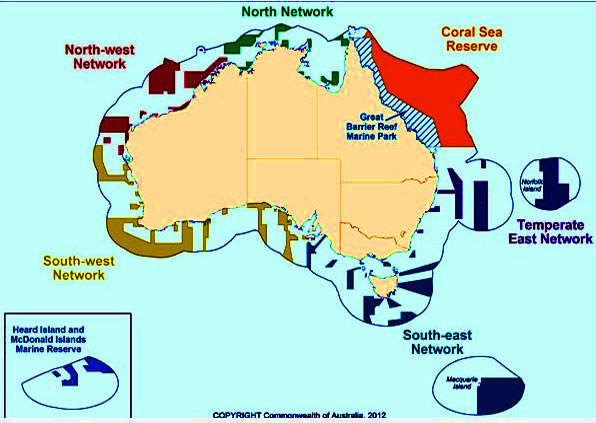
Environment Minister Tony Burke said more than 2.3 million square kilometres of ocean environment will be declared as a national marine reserve networks– a historic win since the plan was incubated a decade ago. This plan will position Australian waters to be the world’s largest marine sanctuary.

Minister Burke will soon forward his recommendations to the Governor General. He said “Australia is a world leader when it comes to protecting our oceans, and so we should be, we’ve got responsibility for more of the ocean than almost any other country on Earth.”

The World Wildlife Foundation (WWF), a leading environmental advocacy group, likewise, said people’s power made this development possible with 450,000 made submissions to Minister Burke.

Elizabeth and Middleton Reefs in the Temperate East Network are home to the critically endangered east coast population of grey nurse shark and the vulnerable white shark. (Photo: Australian Government)

“We look forward to the Government bedding down final management arrangements for the new marine parks as soon as possible, so that all Australians can begin to enjoy the benefits that marine protection will deliver now and into the future,” WFF Marine Campaigner Jenita Enevoldsen said.

A June poll showed that 70 per cent of Australians supported the government’s marine reserves plan ‑ the most decision the government has made. This project started in early 2000’s under a series of comprehensive community consultations, deliberations and science-based region planning.

“These final lines on maps around our sea country cover and protect a wide range of important habitats including coral reefs, seagrass beds, sponge gardens and hundreds of threatened species of whales, sharks, dolphins, turtles, sea lions and sea dragons,” Enevoldsen said.

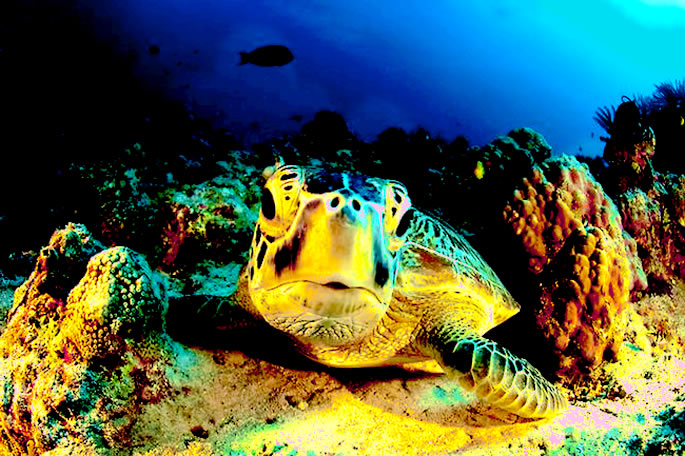
Giant Green Turtle in the Coral Sea on Queensland. (Photo: Supplied)

Giant Green Turtle in the Coral Sea on Queensland. (Photo: Supplied)

Australia’s oceans is the home to many of the world’s endangered marine animals including the Green Turtle, the Blue Whale, the Southern Right Whale, the Australian Sea Lion and the whale shark.

While it is a big win for conservationists, the marine sanctuary means commerical and industrial activities around the area will be limited, including recreation, commercial fishing, and gas exploration ventures.

However, the Government recognises that there will be impacts on some fishers and it will support those who are affected

A national marine reserve will include the vast stretch of the continent. (Photo: Australian Government)

New marine reserves have been proclaimed in five of Australia’s six large marine regions. The reserves in the South-east region were proclaimed in 2007.

Blog Link: Asian Correspondent

Don’t mine the the Reef!

From Greenpeace:

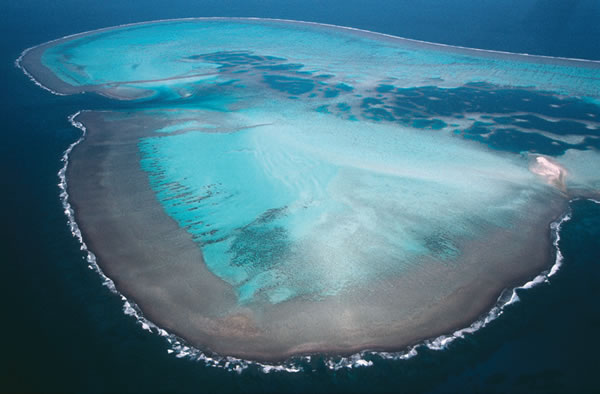
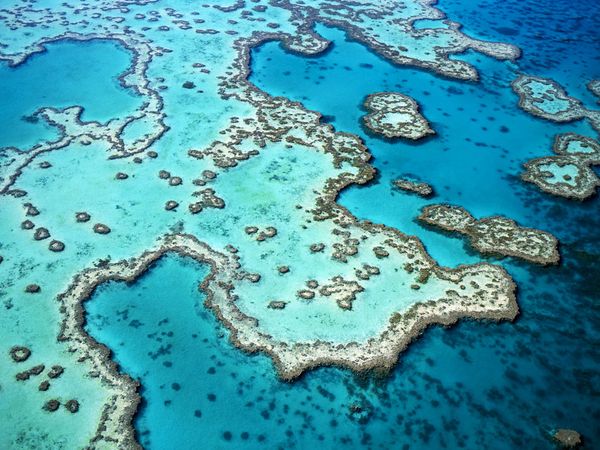
The Great Barrier Reef World Heritage Area covers an area of 348,000 square kilometres and more than 2300 kilometres long

Who has heard of the Galilee Basin? Virtually no one. That is the problem.

We are witnessing one of Australia’s biggest environmental emergencies unfold but it is taking place out of the public eye. And it threatens one of the world’s greatest natural treasures – the Great Barrier Reef.

Watch the video HERE

The Great Barrier Reef is on the brink of being turned into an industrial zone, with huge new coal ports and shipping routes waiting to be approved. These developments are the result of plans to rapidly increase Australia’s coal exports. The coal will be mined in Queensland’s Galilee Basin and shipped overseas via the Great Barrier Reef.

Beautiful marine lives under threat (Photo: National Geographic)

A new Greenpeace investigation has revealed the damage the coal mines could have if they go ahead. The Galilee Basin mines threaten our World Heritage Reef, as well as the stability of our climate, the health of our water supply and the habitat of native wildlife.

Let our politicians know you don’t want our environment sacrificed 
- SIGN PETITION

Australia’s biggest contribution to global warming is our coal exports. As plans progress to rapidly increase our coal exports, just yesterday the Arctic ice sheet melted to its lowest point on record; the result of an increasingly warming climate.

Greenpeace’s investigative findings:

•There are nine mega coal mines proposed here, five of which would be bigger than any mine currently operating in Australia.

•If the coal from the Galilee mines is burned, it would produce over 700 million tonnes of carbon pollution a year – that’s bigger than the entire fossil fuel emissions of Australia, the UK or Canada.

•These mines are the single biggest driver of industrialising the Great Barrier Reef. A series of coal ports are planned to be built and expanded, millions of tonnes of sea floor will be dredged and up to 10 000 coal ships will travel through World Heritage Area.

•If we don’t reduce our emissions, sea temperatures will rise. If they rise by 2-3°C it would result in the annual bleaching of over 97% of the Reef. There is a growing movement of people taking action in this epic struggle to safeguard our precious Reef and the stability of our climate.

Greenpeace welcomes underwater investigation

Please join us by signing the ‘Save our Reef’ petition now.

Greens join forces to save the Tarkine

The Wilderness Society, Tarkine National Coalition, and GetUp! joined forces in the campaign to protest the “out-of-control” mining ventures in the Tarkine in Tasmania and push for its enlistment in the World Heritage Site.

Convoluted rocks at the west coast off Tarkine. (Photo: Flickr)

Massive banners in front of a proposed Venture Minerals’ open cut mine in the Meredith Ranges have been unveiled as part of the Tarkine wilderness. Tarkine is claimed to have been recently assessed by the Commonwealth and Tasmanian Governments to have a national and World Heritage values prompting strong community oppositions to any developmental aggression.

Here’s from the campaigners:

Liz Johnstone, Tarkine campaigner for The Wilderness Society, said many of these values, however, are under threat from new open cut mines. Some are proposed in existing conservation reserves that have been watered down to allow mining and exploration.

Venture and a range of other companies have plans to build strip and open cut mines in the region, ahead of the findings of an Australian Heritage Commission assessment of the environmental significance of the area.

Miners, Australian Workers Union join forces to support mining in the Tarkine. (Photo: ABC)

Paul Oosting, campaign director for GetUp, said the Tarkine has evolved over 40 million years to be what is now one of the few last remaining wild places on the face of the planet, yet Venture Minerals wants to go into what is currently a conservation area and strip mine it for just 2-8 years.

“Today we have seen the Tasmanian community stand up and take action to not let this happen and we know that they have the support of people from around the country who want to see this area properly protected,” Oosting said.

Vica Bayley, campaign manager for Wilderness Society Tasmania, said that the event signals an escalation of the community campaign and a counter to the provocative actions of the Australian Workers Union and the mining industry who are pre-empting the current national heritage assessment and pushing ahead with risky mining proposals.

“The AWU, the mining lobby and companies need to back off and allow due process and the heritage assessment to conclude before locking in destructive proposals that threaten the values of the area and impact on the heritage listing that previous assessments prove this region deserves,” Bayley said.

GetUp’s “Save the Tarkine” campaign

The action before Monday’s (24 Sept) Extraordinary General Meeting of Venture Minerals’ shareholders in Perth, where a decision will be made on capital raising needed to kick start its mines in the Tarkine. “The company, its shareholders and financial backers must realise that mining World Heritage value wilderness is a risk not only to the environment, but also to their investment,” Bayley said.

More info about this campaign: Tarkine National CoalitionWilderness Society Tasmania, GetUp!

Tasmanian Premiere Lara Gidding maintains that the Tarkine is insignificant, with mining representing only one per cent of the region.

Blog Link: Asian Correspondent

Gay marriage faces an uphill battle

Legalising same sex marriage faces a big hurdle in Parliament taking into consideration the big divide in Australian society at the crossroad of conservatism and change.

More than 3,000 advoccates of gender equality march into the Victorian Parliament House to protest the 8-year ban on marriage equality. (Photo: Equal Love)

Debates on marriage equality resumed Tuesday with deliberation that went overnight through Wednesday. At noon, Marriage Amendment Bill 2012 sponsored by Labor’s Stephen Jones was defeated, 42-98, at the Lower House. Both Prime Minister Julia Gillard and Opposition Leader Tony Abott voted against the bill.  See AAP’s report who voted for and against HERE.

Four bills are before the federal Parliament – the Marriage Amendment Bill 2012, the Marriage Amendment Bill (No.2) 2012, the Marriage Equality Amendment Bill 2012 and the Marriage Equality Amendment Bill 2010.

Senator Penny Wong with partner Sophie Allouache and baby daughter Alexandra. (Photo: The National Times)

The bills seek to amend the Marriage Act 1961 allowing same-sex marriages to be recognised while placing no obligation on a minister of religion to solemnise a same-sex marriage. The Marriage Amendment Bill 2012 is sponsored by Adam Brandt from the Australian Greens and Andrew Wilkie, an Independent representative from Denison, Tasmania. The proposed amendment suggests to remove discriminatory references based on sexual orientation and gender identity and to allow marriage regardless of sex, sexual orientation or gender identity.

The other bill, Marriage Equality Amendment Bill 2010 No.  2010 , sponsored by another Greens Senator Hanson-Young, is an Act to create the opportunity for marriage equality for people regardless of their sex, sexual orientation or gender identity, and for related purposes.

The Marriage Act 1961 defines marriage as ‘the union of a man and a woman to the exclusion of all others, voluntarily entered into for life’.

At the state level, the Tasmanian House of Assembly passed the Same-Sex Marriage Bill on August 30, 2012 and is now to be considered by the Tasmanian Legislative Council. The Premier of South Australia has declared his support for marriage equality at the state level as has the Australian Capital Region (ACT) Government.

Gillard, un-wedded and atheist, stands aloof to the issue. She once said two people can love and commit to each other without being married. Gillard, at 50, has a partner but has no wedding plans. Abbott is neither supportive to the civil union of gays and lesbians. He admitted he is old-fashioned and he, thus, believes that marriage should be a union between a man and a woman.

The Sydney Mardi Grass is the largest gay festival in Australia. (Photo: Today)

Last night, Liberal Senator Cory Bernardi expressed fear that legalising same sex marriage will redefine marriage paving the way to bestiality and polygamy. He said the bills are attack to “our enduring institutions.” His remarks backfired creating furor among gay and lesbian groups and supporters. He later announced his resignation today saying ”My focus is now on directing my time and energy to representing the people of South Australia as a Liberal senator,” Fairfax Media quoted him as saying.

Pressures from gay and lesbian groups have been mounting and the Parliament cannot escape the issue. Over 3,000 gays marched in Melbourne to protest the 8-year ban on the “state-sanctioned discrimination” last week. In a demonstration of defiance, about 40 couples were wedded and officiated by a Catholic priest– Father Greg Reynolds. The priest has already gained notoriety from opening a church of dissident Catholics that welcomes ‘‘every man and his dog’’ – including gays and lesbians. Reynolds has overseen the wedding of couples who lack the legal right to marry under Australian law.

Reacting to the defeat of the Labor-sponsored bill, Equal Love Convener Ali Hogg said the voting down of the bill is an insult to to the LGBTI people.

   “The voting down of this bill is an insult. It is an indictment of both major parties, neither of which have proven themselves allies of LGBTI people. We might expect nothing better from the Liberals, who have been happy to promote lunatic bigots like Corey Bernadi through their ranks for years, but the fact that the ALP has also failed to throw its weight behind equal rights, and has instead helped to maintain homophobic discrimination as law, is nothing less than shameful.”

Equal Love has already announced a future rally to be held on November 24. “We call on all supporters of equality to continue to pressure all sides of politics to vote in favour of equality in the upcoming marriage amendment bills.”

A catholic church is Sydney now accepts gays and lesbians into its congregation. (Image: gaycatholic.com.au)

Despite the concerted efforts of the multi-sectarian groups to discourage same gender marriage, a few traditional churches have somehow managed to accept this major shift. Acceptance, for example, is a faith community supporting gay, lesbian, bisexual and transgender (GLBT) Catholics, their family and friends. It has been running for almost four decades.

By providing a safe, spiritual and social environment, through Acceptance, many GLBT  Catholics have found reconciliation with their faith and sexuality.

Parents, Families, Friends of Lesbians and Gays (PFLAG) Victoria is another peak body of a voluntary organisation in support of gays and lesbians, who meet once a month to offer support and friendship to families – particularly parents – and to members of the gay, lesbian, bisexual, transgender and intersex community who may need support in coming out.

Countries that support same sex marriages (Photo: Google)

The Australian Human Rights Commission said civil marriage is a human right available to all without discrimination.

Commission President Gillian Trigg, in a statement, said the fundamental human rights principle of equality means that civil marriage should be available, without discrimination, to all couples, regardless of sex, sexual orientation or gender identity.

“The parliamentary vote on marriage equality this week gives federal Parliament the opportunity to take another step towards equality for people who are discriminated against on the basis of their sexual orientation, sex and/or gender identity,” Professor Triggs said.

Releasing a Commission position paper on marriage equality ahead of this week’s parliamentary vote on the issue, she said that removing the prohibition on civil marriage for same-sex couples was the next step toward legislative equality with opposite-sex couples. Read the Commission’s position paper on marriage equality HERE.  The positiion paper points out that:

Australia has legal obligations to protect and promote human rights including those encompassed in the International Covenant on Civil and Political Rights (ICCPR). The ICCPR includes the principles of equality and non-discrimination. The United Nations Human Rights Committee has concluded that the ICCPR does not prevent the recognition of same-sex marriage, rather the ICCPR does not impose a positive obligation on states to do so.

Equality is a key human rights principle. It is set out in article 26 of the ICCPR, which states that all people ‘are equal before the law and are entitled without any discrimination to the equal protection of the law’. Article 2 of the ICCPR requires State Parties to ensure all individuals are to enjoy the rights set out in the ICCPR without discrimination.

Amsterdam, The Netherlands legalised the world’s first gay marriage in 2001. (Photo: Robin Utrech/AFP/Getty Images/Washington Post)

Canada also legalised the civil union of gays and lesbians under the Civil Marriage Act in 2005. (Photo: Phill Snel/Getty Images/ Washington Post)

The countries now fully recognising same-sex marriage include Argentina, Belgium, Canada, Denmark, Iceland, Mexico, the Netherlands, Norway, Portugal, South Africa, Spain, Sweden, and several states in the USA. A marriage equality bill has passed its first reading in the New Zealand Parliament, and the Scottish and French Governments have also indicated they will introduce marriage equality bills.

Blog Link: Asian Correspondent

Super trawler can’t super fish

Super trawler Abel Tasman could suck schools of mackerel off Australian waters (Photo: Pierre Gleizes/Greenpeace)

MV Margiris, the giant fishing vessel measuring 146-metre long, has been banned from its grand mission to fish 18,000 tons of pelagic fish off Australian waters.

Even before it reached Australian shores, more than a dozen of Green groups have already sounded the alarm bell pushing the Federal Government to block the super trawler.

Baptising it with a new name, Abel Tasman, early this month did not help the super ship either to set its past records straight. Green groups alleged the humongous vessel to have plundered the seas off the Pacific and the coasts off West Africa, among other major international waters. The vessel, longer than the Sydney Harbour Brige, can dwarf and make local fishing boats look like toys– if allowed to sail on, they said. The ship is now docked at Port Lincoln in South Australia.

Abel Tasman could be the largest fishing vessel to sail on Australian waters. (Photo: News Corp)

The Parliament said Abel Tasman cannot go ahead with its mission– banning it for two years until a comprehensive scientific research and review of the Small Pelagic Fishery Agreement has been made. Fisheries Minister Joe Ludwig also announced a review of the 20 year old fisheries management legislation, in light of concerns about super trawlers devastating fish stocks.

Australian-owned, Seafish Tasmania, entered a joint venture with the Dutch-owned MV Margiris for small pelagic fishing that would net schools of Blue Mackerel, Jack Mackerel and baitfish. The MV Margiris weighing 9,499 tonnes can process over 250 tonnes of fish a day and has a cargo capacity of 6,200 tonnes.

Seafish Tasmania Gerry Green said the venture was estimated to provide jobs to about 50 people, including 45 in Devonport, Tasmania. At least, 15 of whom are likely to be from overseas. “It is going to be hard to tell these employees, some of them who were long term unemployed, that we no longer have a job for them,” SBS noted.

But the Tasmanian Times unearthed some evidence claiming the “Dutch owned, EU subsidised, Margiris Trawler, offers “no advantage to Tasmania or for that matter Australia.” If there is one beneficiary, it would be Seafish Tasmania owner Gerry Geen, the online paper said.

Pelagic or mid-water trawling is the process of deploying and towing a net at a chosen depth in the water column to catch schooling fish such as herring and mackerel. This differs from “bottom” (benthic) trawling in which a net is dragged along the ocean bottom where fish such as cod, haddock, and flounders live.

The Government's zoning of Small Pelagic Fishery. (Photo: AFMA)

Small Pelagic Fishing zones by AFMA

The Small Pelagic Fishery (SPF), managed by the Australian Fishery Mangement Authority (AFMA), is a purse-seine mid-water trawl fishery extending from Southern Queensland to Southern Western Australia. The AFMA said there are currently 71 licenses and five active vessels operating targeting several species including Jack Mackerel, redbait, Blue Mackerel, and Australian Sardine (off NSW only). Yellow Tail scud is taken as by-product.

AFMA has adopted various harvest strategy such as input and output control including limited entry, zoning, mesh size restriction, and total allowable catch limits. They are said to be based on sound science and best marine management practices.

Supernet scoops tonnes of small fish. (Photo: Greenpeace)

However, Greenpeace oceans campaigner Nathaniel Pelle said, “These ships literally vacuum up entire schools of fish”

Greenpeace, GetUp, Environment Tasmania, and the 14 other conservation and fishing groups galvanised a CommunityRun! to block the giant net off Australian waters

The Fishingworld website noted:

Greenpeace oceans campaigner Nathaniel Pelle said the organisation had confronted the Margiris off the coast of Mauritania in March, for its role in what it says is overfishing in the North Sea and South Pacific ”to the point of plunder”.

The environmental group claims the industrial super-trawler is part of the European Association of pelagic freezer trawlers (PFA), responsible for “some of the worst fishing excesses on the planet.”

It said PFA vessels had been reponsible for jack mackerel stocks off Chile plummeting by 90 per cent.

“There has never been a trawler of this scale in Australian waters to my understanding before and that is a serious concern that we just don’t know what effect it will have on the food chain,” Greens MP Kim Booth said.

Reflagged Abel Tasman awaits fate at Port Lincoln. (Photo: Ivon Perrin)

The Sea Shepherd said,

If this super trawler is allowed to operate in Australia, it would mean huge impacts on the already critically endangered Southern Bluefin Tuna and albatross, and the tragic death of seals and dolphins through being trapped and drowned in this super trawler’s indiscriminate killing nets of death as “by-catch”.

If overfishing does not stop, the world’s fisheries will completely collapse by 2048. The reality is that the oceans that provide up to eighty percent of our oxygen are in deep trouble and allowing this super trawler to operate in Australia’s waters would be a further sealing of humanities fate.

Sea Shepherd are calling on all our supporters to please for our oceans sake and our children’s sake, please assist Sea Shepherd in stopping this super trawler.

And the drama on the super trawler continues.

Blog Link: Asian Correspondent