Queensland slams UNESCO, defends gas on the barrier reef

UNESCO has released its damning environmental report on the Great Barrier Reef, but the Queensland State Government hits back saying the report poses an obstacle to the multi-billion dollar seam gas business.

The report came in time when the mineral boom is underway and the Queensland Government is excited about financial gains. Queensland Premier Campbell Newman said his Government understands the issues raised in the report but could not accommodate some of its chief recommendations, News Corp. reports.

Newman said his government is in coal business and he is not going to see the economic future of Queensland shut down.

UNESCO sent a team of experts in March to assess the status of the reef confronted by both natural and man-made threats. While natural threats could be beyond control, the impact of the latter can be minimised if the Queensland Government can review and adopt strategic solutions.

The international body said the World Heritage listed site is under enormous pressure amid increased developmental activities, including additional port infrastructures in and around the Great Barrier Reef and ongoing management of major liquefied natural gas (LNG) plants at Curtis Island and Gladstone Harbour.

The dredging in Gladstone Harbour for the seam gas has been blamed by local environmentalists for the area’s poor water quality and a skin disease affecting marine life. Green activists say dredging has adversely affected whales and dugongs in the area.

UNESCO recommended to the State Government to stop port facilities expansions and to undertake a comprehensive review and strategic solutions to protect the Outstanding Universal Value of the reef.

It warned the reef could officially be listed “in danger” if the federal Government fails to convince the international body it has improved its performance before February next year.

Whether Queensland would be able to help improve environmental conditions of the reef or not, both state and federal governments have already given mineral explorations a go. Federal Environment Minister Tony Burke supports the developmental projects saying the approval of applications has been in full swing. He said there was not much he could do to prevent development applications already in progress.

Mining magnates Clive Palmer and Gina Rinehart have likewise secured government’s approval of their mining ventures in Queensland. Further, the two mining lords have  been pressuring the Government to allow them to build the world’s largest coal export facility right in the heart of the Great Barrier Reef World Heritage Area. The facility is envisioned  to double Australia’s coal exports. The mining moguls expect to hear of Government’s decision in 36 weeks time, GetUp noted.

GetUp, an activist group, said mining billionaires are used to getting their way,” but they’re not the only ones who know how to fight.”  The group has forged a tie up with Greenpeace and BankTrack to undertake an advertising campaign in key financial market in Asia and India to warn potential investors not to invest in these projects.

It’s not just UNESCO who are against the massive expansion of coal and coal seam gas facilities. We’ve just released an opinion poll that found 79 per cent of  Australians are already concerned about the expansion of mining along the Reef’s recognised heritage area — and that was before UNESCO’s  scathing criticisms started to make headlines nationwide.

GetUp is optimistic the ad campaign will work.  It claims that  in 2009, it funded ads in the European Financial Times to discourage potential investors who were previously considering to fund Gunns’ pulp mill in Tasmania.

Blog Link: Asian Correspondent

Foreign workers to benefit from Australia’s mining boom

Australian Prime Minister Julia Gillard is fighting for an equitable distribution of wealth amid the current mining boom.

Gillard visits workers who are afffected by foreign labour scheme. (Photo: Gary Ramage/ The Daily Telegraph

Gillard told mining bosses at the Australian Mineral Council last night they don’t own the nation’s resources and that she will not back down with her controversial mining and carbon taxes. She said the Government allows them to dig up the earth, but they do not own its wealth.

The AAP said Gillard told her audience the need for a tough leadership to spread the benefits of the boom.

I know that not all of you in this room are in love with the language of ‘spreading the benefits of the boom’.. .Australia needs tough leadership and I think you know by now I’m prepared to fight….

About $500 billion of investment is currently in the pipeline and Gillard said there is no better place in the world to invest in than Australia.

Australia is ready to take advantage of the mega profits and to spread the wealth through taxes. However, taxing appears to be insufficient in the face of local labour shortages.

Association of Mining and Exploration Companies chief Simon Bennison admitted there are many people who are not qualified triggering unrest among labour unions led by the Australian Council of Trade Unions.

Australian media has announced mining magnate Gina Rinehart has already applied for the Federal Government’s Enterprise Migration Agreement (EMA) which would allow “mega” resource projects to import temporary foreign labour.

Mining magnate Gina Rinehart is the first to apply for EMA (Photo: ABC)

The EMA is another controversial scheme approved by the Federal Government without consultation from the labour sector.

Rinehart needs workers to work for the construction of her Roy Hill iron ore project in the Pilbara region.

The EMA would allow mega resource projects to source 1715 of its 8415 workers needed during its three year construction phase from overseas. The Daily Telegraph said the foreign workers would likely come from “the UK, Europe, India, China, South Korea and the Philippines. At least 6758 Australians will be employed on construction, including 2000 trainees. ”

Bennison said huge mining projects may qualify for an EMA to allow them “to import workers, needed skilled workers ready to work, who simply did not exist in Australia.”

Bennison said the majority of workers that were needed to meet demand in the industry were tradespeople such as welders and plumbers. “Training them up takes time,” he said.

Blog Link: ASIAN CORRESPONDENT

GetUp! rallies behind Swan on mining tax

“Politicians have a choice… between standing up for workers and kneeling down at the feet of the Gina Rineharts and the Clive Palmers …”  – Wayne Swan, The Monthly, March 2012

Here’s from the email inbox:

The Government is talking tough about the need to ensure all Australians benefit from the resources we own. But here’s the stark truth: Over the next three years, as the Minerals Resources Rent Tax brings in $10.6 billion from the mining industry, around $8.5 billion will be handed back to them in tax concessions and loopholes!

Wayne Swan is making critical decisions over the next few weeks in an attempt to reach a budget surplus in 2012/13. As we’ve seen at budget time in years past, ideas are floated out in the weeks leading up to the budget to see how the public responds. Just this morning, news outlets began running the story that perhaps mining subsidies would be cut in the upcoming budget. As Wayne Swan takes the public’s temperature on this issue, let’s turn up the heat on him.

Can you make sure Swan stands up for workers by ending mining handouts? Chip in to put this ad on the air so that he hears from everyday Australians instead of mining magnates:

http://www.getup.org.au/end-billionaire-welfare

Mining magnates such as Clive Palmer and Gina Reinhart continue to rake in record profits at the same time as receiving billions of dollars in handouts (our tax dollars) from the Government.

Each year, mining subsidies on offer include (but are not limited to): – $1.89 billion under the Diesel Fuel Tax Credit Scheme [1] – $330 million under the exploration and prospecting deduction [2] – $250 million via an accelerated deprecation scheme that lets them write down their assets early [3] – $390 million in various research & development deductions [4]

This billionaire welfare is occurring at the same time as nurses, teachers, aged-care workers and other public sector workers face further budget cuts.

That’s why we’ve made an ad that highlights the stories of the people who really deserve the Government’s aid – people working for public interest, not vested interest.

Can you help get their message on TV screens before it’s too late?

http://www.getup.org.au/end-billionaire-welfare

It’s safe to say that at some point in our lives – if it hasn’t happened already – we’ll all depend on people like Clare, Michelle, Janice and Inge. It’s not right that they continue to work hard and pay taxes week in and week out, facing budget cuts and staffing shortages – only to have that money handed over to Clive and Gina so they can become even richer.

We can put a stop to it. Ask Wayne Swan to put our money where his mouth is and end handouts to big mining: http://www.getup.org.au/end-billionaire-welfare

Thanks for standing up for what’s right, for the GetUp team.

PS – With just weeks to go before the budget is handed down, the word out of Canberra is that key meetings to discuss policy options like ending mining subsidies are occurring over the next few weeks. Can you help us get this ad on the air as these important decisions are being made? http://www.getup.org.au/end-billionaire-welfare

Sources: [1] ‘Taxation Statistics 2008-09’, Australian Taxation Office. 2011. p 14 [2] ‘Tax Expenditures Statement 2011’,  The Australian Government the Treasury. January, 2012. p. 108 [3] ‘Drill Now, Pay Later’, Australian Conservation Foundation. September, 2011. p. 8 [4] ‘The Berd in the Hand Report’, Australian Business Foundation. April 2011. pp 18 – 25

Record participation for Earth Hour 2012

Here’s a press release of the WWF Australia:

Tonight’s the biggest ever Earth Hour with a record 147 countries and territories are preparing to send a united message that now is the time to take action for the planet.

Hundreds of landmarks across more than 5,000 cities and towns will go dark at 8:30PM on Saturday local time, with Libya, Algeria, Bhutan and French Guinea among those participating for the first time.

Earth Hour began in 2007 as a one-city initiative in Sydney, Australia and has since grown to be the world’s largest voluntary action for the environment.

In Australia, cities across the country will go dark with 151 towns and cities signed up including, for the first time, the Torres Straight Islands, Christmas Island, and the Territories of Cocos Keeling Isles. The Prime Minister Julia Gillard has also lent her support to Earth Hour this year, saying “what began in Sydney as a simple idea to raise awareness of climate change – has become a global success.”

A number of other prominent Australians are also supporting Earth Hour this year including Sydney Lord Mayor Clover Moore, Isabel Lucas, Peter Garrett MP, Bill Granger, Miranda Kerr, Missy Higgins, Bindi Irwin, Laura Andon and Lizzy Lovette.
Around the world prominent supporters for this year’s Earth Hour include cricket legend Sachin Tendulkar, UN Secretary-General Ban Ki-moon, Greenpeace International Executive Director Kumi Naidoo, former Vice President Al Gore, The Director General of UNESCO, Irina Bokova, the President of Fiji Ratu Epeli Nailatikau, and astronaut André Kuipers who will take part in Earth Hour from the International Space Station.

Read on….

Defeat of QLD Labor, death of Green projects

The official tally of Queensland State Election 2012 (Photo: The Australian)

With the political massacre of the left-wing Labor Party in the recent Queensland state election, new leader from the Liberal National Party Campbell Newman ordered the demolition of environmental projects.

Newman has already directed to scrap the $1.2bn Solar Dawn solar thermal project near Chinchilla, west of Brisbane. This will stop the $75 million in state funding pledged for the scheme which the Anna Bligh government signed last February, the SMH reported.

Resources Minister Martin Ferguson noted he Solar Dawn project was initially thought it would bring $60m in research funding to the University of Queensland, and provide an average of 300 jobs during the three-year construction phase, due to start in 2015. He also suggested the federal government to withdraw its own $464m contribution pledge last month.

Solar Dawn solar research and power plant at Chinchilla (Photo: SMH)

Newman is now working  to axe seven other green schemes saying the carbon tax would make them redundant. The Australian reported. These include the following:

  • $430m Queensland Climate Change Fund which provides $30m a year for climate change initiatives
  • $50m Renewable Energy Fund which supports the Geothermal Centre of Excellence
  • $50m Smart Energy Savings Program which helps businesses improve energy efficiency
  • Waste Avoidance and Resource Efficiency Fund
  • Local Government Sustainable Future Fund
  • Solar Initiatives Package
  • The Future Growth Fund set up in 2006 with the net proceeds from the sale of state-owned energy corporations

Newman assigned the demolition job to bureaucrat Greg Withers, the husband of the now defunct Queensland leader, Anna Bligh. Withers led in setting up the green energy schemes.

Coal-fired power stations in Victoria are one of Australia’s dirtiest. (Photo: Paul Jones/SMH)

Meanwhile, in Victoria, gas emitters are welcome to do business. The Ted Baillieu Government removed the cap on greenhouse gas emissions from new coal-fired power plants, the SMH reported.

Energy Minister Michael O’Brien announced this development contradicting earlier government’s decision to reduce greenhouse gas emissions by 20 per cent by the end of the decade. It also came as the state government released a report on future impacts of climate change in Victoria, finding average temperatures could increase by 1 to 4.2 degrees by 2070 relative to 1990.

The Coalition –Labor and Greens–  had proposed a new coal power standards that would cap emissions from new coal-fired power plants at 0.8 tonnes of carbon dioxide for every megawatt hour of electricity generated. They also suggested the installation of new power plants that would use clean coal technology.

Environment Victoria’s Mark Wakeham said ”polluters are welcome in Ted Baillieu’s Victoria while the government is going out of its way to make it harder to build clean energy projects”.

Baillieu is reported to have released an independent review of Victoria’s Climate Change Act that “recommends repealing the state’s 20 per cent emissions target – which the state government has agreed to – because it would have no extra environmental benefit and would only lighten the load for other states in meeting a national 5 per cent emissions target.”

Blog Link: Asian Correspondent

Australia’s mining tax and CIA conspiracy

The mining tax has dominated Australia’s political landscape this week.

The Senate passed the mining tax on Monday imposing a 30 percent tax on super profits generated by mining companies from coal and iron ore. The tax revenue will be used to elevate income and pension funds of the less well-off Australians and to cut tax on small businesses.

This sent shockwaves to the mining industry which could have been rejoicing over mining boom worldwide.

Mining magnate Clive Palmer hits CIA of mining conspiracy

Queensland mining magnate Clive Palmer lashed out at the federal government and claimed the CIA is behind the mining tax as part of America’s conspiracy to kill Australia’s coal industry.

Palmer also accused the Greens as “tools” of the US government and the environmental activists group, Greenpeace, is funded by the Rockefeller Foundation.

He said he will lodge a double High Court challenge on both carbon and mining taxes.

But his accusation hits back like a boomerang.

The CIA via ABC email denied his claim prompting him to back away from inflammatory comments, Fairfax reports via SBS.

Crikey, an alternative online media said,

Now Clive Palmer again has demonstrated the eccentricity that comes from having so much money you don’t have to care what anyone thinks of you…

Palmer is doing no more than continuing Queensland’s rich tradition of conspiracy theorists, which has produced the Citizen’s Electoral Council and Pauline Hanson, to name only the most prominent of recent years. Nor is it the first time he’s accused people of being a CIA front — back in November, it was American Express who were doing the bidding of the spooks.

Palmer could probably find consolation in knowing another mining group, Fortescue Metals, confirms it has sought legal advice ahead of plans to mount a High Court challenge against the Federal Government’s mining tax, News Corp said.

Chairman Andrew Forrest of Fortescue Metals leads a protest against mining tax during Kevin Rudd’s time

Fortescue claimed the MRRT is a poorly designed tax, drafted by the big miners behind closed doors to minimise their tax exposure at the expense of the rest of the industry,” the company said in a statement.

The Government is also facing a revolt from Liberal-led mining states.

Western Australia’s Premier Colin Barnett, for one, says he will support any legal action against the tax.

Not Amused

Newly appointed Foreign Minister Bob Carr blasts Palmer’s “reckless” CIA conspiracy claims

He said the “recklessly irresponsible” claim that the CIA is sponsoring a campaign against the coal industry will trigger concern from the United States government and business community.

Carr said the comments should also make many Australians question  Palmer’s links to the Opposition. He said Palmer is very close to Opposition Leader Tony Abbott and Palmer is considered the largest donor to the Liberal Party.

Foreign Affairs Minister Bob Carr

Treasurer Wayne Swan has also denounced Palmer’s claims. He supported Carr’s claim the mining businessman “is in cahoots with Mr Abbott.”

Federal Greens leader Bob Brown has echoed the remarks of Carr and Swan saying Palmer is a life member and a major donor to the Queensland Liberal National Party.

Meanwhile, Greenpeace senior campaigner John Hepburn rejected Mr Palmer’s comments as “ludicrous”. He said Greenpeace would not accept money from any government, corporation or secret service.

The mining tax was initiated almost two years ago, floated by former Treasury boss Ken Henry. It originally proposed a 40 percent tax on super profits—a proposal that stirred an industry-wide opposition rocking the Labor Party’s leadership. It was the same tax proposal that ousted Kevin Rudd from prime ministership in 2010.

Rising to power, Prime Minister Julia Gillard negotiated a modified tax rate with BHP, Rio and Xstrata although smaller miners remain unhappy with the deal.

The Mineral Resources Rent Tax (MRRT) Bill 2011 and related bills are now ready for the governor-general’s royal assent. The mining tax will start from July 1 this year, Australian media report.

The federal government estimated the new tax will generate $11 billion in three years which will be used to elevate income of the less well-off Australians. It will boost compulsory superannuation contributions, infrastructure payment and a one per cent tax cut for business.

The Australian, however, is pessimistic over the tax. Its editorial page said:

While this newspaper recognises the benefit in ensuring that some of the revenue generated by the once-in-a-generation mining boom is secured for future generations, this tax will do little to drive reform in the slower sectors of the economy while the fastest-growing sector is slugged with a tax that could damage our competitiveness.

Opposition Leader Tony Abbott supports Palmer

I defence of Palmer, Abbott said he was a “larger than life” character.

“I think when he says that the Greens want to stop the coal industry he’s absolutely right – of course the Greens want to stop the coal industry,” Abbott told Channel 10.

Abbott is vowing to repeal the tax if he wins the next election.

Blog Link: Asian Correspondent

Carbon tax unconstitutional, goes to high court

Mining billionaire Clive Palmer of Queensland Nickel

The carbon tax circus is not yet over.

Mining magnate Clive Palmer announced he will challenge Prime Minister Julia Gillard’s carbon tax to High Court saying it is unconstitutional.

Palmer said his legal advisers who are “all senior counsels with experience in the High Court” advised him to take legal action against the federal government on the ground of discriminating his company Queensland Nickel.  The Age  said his legal advice would be finalised next week and his company would probably lodge documents with the High Court by April.

Palmer said his lawyers advised him there were several grounds under which the carbon tax is unconstitutional. For one, he said his company was getting less compensation under the carbon tax than rivals BHP Billiton and Glencore.

A spokesman for Climate Change Minister Greg Combet, however, denied the claim saying the government was still awaiting audited data from nickel producers that would then be included in the compensation regulations.

The Age also noted Roland Burt, a principal at Macpherson and Kelley Lawyers, who singled out three potential avenues for a challenge. These include “Commonwealth external powers, the federal government’s power to impose taxes on the states, and the issue of whether tax law could be bundled up with other legislation.”

However, Burt doubts the success of the challenge:

”Clive Palmer will have some of the best legal minds in the country at his disposal and they will certainly put a powerful case….’But my guess is the government has thought about it all carefully enough to design it in a way that will probably – but by no means certainly – survive the challenge.

PM Gillard and her camp insisted that the carbon tax was strictly reviewed during its legislative development and has ”taken careful constitutional advice and legal advice at every stage.”

Greg Craven, a law professor and vice-chancellor of the Australian Catholic University, believes the carbon tax was ”inherently complicated” and ”was always going to end up in the High Court”.

It raised questions about the scope of taxation power, the rights of the states, the Commonwealth’s power to make laws binding the states, and the compulsory acquisition of property.

”If you were looking for a law that was born to be challenged, this is it, because there are billions of dollars at stake.

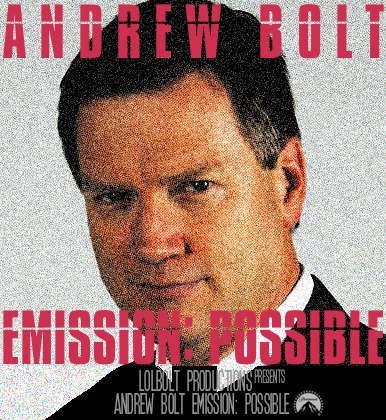
Andrew Bolt, one of Australia’s most influential columnists said, “ Palmer might be right and the carbon tax wrong.”

Blog Link: Asian Correspondent

Gas or waste to power Canberra Hospital

Australia’s Capital Territory (ACT) could be one of the champions of eco-friendly energy sources. The ACT Government is now endorsing a cost-efficient power generator to service its public hospital using gas or waste.

A major signpost at TCH

The Canberra Times reported over the weekend that AECOM, a professional infrastructure consultant, has advised the Government-run Canberra Hospital to use gas or waste generator to power its facilities.

A gas generating plant will cost $48 million to service three buildings. This option will help the hospital to save $28.1 million over 20 years, the report said. Gas is the cheapest power source while a pollution-to-energy generator fetches up to $209 million.

Gas can emit up to 24,000 tonnes of greenhouse gases a year slashing a significant amount of emission from traditional power sources of 72 million tonnes a year.

The hospital needs basic power to produce hot and cold water while a more advanced facility will provide onsite electricity.

Other eco-friendly energy sources are also being explored like solar and wind. However, the hospital compound does not have enough space for the infrastructure. The gas and waste power generators, if approved, will likely be constructed underground connected with cables. The onsite generator will be constructed north of the hospital wing to ensure its flues will not intervene with rescue helicopters.

Windpower generators are also considered but its feasibility is under study.

The paper also reported that Act Chief Minister and Health Minister Katy Gallagher will continue to consult with the community to ensure the viability and sustainability of the project. The Minister is vouching for the proposed alternative energy sources noting that the money saved will be used instead to finance health care for Canberra’s growing population.

 The Canberra Hospital prides itself as the region’s major public hospital, providing specialist and acute care to more than 500,000 people. TCH is a tertiary level health facility, and a teaching hospital of the Australian National University (ANU) Medical School.

Source: Asian Correspondent