Northern Australia poised to meet the Asian era?

Re-blogging:

Opposition Leader Tony Abbott indicated yesterday he is ready for the Asian Century.

If he wins in the federal poll this coming September, his coalition government will map out plans to fast-track the development of Australia’s northern regions- from Cairns in Queensland to Broome in Western Australia. This will lay the groundwork for linking Australia’s tropics to Asia. It will be Abbott’s priority within the first 12 months in office.

Northern Australia’s farmland which could be transformed into a food bowl of Australia and Asia. (Photo: Supplied)

The Coalition’s 2030 Vision for Developing Northern Australia, which was released Friday, highlights his plans. Topping the list is to develop the long-standing dream of many free-market economists and politicians to transform Northern Australia into a food bowl which will feed not only Australians, but also neighbouring Asians.

Abbott said the coalition wants to “capitalise on Northern Australia’s existing strengths and natural advantages in agriculture”—along with energy development, tourism opportunities, education and health services. Noting the economic forecast in the region, he said,

With Asia’s real GDP expected to grow from US$27 trillion to US$67 trillion by 2030 and Northern Australia’s proximity to the tropical region, Northern Australia is well placed to capitalise on the significant economic, strategic and environmental macro-trends that will shape both the Asian and tropical regions.

The food bowl mega-dream will include premium produce which could help to double Australia’s agricultural output.

A tractor ploughs through the vast land of Western Australia. (Photo: Supplied)

The resurrected food bowl plan, however, backfired from environmental groups.

The Wilderness Society (WS), for one, repulses the plan saying that past projects have failed. It said that while billion of dollars have been ploughed through large-scale irrigation projects, they were all doomed. Examples are the Humpty Doo in the Northern Territory and the Ord and Camballin in Western Australia, respectively.

The Society notes the Ord, the poster child of the northern food bowl,  has “been a monumental flop.” The government invested more than $1.3 but large-scale cropping for rice, sugar, cotton, and other crops have failed.

It also said that in 2010, rice failed in 12 months after being reintroduced in the Ord while the cotton industry collapsed after 12 years.

In 2007, former Samsung subsidiary Cheil Jedang shut down its unprofitable sugar mill. The Ord has now been given to a Chinese hotel developer for a “pittance in the vain hope he can succeed in the sugar business where the Korean food giant failed.”

Almost half the Ord is now planted with sandalwood for incense and perfume ‑ hardly useful for feeding Asia.

Crops in this northwestern region. (Photo: Supplied)

The Northern Australia Land and Water Taskforce (NALWT) earlier released a sustainability report that finds no scientific evidence to support a food bowl vision for the north. The landscape is limited by poor soils, water availability and harsh climatic conditions.

The WS said recent research by the Tropical Rivers and Coastal Knowledge group (TRaCK) at Charles Darwin University has backed up previous substantial analysis showing the case for a sustainable northern food bowl does not exist.

Northern Australia is a graveyard for failed agricultural projects. There is absolutely no scientific evidence to support the northern Australia food bowl fantasy.

Rob Law from Melbourne University earlier wrote in The Conversation that the nation’s psyche has been obsessed with the vision for Northern Australia’s food bowl.  He notes it never left the minds of southern developers and politicians as well as other “visionaries.” The vast scope of northern land covers the vast and intact  savanna ecosystems across northern Western Australia, the Northern Territory and Queensland.

The Institute of Public Affairs, a free-market economy think-tank, highlights “the north remains underdeveloped and it is fantastic that the Coalition is looking to unleash its potential.”

By contrast, the NT Environment Centre  pointed out that “the north is a graveyard for failed agricultural projects inspired by ‘visionary’ southern politicians”.

Law predicted that if a coalition government wins in the 2013 election, “it is likely a new battle will be played out on familiar ground.”

The WS’s response: Abbott’s northern food bowl idea is doomed to be an expensive failure and repeat mistakes of past.

Opposition Leader Tony Abbott announces his coalition’s 2030 vision. (Photo: Alex Ellinghausen/Canberra Times)

National Director Lyndon Schneiders said Northern Australia needs new infrastructure and sustainable development opportunities but the north will never be the food bowl of the world, Asia or even Australia. He adds,

“This is bad policy, written with purely political objectives and dressed up as vision, with no costings and no hard commitments. The main point of this policy announcement seems to be currying favour with Australia’s richest person, Gina Reinhart, and to stem vote leak in northern Australia to the Katter Party and Clive Palmer’s United Party.”

Schneiders  suggests that rather than pursuing the “northern myth,” the coalition should be looking at ways to increase support and productivity for sustainable agriculture in southern Australia.

The Society welcomes proposals to increase investment in tourism but questions how destroying the north’s greatest asset, its extraordinary wilderness environments, to make farmland, is compatible with realising its tourism potential, including recreational tourism such as fishing.

Blog Link: Asian Correspondent

Wind power activists gather in Canberra

Supporters and detractors of the Julia Gillard Government’s clean energy plans will converge into the Australian capital Canberra Tuesday to hold  two separate rallies in a showdown of rhetoric on wind power turbines.

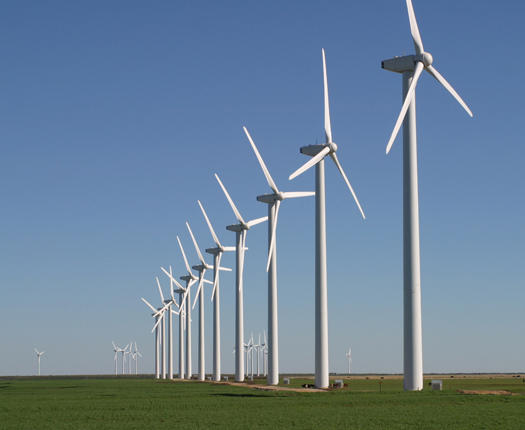
Australia targets to get 20 percent of power source from non-renewables such as wind power by 2020. (Photo: Supplied)

The Green bloc led by Friends of the Earth and citizens’ watchdog GetUp! are rallying supporters nationwide to join the march to Garema Place at noon to face the anti-wind turbine top guns.

“Tuesday’s rally will be the biggest moment this anti-wind ‘movement’ has ever had, and it’s our job to make sure it stays that way. If they gather in opposition to renewables, it’s our job to gather in support [of renewables],” GetUp! said.

One group which opposes wind energy  and runs a website called Stop These Things, boasts of its  parliamentary members from the opposition coalition. Their rally will kick off at 10am on the lawns to the north of Parliament House. Their agenda is to thrash the “unreliable” and “costly ” wind power industry. They claim “wind turbines are not clean, not green and the cost consumers are forced to pay for the unreliable and intermittent power they produce is ridiculous.”

The anti-wind power group accused the industry and its benefactors of raking in about, “AU$50 billion  worth of consumers money in the form of REC tax”.

Supporters are instructed to take bring cameras and capture any misbehaviour from the Green bloc and spot their “Ditch the Witch”-type placards – or “equally unsavoury material.”

Bring a camera or use your phones to capture any misbehaviour from wind industry goons and their supporters – STT will have a name and shame spot where we will post photos and videos of any thugs in action…O ur fine people are smart enough to know that the Green-Labor Alliance is over and that – with a little more help – the Coalition will make energy policy work  again for all Australians – not against them – as is the case now.

Anti-wind power groups alleged wind turbines are threat to health and well-being. (Photo: Supplied)

The pro-wind groups shot back saying the Coalition’s anti-renewables crusaders are peddling misinformation to try and erode support for clean energy sources. The Gillard Government wants to achieve 20 per cent of energy sourced from renewables by 2020.

Anti-wind crusaders include Alan Jones of 2GB Radio; Victorian Senator John Madigan; South Australian Senator Nick Xenophon; Alby Schultz MP, member for Hume: Craig Kelly MP, member for Hughes and an early anti-wind fraud warrior; Chris Back, Liberal senator for Western Australia; Mary Morris – campaigner and community representative for Waterloo in SA;  Alan Moran of the Institute of Public Affairs; and other anti-wind turbines.

Opposition Leader Tonny Abbott earlier admitted he will scrap the price of carbon if elected in this year’s Federal election. He has described climate change as “absolute crap”.  Meanwhile, Crikey alleged that Abbott’s wife is linked to Jeanette Newman who is active in organising anti-wind power movement. She is married to Abbott’s business tsar, Maurice Newman – the former chair of the ABC and the ASX, and chair of Abbott’s proposed business advisory council.

Anti-wind turbines march to the Parliament House in Canberra. (Photo: Supplied)

The Guardian reports Newman earlier claimed that government subsidies for renewable energy is tantamount to a “crime against the people” because higher energy costs hit poorer households the hardest and there was no longer any logical reason to have them.

Blog Link: Asian Correspondent

A Threat to Renewables?

What’s going on with Australia’s sustainable energy resources? Here’s from GetUp:

Australia’s renewable energy future is on the line.

Windpower generators are also considered but its feasibility is under study.

Windpower generators as part of Australia’s sustainable energy future.

On Tuesday Coalition MPs will take the stage outside Parliament House with radio personality Alan Jones to demand a halt to wind power development and to advocate for the scrapping of Australia’s Renewable Energy Target.

Never before in Australia have we had organised opposition to renewable energy. That means it’s no longer enough to just support renewable energy. We need to demonstrate it. On Tuesday we can counter fear-mongering with hope, look to the future, not the past and show the way to a clean energy future.

Join us in Canberra on Tuesday and show your support for renewable energy.

www.getup.org.au/rally4renewables

What: Rally for Renewables
Where: Garema Place, Canberra.
When: 12 noon, Tuesday 18 June.
RSVP: www.getup.org.au/rally4renewables

The last few months have marked a disturbing turn against renewable energy by the Coalition. Tony Abbott has described climate change as “absolute crap”3 and vowed to repeal the price on carbon that makes polluters pay for the real environmental cost of their emissions. Coalition MPs threatened the head of the Clean Energy Finance Corporation, which offers market rate loans for renewable energy projects and demanded that she stop investment by the fund. They even said that if elected that they would “tear up” the contracts signed with renewable energy companies despite the uncertainty it would create for jobs and investment in the renewable energy industry.

And now Coalition anti-renewables “crusaders” – Alby Schultz, Craig Kelly and Chris Back –  are peddling misinformation to try and erode support for renewables. The research has comprehensively debunked the health claims about the negative impacts of wind turbines4. But those facts aren’t important to these MPs. They know that without strong community support for more investment in renewable energy, it creates space for Australia to walk away from its promise to get 20% of our power from renewable sources by 2020. Tony Abbott and Shadow Environment minister Greg Hunt should condemn these MPs as a rogue element but instead they have been silent.

Right now, renewable energy has overwhelming community support, even among Coalition voters. It’s our one clear opportunity to reduce carbon emissions and do our bit to limit global warming to 2 degrees. We can’t let community support for renewable energy be undermined by lies and spurious claims.

www.getup.org.au/rally4renewables

I hope to see you there on Tuesday.
Carl, for the GetUp team.

Bob Brown joins fight to save Sarawak rivers

Re-blogging:

Former Australian Greens Senator Bob Brown flew to Kuching, the capital of the Malaysian state of Sarawak, this week to give his backing to a large group of local communities opposing the controversial mega dam projects in the region.

Former Greens Senator Bob Brown addresses delegates to the SAVE Rivers’ alternative conference.

More than 300 local indigenous people held a rally in Kuching amid the International Hydropower Association’s (IHA) biannual conference – the IHA World Congress on Advancing Sustainable Hydropower  – which runs from May 20-25.

The congress is the world’s largest gathering of dam builders and financiers to discuss industry issues. It is also a venue to share practical experiences, policies, and solutions to climate, water, and energy challenges.

Australian-owned Hydro Tasmania (HT) is involved in the controversial dams and is also a sponsor of the event.

HT joined the project as a technical adviser to Sarawak Energy, the dam-building authority of the multi-billion Sarawak Corridor of Renewable Energy (SCORE).  The project involves 12 highly controversial dams projected to produce 28,000 MW of power.

Bob Brown poses with dam activists during the IHA Congress.

SAVE Sarawak Rivers Network (SAVE Rivers), which organised an alternative conference, said the dams would affect tens of thousands of indigenous people and flood over 2,000 square kilometres of rainforest.

The project is said to be lacking environmental impact assessments despite repeated demands from the affected communities. SAVE Rivers also says that China’s Three Gorges Corporation “began construction on the 944 megawatt Murum Dam in 2012 before its environmental impact assessment had even commenced, leaving affected communities with no option to negotiate resettlement outcomes.”

SAVE Rivers said the dams would be the energy backbone of the Sarawak government’s SCORE Initiative, the plan to rapidly industrialize the state primarily through the expansion of aluminium smelting facilities, palm oil plantations, and other commodity sectors.

Brown, accompanied by Jenny Weber of the Huon Valley Environment Centre, addressed the SAVE Rivers’ alternative conference while HT Chair David Crean and CEO Roy Adair are taking part in the IHA conference.

At the alternative conference,  indigenous communities were given a voice to oppose the dams being built on their land. On Wednesday, they arrived carrying banners saying ‘Respect Native Rights’, ‘Stop Baram Dam’, ’IHA Stop Collaborating With Corrupt Regime’, and ‘No More Dams,’ among other signs.

Protesters flash banners opposing the dams in Sarawak.

The dams are project of the Sarawak state government of Abdul Taib Mahmud who is under investigation by the Malaysian Anti-Corruption Commission after amassing a fortune of billions of dollars while in office.

Brown said in a statement: “Hydro Tasmania’s senior officers are addressing this conference of the world’s biggest dam builders on ‘sustainability’ while the indigenous people of Sarawak are protesting outside and while HT has four consultants working on these megadams which international organizations have condemned as involving gross corruption.”

In 2011, the IHA launched a voluntary auditing tool for dam builders to assess their social and environmental performance, called the Hydropower Sustainability Assessment Protocol (HSAP). Zachary Hurwitz, Policy Program Coordinator at International Rivers, said  HSAP may be useful to guide dam builders and governments on sustainability. However, he admits the risk that “dam builders could use it to greenwash the worst dams, especially given such a context of heavy-handed repression and corruption.”

More protesters say ‘no to dams’.

In December last year, Peter Kallang, chairman of the SAVE Rivers group of Sarawak Indigenous leaders and James Nyurang, village headman from the Baram River Region, led a tour to Australia and called on Hydro Tasmania to pull their support out of the controversial dams. Related article HERE.

Blog Link: Asian Correspondent

Mining giants snub Cape York’s world heritage value

As the Federal Government released the report qualifying Cape York for UN World Heritage listing, the Queensland state government launched its political rhetoric to encourage local indigenous communities to support mining and to oppose the planned world heritage nomination. Cape York is a peninsula located at the northern tip of Queensland.

Deputy Premier Jeff Seeney promised indigenous people a stake in the estimated $25 billion worth of bauxite deposits near Watson River in Aurukun, north of Cairns. He also announced that five mining companies have been shortlisted to undertake the project. Queensland is optimistic mining would transform “welfare-dependent communities” into a “booming town.” Indigenous owners will have equity and the venture will create jobs, Seeney said.

The five mining giants are Rio Tinto, Cape Alumina, Glencore International (GLEN), and Aluminum Corp. of China Ltd (CHALCO). Seeney also announced the Australian Indigenous Resources (AIR), a new venture company to take part of the project.

The Australian media speculate that AIR, represented by indigenous leader Gerhardt Pearson and aluminium smelter entrepreneur John Benson, started negotiating on the stake to develop the mine. AIR demands that traditional owners would hold equity, not just royalties. It is also reported that AIR offered the Wik people 40 percent equity and another 10 percent proposed for Cape York organsations.

The processes of bauxite illustrated. (Photo: Queensland Bauxite)

Seeney said Queensland welcomes the prospect of providing an opportunity for local indigenous people to own stake “in the operation of whatever mine is able to be developed there.” Aurukun Mayor Derek Walpo also supports the project hoping Aurukun would be the first community on Cape York to be “liberated from welfare.”

Environment Minister Tony Burke supports Cape York’s enlistment, but Seeney dismissed the federal government’s plan.

In time of the Queensland announcement, however, the Wilderness Society urge the Julia Gillard Government to nominate Cape York for world heritage listing by July with traditional owners’ consent.

The commonwealth government commissioned top scientists to assess the natural values of Cape York against World Heritage criteria. They released the report recently and found that the peninsula contains universal values of international significance and that these values are widespread all over the place.

The values are divided into seven key attributes, including tropical savanna, rainforest, bauxite ecosystems, freshwater biodiversity and dune systems– some of these are the best examples of ecosystems on the planet.

The bad news: mining and land clearing are identified as threats to its enduring values.

Wilderness Society Northern Australia Campaigner Gavan McFadzean said, “This report sends a clear message to the Queensland government not to approve and fast track destructive mining developments over areas now known to be of international conservation significance.”

Earlier, Jacaranda Resources owned by Gina Rinehart applied for a licence to mine the rock art area near the Laura Basin. Rinehart, however, backed down following pressure from conservation groups.

The Quinkan rock art galleries include works of more than 30,000 years old and are some of the most significant on earth. Embedded in the spectacular Laura escarpments, the Wilderness Society said they should be one of the highlights of a future Cape York World Heritage Area.

The Quinkan rock art is listed by UNESCO as one of the top-10 rock art sites in the world. It predates the well-known sites of Lascaux in France and Altamira in Spain by up to 15,000 years. The sites are listed on the Queensland Aboriginal Cultural Heritage Database and were listed on the National Estate Register (the forerunner to the National Heritage list), which described the Quinkan rock art as constituting “some of the largest bodies of prehistoric art in the world. The paintings are generally large and well preserved, and engravings of great antiquity occur. The Quinkan art is outstanding both in variety, quantity and quality.” They have never been transferred to the National Heritage list, even though they have long been recognised as having World Heritage values.

The Laura Basin is one of Queensland’s big coal deposits and there is interest in mining for other minerals in the region.

If the enlistment pushes through, Cape York will join the ranks of Australia’s UN World Heritage Sites which include: Great Barrier Reef, Kakadu National Park, Willandra Lakes Region, Lord Howe Island Group, Tasmanian Wilderness, Gondwana Rainforests of Australia1, Uluru-Kata Tjuta National Park2, Wet Tropics of Queensland, Shark Bay, Western Australia, Fraser Island, Australian Fossil Mammal Sites (Riversleigh / Naracoorte), Heard and McDonald Islands, Macquarie Island, Greater Blue Mountains Area, Purnululu National Park, Royal Exhibition Building and Carlton Gardens, Sydney Opera House, Australian Convict Sites, Ningaloo Coast

Blog Link: Asian Correspondent

Earth Day Australia?

The United States joins countries around the world today in commemorating Earth Day. Ever since I was involved in the first Earth Day in Massachusetts, way back in 1970, this has always been a day to reflect on our environmental challenges and our responsibility to safeguard our God-given natural resources on a fragile planet we share with the rest of humanity and which we must protect for future generations.

– John Kerry
Secretary of State
Washington, DC
April 22, 2013

Hands on a globe

Earth Day (Photo: Supplied)

The day passed without notice. Even the mailboxes have not got anything in regard to an event observing Earth Day. Has Australia dropped this event from its calendar? Or  has it been easier to organise an Earth Hour (23 March) which it joined several weeks ago?

The writer of Time said,

It’s Earth Day , though you could be forgiven if you missed it. The annual event doesn’t quite have the same energy as it once did—especially not compared to the first Earth Day 23 years ago.

Yes, Green groups are caught up in dealing with more pressing issues – forestry agreement in Tasmania, saving the Great Barrier Reef from fracking and drilling, dirty coal, alternative energy source, overfishing, etc. Meanwhile, the shelving of Woodside’s LNG in Broome gives a major relief to many residents and communities in WA although businesses are quite disappointed.

WordPress and National Geographic sent the reminders just today– April 22 is Earth Day!

Kimberley’s gas hub collapsed

Western Australia’s fantasy of making Kimberley the next Dubai and the world’s largest gas hub suddenly came crumbling down following Woodside Petroleum’s announcement today it is dumping its $45 billion LNG investment in James Point Price.

Broom Community No Gas Campaign flashes a banner to celebrate win outside Woodside’s Office. (Photo: BCNG)

Woodside CEO Peter Coleman admitted the gas project is economically unviable saying the company has been under cost pressure. He said James Point Price does not meet the company’s commercial requirements for a positive investment decision.  A major review of the proposed LNG processing plant near Broome was found it would not deliver the returns the company needed.

While this development is a cause for elation among traditional land owners and local communities who have fought day in and day out to block the project, the WA state government is now pointing fingers amid  the “dismal failure” of the project.

Theresa Roe embraces her granddaughter after Woodside’s announcement. (Photo: BCNG)

WA Opposition Leader Mark McGowan blamed Premier Colin Barnett, saying his constant interfering and meddling caused the project to be lost. Barnett has opposed offshore processing and has intervened in the decision of the onshore site which is unviable, McGowan claimed.

Woodside also announced it will immediately engage with the Browse joint venture to recommend evaluation of other development concepts to commercialise the Browse resources. Woodside would consider floating technologies, a pipeline to existing LNG facilities in the Pilbara or a smaller onshore option at the proposed Browse LNG precinct near James Price Point, a statement said.

Coleman said the company supports floating technology, but this will need to be determined by the joint venture. Woodside’s partner like Shell Australia, for example, supports the onshore floating technology.

A photo showing an alternative technology for the project. (Photo: Golarabooloo- Lurujarri Heritage Trail)

“Floating LNG can bring significant long-term, sustainable jobs to Western Australia, Australia, and the Kimberley, as well as providing employment and business opportunities for Kimberley indigenous people,” Shell spokesperson Ann Pickard said in a statement. She added Shell would work closely with the Browse joint venture and government to keep the Browse project on track.

Premier Barnett laments the failure to develop a gas hub project at James Price Point is a “tragedy and a missed opportunity.”

Greens celebrate death of Barnett’s gas hub

The Wilderness Society said the gas fiasco should serve as a warning to governments and businesses not to go ahead with any project without a social licence forcing communities to accept unwanted and unsustainable developments. He notes Barnett’s failure also proves that WA can not be trusted with environmental assessments.

Traditional owners and local communities march in Freemantle. (Photo: Save the Kimberley)

Wilderness Society National Director Lyndon Schneiders said, “Woodside and its joint-venture partners have avoided possibly the biggest environmental battle in Australia’s history by walking away from Barnett’s folly at James Price Point.”

In January this year, Woodside started bulldozing ancestral burial sites in Walmadan, an act that enraged indigenous communities. “Hundreds if not thousands of people were prepared to stop Woodside from working in the sand dune area at Walmadan, which has great cultural significance to the Traditional Owners,” Schneiders said.

Schneiders, in a statement, also calls for Barnett to end this “appalling project” for good and asks him for a time to heal the pain of the indigenous people in WA. He said,

This development was opposed by people all around Australia and the world, but nowhere stronger than by the brave Broome community who stood up to hundreds of police alongside the Traditional Custodians who wanted to treasure their cultural heritage.

The Wilderness Society still wants answers on why a compromised Western Australian Environment Protection Authority was allowed to approve the project when there were so many flaws in the environmental and social impact assessment.

An aerial view of the LNG site/ (Photo:AAP/Mike Gray/Environs Kimberley)

Victory, but the fight is not yet over

The Australian Conservation Foundation (ACF) said the battle to save the Kimberley has come to define a new generation of Australian environmental activists, many of whom have taken the opportunity to visit the Kimberley, get the red dirt on their feet, and will now feel personally connected to it for life.

The ACF also notes how rallies and festivals brought the Kimberley to the nation’s capital cities where hundreds of thousands of exceptional Australians have collectively said: ‘No, the Kimberley is too precious to lose.’ It adds the project lost its social license long ago and with Woodside’s announcement, it has now lost its economic licence.

Former Greens Senator Bob Brown joins in a Freemantle rally to oppose the planned gas hub. (Photo: Save the Kimberley)

While Woodside is exploring other alternative options to salvage what remains in the project, the AFC warns the battle is not yet over. ”Put simply, this means that the industrialisation of James Price Point and west Kimberley remain a possibility,” it said, concluding:

We will continue to update you on what this means, but for today at least take a moment to feel proud that because of Australia’s standing strong for the Kimberley ancient songlines, dinosaur footprints, monsoon thickets, bilby colonies and the world’s largest humpback whale nursery remain protected from a gas hub.

Related articles

Queensland’s Newman declares “war” on native forests

What’s hot this week? Here’s to re-post Queensland’s new forest controversy:

The South East region of Queensland is home to a vast reserve of native forest providing a sanctuary for various kinds of flora and fauna. It is a bioregion known for its significant number of rare, threatened, and endemic species– the highest numbers of all regions assessed around Australia under the Regional Forest Agreement (RFA) process.

QLD Premiere Campbell Newman (Photo: SBS)

The Queensland State Government has been highly commended for its conservation efforts marked by the historic South East Queensland (SEQ) Forestry Agreement signed  in 1999 to stop logging in protected areas. The pact protects an additional 425,000 hectares in the conservation reserve system. It also envisions that all logging activities on native forest on public land will cease by 2024. Within 25 years, the area of forest reserved in SEQ is expected to be more than one million hectares.

There has been a ceasefire from forest wars over the past 14 years. The forest remains undisturbed by commercial activities– until recently the Campbell Newman government stirred the hornet’s nest.
This week, conservationists uncovered a clandestine document (credits to Indymedia.org.au) signed by Agriculture Minister John Mc Veigh to re-open the protected areas for logging.

Greens Senator Larissa Waters warns logging will destroy koala habitat. (Photo: SMH)

Greens Senator Larissa Waters lambasted a leaked letter from Agriculture Department Director-General Jack Noye to National Parks Department Director-General John Glaister that says Agriculture Minister John McVeigh has approved the logging. The letter also notes that the proposed logging would be conducted without Queensland Parks and Wildlife Service approval for codes or harvest plans.

Green peace is under threat and if logging resumes, it will affect southeast Queensland, the western hardwoods area, cypress regions in the west, central Queensland and north Queensland—all habitats of threatened species.

The Glossy Black Cockatoo is now listed as “vulnerable” in SEQ. (Photo: Supplied)

A report from Daniel Burdon both published in the Sunshine Coast Daily and Gympie Times said McVeigh had offered new 25-year contracts to 14 licensed timber companies to log cypress forests across state forests in southern and central Queensland.

Rod McInnes, Timber Queensland CEO (sic), said the renewal of the sales permits was essentially guaranteeing a longer contract for companies which already have an allocated licence to log such areas.

“Anyone who’s already got a Crown Wood Allocation now simply has a 25-year sale guarantee for their allocation,” he said.

“That doesn’t actually change how much timber is logged in the cypress forests each year, just how long the contracts are.

“What I’d be expecting in the next few years, are that rather than each of the 14 companies keeping their contracts, they might sell them now they are long-term, and four or five bigger commercial operators will take those allocations on, through amalgamations.”

Greens Senator Larissa Waters blasted Queensland Premier Campbell Newman for orchestrating the move which she said was tantamount to initiating forest destruction. She noted the forests as an important habitat for vanishing species.

A survey of endangered species in the SEQ bioregion

Wilderness Society denounces the move

Wilderness Society National Director Lyndon Schneiders denounced the move saying, “This is a short-sighted and counterproductive decision by the Queensland Government that undermines past agreements between conservation groups and the timber industry.”

He called on the Newman Government to stop sending chainsaws into up to two million hectares of high conservation value forests throughout Queensland.

A timber industry spokesperson said the forest was used to be harvested for sustainable logging and shutting it down all these years had hurt badly the timber industry. The spokesperson added that the state needs to create more jobs.

The Wilderness Society said, “Timber imports and the high dollar are challenging enough for the industry without stoking a conflict that was resolved a decade ago.

“If logging occurs in these areas, Queensland timber will become synonymous with forest destruction. The market has little taste for wood sourced from native forest destruction, and the Queensland timber industry will lose markets.

“We understand access to existing hardwood plantations is a key issue. The Wilderness Society will work with key stakeholders, including SEQFA signatory Timber Queensland, to convince the Queensland Government to abandon this foolhardy path.”

Houn Valley Environment Centre decries forest destruction

Green activists denounces Ta Ann’s involvement in “forest destruction. (Photo: The Observer Tree)

Meanwhile, the Houn Valley Environment Centre continues to decry Tasmania’s “forest destruction.” The Centre expressed fears over the State Government’s permission to allow logging operations in a World Heritage nominated site to supply wood exports. The Centre has been contentious about the logging operation of Forestry Tasmania who supplies wood to Malaysian-based Ta Ann Group.

Centre spokesperson Jenny Weber said, “Ta Ann asserting that they won’t receive timber from the World Heritage nominated forests is one thing, but a commitment by Forestry Tasmania that they will not deliver wood from these coupes has not been officially announced. Until the guarantee that the timber from the proposed logging areas in the Huon district is given by Forestry Tasmania, the assertion by Ta Ann cannot be verified.”

Weber claimed Ta Ann had previously admitted that they have to take what Forestry Tasmania supplies them regardless where the wood products were sourced out.

Blog Link: Asian Correspondent

Kimberley’s sacred sites destroyed for a large-scale gas venture

Western Australia is one of the last remaining frontiers of the Indigenous Australians. Series of land grabs pushed them to this territory. But now, even their ancestral graveyards have to go.

Western Australian Indigenous Affairs Minister Peter Collier approved Woodside Petroleum to start bulldozing Aboriginal heritage sites, including the sand dunes area at James Price Point, in order to give way to a $30-40 billion  LNG project. Below the sand dunes are the remains and fossils of Aboriginal ancestors.

The company stopped working in sand dunes last year pending application of a clearance under the Heritage Act. The clearance would allow holders to work at sites registered by local Aboriginal people. The lack of earlier approvals underpinned protesters’ claims the project is illegal.

The State Government fancies this sacred land to emerge as the “Saudi Arabia of Gas,” the world’s largest gas hub. And this could be the ultimate act of Aboriginal dispossession.

Tracks on James Price Point (Photo: Kimberley Media)

James Price Point, originally named Walmadany, is located at the apex of the Lurujarri Heritage trail, the sacred place where several of the revered Goolarabooloo and Jabirr Jabirr men and women were buried, including the highly respected traditional custodian Walmadany.

Woodside claims a Native Title Agreement was executed on 30 June 2011 to enable the establishment of the Browse LNG Precinct near James Price Point, 60 km north of Broome. The Indigenous people, however, said the agreement was based on fraud.

When the Colin Barnett Government approved the multi-billion gas project, the Traditional Owner Taskforce (TOTF) was not consulted. The TOTF drew on the best practices in traditional governance and decision-making structures. It incorporates procedures in contemporary meeting, decision-making and information transfer practices to “create a unique, culturally appropriate, consistent and comprehensive consultation and engagement process.” (p.41)

Protests continue to oppose the gas hub. (Photo: nationalunitygovernment.org)

The principle of Indigenous Free Prior Informed Consent (IFPIC) was ignored. It also reinforces the decision of West Australian Supreme Court Chief Justice Martin that the process of compulsorily acquiring land from Goolarabooloo and Jabirr Jabirr traditional owners was unlawful.

The Wilderness Society said allowing Woodside to start work in the sand dunes at James Price Point is like sanctioning the bulldozing of St George’s Cathedral in Perth or St Mary’s Cathedral in Sydney and all of the grave sites associated with these religious institutions.

The Society joins the Traditional Custodians in condemning the approval of Woodside’s request to enter and destroy thousands of years of Indigenous Heritage in the area to pursue its proposed gas processing complex.

Wilderness Society WA Campaign Manager Peter Robertson said,

This approval by the Minister for Indigenous Affairs yet again demonstrates the willingness of the WA Government to put unnecessary and unwanted development ahead of the people of the region and the values of the community. We call on the other Browse joint-venture partners to make it clear whether they support the destruction of these ancient burial grounds.

He added it is worth noting that the proponent for the James Price Point gas processing complex is Premier Colin Barnett in his role as Minister for State Development, and that Indigenous Affairs Minister Peter Collier is also the Minister for Energy.

Heritage trail in Broome, WA (Photo: Kimberley Media)

The Society further accused the Government of  incompetence and multiple conflicts of interest in pursuing the project from its botched attempts at compulsory acquisition through to the environmental approval process and now the approval for Woodside to destroy sand dunes of the highest cultural and religious significance.

James Price Point is one of the fiercest battlegrounds between the Indigenous people and the Australian Government in contemporary times. With the support of the local communities, Green and civic groups, the Indigenous people are fighting to protect the “Law Below the Top Soil” – the law handed down from many generations to another that governs their ancestral rights.

Barricades, clashes between police and civilians, and arrests are expected to continue in the course of the project.

“I can feel the pain coming through this ground. This country is screaming from hurt.” –Albert Wiggan’s powerful monologue from OLD COUNTRY NEW COUNTRY on Woodside Energy’s proposed gas plant at James Price Point.

Blog Link: Asian Correspondent

The Silent Victims of Bushfires

Australian summer is the peak season of bushfires. The CSIRO, a leading scientific body, said bushfire is a natural phenomenon no less than the sun and rain, and it occurs frequently all-year-round. When the mercury hits over 40 degrees Celsius (140 F), heat ignites wildfires that spread extensively engulfing farms, forests,  and communities,  including sanctuaries of wildlife. While many animals can survive, bushfires put pressure on many species to the verge of extinction. Plant and trees, however, have more power to regenerate.

A kangaroo hops through a burnt paddock in Melbourne West. (Photo: AAP)

Fire authorities across states have issued fire warnings , maps, and  precautions. Three states were under red alert early this week: Tasmania, New South Wales, and Victoria.  But temperatures dipped on Wednesday easing total the fire ban in threatened areas.

Fire brigades, community workers, and volunteers help in rescue operations while authorities assess the extent of damage.

Beyond the ashes are the silent victims of the catastrophe–  animals and endangered species.

The past bushfires had left many animals dead, their habitats destroyed. In Victoria, among the endangered species are the state bird emblem, the Helmeted Honeyeater and Leadbeaters Possums. According to Zoo Victoria, the Healesville Sanctuary is still reeling from the effects of Black Saturday in 2009. The Sanctuary itself was under threat and many animals were evacuated. The Vet team worked around the clock treating fire- affected animals in the wildlife hospital and in rescue centres in the community.

Threatened by bushfires (Photo: Supplied)

In Western Australia, many species of native animals and birds are feared to have been completely wiped out, according to Australian Geographic. Conservationists and animal carers note that populations of highly endangered possums, black cockatoos and other native species may now be locally extinct in the Margaret River, Nannup and Augusta regions. About 90 percent of wildlife in these areas are already presumed extinct.

Another endangered bird is the Red-tailed black cockatoo especially those the endangered Baudin’s red-tailed black cockatoos which are only found WA’s southwest. The number is estimated to be less than 10,000.

The ground parrot used to be a common bird seen in Australia, but the specie is disappearing. (Photo: Supplied)

The Wilderness Society has listed top five endangered species which could become extinct in the coming few years. These species are considered the most threatened by the fires: the Leadbeater’s Possum, Sooty Owl, Barred Galaxias, Ground Parrot. and Spotted Tree Frog.

Bushfires are wiping out the Spotted Tree Frog. (Photo: Supplied)

Koalas, kangaroos, sheep, and cattle are not spared from pain and suffering. The Department of Environment and Sustainability works with qualified and experienced wildlife care organisations and rehabilitators to assist with the recovery, treatment, rehabilitation and release of wildlife affected by fire.

This photo of CFA firefighter David Tree and Sam the koala became a bushfire icon of the Black Saturday in 2009. (Photo:Reuters)

Mobile animals, such as birds, kangaroos and wallabies, may be able to move out of burning areas to safer grounds. Other wildlife can take refuge underground, in tree hollows and logs, unburnt patches of vegetation, wet gullies, rocky areas and on leeward slopes.

Many perish in the fires while some badly burnt animals await DSE ‘s advice for their immediate ‘destuction’. Survivors are treated in vet clinics.

Plant species usually regenerate a few seasons after a bushfire. From the charred tree trunks and ashes from the earth, new life re-emerge–more resilent to face the evolutionary changes in the environment.

Many plant species resprout from protected buds, at or below ground level, and many others regenerate from soil-stored seed even if the adult plants were killed by the fires.

A wildfire near Deans Gap, New South Wales, Australia, crosses the Princes Highway. Pic: AP.

Links to Animal Rescue:

Department of Environment and Sustainability

Wildlife Victoria

Blog Link : Asian Correspondent