Gore praises Obama ahead of climate leaders training in Australia

Former US Vice President Al Gore is scheduled to visit Australia this month to lead a climate leadership training drive, shortly after US President Barack Obama’s historic announcement early this week directing the Environmental Protection Agency (EPA) to initiate massive cuts on dirty carbon emissions.

Climate Reality Project Chairman and former US Vice President Al Gore (Photo: CRP)

The 25th Climate Reality Leadership Corps training program will kick off on June 25-27 in Melbourne in partnership with Australian Conservation Foundation (ACF) to teach participants about the science of climate change and how to communicate its effects.

US President Barack Obama announces historic cuts in carbon emissions (Photo: AP)

Gore’s leadership training  will mark another important event following initiatives of various NGOs towards decarbonising Australia. Last month, US economist Jeffrey Sachs led the launch of a low carbon economy initiative.

Gore, the Climate Reality Project chairman, praised  Obama’s announcement to cut the nation’s dirty carbon emissions from the power sector by 30 percent nationwide below 2005 levels by 2030. This is equal to the emissions from powering more than half the homes in the United States for one year. The former VP said the clean energy initiative is the most crucial step towards combating the climate crisis.

We simply cannot continue to use the atmosphere as an open sewer for dirty and dangerous global warming pollution that endangers our health and makes storms, floods, mudslides and droughts much more dangerous and threatening – not only in the future, but here and now.

Gore reiterated that actions are taking place worldwide to address climate change but remained wary about special interest groups that continue to deny and spread misleading information to muddle and obfuscate the issue. He said denial of the linkage between carbon emissions and climate change is like denial of the link between tobacco and lung cancer. He warned that further inaction would be extremely dangerous and destructive for America and the rest of the world. He added that there are now technologies that can offer alternative sources of clean, efficient, and competitive renewable energy.

He backs Obama for facing challenges through a series of critical actions and empowering the EPA to enforce limits on CO2 emissions for new power plants and accelerating the shift to  renewable energy.  He said America has taken another historic step in leading the world towards a green and sustainable economy.

Not all businesses are happy

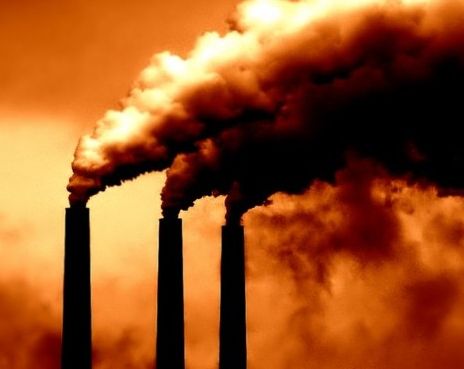
Smoke billow from coal-fired power plants (Photo: AP)

Not all businesses are happy and merchants of doubt are expected to block climate initiatives. Christopher Helman of Forbes notes the “casualties” of the plan: “Coal miners and owners of coal-fired power plants. Don’t expect their shares to sell off on today’s rule revelation though — EPA has been telegraphing its plans for months, so the bad news is baked in.”

…..it is clear to analysts that coal will bear the brunt of this anti-carbon crusade, while natural gas will be the big winner. Coal-fired power plants are responsible for about 25% of all greenhouse gas emissions in America. Per megawatt-hour, coal plants emit about 1 metric ton of carbon dioxide. Compare that to natural gas turbines, which emit just .4 metric tons per mWh.

The EPA reportedly estimates that investments needed to meet the emission limits will cost about $8 billion a year, but would save 6,600 lives and more than $50 billion a year in health care costs tied to air pollution.

While the announcement is widely praised, not everybody is positive. Bloomberg reported how the US zero emission would only be defeated by the rising emissions of China, India, and Indonesia, for example.

Burning fossil fuels in the U.S. released 5.3 billion metric tons of greenhouse gases in 2012. China emitted 9.0 billion tons and by 2020 is forecast by the U.S. Energy Department to reach 11.5 billion metric tons, while the U.S. stays flat. India, Indonesia and other developing nations are expected to grow, as well.

Were U.S. emissions cut to zero, “global emissions would continue to increase,” Robert Stavins, director of Harvard University’s Environmental Economics Program, said in an e-mail. “So, the direct impacts of the new power plant rules on atmospheric greenhouse-gas concentrations will be small.”

Optimism in the Pacific

Solar panels station on Port Augusta, Victoria (Photo: Supplied)

Scientists in the Pacific welcome Obama’s clean energy plan. Radio Australia interviewed Dr. Padma Lal,  an independent researcher on Climate Risk in the Pacific, who applauds the announcement and said it is urgent to take action to make the plan a reality.

She noted other countries – the major polluters – have already started taking action to reduce their carbon emissions, such as China, India, Brazil.

…..we would like to see other countries such as Australia and European nations to follow suit. Perhaps it’s a bit too early to say that this is actually going to happen, it’ll be interesting to see in tangible terms what actions are taken by the American state. From the Pacific point of view it really is urgent that they do take such measures…

Gore leads climate training in Australia

The former US VP will lead the leadership training in Australia, alongside world-class climate scientists, political strategists, communication experts, community organisers and activists. He said:

We have taken these trainings around the world, and in every community committed leaders are standing up to take action on the climate crisis. Our goal is to provide them with the best possible tools to become even more effective leaders in their schools, businesses, houses of worship, and local and national governments.

The intensive program is expected to formally train a new group of Climate Reality Leaders, who can become change agents in their own communities. They will emerge from the program as “energised and skilled communicators” with the knowledge, tools and drive to educate diverse communities on the costs of carbon pollution and what can be done to solve the climate crisis.

Australia leads the world’s highest per capita carbon emissions (Image: Supplied/ Carbonworks)

ACF CEO Kelly O’Shanassy said that is the absence of government support to educate and train leaders on the urgency of climate change, her organization welcomes Gore’s project to Australia.

Australia is on the front line when it comes to climate change impacts, yet our national government is unravelling hard-won progress to price pollution and boost renewable energy. In the absence of government leadership on climate change, the people need to lead the way.


Blog Link: The Green Journal/ Asian Correspondent

US economist launches low carbon mission in Australia

While the global community is stepping up plans and actions to respond to climate change, Australia is responding otherwise. Under the current political leadership, Australia’s attitude towards global cooperation has been recalcitrant.

The Tony Abbott’s budget cuts on environment , along with the anti-climate change initiatives, remain a controversial issue triggering non-stop protests and rallies nationwide. But in the midst of chaos, the budget welcomes the re-known economist and professor, Jeffrey Sachs, who arrived in Australia  to launch a clean energy initiative.

Professor Jeffrey Sachs leads the launching of low carbon project in Melbourne (Photo: Rowena Dela Rosa Yoon)

“This is not a great budget, but a great debate,” Professor Sachs quipped.

Noting the crucial role of Australia in preventing a tipping point of the planet, Sachs led the launching of ‘How Australia can Thrive in a Carbon World, Pathways to Prosperity in 2050’ in Melbourne on May 21. The launch was sponsored by Monash Sustainability Institute and The Myer Foundation.

Obviously disappointed and not amused with the budget, Sachs said Australia has a critical role in leading the world towards a low carbon and yet still a prosperous global economy. For one thing, Australia’s per capita emissions are amongst the highest in the world driven by agriculture, industry and coal-based electricity.

He said decarbonisation has been underway,  including Australia’s trading partners with a goal of economic prosperity – yet with improved air quality, energy security and improved standards of living. The project underlies a tough challenge for Australia’s competitiveness driven by emissions from the country’s key exports, including coal, gas, oil and beef. The Monash University team, however, underscores that Australian economy is resilient and diverse, besides the largest industry which occupies 52 percent of the  GDP is the service sector. The carbon emissions sector such as mining, manufacturing, agriculture and forestry share lesser portion to the GDP.

The mission of the project is to map up viable pathways to reduce dangerous carbon emissions. Pathways may include increasing energy efficiency, shift to low carbon resources, and non-energy abatement and sequestration. Sachs said there has been a lot of talks going on and what the global community needs to see is a showcase of a pathway that is viable and achievable. The working paper outlines:

This means that each country will gain insights such as what China is predicting in terms of renewable energy growth, what Europe and the US are assuming with regards to take up of energy efficiency, and what India’s demand for coal may be.

Decarbonization is coordinated globally but driven locally with the participation of 13 countries which collectively represent more than 75 per cent of global greenhouse gas emissions. The project is being coordinated by the Sustainable Development Solutions Network (SDSN) – which is an international network of universities and research institutions. Countries participating include Australia, Brazil, Canada, China, Europe, India, Indonesia, Japan, Mexico, Russia, South Africa, South Korea and the United States. 

SDSN appointed ClimateWorks Australia and the Australian National University to jointly lead Australia’s involvement, with modelling by CSIRO and the Centre of Policy Studies at Victoria University. After the launch, the project expects each of the participating countries to prepare summaries of example pathways modelled and demonstration of the technological solutions for deep decarbonisation. The summaries will be included in a SDSN ‘Phase 1’ report to be released in July 2014. It will be presented to UN Secretary General Ban Ki Moon in preparation for the UN General Assembly meeting and Climate Change Summit in New York City this coming September. Australia’s story will be presented to a global audience.  

Q & A during the launch. Professor Jeff Sachs is seated second from the right. (Photo: Rowena Dela Rosa Yoon)

Q & A during the launch. Professor Jeff Sachs is seated second from the right. (Photo: Rowena Dela Rosa Yoon)

Professor Sachs is known for his work on poverty eradication, including his bestselling books – Common Wealth: Economics for a Crowded Planet and The End of Poverty. He is the director of the Earth Institute at Columbia University and a special adviser to UN Secretary-General Ban Ki-moon.

Jeffrey D. Sachs – Australia in the Age of Sustainable Development

Here’s an upcoming event in Melbourne

sachs

Jeffrey D. Sachs – Australia in the Age of Sustainable Development

SDSN Australia/Pacific – Monash Sustainability Institute and ACFID

Wednesday, 21 May 2014 from 6:00 PM to 7:30 PM (AEST)

Melbourne, VIC

As humanity pushes against planetary boundaries, how can we achieve economic growth that is both environmentally sustainable and socially inclusive? Join us to hear Jeffrey D. Sachs, world-renowned economist, leader in sustainable development and senior UN advisor discuss the new age of sustainable development and what it means for Australia.

Humanity has entered a new era of both risk and possibility. Extreme poverty is down by half since 1990, and the IT revolution allows new possibilities as never before. Yet social inequalities are soaring; the environment is under great and growing stress; and governance is so far unable or unwilling to adapt. Jeffrey Sachs will discuss the new age of sustainable development, and Australia’s role in achieving sustainable development both domestically and globally.

Professor Jeffrey D. Sachs serves as the Director of The Earth Institute, Quetelet Professor of Sustainable Development, and Professor of Health Policy and Management at Columbia University. He is Special Advisor to United Nations Secretary-General Ban Ki-moon on the Millennium Development Goals, and held the same position under former Secretary-General Kofi Annan. He is Director of the UN Sustainable Development Solutions Network, as well as co-founder and director of the Millennium Villages Project. Sachs is also one of the Secretary-General’s MDG Advocates, and a Commissioner of the ITU/UNESCO Broadband Commission for Development. He has authored three New York Times bestsellers in the past seven years: The End of Poverty, Common Wealth: Economics for a Crowded Planet, and The Price of Civilization.

Presented by the Monash Sustainability Institute as the Australia/Pacific Regional Centre of the UN Sustainable Development Solutions Network with the Australian Australian Council for International Development and proudly supported by the City of Melbourne.

Have questions about Jeffrey D. Sachs – Australia in the Age of Sustainable Development? Contact SDSN Australia/Pacific – Monash Sustainability Institute and ACFID

Greens rally to save Tasmania’s world heritage

The Bob Brown Foundation gathered around 2,000 people today to help rally against removal of 74,000 hectares of forests from the World Heritage List in the Upper Florentine Valley in Tasmania. The area is part of the 170,000 hectares added into the highly protected area which was decided in Phnom Penh, Cambodia last year .

Australia’s current Government proposed the removal as it intends to use the area for logging. The proposal has been submitted to the UNESCO’s World Heritage Committee and the decision will be announced around June 15-25 in Doha.

The Foundation said the area is largely intact with tall eucalyptus forests and karst region (underground cave formations) besides there are other significant geomorphological features and areas of significant Aboriginal heritage.

However, Prime Minister Tony Abbott reiterates his government’s mission, first and foremost, is to get back into business especially with the historic Free Trade Agreements (FTA) he recently signed with Japan and Korea, while FTA with China is also being worked out.

Noting his address to the 2014 Forest Works Dinner in Canberra last month, Prime Minister Tony Abbott  told the timber industry that his Government is working for the removal of the 74,000 hectares of forest from the heritage listing. He said,”One of the first acts of the incoming Government was to begin the process to try to get out of world heritage listing 74,000 hectares of country in Tasmania, because that 74,000 hectares is not pristine forest. It’s forest which has been logged, it’s forest which has been degraded, in some cases, it’s plantation timber that was actually planted to be logged.”

Abbott convinced timber investors that 74,000 hectares out of the world heritage listing will “still leave half of Tasmania protected forever.” He assured that his Government respects the timber industry and that it wants the timber industry to have a vigorous and dynamic future, “We want the timber industry to be a vital part of Australia’s economic future, not just something that was a relic of our history. That’s what this Government wants.”

The Bob Brown Foundation’s Campaign Manager Jenny Weber said, “Today’s outstanding turn out in the Upper Florentine forests clearly shows that Australians are very proud of their World Heritage forests. We are sending a strong message to UNESCO that we love our spectacular forests of outstanding universal value, and the Australian community will stand up to defend them.”
Rally speakers included Australian Greens Leader Senator Christine Milne, Markets for Change CEO Peg Putt, Still Wild Still Threatened’s Miranda Gibson and Home and Away actor Lisa Gormley.
Blog Link: The Green Journal at Asian Correspondent


Post-Easter

Australia has gone through a long weekend over Easter period and business has just resumed today.

Nonetheless, the past days had not been completely quiet. Issues on the rights of asylum seekers rage on while civic activism continues.

In NSW, residents fear about gas fracking and contamination while in Queensland, conservation groups rally against massive industrialization along the Great Barrier Reef. Tasmania Wilderness remains under threat as the Tony Abbott Government changed its mind about protecting the world heritage forested areas. There is a ray of hope in Western Australia as a result of the recently held election. However, the fight to protect the rights of sharks from culling is expected to go on.

Whales in the Southern Ocean, meanwhile, can enjoy a peaceful and safe interlude while the Japanese harpoons had lost their case in the international court. They are back home pondering what to do next and it is possible they will come back to pursue their “scientific research”.

I will resume my writing soon.

Australia snubs global climate summit in Warsaw

It is official: Australia’s new government denies global warming.  The Coalition Government will not send its environment minister to the 19th session of the Conference of the Parties (COP 19) to the United Nations Framework Convention on Climate Change (UNFCCC) which will kick off  in Warsaw, Poland from 11-22 November 2013.

The National Stadium in Warsaw

Environment Minister Greg Hunt will stay at home to expedite the processes involved in repealing the carbon tax, a top election promise made by his big boss, Prime Minister Tony Abbott.

However, a representative on his behalf has been dispatched to take part in the annual event. Hunt will be busy repealing the carbon tax while the conference is underway. The carbon tax was passed by the Australian legislature in 2011 under former Prime Minister Julia Gillard. Since Abbott won the federal election in September this year, scrapping the carbon tax has topped his priority agenda.

Australia will be represented by Australia’s Climate Change Ambassador Justin Lee from the Department of Foreign Affairs. Foreign Minister Julie Bishop will also not attend.

The Coalition Government of Tony Abbott (center) is up to repeal the carbon tax. (Photo: Courier Mail)

Climate observers said this will send a wrong signal of Australia walking away from its commitment on climate action and it may set a precedent for other countries to backslide.

Climate skeptics and right-wingers are already cheering on Australia’s unprecedented example. Recently, former PM John Howard also scoffed at ”alarmists” in a climate skeptics’ gathering held in London and admitted he is “unconvinced” of an impending ”global warming catastrophe.”

The COP19 expects to bring together around 40,000 attendees from government, academia, business and advocacy groups to advance international agreements that aim to mitigate climate change and adapt to its effects.

In the past, a government minister represented Australia to the UNFCCC.  Ian Campbell headed the delegation under John Howard’s first government in 1997.  Labor Climate Change Ministers Penny Wong and Greg Combet, respectively, attended the conference from 2007, although in  2012, the Gillard government’s parliamentary secretary on climate change Mark Dreyfus attended the conference on behalf of Combet.

Oppositions and environmental groups are wary of the bad signal Australia will be sending to the summit. Opposition climate spokesman Mark Butler said “Other countries are going to read into it at best with confusion and at worst that the Abbott government is walking away from global action on climate change, ” Australia’s leading media The Australian quoted him as saying.

Greens MP Adam Bandt also said it was “understandable” that Minister Hunt was “embarrassed” by his government’s decision to scrap the carbon tax, but it was no excuse to skip the global summit. While no major decisions will be made at Warsaw, the meeting will build momentum in the lead-up to major negotiations for a global agreement on cutting greenhouse gases in Paris in 2015.

Environment Minister Greg Hunt during a media interview (Photo: SBS)

Businesses support repeal of carbon tax

PHP Billiton, among other businesses under the Australian Business Council,  supports the dumping of carbon tax. While backing the Federal Government’s plan, the mining giant, however, urged scrapping the price of carbon should be done as soon as possible. It warned of a possible  complications if it is not done by mid-2014. The mining firm said it still believes in having a price on carbon, but any policy should be trade friendly and revenue neutral.

BHP Billiton noted that repealing the carbon tax will get rid of the current problem of Australian firms paying a higher cost on pollution than their international competitors.  The company shares concerns already expressed by others businesses about the uncertainty that will be created should the legislation not pass by mid-next year.

Climate action nationwide rally

Amid plans to scrap the carbon tax, a climate action is brewing nationwide. Various environmental groups are set to mobilise rallies in every major city nationwide on November 17. It is a collaboration of GetUp, the Australian Conservation Foundation,  the Australian Youth Climate Coalition, Environment Victoria, Fire Brigade Employees Union, Greenpeace, 350.org, Oxfam Australia and many other groups. ACF said they intend to make this event as big as they can.

The ACF wants to keep Australia’s carbon tax. It said that while the tide of history is flowing towards pricing pollution, Australia is turning back the clock. Along with the climate action rally, the Foundation also supports an online petition to the prime minister, environment minister, and environment decision makers from all parties.

GetUp who is spearheading the climate action  rally said 2011 was a turning point for Australia.  Climate scientists warned it was the beginning of the critical decade for climate change and thus required stronger action to avoid the catastrophic effects of rising emissions. Australians responded to this warming by enacting the carbon tax.

However, Australia faces another turning point this year– which is poised to “go backwards on climate action at a time when the government’s own independent climate policy advisory body has warned the nation’s current emissions reductions targets are “inadequate” and what it needs is stronger and more ambitious targets.”

Blog Link: The Green Journal/Asian Correspondent

Climate Action: From the ACF

From the Australian Conservation Foundation:Who cares?

Carbon pollution contributes to man-made environmental disaster

Carbon pollution contributes to man-made environmental disaster

Hi Rowena,

You are one of a 20 million strong movement. On October 23, 24 Hours of Reality: The Cost of Carbon created the world’s largest conversation on climate change.

Did you miss it? You can watch videos from Australia and around the globe here.

So what happened?

  • More than 20 million people watched worldwide.
  • Over 24 hours, there were 252 million mentions on Facebook and Twitter.
  • ACF members and Climate Leaders hosted 60 screening events around the country.

What now?

More than ever, as we hear mixed signals from politicians about climate action, we need to be vocal and well versed.

Here are 3 things you can do:

  1. Come to the national day of climate action on Sunday Nov 17. Join ACF and our allies around Australia.
  2. Sign our petition to keep our laws to cut carbon pollution. It’s not time to wind them back!
  3. Request a presentation from a Climate Leader trained by Al Gore, so your group can better understand the science, impacts and solutions to climate change

I will be at the Melbourne day of climate action. Other cities have meeting points too. I hope you can make it on Sunday 17 November.

With thanks,

Tony

Tony Mohr ,Climate Change Campaign Manager, Australian Conservation Foundation

Bushfire season is on

Following the change of Australian Government, policy changes on climate and environment have taken place. The Green Journal takes a break to wait for further developments. Meanwhile, here’s from From GetUp!–

Is climate change making bushfires worse?

Yes. ABC’s headline today: “Scientists say climate change link to bushfires demands action”.

As we think of the hundreds of families losing homes in these fires, and the heroic fire fighters giving their all, we know that our climate will only get more dangerous unless we take strong action now.

We have a plan – I recorded this short video to give you the details:


www.getup.org.au/climateaction

Former Rural Fire Services Commissioner, Phil Koperberg, spells it out: “This is a feature of slowly evolving climate. We have always had fires, but not of this nature, and not at this time of year, and not accompanied by the record-breaking heat we’ve had”.[1]

The science and the impacts are clearer than ever, but many of our political leaders are stepping back. We won’t make progress by waiting for them. I can’t see a path to climate action that doesn’t involve a huge, strong movement of Australians standing up. Let’s start a summer of action with these huge rallies.

Can you help?

Sam,
for the GetUp team

[1] We need to talk about bushfires and climate change – if not now, when?, The Guardian, 21 October 2013

PS. Stay turned over the coming days for information about how you can be involved in our huge climate action mobilisations or host your own.

Original email

Dear Rowena,

We have a bold plan to kick off a huge climate campaign – but we need your help.

The last month was the hottest on record.
The last 12 months were the hottest on record.
The last summer was the hottest on record, breaking 120 extreme weather events.

This month? Summer seems to have come early and bushfires are already burning.

Meanwhile, Tony Abbott has just released his legislation to scrap the carbon price – but there’s no sight of a solid plan that would replace it or even meet our current targets to reduce emissions.

Politically, things might be a bit grim. But this is no time to give up on fighting for a safe climate – it’s time to step up. We have bold, exciting and massive things planned. Watch the video to find out how you can get involved:

www.getup.org.au/climateaction

We’re holding huge climate mobilisations across the country on 17 November. It’s an ambitious plan, and we can’t sign up for it without your support. Are you in?

GetUp! Team

TO DO! Contest for Socially Responsible Tourism Projects

Sustainable Tourism – Here’s to share from The International Ecotourism Society (TIES):
The Studienkreis für Tourismus und Entwicklung e.V. (Institute for Tourism and Development) has announced the 19th annual TO DO! Contest for Socially Responsible Tourism Project.

sustainable-tourism

The TO DO! Contest is now inviting applicants worldwide with existing tourism projects that successfully incorporate the interests and needs of the local population by active participation during planning and implementation, and are actively engaged in ensuring fair remuneration, promoting training and education, strengthening local cultures, and implementing other measures which contribute to the sustainable development of tourism and community initiatives.

Selection criteria and deadline for application: 30 September 2013Read more

Guided tours to conservation properties in the southern hemisphere

Would you like to visit private conservation properties this spring?

Then join us for our ‘Spring into Nature’ events across Victoria, for guided walks through beautiful protected properties that are home to native plants and wildlife.

Starting from 15 September, there will be 17 “open days” across the state, giving you the chance to enjoy nature and talk to landowners and Trust for Nature staff about private land conservation. This will be a great opportunity to see wildflowers and threatened wildlife in their natural habitat. At one event, there will be a presentation on the Trust’s newly developed State-wide Conservation Plan. This is an opportunity to hear about our conservation direction for the future.

Click here to download the full list of properties and open days. If you would like to know more about a specific event, please get in touch with the contact listed under RSVP or call Trust for Nature on  (03) 8631 5888

This information is also on the Spring into Nature page of our website:  http://www.trustfornature.org.au/whats-new/spring-into-nature-2012/

Some properties have restricted numbers, so get in quickly to reserve your place and start planning some spring outings today!

Level 5/379 Collins Street, Melbourne, Victoria 3000 Australia

Ph: (03) 8631 5888 Fax: (03) 9614 6999 Freecall: 1800 99 99 33 trustfornature@tfn.org.au