Transfer of power to State poses threat to environment

This might be a good news for Santos, Chevron, Woodside, Shell, BHP Billiton, ExxonMobil, Origin, Ta Ann—name it—and all those other giants engaged in the business of “exploiting” Australia’s natural resources. They will have more freedom to dig and rig, build dams, or haul native logs—if the power to enforce environmental laws will be transferred from the Federal Government to the State Government.

Undated photo shows BHP Billiton running this machine at Mt Newman mine in Western Australia. (AP Photo/BHP Billiton,HO)

The Council of Australian Governments earlier this year agreed to reform controversial environmental laws. It proposes changes that would give states autonomy to take control over local environmental laws.

The Environment Protection and Biodiversity Conservation Act 1999 (EPBC Act)  administered by the Department of the Environment, Water, Heritage and the Arts covers the assessment and approval process of national environmental and cultural concerns. It also administers specific Acts that oversee activities relating to marine resources, importing, heritage issues, hazardous waste, and fuel quality.

State and territory environment laws apply to specific business activities and are administered by both state and local governments in the form of licences and permits.

The plan to hand over control of national environmental powers to state and territory governments has outraged the Greens. Last month, an alliance of more than 35 environmental organisations sent more than 10,000 petition signatures to Environment Minister Tony Burke to oppose the proposals.

The Wilderness Society of Australia warned that without Federal powers to override the states, places of high conservation values would be exposed to exploitation. This is the case of the Great Barrier Reef, the Franklin River, the Daintree Rainforest and Fraser Island, for example. If left to the State Government, they would have been destroyed, the group said.

The Australian Conservation Foundation (ACF) notes that in the past, under the national environment law, the Federal Government has been able to save  the Great Barrier Reef from State Government plans to allow oil rigs.

However, the reef is still at risk from climate change, catchment run-off, coastal developments and shipping. Recent reports show it has lost 50 per cent of its coral cover since 1985.


Protestors at Franklin Dam site in 1982. In 1978, the Tasmanian Hydro-Electric Commission announced plan to build Franklin Dam, but failed. In 1982, the Federal Government declared the area as a World Heritage Site. (Photo: Tasmania Wilderness Society/National Archive of Australia)

Lonergan Research poll in November said the vast majority of Australians, about 85 per cent, believe the Federal Government should be able to block or make changes to major projects that could damage the environment.

Last week, the plan sounded to have been resolved. The Wilderness Society thought it could sit back and relax—at least for now. In a press release dated 7 December, the Society said the Federal Government has saved business and environmental organisations from a legislative and litigation nightmare by not handing over environmental approval powers to the states.

Wilderness Society National Director Lyndon Schneiders noted, “The business community has avoided a train wreck. The Federal Government seems to have recognised that our environment is essential to our national interest.”

Now is the time to put in place a robust system that guarantees the highest level protection of areas of national and international significance and for the Federal Government to continue to be the guardians of those values.

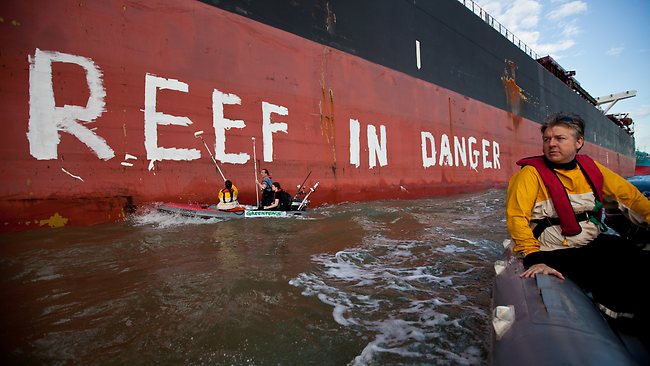
Greenpeace flashes a banner to support a UN team dispatched to assess the Great Barrier Reef in early 2012.

However, the ACF today pushed the red button: “Our federal environment laws – the last resort of protection for our precious places and species – are under attack.” Despite a concerted campaign of environmental organisations, the Council of Australian Governments (COAG) will put the plan on hold till next April, Chief Executive Office Don Henry said in a statement circulated by email. ACF Director of Strategic Ideas Charles Berger also noted, “the plan is not completely off the table and big business is bound to push the government to reconsider.”

You can bet big business will be pushing these changes, which would make it easier for developers and miners to irreparably damage reefs, wetlands and heritage areas by taking away the national layer of scrutiny and review.

So the fight to pressure politicians not to allow businesses to exploit the environment is expected to go on until the Government will “dump this reckless idea for good, “ the ACF said.

Blog Link: Asian Correspondent

Greenies win for the world’s largest marine sanctuary

It does not happen quite often for the greenies to celebrate. But today, there is reason for euphoria and optimism as the Federal Government breaks the news of making Australia’s vast stretch of seas and oceans as a national reserve.

The whale shark, white shark, humpback whale, and other world’s largest fish inhabit the North-west and South-east regions. (Photo: Supplied)

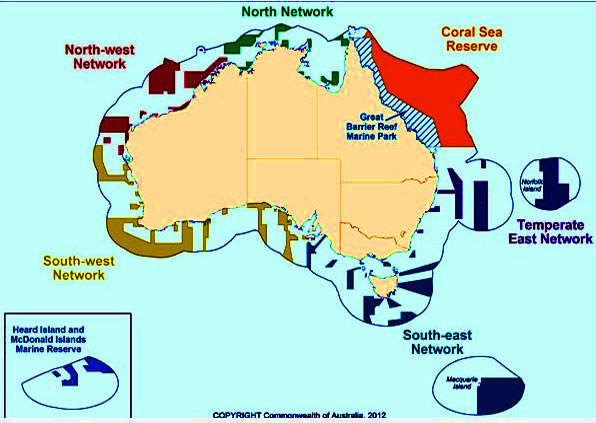
Environment Minister Tony Burke said more than 2.3 million square kilometres of ocean environment will be declared as a national marine reserve networks– a historic win since the plan was incubated a decade ago. This plan will position Australian waters to be the world’s largest marine sanctuary.

Minister Burke will soon forward his recommendations to the Governor General. He said “Australia is a world leader when it comes to protecting our oceans, and so we should be, we’ve got responsibility for more of the ocean than almost any other country on Earth.”

The World Wildlife Foundation (WWF), a leading environmental advocacy group, likewise, said people’s power made this development possible with 450,000 made submissions to Minister Burke.

Elizabeth and Middleton Reefs in the Temperate East Network are home to the critically endangered east coast population of grey nurse shark and the vulnerable white shark. (Photo: Australian Government)

“We look forward to the Government bedding down final management arrangements for the new marine parks as soon as possible, so that all Australians can begin to enjoy the benefits that marine protection will deliver now and into the future,” WFF Marine Campaigner Jenita Enevoldsen said.

A June poll showed that 70 per cent of Australians supported the government’s marine reserves plan ‑ the most decision the government has made. This project started in early 2000’s under a series of comprehensive community consultations, deliberations and science-based region planning.

“These final lines on maps around our sea country cover and protect a wide range of important habitats including coral reefs, seagrass beds, sponge gardens and hundreds of threatened species of whales, sharks, dolphins, turtles, sea lions and sea dragons,” Enevoldsen said.

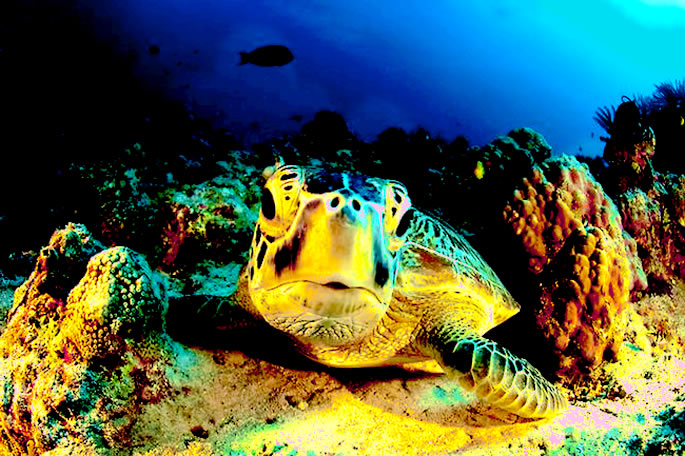
Giant Green Turtle in the Coral Sea on Queensland. (Photo: Supplied)

Giant Green Turtle in the Coral Sea on Queensland. (Photo: Supplied)

Australia’s oceans is the home to many of the world’s endangered marine animals including the Green Turtle, the Blue Whale, the Southern Right Whale, the Australian Sea Lion and the whale shark.

While it is a big win for conservationists, the marine sanctuary means commerical and industrial activities around the area will be limited, including recreation, commercial fishing, and gas exploration ventures.

However, the Government recognises that there will be impacts on some fishers and it will support those who are affected

A national marine reserve will include the vast stretch of the continent. (Photo: Australian Government)

New marine reserves have been proclaimed in five of Australia’s six large marine regions. The reserves in the South-east region were proclaimed in 2007.

Blog Link: Asian Correspondent

Don’t mine the the Reef!

From Greenpeace:

The Great Barrier Reef World Heritage Area covers an area of 348,000 square kilometres and more than 2300 kilometres long

Who has heard of the Galilee Basin? Virtually no one. That is the problem.

We are witnessing one of Australia’s biggest environmental emergencies unfold but it is taking place out of the public eye. And it threatens one of the world’s greatest natural treasures – the Great Barrier Reef.

Watch the video HERE

The Great Barrier Reef is on the brink of being turned into an industrial zone, with huge new coal ports and shipping routes waiting to be approved. These developments are the result of plans to rapidly increase Australia’s coal exports. The coal will be mined in Queensland’s Galilee Basin and shipped overseas via the Great Barrier Reef.

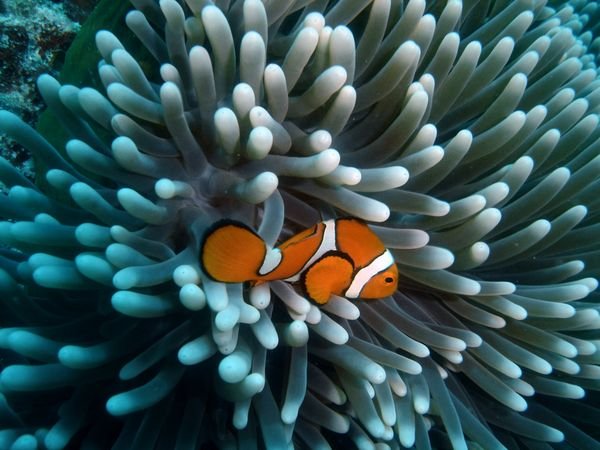
Beautiful marine lives under threat (Photo: National Geographic)

A new Greenpeace investigation has revealed the damage the coal mines could have if they go ahead. The Galilee Basin mines threaten our World Heritage Reef, as well as the stability of our climate, the health of our water supply and the habitat of native wildlife.

Let our politicians know you don’t want our environment sacrificed 
- SIGN PETITION

Australia’s biggest contribution to global warming is our coal exports. As plans progress to rapidly increase our coal exports, just yesterday the Arctic ice sheet melted to its lowest point on record; the result of an increasingly warming climate.

Greenpeace’s investigative findings:

•There are nine mega coal mines proposed here, five of which would be bigger than any mine currently operating in Australia.

•If the coal from the Galilee mines is burned, it would produce over 700 million tonnes of carbon pollution a year – that’s bigger than the entire fossil fuel emissions of Australia, the UK or Canada.

•These mines are the single biggest driver of industrialising the Great Barrier Reef. A series of coal ports are planned to be built and expanded, millions of tonnes of sea floor will be dredged and up to 10 000 coal ships will travel through World Heritage Area.

•If we don’t reduce our emissions, sea temperatures will rise. If they rise by 2-3°C it would result in the annual bleaching of over 97% of the Reef. There is a growing movement of people taking action in this epic struggle to safeguard our precious Reef and the stability of our climate.

Greenpeace welcomes underwater investigation

Please join us by signing the ‘Save our Reef’ petition now.

Super trawler can’t super fish

Super trawler Abel Tasman could suck schools of mackerel off Australian waters (Photo: Pierre Gleizes/Greenpeace)

MV Margiris, the giant fishing vessel measuring 146-metre long, has been banned from its grand mission to fish 18,000 tons of pelagic fish off Australian waters.

Even before it reached Australian shores, more than a dozen of Green groups have already sounded the alarm bell pushing the Federal Government to block the super trawler.

Baptising it with a new name, Abel Tasman, early this month did not help the super ship either to set its past records straight. Green groups alleged the humongous vessel to have plundered the seas off the Pacific and the coasts off West Africa, among other major international waters. The vessel, longer than the Sydney Harbour Brige, can dwarf and make local fishing boats look like toys– if allowed to sail on, they said. The ship is now docked at Port Lincoln in South Australia.

Abel Tasman could be the largest fishing vessel to sail on Australian waters. (Photo: News Corp)

The Parliament said Abel Tasman cannot go ahead with its mission– banning it for two years until a comprehensive scientific research and review of the Small Pelagic Fishery Agreement has been made. Fisheries Minister Joe Ludwig also announced a review of the 20 year old fisheries management legislation, in light of concerns about super trawlers devastating fish stocks.

Australian-owned, Seafish Tasmania, entered a joint venture with the Dutch-owned MV Margiris for small pelagic fishing that would net schools of Blue Mackerel, Jack Mackerel and baitfish. The MV Margiris weighing 9,499 tonnes can process over 250 tonnes of fish a day and has a cargo capacity of 6,200 tonnes.

Seafish Tasmania Gerry Green said the venture was estimated to provide jobs to about 50 people, including 45 in Devonport, Tasmania. At least, 15 of whom are likely to be from overseas. “It is going to be hard to tell these employees, some of them who were long term unemployed, that we no longer have a job for them,” SBS noted.

But the Tasmanian Times unearthed some evidence claiming the “Dutch owned, EU subsidised, Margiris Trawler, offers “no advantage to Tasmania or for that matter Australia.” If there is one beneficiary, it would be Seafish Tasmania owner Gerry Geen, the online paper said.

Pelagic or mid-water trawling is the process of deploying and towing a net at a chosen depth in the water column to catch schooling fish such as herring and mackerel. This differs from “bottom” (benthic) trawling in which a net is dragged along the ocean bottom where fish such as cod, haddock, and flounders live.

The Government's zoning of Small Pelagic Fishery. (Photo: AFMA)

Small Pelagic Fishing zones by AFMA

The Small Pelagic Fishery (SPF), managed by the Australian Fishery Mangement Authority (AFMA), is a purse-seine mid-water trawl fishery extending from Southern Queensland to Southern Western Australia. The AFMA said there are currently 71 licenses and five active vessels operating targeting several species including Jack Mackerel, redbait, Blue Mackerel, and Australian Sardine (off NSW only). Yellow Tail scud is taken as by-product.

AFMA has adopted various harvest strategy such as input and output control including limited entry, zoning, mesh size restriction, and total allowable catch limits. They are said to be based on sound science and best marine management practices.

Supernet scoops tonnes of small fish. (Photo: Greenpeace)

However, Greenpeace oceans campaigner Nathaniel Pelle said, “These ships literally vacuum up entire schools of fish”

Greenpeace, GetUp, Environment Tasmania, and the 14 other conservation and fishing groups galvanised a CommunityRun! to block the giant net off Australian waters

The Fishingworld website noted:

Greenpeace oceans campaigner Nathaniel Pelle said the organisation had confronted the Margiris off the coast of Mauritania in March, for its role in what it says is overfishing in the North Sea and South Pacific ”to the point of plunder”.

The environmental group claims the industrial super-trawler is part of the European Association of pelagic freezer trawlers (PFA), responsible for “some of the worst fishing excesses on the planet.”

It said PFA vessels had been reponsible for jack mackerel stocks off Chile plummeting by 90 per cent.

“There has never been a trawler of this scale in Australian waters to my understanding before and that is a serious concern that we just don’t know what effect it will have on the food chain,” Greens MP Kim Booth said.

Reflagged Abel Tasman awaits fate at Port Lincoln. (Photo: Ivon Perrin)

The Sea Shepherd said,

If this super trawler is allowed to operate in Australia, it would mean huge impacts on the already critically endangered Southern Bluefin Tuna and albatross, and the tragic death of seals and dolphins through being trapped and drowned in this super trawler’s indiscriminate killing nets of death as “by-catch”.

If overfishing does not stop, the world’s fisheries will completely collapse by 2048. The reality is that the oceans that provide up to eighty percent of our oxygen are in deep trouble and allowing this super trawler to operate in Australia’s waters would be a further sealing of humanities fate.

Sea Shepherd are calling on all our supporters to please for our oceans sake and our children’s sake, please assist Sea Shepherd in stopping this super trawler.

And the drama on the super trawler continues.

Blog Link: Asian Correspondent

Greens, Sea Shepherd intensify anti-Woodside gas campaign

Former Senator Bob Brown will be the star celebrity on Fathers’ Day when he gathers a throng of supporters to see the Sea Shepherd’s Steve Irwin ship docked onto the Circular Quay in Sydney, Sept 2.

Sea Shepherd’s Steve Irwin sail for Ganthueme Point to launch Operation Kimberley Miinimbi. (Photo: Anabelle Sandes)

The ship has just arrived from its voyage to the remote coast of Kimberley in Western Australia to intervene on behalf of 10,000 or so humpback whales said to be threatened by Woodside’s Petroleum’s gas factory in the Browse Basin off western Kimberley.

Sea Shepherd is known as the champion-defender of marine animals. It goes against man-made predators including the well-known Japanese whalers in the southern oceans. In July, the Goolarabooloo people invited the marine group to help drive away Woodside and its partners from the Kimberley region.

The Browse Basin off western Kimberley is home to the Humpback Whale (Photo: Paul Souders/National Geographic)

In the letter to Jeff Hansen, Sea Shepherd Australian director, the “Senior Law Bosses” said the industrialisation project located 50km north off Broome will destroy 30 sq km of land and 50 sq km of seabed. It will destroy the Law of Culture and songcycle which provides health and vitality of the people.

Hansen responded positively, and with Brown, the Operation Kimberly Miinimbi was launched. Sea Shepherd’s Steve Irwin left the port of Melbourne in early August and sailed for Ganthueme Point to assess the area.

The Kimberley region is home to the world’s largest population of humpback whales. The Wilderness Society estimates the Kimberley whale population to stand at an estimate of 16,000 to 20,000 individuals. Every year the whales congregate along the Kimberley coast, an arc stretching from Broome and the Dampier Peninsula to Camden Sound where they mate, give birth and nurture and train their young. The whales then migrate south from their ‘home base’ in the Kimberley region, along the Western Australian coast, until they reach their Antarctic summer feeding grounds.

Former Senator Bob Brown, Melissa Park – Federal MP for Fremantle, and Jeff Hansen – Sea Shepherd Australia director flash a banner on the rocks of Ganthueme Point (Photo: seashepherd.org)

Other marine wildlife in area include dolphins, penguins, whale sharks, and turtles.

Brown admitted that whales are the only larger species to ever move on the planet along with the now extinct dinosaurs. The Kimberley coastline is home to the world’s biggest humpback whale nursery, the so-called Group IV humpback population.

The Sea Shepherd claims that since 1 July this year, more than 259 whales have already been recorded by scientific survey just a few kilometers south of James Price Point and 23 calf and cow (mother and baby) pairs have been sighted already, with over 70% found within 5 kilometers of the coast.

The Browse Basin lies entirely offshore north of Broome and covers about 140 000 sq km. The basin is bounded by the Leveque Shelf in the south, the Kimberley Block to the east, and the Ashmore Platform and Scott Plateau in the north, and grades into the offshore Canning Basin to the southwest. The area can be serviced from Broome, which has adequate port and air facilities. The Browse Basin is one of Australia’s most hydrocarbon-rich basins. The most significant hydrocarbon fields of the Browse Basin occur in the Caswell Sub-basin.

The breeding ground for humpback whales is under threat from the massive LNG gas development project. (Photo: wilderness.org.au)

Gas exploration in the area began in 1970. However, the Woodside’s LNG Development marks the largest ever with an investment of $45 billion within the next 30 years. The LNG development seeks to process $200 billion worth of gas and 360 million barrels of condensate from three fields in the Browse Basin, approximately 400km north of Broome off the Western Australian coast.

Woodside has the largest interest in the Browse permit areas held by the Browse LNG Development joint venture, with approximately 46 per cent working interest. The other joint venture participants are Shell Developments Australia Pty Ltd, BP Developments Australia Pty Ltd, and BHP Billiton (North West Shelf) Pty Ltd. Chevron Australia Pty Ltd, however, recently withdrew its interest in the Browse project for a swap deal with Shell.

The gas would be shipped to Asia. James Price Point will become a transmogrified industrial precinct fed by a new highway from Broome. Hundreds of tanker ships will take the processed gas to China, Japan and elsewhere.

Woodside Petroleum unveils its $45 billion LNG plan (Photo: woodside.com.au)

The Goolarabooloo people, traditional owners of the James Price Point (Walmadan) coastline, oppose Woodside’s project. However, the Kimberley Land Council, in a split vote, endorsed it after Woodside committed to paying the council $1.3 billion over 30 years, Brown told Crikey.

The Conservation Council of Western Australia warned that exploitation of this gas field will bring a major environmental impacts from drilling in sensitive marine environments, dredging and blasting of coral reefs and other sensitive marine environments for pipeline construction and construction of new ports.

The massive scale project with offshore emission facilities will produce formation water containing hydrocarbons and heavy metals and flared gas. Over 10 million tonnes of greenhouse gas emissions per year is also in place.

The area, to be transformed into a megaport, will significantly increase shipping movements that will potentially interfere with the migration and breeding of humpback whales and other marine life, and risking the introduction of marine invasive species.

If it go head, the Bowse Basin will cost irrepairable damage which include:

4 gas pipelines coming ashore at James Price Point; 4 oil pipelines coming ashore at James Price Point; 4 export pipelines (2 with monoethylene glycol—anti-freeze— going to Scott Reef, 2 with carbon dioxide (if Woodside decides it wants to ‘geo-sequester’ it); 8 huge LNG tanks, 4 LPG storage tanks, 4 oil tanks;  Construction camp for 3,500 – 6,000 workers;  1,000 permanent onsite staff; Desalination plant; 1000 – 1,500 LNG tanker movements year

Whales are natural attractions of Kimberley (Photo: Anabelle Sandes)

The Conservation Council of Western Australia noted that EPA Chairman Dr Paul Vogel even admitted “that turbidity from dredging, oil spills, industrial discharges, noise, light and vessel strikes could adversely affect whales, dolphins, turtles, dugong and fish. Western Australian Premier Colin Barnett is pushing ahead with gas factories at James Price Point, just north of Broome, on one of the world’s most unspoiled coastlines, even though whale deaths are inevitable.”

Blog Link: Asian Correspondent

Queensland slams UNESCO, defends gas on the barrier reef

UNESCO has released its damning environmental report on the Great Barrier Reef, but the Queensland State Government hits back saying the report poses an obstacle to the multi-billion dollar seam gas business.

The report came in time when the mineral boom is underway and the Queensland Government is excited about financial gains. Queensland Premier Campbell Newman said his Government understands the issues raised in the report but could not accommodate some of its chief recommendations, News Corp. reports.

Newman said his government is in coal business and he is not going to see the economic future of Queensland shut down.

UNESCO sent a team of experts in March to assess the status of the reef confronted by both natural and man-made threats. While natural threats could be beyond control, the impact of the latter can be minimised if the Queensland Government can review and adopt strategic solutions.

The international body said the World Heritage listed site is under enormous pressure amid increased developmental activities, including additional port infrastructures in and around the Great Barrier Reef and ongoing management of major liquefied natural gas (LNG) plants at Curtis Island and Gladstone Harbour.

The dredging in Gladstone Harbour for the seam gas has been blamed by local environmentalists for the area’s poor water quality and a skin disease affecting marine life. Green activists say dredging has adversely affected whales and dugongs in the area.

UNESCO recommended to the State Government to stop port facilities expansions and to undertake a comprehensive review and strategic solutions to protect the Outstanding Universal Value of the reef.

It warned the reef could officially be listed “in danger” if the federal Government fails to convince the international body it has improved its performance before February next year.

Whether Queensland would be able to help improve environmental conditions of the reef or not, both state and federal governments have already given mineral explorations a go. Federal Environment Minister Tony Burke supports the developmental projects saying the approval of applications has been in full swing. He said there was not much he could do to prevent development applications already in progress.

Mining magnates Clive Palmer and Gina Rinehart have likewise secured government’s approval of their mining ventures in Queensland. Further, the two mining lords have  been pressuring the Government to allow them to build the world’s largest coal export facility right in the heart of the Great Barrier Reef World Heritage Area. The facility is envisioned  to double Australia’s coal exports. The mining moguls expect to hear of Government’s decision in 36 weeks time, GetUp noted.

GetUp, an activist group, said mining billionaires are used to getting their way,” but they’re not the only ones who know how to fight.”  The group has forged a tie up with Greenpeace and BankTrack to undertake an advertising campaign in key financial market in Asia and India to warn potential investors not to invest in these projects.

It’s not just UNESCO who are against the massive expansion of coal and coal seam gas facilities. We’ve just released an opinion poll that found 79 per cent of  Australians are already concerned about the expansion of mining along the Reef’s recognised heritage area — and that was before UNESCO’s  scathing criticisms started to make headlines nationwide.

GetUp is optimistic the ad campaign will work.  It claims that  in 2009, it funded ads in the European Financial Times to discourage potential investors who were previously considering to fund Gunns’ pulp mill in Tasmania.

Blog Link: Asian Correspondent

Great Barrier Reef awaits UN verdict

The Great Barrier Reef World Heritage Area covers an area of 348,000 square kilometres and more than 2300 kilometres long

Green activists are expecting to hear the results of investigation on the Great Barrier Reef conducted by the joint mission of the UNESCO World Heritage Centre (WHC) and the International Union for Conservation of Nature (IUCN). The experts visited Australia from March 4-14 to probe into the current park’s environmental conditions, including alleged man-made threats posed by seam gas exploration projects.

The Greenpeace is nearly completing a signup campaign of 15,000 people while GetUp! intensifies it drive to gather a strong 75,000 strong petition to stop developmental aggressions.

“Imagine if the Pyramids were being bulldozed or the Grand Canyon mined – the global community would be furious,” GetUp!, a major environmental activists, said  in an email loop.

GetUp! is trying to construct a simile to compare these World Heritage sites to Australia’s Great Barrier Reef.

Beautiful marine lives under threat (Photo: National Geographic)

Earlier, the UN team has already warned the Great Barrier Reef is posed “to die a thousand cuts” with various threats including growing population, mining boom, and gas explorations.  The team also intended to re-assess the overall outstanding value of the reefs.

The Australian committee of the IUCN has warned of a tenfold increase in shipping on the World Heritage Site associated with existing and proposed port development projects. Much of it will be going through channels within a marine park far narrower than the English Channel, the Crickey claimed.

The Gladstone Ports Corporation (GPC) approved the project in 2011 allowing  private contractors “to dredge 46 million cubic metres from within the harbour boundaries,  inside the World Heritage area, over the next 20 years…a volume equivalent to 27 Melbourne Cricket Grounds,” GetUp! argued.

Greenpeace welcomes underwater investigation

 News reports claimed the Federal Government and the Queensland State Government approved the project amid strong protests from local residents. Further, they said the United Nations which holds custody to the Heritage Park was not consulted on the project which is a breach of World Heritage guidelines.

A private law firm for Gladstone commercial fishing businesses warned that the Western Basin Dredging and Disposal Project has significant long term environmental impacts on a national scale.

Ridiculous as it may sound, but the lawyer’s group said the massive dredging activities occurs 24 hours per day, 7 days per week, for about 18 months.  It is estimated that 42,300,000 cubic metres of material is to be dredged over the construction phase which cause turbidity plumes in the Port area. Contaminants are also speculated to spread in the Port area which can destroy the Port’s ecosystems.

The lawyers estimated that dredging will cause the direct loss of around 902 ha of benthic habitat (including 258.8 ha of seagrasses).  An additional 5416 ha of benthic habitat (including 1406 ha of seagrasses) may be indirectly lost in the short to medium term. In summary, the group said close to 1,700 hectares of seagrass will likely be lost and 6,300 hectares of benthic habitat likely to be lost.   There are additional obstructions of the northern Western Basin due to construction and increased vessel traffic, including massive dredges may impede the migratory pathways of marine fauna using The Narrows and the entire Port Curtis region, the lawyers claimed.

Greenpeace intensifies on-site campaign

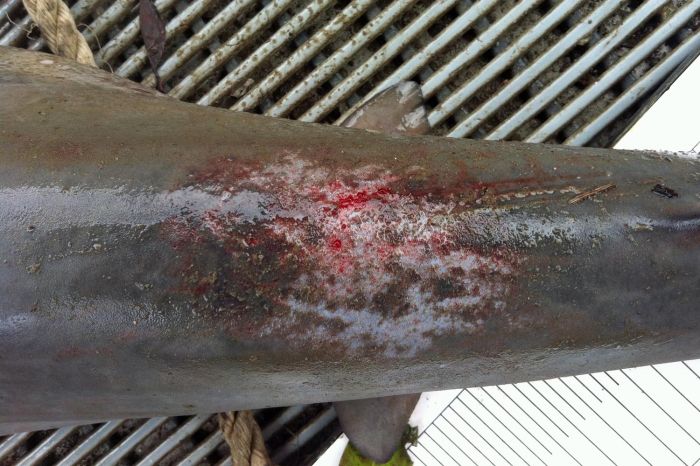
In 2011, a three-week fishing ban was imposed around the Gladstone area after sightings of fishes infected by unknown disease. Barramundi, for instance, were reported to have suffered from ‘sore’ and ‘cloudy’ eyes, while other fish appeared deformed and had bruises

The project is a partnership venture between Santos, Petronas, Total, and KOGAS. Santos is Australia’s largest domestic gas producer while PETRONAS is Malaysia’s national oil and gas company and the second largest LNG producer in the world. French energy major, Total, on the other hand, is the world’s fifth largest publicly traded integrated international oil and gas company; and South Korea’s KOGAS is the world’s largest buyer of LNG.

The partners announced the Gladstone Liquified Natural Gas (GLNG) project creates more than 5000 jobs during construction and about 1000 ongoing positions in the operational phase. They added that the project stimulates businesses and employment opportunities in the Gladstone and Roma regions through increased demand for goods and services.

Santos builds a LNG export facility in Gladstone for commercialised QLD seam gas resources. The facility is expected to  produce 3-4 million tonnes per annum (Mtpa) of LNG with future potential expansion to nominal 10 Mpta. The project is consists of CSG field development; gas transmission pipeline construction; and LNG liquefaction and export facility development.

The facility – built on Curtis Island (Hamilton Point area) – is close to the industrial deepwater port of Gladstone. The Project sources gas from Santos CSG fields around the Comet Ridge and Roma project areas, with gas being transported to the Gladstone LNG facility via subsurface 425 km gas transmission pipeline. Santos is planned to drill and complete the development wells to supply 53000 petajoules (PJ) (140 billion3) of CSG to the proposed LNG facility. There are about 600 wells to be dug prior to 2015 and 1400 or more wells after 2015 (excluding exploration wells). Installation of related infrastructures are constructed including access roads, accommodation camps, water gathering networks, water management facilities, in-field gas gathering networks (to transport gas from the wells to the field compression stations, gas compression stations and pipeline compressor stations).

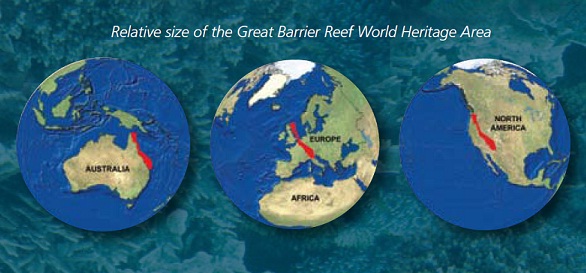
A comparative size on the Great Barrier Reef

The gas transmission corridor is 425 km long underground gas transmission pipeline corridor will accommodate one or more pipelines for the delivery of fas from the CSG resouces to the facilty. Transmission pipelines nominal diametere 650-800 mm.

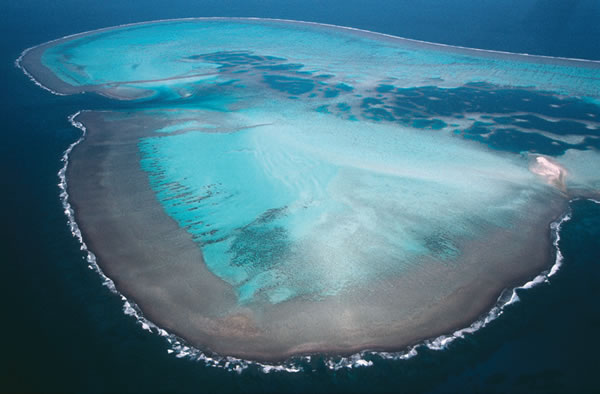
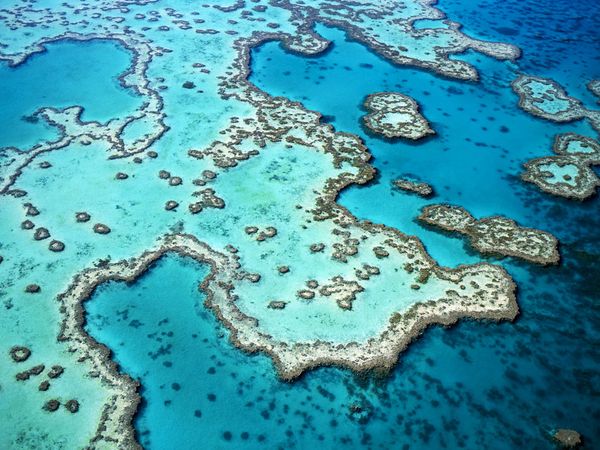
The Great Barrier Reef World Heritage Area covers an area of 348,000 square kilometres — the equivalent size of Italy or Japan, more than 2300 kilometres long. It extends to the low water mark on the mainland coast along northern Australia. It Includes more than 3000 separate coral reefs, some 900 islands and all the waters within the outer boundaries of the Marine Park.

It is designated as national park in 1975 and listed in the UNESCO world heritage list for its invaluable in 1981

The UN report will be presented to the World Heritage Committee in June, which will then decide whether to list the reef as a World Heritage Site in Danger.

News Link: Asian Correspondent

Australia’s largest living treasure at risk

Forgive the few seconds of ad. This is the most spectacular video shot I have ever found on Australia’s largest living structure– the Great Barrier Reef– which spans more than 1,200 miles (2,000 km) of islands and submerged reefs.

It is a massive water kingdom containing thousands of marine species. It became a national park in 1975 and after six years, it was named as UNESCO’s World Heritage Site. About 33 percent of the area is banned from fishing.

But this heritage site has been at risk — not with natural causes such as climate change but threatened by man-made disaster. Gas exploration and dedging on the sea floor has been going on.

A team from the UNESCO has embarked on a mission to Australia this week to re-assess the outstanding value of the Great Barrier Reef.

Stay tuned for more updates!