Gore, Palmer forge clean energy alliance

Former US Vice President Al Gore’s recent visit to Australia could be a saving grace to the country’s clean energy future. Gore did not only get the support of more than 500 new climate leaders from 24 countries, but more notably he got the backing of  controversial mining magnate, Clive Palmer, who leads the Palmer United Party (PUP).

Gore told his followers during the 3-day Climate Reality Leadership Corps Training in Melbourne last week he believes in Palmer’s genuine intention to help reduce dirty carbon emissions. He added he appreciated the opportunity to meet Palmer to discuss solutions to the climate crisis: 

“As a national leader, he clearly understands the critical importance of ensuring a sustainable future for generations to come. Mr. Palmer and I don’t agree on everything, but I’m very encouraged by his willingness, and that of his party, to preserve many of the climate policies in Australia.”

Al Gore and Clive Palmer hold a joint press conference in Canberra. (Photo supplied)

The announcement elicited media sensations describing the Gore-Palmer meeting as an inconvenient partnership. But grassroots are more than happy to welcome the alliance.

GetUp, for example, said people fought so hard to keep clean energy initiatives, but all environmental  laws are facing the chopping board;

Saving the price on pollution we fought so hard to achieve is unfortunately looking less and less likely – but Palmer’s Senators have announce that they have conditions…

Gore and Palmer reached a compromise on clean energy issues. Palmer vowed to support the Renewable Energy Target (RET), uphold the Clean Energy Finance Corp, and to save the Climate Change Authority.  PUP Senators are expected to block moves that will abolish these “clean three.” PUP,  however, is not supportive to carbon tax, but instead favours Emissions Trading Scheme (ETS). Palmer also dismissed Direct Action plan which he claims to be a waste of money.

Al Gore trains new climate leaders in Melbourne.

Kelly O’Shanassy, chief executive officer of the Australian Conservation Foundation (ACF) said Palmer has taken a big step towards securing a cleaner, healthier future for all Australians. But she is disappointed his party will support the repeal of the carbon tax, and the current emissions trading scheme structure could go with it.

The carbon price is working now. Pollution from electricity fell by 5% in 2013 alone. If Mr Palmer is serious about Australia tackling climate change, he must be serious about retaining the laws that are already doing the job.

Palmer has three Senate votes which is crucial in balancing the Senate. GetUp said, “ if our new Senate votes with Palmer, this will mean we can still make significant progress towards a clean energy future that will fund renewable energy projects, create jobs and stop Abbott from taking Australia back into the dark ages. “

The Senate will convene on July 7 to determine the fate of the clean energy future.

Gore recruits new climate leaders

Meanwhile, 525  new leaders are added into Gore’s climate army. Gore encouraged them in their resolve to help fight what matters to them: environment and climate change. The new leadership corps involve a wide range of professional demographics, including teachers, communicators, IT experts and technicians, farmers, artists, musicians, businessmen, and bureaucrats, among others as well as youth and students.

Al Gore leads the Climate Reality Q & A panellists.

It is the fourth training in Australia that calls for serious concerns on climate reality: severe heatwaves, bushfires, drought, and floods.  O’Shanassy said it is no coincidence that ACF are training leaders: “ We need them now more than ever. Over the next few weeks the government will try to bulldoze Australia’s climate laws. While some senators are pushing their support for clean energy, nothing can be taken for granted until the votes are counted on July 7th. The carbon price is still in peril and we must keep fighting.”

Pricing carbon sets the agenda.

Gore expects Australia to play a global leadership role on the most pressing issue of the time.  He said “We have more reasons than ever to believe we’re putting ourselves on a path to solve the climate crisis.”
He underscored initiatives of  US President Obama who has committed to cut carbon emissions and encouraging global action to tackle global warming. He also noted China to have established emissions trading schemes, along with the European Union and parts of the United States like California. He concluded that Australia is taking action as well:

Two million Australian households now have rooftop solar PV systems, just one example of the rapid growth of clean renewable energy worldwide. Australia and its citizens have long been leaders on this issue. It is my hope that its climate policies will continue to reflect that and serve as an example to the rest of the world.

Blog Link: The Green Journal/ Asian Correspondent

Gore praises Obama ahead of climate leaders training in Australia

Former US Vice President Al Gore is scheduled to visit Australia this month to lead a climate leadership training drive, shortly after US President Barack Obama’s historic announcement early this week directing the Environmental Protection Agency (EPA) to initiate massive cuts on dirty carbon emissions.

Climate Reality Project Chairman and former US Vice President Al Gore (Photo: CRP)

The 25th Climate Reality Leadership Corps training program will kick off on June 25-27 in Melbourne in partnership with Australian Conservation Foundation (ACF) to teach participants about the science of climate change and how to communicate its effects.

US President Barack Obama announces historic cuts in carbon emissions (Photo: AP)

Gore’s leadership training  will mark another important event following initiatives of various NGOs towards decarbonising Australia. Last month, US economist Jeffrey Sachs led the launch of a low carbon economy initiative.

Gore, the Climate Reality Project chairman, praised  Obama’s announcement to cut the nation’s dirty carbon emissions from the power sector by 30 percent nationwide below 2005 levels by 2030. This is equal to the emissions from powering more than half the homes in the United States for one year. The former VP said the clean energy initiative is the most crucial step towards combating the climate crisis.

We simply cannot continue to use the atmosphere as an open sewer for dirty and dangerous global warming pollution that endangers our health and makes storms, floods, mudslides and droughts much more dangerous and threatening – not only in the future, but here and now.

Gore reiterated that actions are taking place worldwide to address climate change but remained wary about special interest groups that continue to deny and spread misleading information to muddle and obfuscate the issue. He said denial of the linkage between carbon emissions and climate change is like denial of the link between tobacco and lung cancer. He warned that further inaction would be extremely dangerous and destructive for America and the rest of the world. He added that there are now technologies that can offer alternative sources of clean, efficient, and competitive renewable energy.

He backs Obama for facing challenges through a series of critical actions and empowering the EPA to enforce limits on CO2 emissions for new power plants and accelerating the shift to  renewable energy.  He said America has taken another historic step in leading the world towards a green and sustainable economy.

Not all businesses are happy

Smoke billow from coal-fired power plants (Photo: AP)

Not all businesses are happy and merchants of doubt are expected to block climate initiatives. Christopher Helman of Forbes notes the “casualties” of the plan: “Coal miners and owners of coal-fired power plants. Don’t expect their shares to sell off on today’s rule revelation though — EPA has been telegraphing its plans for months, so the bad news is baked in.”

…..it is clear to analysts that coal will bear the brunt of this anti-carbon crusade, while natural gas will be the big winner. Coal-fired power plants are responsible for about 25% of all greenhouse gas emissions in America. Per megawatt-hour, coal plants emit about 1 metric ton of carbon dioxide. Compare that to natural gas turbines, which emit just .4 metric tons per mWh.

The EPA reportedly estimates that investments needed to meet the emission limits will cost about $8 billion a year, but would save 6,600 lives and more than $50 billion a year in health care costs tied to air pollution.

While the announcement is widely praised, not everybody is positive. Bloomberg reported how the US zero emission would only be defeated by the rising emissions of China, India, and Indonesia, for example.

Burning fossil fuels in the U.S. released 5.3 billion metric tons of greenhouse gases in 2012. China emitted 9.0 billion tons and by 2020 is forecast by the U.S. Energy Department to reach 11.5 billion metric tons, while the U.S. stays flat. India, Indonesia and other developing nations are expected to grow, as well.

Were U.S. emissions cut to zero, “global emissions would continue to increase,” Robert Stavins, director of Harvard University’s Environmental Economics Program, said in an e-mail. “So, the direct impacts of the new power plant rules on atmospheric greenhouse-gas concentrations will be small.”

Optimism in the Pacific

Solar panels station on Port Augusta, Victoria (Photo: Supplied)

Scientists in the Pacific welcome Obama’s clean energy plan. Radio Australia interviewed Dr. Padma Lal,  an independent researcher on Climate Risk in the Pacific, who applauds the announcement and said it is urgent to take action to make the plan a reality.

She noted other countries – the major polluters – have already started taking action to reduce their carbon emissions, such as China, India, Brazil.

…..we would like to see other countries such as Australia and European nations to follow suit. Perhaps it’s a bit too early to say that this is actually going to happen, it’ll be interesting to see in tangible terms what actions are taken by the American state. From the Pacific point of view it really is urgent that they do take such measures…

Gore leads climate training in Australia

The former US VP will lead the leadership training in Australia, alongside world-class climate scientists, political strategists, communication experts, community organisers and activists. He said:

We have taken these trainings around the world, and in every community committed leaders are standing up to take action on the climate crisis. Our goal is to provide them with the best possible tools to become even more effective leaders in their schools, businesses, houses of worship, and local and national governments.

The intensive program is expected to formally train a new group of Climate Reality Leaders, who can become change agents in their own communities. They will emerge from the program as “energised and skilled communicators” with the knowledge, tools and drive to educate diverse communities on the costs of carbon pollution and what can be done to solve the climate crisis.

Australia leads the world’s highest per capita carbon emissions (Image: Supplied/ Carbonworks)

ACF CEO Kelly O’Shanassy said that is the absence of government support to educate and train leaders on the urgency of climate change, her organization welcomes Gore’s project to Australia.

Australia is on the front line when it comes to climate change impacts, yet our national government is unravelling hard-won progress to price pollution and boost renewable energy. In the absence of government leadership on climate change, the people need to lead the way.


Blog Link: The Green Journal/ Asian Correspondent

Deutsche bank rebuffs Adani’s funding request

The Deutsche Bank of Germany announced it will not lend money to the Indian mining firm Adani Group to finance the development of Abbot Point Terminal I. The decision came after an AGM held on Thrusday.

We stress that we take the future of the Great Barrier Reef very seriously. We observe that there is no consensus between UNESCO and the Australian government regarding the expansion of Abbot Point. Since our guidance requires such a consensus as a minimum, we would not consider a financing request. – Deutsche Bank Group

Deutsche Bank Group convenes AGM 2014 (Photo: Deutsche Bank Group FB)

Adani is one of the last remaining investors standing for the port terminal, along with another Indian firm, GVK Group.

Other investors have long abandoned their stakes, including mining giants Rio Tinto, BHP Billiton, Lend Lease and Anglo American. Market and financial analysts said the multi-billion dollar investment is unfeasible due to the end of the mining boom, with the downward spiraling of coal market prices worldwide. Galilee Basin in northern Queensland, where coal will be extracted,is also extremely remote and without basic infrastructure.

Tony Brown, tour operator for the Whitsundays, speaks at the bank’s AGM 2014 (Photo: Market Forces)

Australian mining goddess Gina Rinehart, herself, sold most of her coal assets in 2011. GVK bought them.

But despite Indian interests, the project has been stalled for two years. Adani is required to complete all environmental approvals and then raise AU $8 billion of additional debt and equity financing, and hence allow construction to commence on the Carmichael coal, rail and port proposal. Read the scale and magnitude of funding HERE.

There are speculations that the two companies tried to sell their equity holdings. GVK allegedly offered Coal India Ltd, but was rebuffed due to its uncommercial value. Adani is also rumoured to have approached several Chinese firms, including China Railway Corp.

Early this month, the Institute for Energy Economics and Financial Analysis (IEEFA) warned investors it is too risky to invest in the project. Local banks which were appointed to finance the project include National Australia Bank, Commonwealth Bank, and Westpac Banking Corp- on top of a few other international banks.

Tim Buckley , director of Energy Finance Studies, Australasia for the Institute for Energy Economics and Financial Analysis said that India cannot afford the price of imported coal:

India’s perilous economic and financial situation creates further uncertainty for companies relying on its ability and willingness to import coal, with its associated implications for inflation, current account deficits, economic instability and energy security’.

He also said that “imported coal would require double the current price of India’s wholesale electricity, which categorically discredits the nonsense argument that it might alleviate India’s energy poverty.” Buckley has produced detailed reports on Adani and GVK.

Whitsundays tour operator Tony Brown joins the rally in Germany (Photo: Market Forces)

Various environmental and civic groups have written the Deutsche Bank not to lend Adani.  Australian-base civic groups also linked with their European counterparts to “pressure” the bank. Some travel operators in Queensland further travelled to Germany to join the rally.

At the end of the AGM on Thrusday, the bank released the Deutsche Bank’s Environmental and Social Reputational Risk Framework (ES Framework), which stipulates the bank’s  environmental and social due diligence as an integral part of the approval process for doing business.

One of the specific guidelines recently adopted addresses activities in the close proximity to World Heritage Sites. It precludes transactions within or in close proximity to World Heritage Site unless there is a prior consensus between the relevant Government and UNESCO that such operations will not adversely affect the Outstanding Universal Value of the Site. This implies that we would not consider a request to finance an expansion unless we had the assurance of both the government and UNESCO that it would not adversely affect the Value of the Site.

Read: Deutsch Bank official stand and UNESCO’s State of Conservation

Blog Link: The Green Journal/ Asian Correspondent

Indian groups keep stake in Abbot Point, reef dumping

Indian mining groups –  Adani and GVK-Hancock –  have not waivered to drop their stakes in the controversial Abbot Point Port terminals in Northern Queensland.

The rest had already dropped the deal, including BHP Billiton and Rio Tinto. Anglo American is the latest to announce it is walking away.

Abbot Point in Northern Queensland (Photo: NQBPC)

BHP Billiton has formally withdrawn from the $5 billion worth of project as the preferred developer of Terminal 2  in 2012. It also pulled out of building a rail line linking the port with Bowen Basin mines.

Early on, doubt has been cast over the feasibility of the project.

The recent decision by Anglo American re-affirms the unfeasibility of the project. The firm announced that oversupply of coal in the world market has dampen prices.

As of its December 2013 financial records, “metallurgical coal saw underlying operating profit fall 89% to $46m, while thermal coal profits fell 32% to $541m as a result of lower realised prices.”

Bloomberg’s writer, Elisabeth Berhmann, quoted a Sydney-based commodity analyst from Goldman Sachs Groups Inc as saying, “For these projects to be attractive investments, you need to be quite bullish about thermal coal prices….If you’re a power company, and you’re wanting to secure sources of coal, there’s plenty of coal in the market.”

Mining Australia notes the expansion would see four terminals costing $6.2 billion which would provide an extra annual capacity of 120 million tonnes. this would also support the development of mines in the Bowen, Surat, and Galilee Basins.

Adani and GVK Hancock, however, are all out to develop Terminal 0 and Terminal 3, respectively.

Josh Euler, manager for corporate affairs at GVK Hancock, welcomes the decision to go ahead with the expansion. He said in a  press statement , “This is a significant milestone in developing our Galilee Basin coal projects, which represent the creation of over 20,000 direct and indirect jobs and over $40 billion in taxes and royalties.” .

Double disadvantage

Amid bearish coal market prices, environmental groups have denounced the Government’s decision due to its high risk posing an irreversible damage to the world heritage site. The Great Barrier Reef Marine Park Authority (GBRMPA) approved the dumping of 3 million cubic metres of dredge spoil in the reef marine park

The Australian public has been outraged with the approval. Last year, the United Nations downgraded the world heritage site into the endangered list.

Protesters in mascots against dumping on the reef. (Photo: AAP)

GBRMPA expedited a crisis communication in an attempt to ‘enlighten’ and ‘pacify’ the public.. Its chairman, Russell Reichelt,  has written an article at the academic online paper –The Conversation –  to justify the approval. He said the decision is based on comprehensive study and sound judgment that will not do any lasting harm to the heritage site. Discussion has been open to the public since March 3. Reichelt answers the queries himself although readers– composed of engineers, scientists, researchers, and ordinary citizens — are neither convinced nor impressed with the attempt to “gloss over” the real issue.

Observers said, there is something fishy at the sudden turn around of decision considering the warnings over sediments dumping.

Greenpeace  also found a document that questions the integrity of the decision. It shows that GBRMPA feared the dumping would annihilate the barrier reef. However, the Environment Department ignored the warnings and pressured the marine park authority.

Greenpeace campaign poster against Adani group

Indian firms- the culprit

Furious tour operators and Greenpeace are pointing fingers at the Indian mining tycoons as the culprit of an impending catastrophic disaster awaiting the vast expanse of corals.

Association of Marine Park Tour Operators President Colin McKenzie, the peak industry lobby group covering tourism in the World Heritage-listed reef region, accused the marine park authority of pandering to politicians and for allowing Adani group to undertake a risky business.

“The biggest culprit is Adani, an Indian corporation that wants to build Australia’s biggest coal mine in the Galilee Basin in central Queensland, and needs the dredging to allow huge coal ships to access their proposed new coal terminal at Abbot Point to send their coal overseas,” Greenpeace said.

Related story HERE

Carbon tax repeal faces hurdle

Re-posting:

When Australia’s Prime Minister Tony Abbott won the election last year, his priority agenda included the repeal of carbon tax. Following his oath-taking, he wasted no time to abolish the Australian Climate Council. Climate-related projects introduced by the Labor Government were scheduled to be scrapped shortly.

On Monday, his Government’s plan faced a drawback. The Upper House blocked his attempt to repeal the carbon tax by rejecting the passage of a billl to abolish the Climate Change Authority.

The Labor-Green coalition knocked back the legislation to disband the authority. The authority was created during the Julia Gillard Government to oversee the implementation of the clean energy laws, which include the carbon tax.

The bill was amended by Labor Senator Louise Prat, but  defeated on the  second reading- 38 votes against 32. It can be re-introduced in three months, but a second rejection would trigger a double dissolution.

Australia’s carbon tax puts price on industrial carbon emissions.

The Greens Senator Christine Milne has already announced victory to supporters although Environment Minister Greg Hunt is unhappy about the outcome “as if an election was never held,” he mumbled.

The Abbott Government knows that any attempt to push for the carbon tax would slow down business and investments- an “industrial slow down.” Hunt had accused Labor of “blocking a tax on basic state services with hospitals, schools and police all impacted by the carbon tax.”

While environmental groups are celebrating, the Australian Conservation Foundation said the authority would now be able to continue its work until the new Senate takes over in July.  Milne said the government could bring this legislation back before the Senate in three months taking into account of the new composition of the legislative body.

Australian Greens Senator Christine Milne

Milne said the authority could continue to provide Australia with high quality independent advice on global warming and a rigorous review of the renewable energy target. She told reporters,“I am delighted that today the Senate has defeated Tony Abbott’s push to try and tear apart a science-based recommendation and go with his anti-science obsession.’’

The authority is mandated to govern Australia’s mitigation policies, undertake reviews and make recommendations on various issues, including emissions reduction targets and carbon budgets, renewable energy targets, the carbon farming initiative, and national greenhouse and energy reporting system.

Abbott disbanded the  Climate Council shortly after he was sworn in as the new prime minister  last year. The council was commissioned to  provide independent and authoritative climate change information to the Australian public “based on the best science available.”

Blog Link: The Green Journal at Asian Correspondent
Arctic oil wells up, Russia sends home 30 activists

Tasmania awaits the homecoming of Colin Russell, 59, one of the 30 Arctic activists detained and freed by Russian authorities.

The Russian Parliament passed amnesty laws before Christmas absolving a range of minor felons, including 30 Greenpeace activists known as the Arctic 30. As New Year draws near, the immigration department also ordered to issue exit visas so that former detainees can go home.

Colin Russell is free at last and is expected to be home in Tasmania for the New Year. (Photo: AAP)

Colin Russell is free at last and is expected to be home in Tasmania for the New Year. (Photo: AAP)

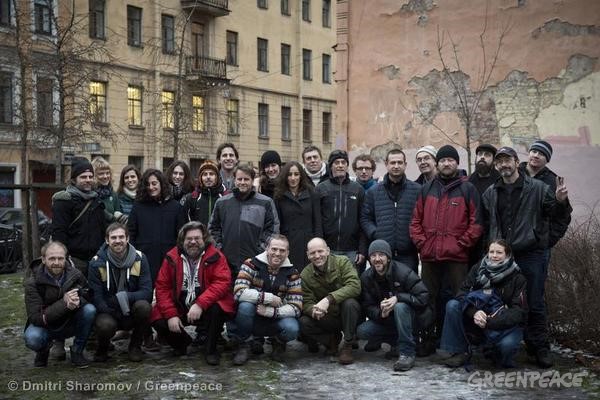
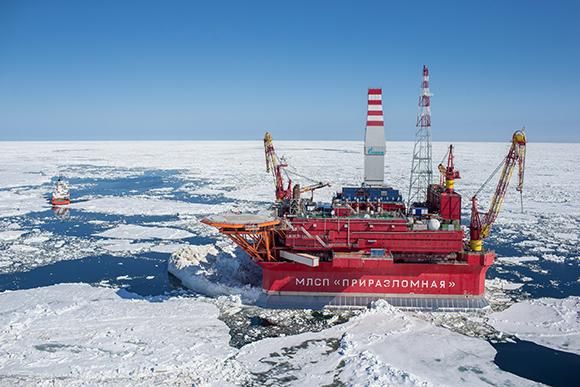
Twenty-eight Greenpeace protestors representing 18 nationalites – Americans, Canadians Britons and Australians, to name a few– and two freelance journalists were seized at the Prirazlomnoye platform on September 18 by Russian commandos. They boarded on the Arctic Sunrise to protest against drilling in the ice capped region, but were intercepted, captured, and charged of piracy, then reduced to hooliganism. If convicted, they could be locked up for at least seven years in jail.

The pardon came at a time when Russia’s first Arctic offshore field Prirazlomnoye started pumping oil in the remote waters of the Pechora Sea. Gazprom Neft announced on December 20 that oil production has begun with an average of 10.6 million barrels of oil per day, close to its current capacity. Gazprom expected an initial production of 12,000 barrels per day in 2014 and the first tanker is likely to be loaded with oil in the first quarter of next year.

Already an owner of the world’s largest natural gas reserves and a growing presence in the oil sector, Gazprom also aims to produce 6 million tons of crude per year (120,000 barrels per day) at the site by 2021.

The Arctic 30 in St. Petersburg awaiting trial on charges of hooliganism.

The Arctic 30 in St. Petersburg awaiting trial on charges of hooliganism.

Prirazlomnoye’s estimated oil reserves stand at 72 million tons — a small field that would be responsible for just 1 percent of Russia’s daily production and be depleted in about two decades, the Reuters reported.

Prirazlomnoye deposit is Russia’s first Arctic offshore exploration project, which marks the start of establishing of a large hydrocarbon hub in the region. The Prirazlomnoye oil deposit lies 60 km offshore in the Pechora Sea. The announcement also marks Russia’s long-planned effort to turn the vast oil and natural gas riches believed to be buried in the frozen waters into profits for its ambitious government-run firms. Gazprom also stressed it has rights to 29 other fields it planned to exploit in Russia’s section of the Arctic seabed.

But both Gazprom and the Kremlin view the field as a stepping stone in a much broader effort to turn the Arctic into the focus of future exploration that makes up for Russia’s declining oil production at its Soviet-era Siberian fields, according to AFP.

The Arctic region is seen as an important source of potential growth for Russia, the world’s largest oil producer, in the next decade, with global oil majors including ExxonMobil, Eni and Statoil clinching deals to enter the Russian Arctic. Russian President Vladimir Putin sees the Arctic offshore riches are of a strategic importance for the country.

Control over energy fields in Russia’s section of the Arctic is split between Gazprom and its state-owned rival Rosneft — an oil producer that wants to break Gazprom’s grip on the natural gas market. Rosneft is said to be partnering in the region with U.S. major ExxonMobil and has smaller deals signed with Italy’s ENI and Norway’s Statoil, the AFP report further added.

Gazprom sees overall investments into the project at about 200 billion rubles ($6 billion), of which half had already been spent with the bulk accounting for a special ice-proof platform.

Conservation groups react

Dima Litvinov, the first of the Arctic 30 to leave Russia for Finland said his freedom is not the end, but just a beginning.

Gazprom's Polarstar platform (Photo: Gazprom.ru)

Gazprom’s Polarstar platform (Photo: Gazprom.ru)

“ They (Gazprom) may have celebrated when our ship was seized, but our imprisonment has been a disaster for them. The movement to save the Arctic is marching now. Our freedom is the start of something, not the end. This is only the beginning. The oil companies are moving north, the world’s climate is changing, the biggest struggles still lie ahead of us.”

Greenpeace said all efforts to protect the last frontier of pristine resources will be exerted and the fight is not yet over. One of its campaign platforms to gather support is Save the Arctic.

Last year, the World Wildlife fund (WWF) released a joint report that seeks to find solution in the event of an oil spill in the region. It said that harsh conditions in Russia’s Pechora Sea coupled with an inadequate oil spill response plan mean that Gazprom would not be able properly respond to an oil spill in the Arctic

A comprehensive study and joint report was released last year by the WWF, Greenpeace, Hydrometcentre of Russia, SOI, AA RI, SRC Risk Informatics. The title of the report: “Simulation of the behaviour of oil spill in the course of OIRFP “PRIRAZLOMNAYA“ Operation Assessment of the possibility of emergency response related to oil spills.

The experts reviewed tens of thousands of possible scenarios and concluded that the area of possible contamination covers over 140,000 square kilometers of open water, as well as over 3,000 kilometers of coastline. The area at risk also includes three protected areas located 50-60 km from the Prirazlomnaya oil platform: the Nenetsky natural reserve, as well as two wildlife preserves, Vaigach and Nenetsky. These reserves are home to walruses and countless species of birds. Gazprom does not include any funds for animal rescue in its oil spill response plan.

 Gazprom's Prirazlomnaya platform in the Arctic (Photo: Gazprom)


Gazprom’s Prirazlomnaya platform in the Arctic (Photo: Gazprom)

Gazprom’s Technology

Gazprom defended its Prirazlomnaya as a unique platform designed and built in Russia on Gazprom orders. In a press statement, it said it uses technology designed to work in extreme conditions, conforms to the strictest safety requirements and is capable of withstanding maximum ice pressure. Specification of the materials used are comprehensively detailed to ensure Prirazlomnaya is oil-spill-free.

Blog Link: The Green Journal at Asian Correspondent

Santos to pay the price for contaminating Pilliga forest

The New South Wales Land and Environment Court is prosecuting for the first time an oil and gas company for spilling a toxic gas waste into the forest killing acres of trees.

The Sydney court is expected to announce its verdict on Santos Ltd. after the New Year. Santos is prosecuted this week for 10,000 liters of coal seam gas spill in the great inland of the Pilliga Forest, northwest of Sydney, in June 2011 without reporting it as required by law. Santos is the first-ever to be prosecuted under 1991 forest law.

Santos-rally

Community groups form a blockage to denounce Santos and the risks associated with fracking (Photo: Supplied)

On Wednesday, the company pleaded guilty on the spill and three counts of failing to file accurate environmental reports. Each charge carries a maximum fine of AU$110,000. Santos is also ordered to pay an additional AU$110,000 for the costs of the investigation and prosecution. The court’s prosecutor, Stephen Rushton, said the penalty serves as deterrence for others to follow.

Santos, acquired Eastern Star Gas July 2011 for AU$626 million. ESG ran a water treatment plant in the Pilliga forest. The polluted water spilled into the forest in June 2011, killing 77 percent of the trees in a 1.75 hectare area, the prosecution said.

The Wilderness Society claims that the senior management of Santos at the time knew about the June 2011 spill, but tried to cover it up. The Society said the court proceedings would then be a test for NSW Government regulation of the coal seam gas industry.

Wilderness Society Newcastle Campaign Manager Naomi Hogan said Santos deserves the maximum penalty for the cover up and that any penalty should be a serious deterrent to other companies.

The Society notes that communities across NSW are watching the ruling closely, as this court case exposes the reality of the water pollution and environmental damage associated with coal seam gas fracking operations.

The damage considered in this case was just from a handful of wells, yet now residents of north-west NSW are facing Santos’ plans for 850 production wells across the Pilliga and Narrabri region, the Society adds.

Local farmers had to report the toxic spill to the media before Santos took action, according to the Society, and this is ”a scary prospect to think that community members will have to continue to monitor coal seam gas pollution if gas fields expand across the north west as planned by Santos and the NSW Government.”

pilliga forest

Community leaders inspect the affected area of the Pilliga Forest (Photo: Supplied)

The Pilliga is considered the last great inland forest, home to many threatened species including the koala and Pilliga mouse. It’s part of the Murray Darling basin, Australia’s largest food bowl, and a major recharge zone for the Great Artesian Basin, an essential source of water for Outback Australia.

About 40 community members blockaded Santos’ Pilliga forest operations on Tuesday and another 25 protests outside the court on Wednesday. Dozens more protested outside Santos offices in Gunnedah and Narrabri.

Santos has always insisted people needs education when it comes to understanding the processes and benefits of fracking.

Drawing from its rich history for 40 years, Santos has been fracking for natural gas from sandstone in the Cooper Basin in outback South Australia. The gas is piped thousands of kilometres to Adelaide, Brisbane and Sydney.

Largest port to kill the Barrier Reef

The “Asian Century” has arrived in Queensland. The world’s largest port will rise soon that will pave the link between the Australian state and Asian market– India in particular.

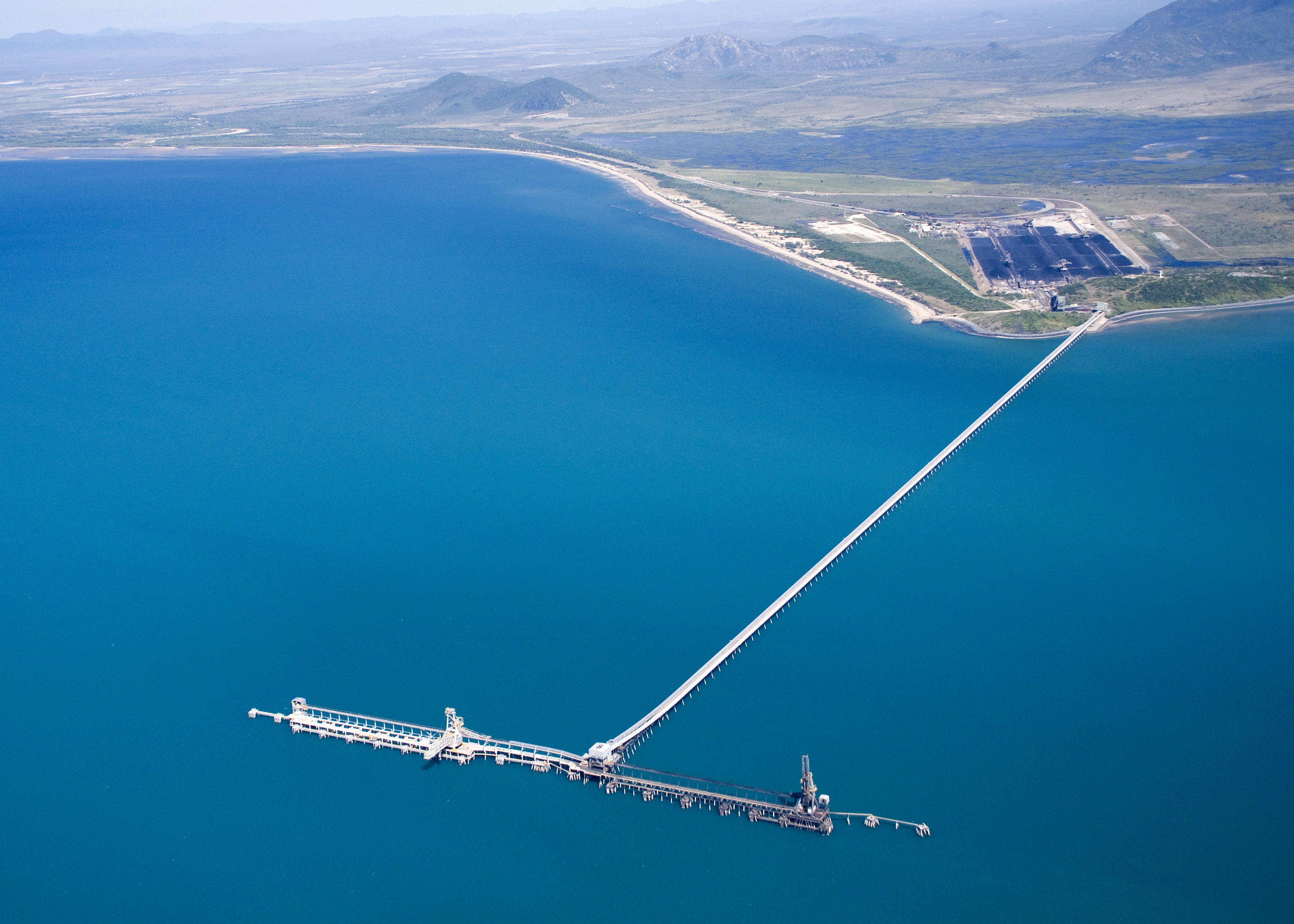
Aerial view Abbot Point T2 and T3

Aerial view Abbot Point T2 and T3

The Federal government gave the green light to the massive expansion of three major port terminals at Abbot Point, 26 km north of Bowen in Central Queensland– positioned to become one of the world’s largest industrial sea ports.

The approval gives Adani Enterprises Pty. Ltd. and GVK, among other mining companies, a breakthrough in the multi-billion coal industry which will exploit the potential of the coal-rich Galilee Basin.

Adani’s most recent performance at T0

Environment Minister Greg Hunt announced the decision on Tuesday after a ”rigid assessment” and the project’s environmental impacts. After a long delay, the minister approved four Queensland projects under the National Environmental Law, including the capital dredging program for the proposed Terminals 0, 2 and 3 at the Port of Abbot Point, the Adani T0 project, the Arrow Liquefied Natural Gas Facility on Curtis Island, and the Arrow Gas Transmission Pipeline to Curtis Island. The terminals will provide the necessary infrastructure to accommodate the ”bullish” coal industry within the Galilee Basin.

The approval of Terminal 0 (T0) is sure to boost Adani’s ambitious prospect to ship the coal to India. “Coal from this project will predominantly service the Indian market,”  Adani admitted. The group acquired the terminal for about two billion Australian dollars under a 99-year lease in 2011. T0 is estimated to have a 70 metric tonnes per annum mtpa (35 mtpa x two stages) handling capacity. T2 will be built by an Australian-own company, while T3 will be undertaken by GVK.

But the New York Times reported Adani bought the port in 2011 for 1.8 billion Australian dollars taking advantage of the area still recovering from a series of floods.

 “Abbott Point is our contribution to India’s global ambitions,” said Gautam Adani, chair of Adani. Adani. “An Indian billionaire and real estate magnate, runs the largest private sector coal importer in India, a country hungry for energy resources. He already has other investments in Queensland….”

The T0 alone is projected to generate  a financial value of A$ 1.4 – 2.8 billion annually in gross revenue which will contribute significantly to the Queensland and Australian economy. It will directly benefit Bowen locality and the wider Whitsunday region, Adani said in its presentation paper earlier this year.

Estimated employment stands at 500 jobs in construction and 200-250 jobs in operation, while it provides opportunity for expansion of permanent working population at the Port of Abbot Point. This projection, however, is based on the estimated export of thermal coal from Adani’s Carmichael Coal Mine and Abbot Point Coal Terminal 0 projects.

GVK, on the other hand, will undertake the expansion of  T3  port facilities and Galilee Basin coal assets including the Alpha, Alpha West and Kevin’s Corner coal projects. It will also construct a rail connection to the Abbot Point Port. “Together with the previously received clearances for the Alpha mine, the rail to Abbot Point ,GVK Hancock has solidified its leading position in the Galilee Basin of Queensland, Australia, ” the company said in a press release.

GV Sanjay Reddy, Vice Chairman  of the GVK Power & Infrastructure Limited, said the approval will enable the “provision of billions of tonnes of high quality, low sulphur, low ash, and cleaner burning coal for consumption in the Indian and Asian market.” He added, “this approval takes our projects in to the final stageof project development and we look forward to successfully developing and consolidating our position as the leading Indian infrastructure development company.”

The North Queensland Bulk Ports Corporation  (NQBC) has been commissioned as the port authority responsible for managing the project.

The extensive industrial projects along the eastern coast of Queensland. The darker blue line sketches the boundary of the world heritage area (Image: Fight for the Reef)

State Premier strengthens economic ties with India

The Galilee Basin is strengthening the economic ties between Queensland and India. Premier Campbell Newman admitted the potential of the region which could be a bigger contributor to Queensland’s economy than the coal seam gas industry.

Newman had visited Adani’s operation in India and believes in the export potential of the region. Further, he considers a long-term strategic business partnership with Indian companies. Mining Australia quoted him as saying, “They want coal to come for their thermal power stations day in, day out, week in, week out, month after month, for not 10 years or 20 years or 50 years; they want it to come for 70 to 100 years” .

On Gautam Adani, Newman is mesmerized with his business empire-building enthusiasm: “He owns the power lines, he owns the retail, he wants that coal. Now, the current coal price is not really a big thing in his calculations,” Newman said. “What he wants is supply security, and he wants to get that supply chain cost down as low as possible.”

Environmental concerns

Greenpeace lambasts the dredging and dumping of industrial waste into the vicinity of the reef.

Environmental groups, however, are enraged with the developments.

The terminals will require dredging of about three million cubic meters of sediments from the bottom of the sea. Local communities and environmental groups are outraged on how and where would the dredging spoils be dumped. The long-term effect after the area after the mining projects is also a matter of concern.

Hunt said he made an agreement with the Gladstone Ports Authority that they will not dispose of up to 12 million cubic metres of spoil within the Marine Park, but will instead use the material for land infill.

Hunt and Newman are already under fire from Green groups. The WWF, for one, is now pressing the Great Barrier Reef Marine Park not to issue a permit to the NQBPC to dump the dredge spoil into the reef waters.

The WWF-Australia, in partnership with the Australian Marine Conservation Society, has also launched a nationwide and international campaign, Fight for the Reef, that educates people about the implication of the large-scale industrialization of Australia’s east coast- more significantly its impact on the world-listed heritage site – the Great Barrier Reef.

Victoria bans fracking until 2015

Fracking is ongoing in many parts of Australia – business as usual. But there is a sigh of relief in Victoria, at least, for now. Re-blogging my post at AC over the weekend:

——

Bad news for gas exploration ventures in Victoria: Fracking moratorium stays until 2015. But for Greenies, it is party time!

Victorian Premier Denis Napthine announced towards the weekend his government is extending the moratorium on the process of unconventional gas fracking until at least July 2015.

Friends of the Earth Melbourne (FoE) has been seeking a gas-free Victoria and this announcement is a welcome development. The group said the state government has been listening to community concerns.

Lock the Gate rallies for a gas-free Australia (Photo:FoE)

The Premier, through his online news service, said that his government would not support on-shore gas production until scientific facts are known and clear evidence shown that such an industry would not risk the state’s assets. He said Victoria is taking a careful and measured approach to a potential onshore gas industry that will be informed by independent scientific facts and public consultation.

FoE Campaigner Cam Walker said the ban extension is a good start although he admitted the issue will not go away.  “Pushing the moratorium out to 2015 will take some of the heat out of the community concern over new fossil fuel projects… But it will not make the government’s problems go away. While gas exploration is allowed to continue, and the prospect of new coal allocations exists, the extension simply gives the community more time to get organised against these threats,” Walker said.

FoE maintains that the Napthine government’s capitulation to people power on unconventional gas will not diminish the community’s angst over new coal mining operations.

The next test for the government will be to see whether it drops plans for a further coal allocation.

Walker added that Napthine needs to understand that new coal is every bit as unpopular as new gas operations in regional Victoria.

Lock the Gate co-ordinator Ursula Alquier also said the state government’s extension to the moratorium on fracking will not stop the growing movement against unconventional gas. She suggested that the logical next step is for the government to ban any further exploration for unconventional gas and initiate a state inquiry into whether this industry will be safe for land, people and water.

“A public inquiry under an independent Chair would then provide information that would complement the findings of the 12-month community consultation program that will be carried out by Energy and Resources Minister Nicholas Kotsiras… without this data, we will be flying blind on whether this industry can be safe and compatible with continued agricultural activity in a densely populated state like Victoria,” Alquier said.

Friends of the Earth joined the National Day of Climate Action on Nov 17. (Photo: R. Yoon/Asian Correspondent)

The gas and petroleum sector, meanwhile, is disappointed with the Premier’s announcement.

According to a report from Mining Weekly,  the Australian Petroleum Production and Exploration Association (Appea) warned the moratorium would further delay diversifying the development of natural gas resources in Victoria and would result in higher-than-necessary energy prices.

Appea COO for Eastern Australia Paul Fennelly reportedly said, “The message to companies seeking to do business in Victoria – seeking to source natural gas, create jobs, revitalise rural communities, add to government revenue streams and provide additional income to farmers – is unfortunately crystal clear.”

Fenelly added the “Victorian government is paying more attention to short-term politics than science-based evidence and is clearly not displaying enough focus on attracting investment and building the economy, nor the consequences of failing to do so.”

Gas and oil explorer Lakes Oil’s chairman Rob Annells also criticised the moratorium on fracture stimulation, or fracking, claiming it is harming both Victoria’s economy and petroleum extraction industry employment, the Gippsland Times reported.

Annells said projects gas prices would rise significantly, probably doubling in the next three to four years, because Australia’s east coast gas market was about to be opened up to world prices when gas exports out of Gladstone, Queensland, began.

He is pessimistic that the consequent price rise will put pressure on local energy reliant industries, threatening employment.

Traditional owners reject river protection law in Cape York

Time has changed in Cape York, Queensland. Traditional land owners have taken a step to support industrialisation over conservation of river systems.

This week, the Federal Court announced it will rule some of the Wild Rivers laws invalid.

Wenlock River in Cape York is one of the river systems protected under Wild Rivers laws.

Cape York traditional owners have pursued their case against Wild Rivers environmental laws to the Federal Court. The laws to protect river systems were enforced during the Labor government in 2009. There were oppositions in the past, but with the new Liberal government, they are more resolved than ever before.

Martha Koowarta, the widow of land rights campaigner John Koowarta, is leading the case to overturn the declaration of three rivers: the Archer, Lockhart and Stewart Rivers – which traditional owners argue were improperly made.

Repealing the Wild Rivers declarations was one of the promises made by the National Liberal Party (LNP) which intended to replace the conservation laws with Cape York Regional Plan (CYRP).

The Association of Mining and Exploration Companies (AMEC), a member of the CYRP Committee met in Cairns on September 18 after Prime Minister Tony Abbott was sworn into office to discuss the draft of the CYRP.

AMEC Regional Manager, Bernie Hogan announced in a statement, “This is another step towards achieving coexistence for industry, local communities and Government.”

He said the decision of the Campbell Newman Government to scrap the four Wild Rivers declarations as part of the CYRP recognises the opportunities of the area for appropriate mining and mineral exploration activities, as well as agriculture and tourism.

He added the revocation gives investors confidence in the region to do business and up for economic development that will secure the future of all Queenslanders.

“We look forward to seeing this sensible approach to development rolled out in other parts of the state as well, particularly where Wild Rivers declarations have stifled exploration in the Northwest of the state” Hogan conluded.

A propaganda against conservation in Queenland. (Photo: Supplied)

Deputy Premier and the Minister for State Development, Infrastructure and Planning Jeff Seeney also met the CYDP Committee which brought together the Cape York Mayors, key industry and community stakeholders and other State Ministers the day after Abbott was sworn.

Seeney said the Newman Government is “setting a course to open the region to economic diversity and opportunities, while balancing the protection of the Cape’s unique environment.”

However, he made it a point that Newman wants to identify infrastructure opportunities that will support economic growth in the region and not introduce additional unnecessary regulation.

The Wilderness Society, meanwhile, is re-affirming its support for the conservation of Wild Rivers systems in Cape York.

Wilderness Society National Director Lyndon Schneiders said the Wild Rivers laws protect the rivers from large-scale development threats, such as in-stream mining, damming, and intensive irrigation It also guarantees indigenous people traditional hunting, fishing, land management and conservation, through protection of native title rights and support for rangers.

While the Society acknowledged and expressed its enormous respect for Koowarta and her family and respect their long struggle for sovereignty over many years, the Society also strongly supports the protection of Cape York’s wild rivers and call for the maintenance of Wild Rivers protection.

Schneiders said the matters being considered by the Federal Court include the consultation process that preceded the making of three Wild River declarations by the Queensland Government in 2009.

“In respect to the consultation process, we note that the Cape York Balkanu Development Corporation was contracted by the Queensland Government….We have always urged compliance with the Native Title Act and supported effective engagement and negotiation processes between government and Traditional Owners, ” he said.

Map of the Archer, Lockhart and Stewart in Cape York. (Image:National Water Commission)

Schneiders reiterates that Wild Rivers declarations represent an effective and flexible approach to conservation which protects the health of the rivers for future generations and allow sustainable development, as well as cultural and recreational use.

The Wild Rivers laws keep mining and other destructive activities away from the most important parts of river catchments – precisely the kind of destructive developments that are now proposed, Schneiders said.

Schneiders  concludes that Wild Rivers declarations represent an effective and flexible approach to conservation which protects the health of the rivers for future generations and allow sustainable development, as well as cultural and recreational use.

Blog Link: The Green Journal/Asian Correspondent