Deutsche bank rebuffs Adani’s funding request

The Deutsche Bank of Germany announced it will not lend money to the Indian mining firm Adani Group to finance the development of Abbot Point Terminal I. The decision came after an AGM held on Thrusday.

We stress that we take the future of the Great Barrier Reef very seriously. We observe that there is no consensus between UNESCO and the Australian government regarding the expansion of Abbot Point. Since our guidance requires such a consensus as a minimum, we would not consider a financing request. – Deutsche Bank Group

Deutsche Bank Group convenes AGM 2014 (Photo: Deutsche Bank Group FB)

Adani is one of the last remaining investors standing for the port terminal, along with another Indian firm, GVK Group.

Other investors have long abandoned their stakes, including mining giants Rio Tinto, BHP Billiton, Lend Lease and Anglo American. Market and financial analysts said the multi-billion dollar investment is unfeasible due to the end of the mining boom, with the downward spiraling of coal market prices worldwide. Galilee Basin in northern Queensland, where coal will be extracted,is also extremely remote and without basic infrastructure.

Tony Brown, tour operator for the Whitsundays, speaks at the bank’s AGM 2014 (Photo: Market Forces)

Australian mining goddess Gina Rinehart, herself, sold most of her coal assets in 2011. GVK bought them.

But despite Indian interests, the project has been stalled for two years. Adani is required to complete all environmental approvals and then raise AU $8 billion of additional debt and equity financing, and hence allow construction to commence on the Carmichael coal, rail and port proposal. Read the scale and magnitude of funding HERE.

There are speculations that the two companies tried to sell their equity holdings. GVK allegedly offered Coal India Ltd, but was rebuffed due to its uncommercial value. Adani is also rumoured to have approached several Chinese firms, including China Railway Corp.

Early this month, the Institute for Energy Economics and Financial Analysis (IEEFA) warned investors it is too risky to invest in the project. Local banks which were appointed to finance the project include National Australia Bank, Commonwealth Bank, and Westpac Banking Corp- on top of a few other international banks.

Tim Buckley , director of Energy Finance Studies, Australasia for the Institute for Energy Economics and Financial Analysis said that India cannot afford the price of imported coal:

India’s perilous economic and financial situation creates further uncertainty for companies relying on its ability and willingness to import coal, with its associated implications for inflation, current account deficits, economic instability and energy security’.

He also said that “imported coal would require double the current price of India’s wholesale electricity, which categorically discredits the nonsense argument that it might alleviate India’s energy poverty.” Buckley has produced detailed reports on Adani and GVK.

Whitsundays tour operator Tony Brown joins the rally in Germany (Photo: Market Forces)

Various environmental and civic groups have written the Deutsche Bank not to lend Adani.  Australian-base civic groups also linked with their European counterparts to “pressure” the bank. Some travel operators in Queensland further travelled to Germany to join the rally.

At the end of the AGM on Thrusday, the bank released the Deutsche Bank’s Environmental and Social Reputational Risk Framework (ES Framework), which stipulates the bank’s  environmental and social due diligence as an integral part of the approval process for doing business.

One of the specific guidelines recently adopted addresses activities in the close proximity to World Heritage Sites. It precludes transactions within or in close proximity to World Heritage Site unless there is a prior consensus between the relevant Government and UNESCO that such operations will not adversely affect the Outstanding Universal Value of the Site. This implies that we would not consider a request to finance an expansion unless we had the assurance of both the government and UNESCO that it would not adversely affect the Value of the Site.

Read: Deutsch Bank official stand and UNESCO’s State of Conservation

Blog Link: The Green Journal/ Asian Correspondent

Indian groups keep stake in Abbot Point, reef dumping

Indian mining groups –  Adani and GVK-Hancock –  have not waivered to drop their stakes in the controversial Abbot Point Port terminals in Northern Queensland.

The rest had already dropped the deal, including BHP Billiton and Rio Tinto. Anglo American is the latest to announce it is walking away.

Abbot Point in Northern Queensland (Photo: NQBPC)

BHP Billiton has formally withdrawn from the $5 billion worth of project as the preferred developer of Terminal 2  in 2012. It also pulled out of building a rail line linking the port with Bowen Basin mines.

Early on, doubt has been cast over the feasibility of the project.

The recent decision by Anglo American re-affirms the unfeasibility of the project. The firm announced that oversupply of coal in the world market has dampen prices.

As of its December 2013 financial records, “metallurgical coal saw underlying operating profit fall 89% to $46m, while thermal coal profits fell 32% to $541m as a result of lower realised prices.”

Bloomberg’s writer, Elisabeth Berhmann, quoted a Sydney-based commodity analyst from Goldman Sachs Groups Inc as saying, “For these projects to be attractive investments, you need to be quite bullish about thermal coal prices….If you’re a power company, and you’re wanting to secure sources of coal, there’s plenty of coal in the market.”

Mining Australia notes the expansion would see four terminals costing $6.2 billion which would provide an extra annual capacity of 120 million tonnes. this would also support the development of mines in the Bowen, Surat, and Galilee Basins.

Adani and GVK Hancock, however, are all out to develop Terminal 0 and Terminal 3, respectively.

Josh Euler, manager for corporate affairs at GVK Hancock, welcomes the decision to go ahead with the expansion. He said in a  press statement , “This is a significant milestone in developing our Galilee Basin coal projects, which represent the creation of over 20,000 direct and indirect jobs and over $40 billion in taxes and royalties.” .

Double disadvantage

Amid bearish coal market prices, environmental groups have denounced the Government’s decision due to its high risk posing an irreversible damage to the world heritage site. The Great Barrier Reef Marine Park Authority (GBRMPA) approved the dumping of 3 million cubic metres of dredge spoil in the reef marine park

The Australian public has been outraged with the approval. Last year, the United Nations downgraded the world heritage site into the endangered list.

Protesters in mascots against dumping on the reef. (Photo: AAP)

GBRMPA expedited a crisis communication in an attempt to ‘enlighten’ and ‘pacify’ the public.. Its chairman, Russell Reichelt,  has written an article at the academic online paper –The Conversation –  to justify the approval. He said the decision is based on comprehensive study and sound judgment that will not do any lasting harm to the heritage site. Discussion has been open to the public since March 3. Reichelt answers the queries himself although readers– composed of engineers, scientists, researchers, and ordinary citizens — are neither convinced nor impressed with the attempt to “gloss over” the real issue.

Observers said, there is something fishy at the sudden turn around of decision considering the warnings over sediments dumping.

Greenpeace  also found a document that questions the integrity of the decision. It shows that GBRMPA feared the dumping would annihilate the barrier reef. However, the Environment Department ignored the warnings and pressured the marine park authority.

Greenpeace campaign poster against Adani group

Indian firms- the culprit

Furious tour operators and Greenpeace are pointing fingers at the Indian mining tycoons as the culprit of an impending catastrophic disaster awaiting the vast expanse of corals.

Association of Marine Park Tour Operators President Colin McKenzie, the peak industry lobby group covering tourism in the World Heritage-listed reef region, accused the marine park authority of pandering to politicians and for allowing Adani group to undertake a risky business.

“The biggest culprit is Adani, an Indian corporation that wants to build Australia’s biggest coal mine in the Galilee Basin in central Queensland, and needs the dredging to allow huge coal ships to access their proposed new coal terminal at Abbot Point to send their coal overseas,” Greenpeace said.

Related story HERE

Santos to pay the price for contaminating Pilliga forest

The New South Wales Land and Environment Court is prosecuting for the first time an oil and gas company for spilling a toxic gas waste into the forest killing acres of trees.

The Sydney court is expected to announce its verdict on Santos Ltd. after the New Year. Santos is prosecuted this week for 10,000 liters of coal seam gas spill in the great inland of the Pilliga Forest, northwest of Sydney, in June 2011 without reporting it as required by law. Santos is the first-ever to be prosecuted under 1991 forest law.

Santos-rally

Community groups form a blockage to denounce Santos and the risks associated with fracking (Photo: Supplied)

On Wednesday, the company pleaded guilty on the spill and three counts of failing to file accurate environmental reports. Each charge carries a maximum fine of AU$110,000. Santos is also ordered to pay an additional AU$110,000 for the costs of the investigation and prosecution. The court’s prosecutor, Stephen Rushton, said the penalty serves as deterrence for others to follow.

Santos, acquired Eastern Star Gas July 2011 for AU$626 million. ESG ran a water treatment plant in the Pilliga forest. The polluted water spilled into the forest in June 2011, killing 77 percent of the trees in a 1.75 hectare area, the prosecution said.

The Wilderness Society claims that the senior management of Santos at the time knew about the June 2011 spill, but tried to cover it up. The Society said the court proceedings would then be a test for NSW Government regulation of the coal seam gas industry.

Wilderness Society Newcastle Campaign Manager Naomi Hogan said Santos deserves the maximum penalty for the cover up and that any penalty should be a serious deterrent to other companies.

The Society notes that communities across NSW are watching the ruling closely, as this court case exposes the reality of the water pollution and environmental damage associated with coal seam gas fracking operations.

The damage considered in this case was just from a handful of wells, yet now residents of north-west NSW are facing Santos’ plans for 850 production wells across the Pilliga and Narrabri region, the Society adds.

Local farmers had to report the toxic spill to the media before Santos took action, according to the Society, and this is ”a scary prospect to think that community members will have to continue to monitor coal seam gas pollution if gas fields expand across the north west as planned by Santos and the NSW Government.”

pilliga forest

Community leaders inspect the affected area of the Pilliga Forest (Photo: Supplied)

The Pilliga is considered the last great inland forest, home to many threatened species including the koala and Pilliga mouse. It’s part of the Murray Darling basin, Australia’s largest food bowl, and a major recharge zone for the Great Artesian Basin, an essential source of water for Outback Australia.

About 40 community members blockaded Santos’ Pilliga forest operations on Tuesday and another 25 protests outside the court on Wednesday. Dozens more protested outside Santos offices in Gunnedah and Narrabri.

Santos has always insisted people needs education when it comes to understanding the processes and benefits of fracking.

Drawing from its rich history for 40 years, Santos has been fracking for natural gas from sandstone in the Cooper Basin in outback South Australia. The gas is piped thousands of kilometres to Adelaide, Brisbane and Sydney.

Largest port to kill the Barrier Reef

The “Asian Century” has arrived in Queensland. The world’s largest port will rise soon that will pave the link between the Australian state and Asian market– India in particular.

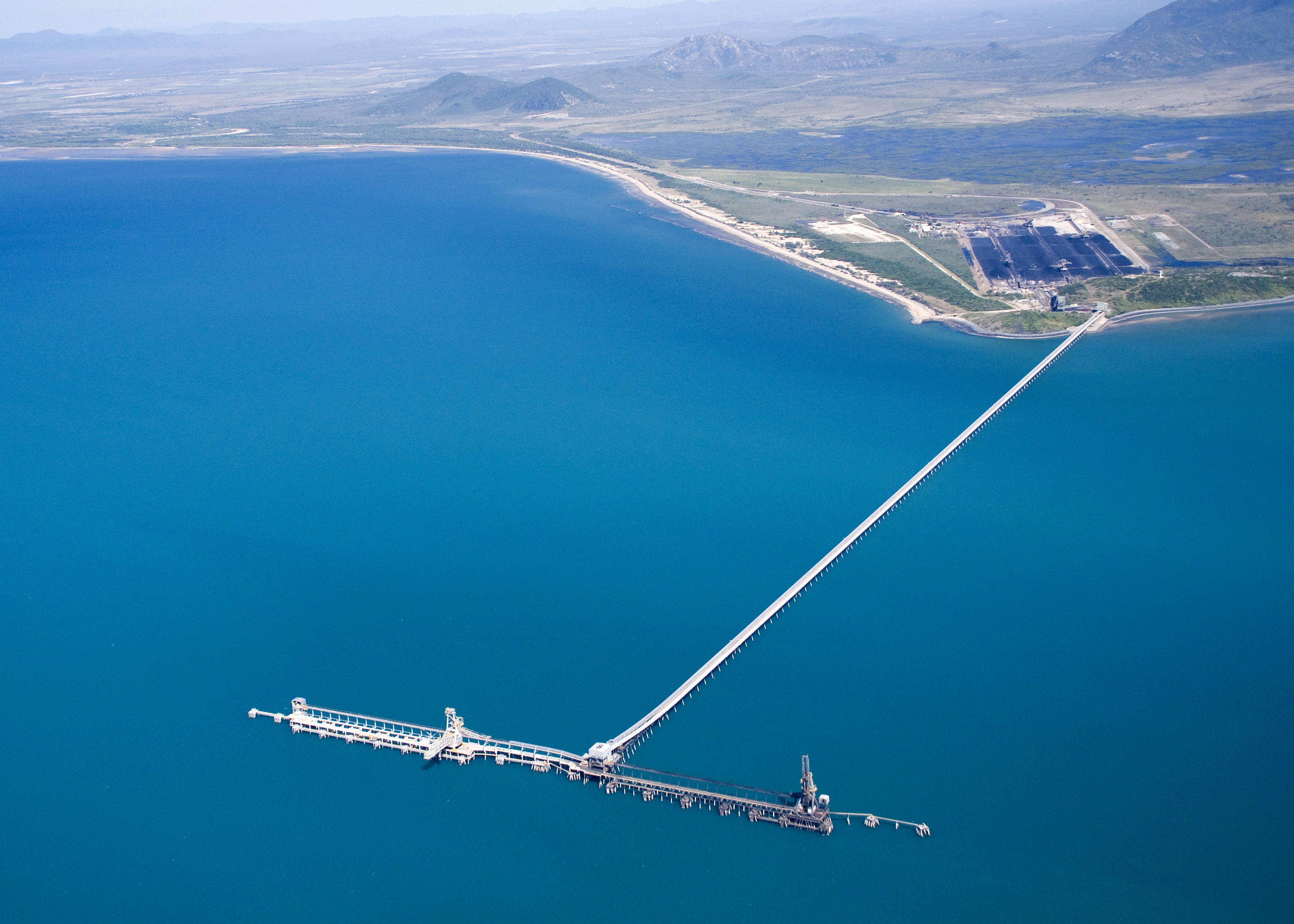
Aerial view Abbot Point T2 and T3

Aerial view Abbot Point T2 and T3

The Federal government gave the green light to the massive expansion of three major port terminals at Abbot Point, 26 km north of Bowen in Central Queensland– positioned to become one of the world’s largest industrial sea ports.

The approval gives Adani Enterprises Pty. Ltd. and GVK, among other mining companies, a breakthrough in the multi-billion coal industry which will exploit the potential of the coal-rich Galilee Basin.

Adani’s most recent performance at T0

Environment Minister Greg Hunt announced the decision on Tuesday after a ”rigid assessment” and the project’s environmental impacts. After a long delay, the minister approved four Queensland projects under the National Environmental Law, including the capital dredging program for the proposed Terminals 0, 2 and 3 at the Port of Abbot Point, the Adani T0 project, the Arrow Liquefied Natural Gas Facility on Curtis Island, and the Arrow Gas Transmission Pipeline to Curtis Island. The terminals will provide the necessary infrastructure to accommodate the ”bullish” coal industry within the Galilee Basin.

The approval of Terminal 0 (T0) is sure to boost Adani’s ambitious prospect to ship the coal to India. “Coal from this project will predominantly service the Indian market,”  Adani admitted. The group acquired the terminal for about two billion Australian dollars under a 99-year lease in 2011. T0 is estimated to have a 70 metric tonnes per annum mtpa (35 mtpa x two stages) handling capacity. T2 will be built by an Australian-own company, while T3 will be undertaken by GVK.

But the New York Times reported Adani bought the port in 2011 for 1.8 billion Australian dollars taking advantage of the area still recovering from a series of floods.

 “Abbott Point is our contribution to India’s global ambitions,” said Gautam Adani, chair of Adani. Adani. “An Indian billionaire and real estate magnate, runs the largest private sector coal importer in India, a country hungry for energy resources. He already has other investments in Queensland….”

The T0 alone is projected to generate  a financial value of A$ 1.4 – 2.8 billion annually in gross revenue which will contribute significantly to the Queensland and Australian economy. It will directly benefit Bowen locality and the wider Whitsunday region, Adani said in its presentation paper earlier this year.

Estimated employment stands at 500 jobs in construction and 200-250 jobs in operation, while it provides opportunity for expansion of permanent working population at the Port of Abbot Point. This projection, however, is based on the estimated export of thermal coal from Adani’s Carmichael Coal Mine and Abbot Point Coal Terminal 0 projects.

GVK, on the other hand, will undertake the expansion of  T3  port facilities and Galilee Basin coal assets including the Alpha, Alpha West and Kevin’s Corner coal projects. It will also construct a rail connection to the Abbot Point Port. “Together with the previously received clearances for the Alpha mine, the rail to Abbot Point ,GVK Hancock has solidified its leading position in the Galilee Basin of Queensland, Australia, ” the company said in a press release.

GV Sanjay Reddy, Vice Chairman  of the GVK Power & Infrastructure Limited, said the approval will enable the “provision of billions of tonnes of high quality, low sulphur, low ash, and cleaner burning coal for consumption in the Indian and Asian market.” He added, “this approval takes our projects in to the final stageof project development and we look forward to successfully developing and consolidating our position as the leading Indian infrastructure development company.”

The North Queensland Bulk Ports Corporation  (NQBC) has been commissioned as the port authority responsible for managing the project.

The extensive industrial projects along the eastern coast of Queensland. The darker blue line sketches the boundary of the world heritage area (Image: Fight for the Reef)

State Premier strengthens economic ties with India

The Galilee Basin is strengthening the economic ties between Queensland and India. Premier Campbell Newman admitted the potential of the region which could be a bigger contributor to Queensland’s economy than the coal seam gas industry.

Newman had visited Adani’s operation in India and believes in the export potential of the region. Further, he considers a long-term strategic business partnership with Indian companies. Mining Australia quoted him as saying, “They want coal to come for their thermal power stations day in, day out, week in, week out, month after month, for not 10 years or 20 years or 50 years; they want it to come for 70 to 100 years” .

On Gautam Adani, Newman is mesmerized with his business empire-building enthusiasm: “He owns the power lines, he owns the retail, he wants that coal. Now, the current coal price is not really a big thing in his calculations,” Newman said. “What he wants is supply security, and he wants to get that supply chain cost down as low as possible.”

Environmental concerns

Greenpeace lambasts the dredging and dumping of industrial waste into the vicinity of the reef.

Environmental groups, however, are enraged with the developments.

The terminals will require dredging of about three million cubic meters of sediments from the bottom of the sea. Local communities and environmental groups are outraged on how and where would the dredging spoils be dumped. The long-term effect after the area after the mining projects is also a matter of concern.

Hunt said he made an agreement with the Gladstone Ports Authority that they will not dispose of up to 12 million cubic metres of spoil within the Marine Park, but will instead use the material for land infill.

Hunt and Newman are already under fire from Green groups. The WWF, for one, is now pressing the Great Barrier Reef Marine Park not to issue a permit to the NQBPC to dump the dredge spoil into the reef waters.

The WWF-Australia, in partnership with the Australian Marine Conservation Society, has also launched a nationwide and international campaign, Fight for the Reef, that educates people about the implication of the large-scale industrialization of Australia’s east coast- more significantly its impact on the world-listed heritage site – the Great Barrier Reef.

Don’t mine the the Reef!

From Greenpeace:

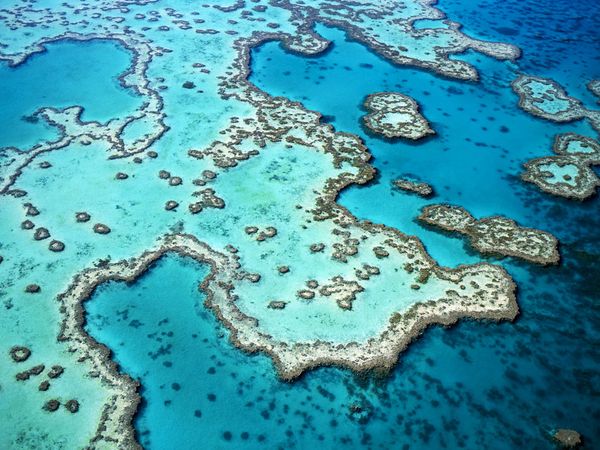
The Great Barrier Reef World Heritage Area covers an area of 348,000 square kilometres and more than 2300 kilometres long

Who has heard of the Galilee Basin? Virtually no one. That is the problem.

We are witnessing one of Australia’s biggest environmental emergencies unfold but it is taking place out of the public eye. And it threatens one of the world’s greatest natural treasures – the Great Barrier Reef.

Watch the video HERE

The Great Barrier Reef is on the brink of being turned into an industrial zone, with huge new coal ports and shipping routes waiting to be approved. These developments are the result of plans to rapidly increase Australia’s coal exports. The coal will be mined in Queensland’s Galilee Basin and shipped overseas via the Great Barrier Reef.

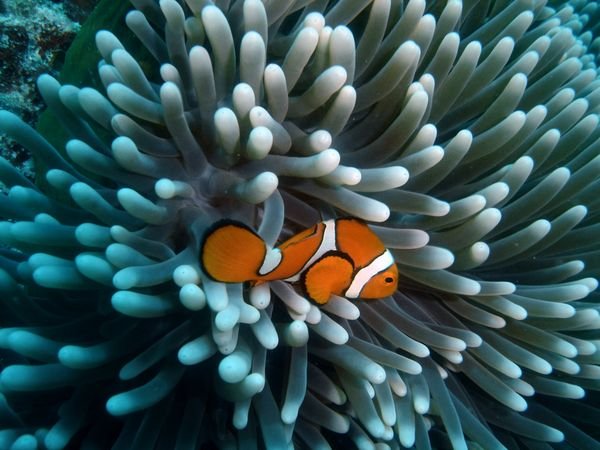
Beautiful marine lives under threat (Photo: National Geographic)

A new Greenpeace investigation has revealed the damage the coal mines could have if they go ahead. The Galilee Basin mines threaten our World Heritage Reef, as well as the stability of our climate, the health of our water supply and the habitat of native wildlife.

Let our politicians know you don’t want our environment sacrificed 
- SIGN PETITION

Australia’s biggest contribution to global warming is our coal exports. As plans progress to rapidly increase our coal exports, just yesterday the Arctic ice sheet melted to its lowest point on record; the result of an increasingly warming climate.

Greenpeace’s investigative findings:

•There are nine mega coal mines proposed here, five of which would be bigger than any mine currently operating in Australia.

•If the coal from the Galilee mines is burned, it would produce over 700 million tonnes of carbon pollution a year – that’s bigger than the entire fossil fuel emissions of Australia, the UK or Canada.

•These mines are the single biggest driver of industrialising the Great Barrier Reef. A series of coal ports are planned to be built and expanded, millions of tonnes of sea floor will be dredged and up to 10 000 coal ships will travel through World Heritage Area.

•If we don’t reduce our emissions, sea temperatures will rise. If they rise by 2-3°C it would result in the annual bleaching of over 97% of the Reef. There is a growing movement of people taking action in this epic struggle to safeguard our precious Reef and the stability of our climate.

Greenpeace welcomes underwater investigation

Please join us by signing the ‘Save our Reef’ petition now.

After carbon tax, coal to power the economy

Following economists’ recent prediction of the impending end of mining boom cycle, the Federal Government is scrambling to find an alternative solution to power the Australian economy and is now turning to seam gas and brown coal projects.

New South Wales and Victoria received the green lights to go ahead with the projects, respectively – stirring rounds of uproar from local industries, farmers, consumers, and environmental groups.

Hunter Valley in NSW is home to one of the world’s finest wineries and is now under seam gas exploration threat.

In January this year, the Federal Government created the Independent Expert Scientific Committee to provide impartial advice on the environmental effects of coal mining and coal seam gas projects. But ABC’s Lateline revealed that four out of the six members have financial links with the mining industry.

  • Professor Chris Moran – director of the Sustainable Minerals Institute at the University of Queensland. In 2010 the institute received $17 million, more than half of its funding, from coal seam gas and mining giants Santos, BHP Billiton, BG Group, Rio Tinto and many more.
  • Associate Professor David Laurence – head of the University of NSW Centre for Sustainable Mining Practices. It’s funded with a $1.1 million grant by Mitsubishi Development, a Japanese-controlled coal miner with significant investments in Queensland.
  • Professor John Langford – shareholder in coal seam gas and coal companies for his self-managed superannuation funds.
  • Professor Peter Flood –  a regular consultant for the resource industry.

Affected by the coal, the Hunter Thoroughbred Breeders Association represents stallion farms, broodmare farms, the largest equine hospital in the Southern Hemisphere.

The committee is chaired by Professor Craig Simmons who said the committee is made up of distinguished academics with long and credible public records. He rejected any suggestion that the committee’s work is influenced by industry.

Professor Gary Willgoose, a hydrologist who holds a prestigious position of Australian professorial fellow said it is virtually impossible to find an independent expert as the coal seam gas industry funds and provides the vast majority of research and consultancy work.

Larissa Walters, Federal Green Senator, however said, “These people have been appointed to scrutinise the impacts of coal seam gas and coal mining. You want to make sure that they’re not getting paid by the industry and therefore might turn a blind eye to some of the more dastardly impacts of the industry.” Read ABC TRANSCRIPT.

In Victoria, the brown coal investment is in full swing under the Ted Baillieu Government. The federal and Victorian governments today announced the creation of a $90 million fund for new brown coal projects in the Latrobe Valley.

North brown coal power station in Gippsland, Victoria. (Photo: Aaron Francis/The Australian)

The Sydney Morning Herald said each government will contribute $45 million to pay for the development and rollout of brown coal technologies, including drying for export, conversion into fuels and fertilisers, and reducing emissions from coal-fired electricity generation. The announcement comes ahead of the Victorian Government opening its controversial tender for new allocations of brown coal in the Latrobe Valley.

Federal Energy Minister Martin Ferguson said the program will create jobs in the LaTrobe Valley region, spur economic growth, and create a sustainable source of energy for Victorian industries and households.

The Minister also said,

There is a potential for brown coal to develop into a valuable export, which would not be possible without the technological innovation that may also assist in meeting the Government’s emissions reductions targets of five per cent fewer emissions than 2000 levels by 2020.”

Victorian Energy Minister Michael O’Brien said,

Our brown coal resource has for a long time benefited all Victorians, delivering a reliable and affordable power source that has underpinned our economic growth and been a competitive advantage for the state.

There is a long term viable future for the Latrobe Valley based on the sustainable use of brown coal.’

Expressions of interests for grants will close on November 19. The governments said construction of the  first funded project will be scheduled for 2013-14.

Meanwhile, Friends of the Earth campaign coordinator Cam Walker released a media statement to express his group’s disappointment over the government’s sneaky plan of scrapping clean energy projects.

The Yallourn brown coal power station in Victoria’s Latrobe Valley. (Photo: News Limited)

Last week, the Federal Energy Minister announced it will cancel the $100 grant to the proposed HRL coal-fired power plant in the Latrobe Valley. He said the announcement is devastating for the Victorian communities. The $45 million Victorian government contribution could be use to invest in clean energy technology. Walker said the announcement is a massive lost opportunity.

Instead of continuing to peddle the notion of ‘clean’ coal technologies, the government should be putting public funds into job rich renewable technology. The state government has shut off much of the state to wind energy, and refuses to listen to community concerns about coal and CSG. Having done a U Turn on climate action, it seems the government of Ted Baillieu is determined to take Victoria back into the 1950s by continuing to support the expansion of the obsolete brown coal industry.

Australia’s mining goddess acquires Fairfax media

Mining magnate Gina Rinehart grabbed the largest stake at Fairfax Media with additional 42 million shares costing $25 million which she bought in just one transaction today. This increased her total share at the company to almost 15 per cent from 13 per cent, The Australian reported.

Gina Rinehart grabs Fairfax. (Photo: Patrick Hamilton/Perth Now)

Rinehart bought the shares at a price of 60 cents per share. The trade was worth $25.2 million representing 1.8 per cent of Fairfax’s total issued shares, the AAP said at noon.

Perth Now, however, is following up latest developments including a dramatic approached for 235 million shares which was made after the local sharemarket closed, with the offer available till 8pm.

Fairfax is one of the two biggest and most influential media conglomerates in Australia, along with the News Limited owned by the old-rich Rupert Murdoch’s clan.

Perth Now also noted Canberra Media analyst Peter Cox who believes Rinehart is increasing her stake to boost her influence in national affairs. He said Rinehart has already acquired Ten News as a financial investment.

“So this has to be driven by her view on politics in Australia…What’s the point of spending that money on it if you’re not going to have influence?”

The latest stake must be a way to go forward fulfilling the prophesy of climate sceptic Lord Christopher Monckton who advised the rich to capture the media to advance free-market agenda.

Australia’s mining magnates: Clive Palmer, Gina Rinehart, Andrew Forrest

Monckton spoke last year to free-market think tanks in WA on “How to better capture the Australian media to help push a right-wing, free-market and climate sceptic agenda.” It was a boardroom meeting hosted by the Mannkal Economic Education Foundation, a group chaired by mining “Hall of Fame” member Ron Manners to promote free-market ideals and low government intervention.

ABC’s The Drum said Manners is a member of Gina Rinehart’s lobby group ANDEV, which has been joined by the Institute for Public Affairs to lobby for a separate low-tax low regulation economic zone for the north of Australia to make mining projects easier to develop.

The original version of the video has been deleted from You Tube, but GetUp reposted it with transcription capturing Monckton’s verbatim sinister claims:

Is there an Australian version of Fox News?… No….

Frankly whatever you do at a street level, which is what you are talking about here, is not going to have much of an impact compared with capturing an entire news media.

You look at the impact that Andrew Bolt has had since he was rocketed to fame and that is the way to do it, you have to capture the high ground of what are still the major media, and what will remain for quite some time.

And until we crack that one both in the UK and Australia, we’re going to suffer from an disadvantage, against the more libertarian right-wing minded people in the United States…who have got Fox News and have therefore got things like a Tea Party, have at last put some lead into the pencil of the republican Party.

And it seems to me that putting some time into encouraging those we know who are super rich to invest in perhaps even establishing a new satellite TV channel is not an expensive thing, and then get a few…Joe Novas and Andrew Bolts to go on and do the commentating everyday—and keep the news free and fair and balanced, as they do on Fox. That would be breakthrough and give to Australia as it has for America a proper dose of free market thinki

The Australian said Rinehart admitted her desire to control two board seats at the media company which publishes The Sydney Morning Herald, The Age in Melbourne, and the Australian Financial Times. The company also controls the auction website TradeMe, as well as the Southern Cross Broadcasting network of radio stations.

Amid mining boom, Rinehart was also the first mining magnate to get the approval from the Federal Government to import 1715 foreign workers under a new type of 457 visa for the three-year construction phase of Roy Hill iron ore mine in Western Australia.

Caricature to mock Rinehart’s foreign workers (By Nicholson)

The scheme angered local workers and labour unions. Labour observers said Rinehart will take advantage of skilled foreign workers that come with cheaper wages.

This year, the BRW magazine named Rinehart as theworld’s richest woman with $29 billion mining fortune making her $3 billion richer  than Christy Walton’s, the widow whose inherited wealth springs from US retail giant Wal-Mart.

The ABC said “Ms Rinehart has ridden Australia’s resources boom like no-one else; her wealth ballooning by an unparalleled $18.87 billion in the past year….That equates to $1,077,054 every 30 minutes of every day.

Blog LInk: Asian Correspondent