Don’t mine the the Reef!

From Greenpeace:

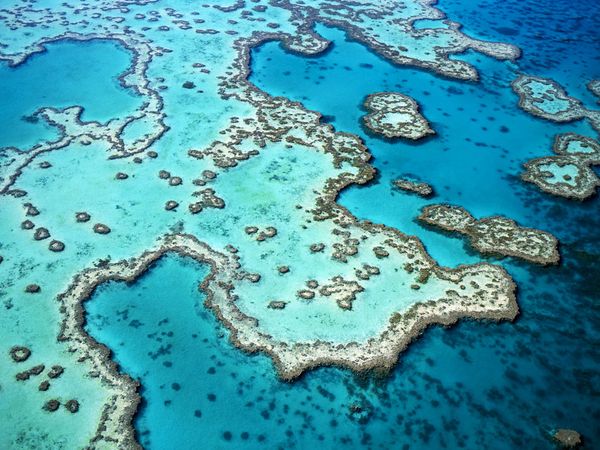
The Great Barrier Reef World Heritage Area covers an area of 348,000 square kilometres and more than 2300 kilometres long

Who has heard of the Galilee Basin? Virtually no one. That is the problem.

We are witnessing one of Australia’s biggest environmental emergencies unfold but it is taking place out of the public eye. And it threatens one of the world’s greatest natural treasures – the Great Barrier Reef.

Watch the video HERE

The Great Barrier Reef is on the brink of being turned into an industrial zone, with huge new coal ports and shipping routes waiting to be approved. These developments are the result of plans to rapidly increase Australia’s coal exports. The coal will be mined in Queensland’s Galilee Basin and shipped overseas via the Great Barrier Reef.

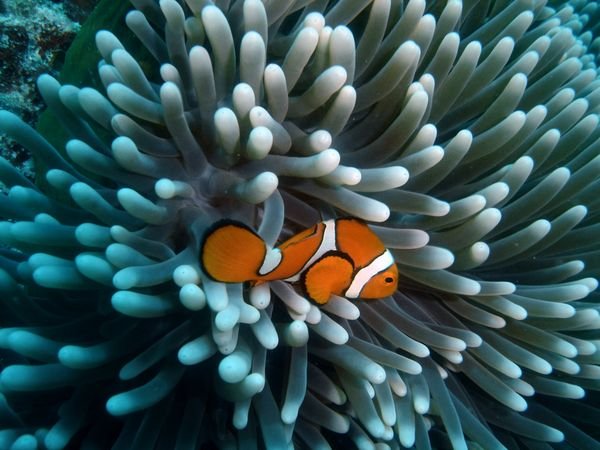
Beautiful marine lives under threat (Photo: National Geographic)

A new Greenpeace investigation has revealed the damage the coal mines could have if they go ahead. The Galilee Basin mines threaten our World Heritage Reef, as well as the stability of our climate, the health of our water supply and the habitat of native wildlife.

Let our politicians know you don’t want our environment sacrificed 
- SIGN PETITION

Australia’s biggest contribution to global warming is our coal exports. As plans progress to rapidly increase our coal exports, just yesterday the Arctic ice sheet melted to its lowest point on record; the result of an increasingly warming climate.

Greenpeace’s investigative findings:

•There are nine mega coal mines proposed here, five of which would be bigger than any mine currently operating in Australia.

•If the coal from the Galilee mines is burned, it would produce over 700 million tonnes of carbon pollution a year – that’s bigger than the entire fossil fuel emissions of Australia, the UK or Canada.

•These mines are the single biggest driver of industrialising the Great Barrier Reef. A series of coal ports are planned to be built and expanded, millions of tonnes of sea floor will be dredged and up to 10 000 coal ships will travel through World Heritage Area.

•If we don’t reduce our emissions, sea temperatures will rise. If they rise by 2-3°C it would result in the annual bleaching of over 97% of the Reef. There is a growing movement of people taking action in this epic struggle to safeguard our precious Reef and the stability of our climate.

Greenpeace welcomes underwater investigation

Please join us by signing the ‘Save our Reef’ petition now.

Greens join forces to save the Tarkine

The Wilderness Society, Tarkine National Coalition, and GetUp! joined forces in the campaign to protest the “out-of-control” mining ventures in the Tarkine in Tasmania and push for its enlistment in the World Heritage Site.

Convoluted rocks at the west coast off Tarkine. (Photo: Flickr)

Massive banners in front of a proposed Venture Minerals’ open cut mine in the Meredith Ranges have been unveiled as part of the Tarkine wilderness. Tarkine is claimed to have been recently assessed by the Commonwealth and Tasmanian Governments to have a national and World Heritage values prompting strong community oppositions to any developmental aggression.

Here’s from the campaigners:

Liz Johnstone, Tarkine campaigner for The Wilderness Society, said many of these values, however, are under threat from new open cut mines. Some are proposed in existing conservation reserves that have been watered down to allow mining and exploration.

Venture and a range of other companies have plans to build strip and open cut mines in the region, ahead of the findings of an Australian Heritage Commission assessment of the environmental significance of the area.

Miners, Australian Workers Union join forces to support mining in the Tarkine. (Photo: ABC)

Paul Oosting, campaign director for GetUp, said the Tarkine has evolved over 40 million years to be what is now one of the few last remaining wild places on the face of the planet, yet Venture Minerals wants to go into what is currently a conservation area and strip mine it for just 2-8 years.

“Today we have seen the Tasmanian community stand up and take action to not let this happen and we know that they have the support of people from around the country who want to see this area properly protected,” Oosting said.

Vica Bayley, campaign manager for Wilderness Society Tasmania, said that the event signals an escalation of the community campaign and a counter to the provocative actions of the Australian Workers Union and the mining industry who are pre-empting the current national heritage assessment and pushing ahead with risky mining proposals.

“The AWU, the mining lobby and companies need to back off and allow due process and the heritage assessment to conclude before locking in destructive proposals that threaten the values of the area and impact on the heritage listing that previous assessments prove this region deserves,” Bayley said.

GetUp’s “Save the Tarkine” campaign

The action before Monday’s (24 Sept) Extraordinary General Meeting of Venture Minerals’ shareholders in Perth, where a decision will be made on capital raising needed to kick start its mines in the Tarkine. “The company, its shareholders and financial backers must realise that mining World Heritage value wilderness is a risk not only to the environment, but also to their investment,” Bayley said.

More info about this campaign: Tarkine National CoalitionWilderness Society Tasmania, GetUp!

Tasmanian Premiere Lara Gidding maintains that the Tarkine is insignificant, with mining representing only one per cent of the region.

Blog Link: Asian Correspondent

Tarkine Wilderness begs Govt protection

What’s the fuss about Tarkine?

“Here, some of the tallest and oldest trees in the world are being logged for woodchips — irreplaceable virgin forests converted into toilet paper.” – The Green Left

Discover the hidden treasures of the Tarkine (Photo: Carol Haberie/Tarkine Wilderness of Tasmania)

This is one of the uncomfortable truths about the current state of the Tarkine, one of the last remaining pristine wilderness of Tasmania and claimed to be disturbed by logging and open cut mining operators.

Tarkine could be an unfamiliar destination to most intrepid travelers, but to those who know this place by heart, Tarkine can match the beauty and historical significance of iconic spots such as the Ayers Rock (Uluru), Sydney Opera House, or Bondi Beach.

The Tarkine is the largest wilderness in the north-west region of Tasmania sprawling over 477,000 hectares. It is dominated by pristine rainforests with dramatic view of wild rivers, deep gorges, and waterfalls. About 70 percent of the total area is rainforest, 90 percent of which is regarded as old-growth forest.

Arthur River rainforest in the Tarkine (Photo: Tarkine.org)

The Tarkine is considered by conservationists as one of world’s oldest rainforests. It hidden treasures contain relics from the ancient super-continent, Gondwanaland. It is home to more than 60 rare species. Unique animals include the Giant Freshwater Lobster – the world’s largest freshwater crustacean; the Tasmanian Wedge Tailed Eagle – Australia’s largest Eagle; and the famous Tasmanian Devil.

However, environmental groups lament its lack of government protection. Increased commercial activities in area are claimed have posed a serious threat to various species, some of which are now considered endangered.

Green groups believe Tarkine should be given equal importance like other great Australian landmarks. As such, Tarkine has been pushed for listing in the World Heritage Site. But its listing faces no paved road – hampered by the Government’s dilemma between conservation and economic pursuits.

The fact is both the Federal and State governments do not think Tarkine should be listed.

The Tasmanian Devil is one of the species under threat.

The Federal Government said it has enough protection while the Tasmanian State Government said logging and mining will create and sustain jobs and livelihood.

Early on, The Mercury reported the State Government supports mining ahead of the environment in a submission to the Federal Government on whether the Tarkine Wilderness Area should be protected by national heritage laws.

The report said Energy and Resources Minister Bryan Green admitted the State Government “desperately wanted to see lucrative projects such as the multi-million-dollar Mt Lindsay tin mine reach fruition.”

Dollars generated by mining can surpassed dairy, beef, and wine combined. The mining ventures of St Lindsay mine, for one, aims to target the world’s second-largest tin deposit that overlaps part of the Tarkine in the state’s North-West. It could generate up to $250 million annually, the report added.

Tasmania Priemiere Lara Giddings also admitted mining industry is a crucial source of income for the Government. The ABC reported she is adamant the Tarkine’s proposed listing should not compromise future mining operations.

She says low impact operations similar to MMG’s new Southern Hercules open cut mine at Rosebery can occur in the Tarkine without compromising the region’s environmental values.

“Mining is an essential part of the Tasmanian economy, it has a royalty benefit to the State Government which helps to contribute to our state budget as well, so we’re keen to see mining continue.”


Rare species inhabit the Tarkine (Photo: Discovertarkine.com)

The Age has traced back the history of the campaign to protect the Tarkine. It says it started from Tasmanian forests disputes way back the 1980s. Former Green Senator Bob Brown suggested the name “Tarkine” to honour the memory of the local indigenous Tarkiner people. The campaign was initially dubbed “For the Forests”. Since then frequent skirmishes over its protection have become common.

Ever since there has been skirmishing over its protection – no more so than in the case of the ”Road to Nowhere”. This 70-kilometre, north-south link road cutting across the wilderness’ western side took seven years to build – and was stopped and restarted by successive governments.

When the road opened in 1995, then Premier Ray Groom claimed it as proof the tide was turning against environmentalists. It remains little used.

Logging into the northern fringes of the Tarkine has a long history and has met few protests. Its most contentious timber is the rainforest myrtle – a deep-red cabinetmaker’s delight. Under the Howard government, 70,000 hectares of myrtle rainforest was reserved in 2005.

Guided tours are provided in the Tarkine (Photo:tarkinelodge.com)

The Tarkine Wilderness has been waiting for enlistment as a national park for the past three decades, but the Federal Government is delaying it for further consideration.   UK-based The Independent noted the Government is unconvinced of its listing while the the WWF, among with other Green groups have been watching for the development of  the Tarkine’s listing. View timeline here.

While the Tarkine awaits, the Tarkine National Coalition fears ten new mines will put up over the next five years.

Blog Link: Asian Correspondent

Australia’s new Fairfax media to promote mining agenda?

Following Gina Rinehart’s massive share buy outs last week, Fairfax announced its long-overdue plan to go digital via paid subscription— scrapping outdated print versions of Australia’s major broadsheets, namely the Sydney Morning Herald and The Age.

Mining billionaire Gina Rinehart is now one of Australia’s most powerful women (Photo: AAP)

The media company is set to shut down the printing presses of the two papers located in Chullora in Sydney’s south-west and Tullamarine in north-west Melbourne, respectively, the ABC reported.

About 1,900 jobs have to go in the next three years shocking workers at the presses.

Andrew Jaspan, former editor-in-chief of The Age and a current editor of The Conversation, also said about about 20 percent of the editorial staff, about 150- 200, are also poised to lost their jobs. He added that the media company can still produce a “premium print” edition using a few journalists.

He said the media company has been mismanaged by people who do not have direct experience in the media industry.

Fairfax announced massive job cuts (Photo: Julian Smith)

The print editions, he said, are outdated formats invented 155 years ago noting that the Internet has radically changed the nature and the way news are distributed. He said “rivers of gold” generated by advertising have been dried up.

One by one Fairfax was stripped of its classified advertising “rivers of gold”. The jobs went to Seek.com.au, Cars to Carsales.co.au, homes to Realestate.com.au.

He proposed the digitalisation of Fairfax way back in 2007 when the company’s market value was $5 billion. After five years, the value dipped to as low as $1 billion. The shareprices also collapsed from $5 per share to 60 cents which predators like Rinehart has taken advantage of, he added.

The former Fairfax editor said Rinehart will not run the media like an investor but instead she will use the media to sway public opinion.

Back in 2010 she and her fellow mining barons spent $22m to get rid of Kevin Rudd’s proposed mining tax….. And so successful was the campaign that they got rid of Rudd and saved themselves an estimated $20bn in taxes.

Rinehart’s appointment of Australia’s leading climate change sceptic, Ian Plimer, as an advisor to her mining companies is simply a taste of what’s to come. As one senior Fairfax editor remarked, expect this kind of front page once Rinehart gets control. “Exclusive: Climate Change is a Hoax”.

Activists group, GetUp, tell supporters to exposed the “truth” behind Rinehart’s Fairfax raid. (Photo: GetUp)

Rinehart grabbed nearly 19 percent of the total shareholding of Fairfax Media in two separate buy outs last week. Her company, Hancock Prospecting ,confirmed she has increased her stake at the company from 13 percent, a status which already made her the majority shareholder. She cannot hold more than 20 percent unless she bid for a takeover as stipulated under Corporations Act, the ABC said.

Related article here.

Blog Link: Asian Correspondent

Australia’s mining goddess acquires Fairfax media

Mining magnate Gina Rinehart grabbed the largest stake at Fairfax Media with additional 42 million shares costing $25 million which she bought in just one transaction today. This increased her total share at the company to almost 15 per cent from 13 per cent, The Australian reported.

Gina Rinehart grabs Fairfax. (Photo: Patrick Hamilton/Perth Now)

Rinehart bought the shares at a price of 60 cents per share. The trade was worth $25.2 million representing 1.8 per cent of Fairfax’s total issued shares, the AAP said at noon.

Perth Now, however, is following up latest developments including a dramatic approached for 235 million shares which was made after the local sharemarket closed, with the offer available till 8pm.

Fairfax is one of the two biggest and most influential media conglomerates in Australia, along with the News Limited owned by the old-rich Rupert Murdoch’s clan.

Perth Now also noted Canberra Media analyst Peter Cox who believes Rinehart is increasing her stake to boost her influence in national affairs. He said Rinehart has already acquired Ten News as a financial investment.

“So this has to be driven by her view on politics in Australia…What’s the point of spending that money on it if you’re not going to have influence?”

The latest stake must be a way to go forward fulfilling the prophesy of climate sceptic Lord Christopher Monckton who advised the rich to capture the media to advance free-market agenda.

Australia’s mining magnates: Clive Palmer, Gina Rinehart, Andrew Forrest

Monckton spoke last year to free-market think tanks in WA on “How to better capture the Australian media to help push a right-wing, free-market and climate sceptic agenda.” It was a boardroom meeting hosted by the Mannkal Economic Education Foundation, a group chaired by mining “Hall of Fame” member Ron Manners to promote free-market ideals and low government intervention.

ABC’s The Drum said Manners is a member of Gina Rinehart’s lobby group ANDEV, which has been joined by the Institute for Public Affairs to lobby for a separate low-tax low regulation economic zone for the north of Australia to make mining projects easier to develop.

The original version of the video has been deleted from You Tube, but GetUp reposted it with transcription capturing Monckton’s verbatim sinister claims:

Is there an Australian version of Fox News?… No….

Frankly whatever you do at a street level, which is what you are talking about here, is not going to have much of an impact compared with capturing an entire news media.

You look at the impact that Andrew Bolt has had since he was rocketed to fame and that is the way to do it, you have to capture the high ground of what are still the major media, and what will remain for quite some time.

And until we crack that one both in the UK and Australia, we’re going to suffer from an disadvantage, against the more libertarian right-wing minded people in the United States…who have got Fox News and have therefore got things like a Tea Party, have at last put some lead into the pencil of the republican Party.

And it seems to me that putting some time into encouraging those we know who are super rich to invest in perhaps even establishing a new satellite TV channel is not an expensive thing, and then get a few…Joe Novas and Andrew Bolts to go on and do the commentating everyday—and keep the news free and fair and balanced, as they do on Fox. That would be breakthrough and give to Australia as it has for America a proper dose of free market thinki

The Australian said Rinehart admitted her desire to control two board seats at the media company which publishes The Sydney Morning Herald, The Age in Melbourne, and the Australian Financial Times. The company also controls the auction website TradeMe, as well as the Southern Cross Broadcasting network of radio stations.

Amid mining boom, Rinehart was also the first mining magnate to get the approval from the Federal Government to import 1715 foreign workers under a new type of 457 visa for the three-year construction phase of Roy Hill iron ore mine in Western Australia.

Caricature to mock Rinehart’s foreign workers (By Nicholson)

The scheme angered local workers and labour unions. Labour observers said Rinehart will take advantage of skilled foreign workers that come with cheaper wages.

This year, the BRW magazine named Rinehart as theworld’s richest woman with $29 billion mining fortune making her $3 billion richer  than Christy Walton’s, the widow whose inherited wealth springs from US retail giant Wal-Mart.

The ABC said “Ms Rinehart has ridden Australia’s resources boom like no-one else; her wealth ballooning by an unparalleled $18.87 billion in the past year….That equates to $1,077,054 every 30 minutes of every day.

Blog LInk: Asian Correspondent

Queensland slams UNESCO, defends gas on the barrier reef

UNESCO has released its damning environmental report on the Great Barrier Reef, but the Queensland State Government hits back saying the report poses an obstacle to the multi-billion dollar seam gas business.

The report came in time when the mineral boom is underway and the Queensland Government is excited about financial gains. Queensland Premier Campbell Newman said his Government understands the issues raised in the report but could not accommodate some of its chief recommendations, News Corp. reports.

Newman said his government is in coal business and he is not going to see the economic future of Queensland shut down.

UNESCO sent a team of experts in March to assess the status of the reef confronted by both natural and man-made threats. While natural threats could be beyond control, the impact of the latter can be minimised if the Queensland Government can review and adopt strategic solutions.

The international body said the World Heritage listed site is under enormous pressure amid increased developmental activities, including additional port infrastructures in and around the Great Barrier Reef and ongoing management of major liquefied natural gas (LNG) plants at Curtis Island and Gladstone Harbour.

The dredging in Gladstone Harbour for the seam gas has been blamed by local environmentalists for the area’s poor water quality and a skin disease affecting marine life. Green activists say dredging has adversely affected whales and dugongs in the area.

UNESCO recommended to the State Government to stop port facilities expansions and to undertake a comprehensive review and strategic solutions to protect the Outstanding Universal Value of the reef.

It warned the reef could officially be listed “in danger” if the federal Government fails to convince the international body it has improved its performance before February next year.

Whether Queensland would be able to help improve environmental conditions of the reef or not, both state and federal governments have already given mineral explorations a go. Federal Environment Minister Tony Burke supports the developmental projects saying the approval of applications has been in full swing. He said there was not much he could do to prevent development applications already in progress.

Mining magnates Clive Palmer and Gina Rinehart have likewise secured government’s approval of their mining ventures in Queensland. Further, the two mining lords have  been pressuring the Government to allow them to build the world’s largest coal export facility right in the heart of the Great Barrier Reef World Heritage Area. The facility is envisioned  to double Australia’s coal exports. The mining moguls expect to hear of Government’s decision in 36 weeks time, GetUp noted.

GetUp, an activist group, said mining billionaires are used to getting their way,” but they’re not the only ones who know how to fight.”  The group has forged a tie up with Greenpeace and BankTrack to undertake an advertising campaign in key financial market in Asia and India to warn potential investors not to invest in these projects.

It’s not just UNESCO who are against the massive expansion of coal and coal seam gas facilities. We’ve just released an opinion poll that found 79 per cent of  Australians are already concerned about the expansion of mining along the Reef’s recognised heritage area — and that was before UNESCO’s  scathing criticisms started to make headlines nationwide.

GetUp is optimistic the ad campaign will work.  It claims that  in 2009, it funded ads in the European Financial Times to discourage potential investors who were previously considering to fund Gunns’ pulp mill in Tasmania.

Blog Link: Asian Correspondent

Foreign workers to benefit from Australia’s mining boom

Australian Prime Minister Julia Gillard is fighting for an equitable distribution of wealth amid the current mining boom.

Gillard visits workers who are afffected by foreign labour scheme. (Photo: Gary Ramage/ The Daily Telegraph

Gillard told mining bosses at the Australian Mineral Council last night they don’t own the nation’s resources and that she will not back down with her controversial mining and carbon taxes. She said the Government allows them to dig up the earth, but they do not own its wealth.

The AAP said Gillard told her audience the need for a tough leadership to spread the benefits of the boom.

I know that not all of you in this room are in love with the language of ‘spreading the benefits of the boom’.. .Australia needs tough leadership and I think you know by now I’m prepared to fight….

About $500 billion of investment is currently in the pipeline and Gillard said there is no better place in the world to invest in than Australia.

Australia is ready to take advantage of the mega profits and to spread the wealth through taxes. However, taxing appears to be insufficient in the face of local labour shortages.

Association of Mining and Exploration Companies chief Simon Bennison admitted there are many people who are not qualified triggering unrest among labour unions led by the Australian Council of Trade Unions.

Australian media has announced mining magnate Gina Rinehart has already applied for the Federal Government’s Enterprise Migration Agreement (EMA) which would allow “mega” resource projects to import temporary foreign labour.

Mining magnate Gina Rinehart is the first to apply for EMA (Photo: ABC)

The EMA is another controversial scheme approved by the Federal Government without consultation from the labour sector.

Rinehart needs workers to work for the construction of her Roy Hill iron ore project in the Pilbara region.

The EMA would allow mega resource projects to source 1715 of its 8415 workers needed during its three year construction phase from overseas. The Daily Telegraph said the foreign workers would likely come from “the UK, Europe, India, China, South Korea and the Philippines. At least 6758 Australians will be employed on construction, including 2000 trainees. ”

Bennison said huge mining projects may qualify for an EMA to allow them “to import workers, needed skilled workers ready to work, who simply did not exist in Australia.”

Bennison said the majority of workers that were needed to meet demand in the industry were tradespeople such as welders and plumbers. “Training them up takes time,” he said.

Blog Link: ASIAN CORRESPONDENT