Unknown's avatar

About rowenadelarosayoon

Communications strategist encompassing a broad scope of print and online journalism, public relations, marketing, campaign and developmental writing, research, website planning, social media strategy, and all related areas.

Aussie forests escape inferno, Greens rejoice

Australia’s old-growth forests will not go to the furnace to generate electricity—at least for now.

Environment watchers are rejoicing over the Parliament’s vote against subsidies intended for loggers to burn native growth forests to generate power.

A campaign against forest burning. (Design by Paul Kimbrell http://www.eastgippsland.net.au)

Tasmania’s Huon Valley Environment Centre, for one, praised the Federal MPs who voted against Lynn MP Robert Oakeshott’s motion to allow Renewable Energy Certificates to be generated by burning wood from the logging of native forest.

The Green Left described the motion as a narrow escape for the logs to avoid the blazing inferno — a vote of 72-72 with Speaker Peter Slipper casting the final ‘no’ vote to Rob Oakeshott’s motion.

A spokeswoman for the Western Australia Forest Alliance, Jess Beckerling, says it is a win for forests around the country. “It’s a really strong indication that common sense has prevailed,” she told the ABC.

In a press statement, the Huon Valley Environment Centre biomass campaigner Will Mooney also said this rejection must encourage government and businesses to search for a truly renewable energy options. He said communities across Australia will be relieved that plans for polluting native forest fuelled power stations will not be eligible to draw on incentives.

He added the vote scrapped the plan to build power station near Lonnavale in Tasmania. A 30MW power station is estimated to consume over 300,000 tonnes of timber a year.

Huon Valley Environment Centre spokesperson Jenny Weber also said the vote “backs up the concerns of conservation organisations, health advocates, scientists and community groups who have voiced a range of concerns about logging industry plans to prop up native forest logging with large scale wood-fired power stations…”

Prior to the vote, letters have been sent to the Members Of Parliament rejecting Oakeshott’s Disallowance Motion.

A Tasmanian tourist spotted this sign and posted it in a travel blog.

The Australian Forest and Climate Alliance urged the MPs to act at this critical time for the future of not only Australia’s forests, but also the climate.

The native forest logging industry is currently experiencing market driven changes that provide the opportunity to shift Australia’s wood and paper production industry onto a sustainable path, based on plantations. The opportunity to transition the forest industry at this critical time will be lost if new incentives are created that will drive ongoing native forest logging.

The disallowance motion put forward by Mr Oakeshott that would allow native forest wood ‘waste’ burnt for electricity to be eligible for Renewable Energy Certificates under the government’s Renewable Energy Target. The climate alliance cited reasons to reject disallowance motion which summarise the unfeasibility of the plan.

This motion, if passed, will create a new incentive to log Australia’s last remaining native forests, prevent the rapid transition into a viable plantation based industry.  Australia’s public native forests are much more valuable as carbon sinks, biodiversity habitats, water providers and purifiers, and as tourist destinations.

Climate Change Minister Greg Combet told Nine News the government was determined to provide support for bio-energy investment while also ensuring that native forests are afforded appropriate protection.

“While biomass derived from native forests though is no longer recognised under this regulation as an eligible renewable energy source … those changes do not … prohibit the use of this biomass for bio-energy.”

The vote against Oakeshott put to rest the controversial “endorsement of scientists” who argued burning forest can lead to renewable energy.

A poster purportedly designed in favour of clearfelling (Photo:Anonymous blog)

Early this month, the Port Macquarie News reported a controversial move to classify burning of native wood waste as renewable energy has received support from scientists.

It said 49 forestry scientists and practitioners signed a letter of support for a motion put forward by Lyne MP Rob Oakeshott and seconded by New England independent Tony Windsor that would see logging companies granted Renewable Energy Certificates for burning native forest residues.

Professor Rod Keenan, the director of the Victorian Centre for Climate Change Adaptation Research Centre at The University of Melbourne, was among the signatories, the paper reported. Keenan is said to have argued that wood waste, now burnt either in the forests or at the sawmill, was an appropriate substitute for fossil fuels.

However, the Green Left published ” Scientists’ open letter to Oakeshott: Burning forests for energy will make climate change worse.”

At Styx Forest, TAS, the diameter of an old tree can hold a number of people. (Photo: Flickr)

The green publication noted the scientists saying the ”decision to support incentives for native forest-burning power stations has alarming ramifications for communities and natural ecosystems across Australia.”

If you have any question about this article, please leave a Reply or email The Green Journo.

News Link: Asian Correspondent

New species found in Skullbone Plains,Tasmania

From the email loop circulated by the Tasmanian Land Conservancy which was dropped into my inbox today:

The recent Bush Blitz at our fabuolous Skullbone Plains reserve has been a tremendous success — with between 520 to 550 species of plants and animals collected during the week.

Phil Hurle, Australian National Botanical Gardens preparing specimens collected from Skullbone Plains (Photo: TLC)

Now that the fieldwork is now over, the team of 20 scientists are back in their labs identifying the specimens. This can often take many months, if not years to complete. Each specimen will be painstakingly described and documented before being entered into the collection of the Tasmanian Museum and Art Gallery and the Tasmanian Herbarium, as well as other museums, universities and herbaria around Australia. They will be carefully preserved and made available for research.

A recent exhibit of the Australian National Botanical Gardens

Why the Blitz ? There are many plants and animals still to be discovered by science. There are an estimated 566,398 species in Australia – but three-quarters of this biodiversity is yet to be identified. Forty-five per cent of continental Australia and over 90 per cent of our marine area have never been comprehensively surveyed by scientists.

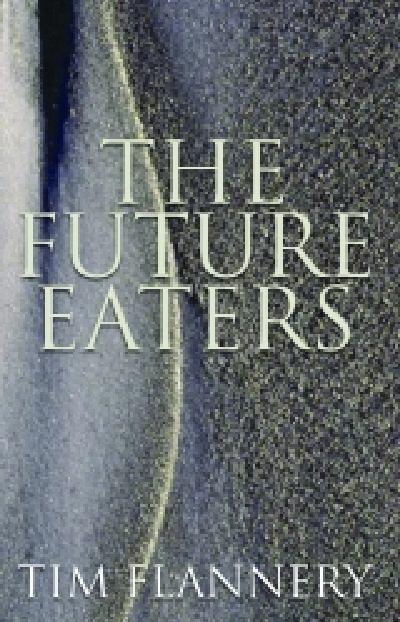
Published by Reed Books Australia, 1994

Interesting stuff. I have just read the introduction of Tim Frannery”s book, The Future Eaters, which brings into light how the waves of settlement and immigration have changed Australia’s biodiversity. Many of the native animal and plant species have become extinct in the course of influx of foreign species and foreign environmental practices.

Sustainable Communities: An invite to listen

Here’s to mark my calendar to attend this event.
Sustainable communities: collaborating, planning, delivering – a C40 Cities Climate Leadership Group public event

Dear Rowena,

The City of Melbourne, in conjunction with the C40 Cities Climate Leadership Group, invites you into the minds of the world’s leading thinkers on sustainability. The sharpest minds on cities and sustainability will be in Melbourne during March for a workshop on sustainable cities and this Melbourne Conversations event is your chance to hear what they are saying.

Sustainable communities: collaborating, planning, delivering has been developed in conjunction with the C40 workshop and will allow you to hear about leading-edge approaches to creating and maintaining sustainable communities.

Come along and give us your comments and opinions from the audience ‘hot seat’ or get involved in the conversation online through our Facebook group or on Twitter.

Date: Thursday 29 March 2012 Time: 6pm to 7.30pm (doors open at 5.30pm) Venue: BMW Edge Federation Square, corner of Flinders and Swanston streets, Melbourne

Free entry – no bookings

For more information visit the City of Melbourne What’s On website.

We would like to thank all of our contributing partners for their involvement in this event: Federation Square, C40 Cities, Future Leaders, Lend Lease Development, the Australian Department of Climate Change and Energy Efficiency, Green Building Council of Australia, ICLEI, Places Victoria and World Green Building Council.

Professor Jan Gehl – Gehl Architects: Copenhagen, Denmark Professor Billie Giles-Corti – Director, McCaughey Centre: VicHealth Centre for the Promotion of Mental Health and Community Wellbeing, Melbourne School of Population Health, University of Melbourne Ms Li Lixin – Deputy Chief of Air Pollution Control Division, Beijing Municipal Environmental Protection Bureau, Beijing, China Ms Romilly Madew – Chief Executive, Green Building Council of Australia, Sydney Ms Melanie Nutter – Director San Francisco Environment Department, USA Moderator: Peter Mares, Fellow, Cities Program, Grattan Institute, Melbourne

Being Green and Colourful

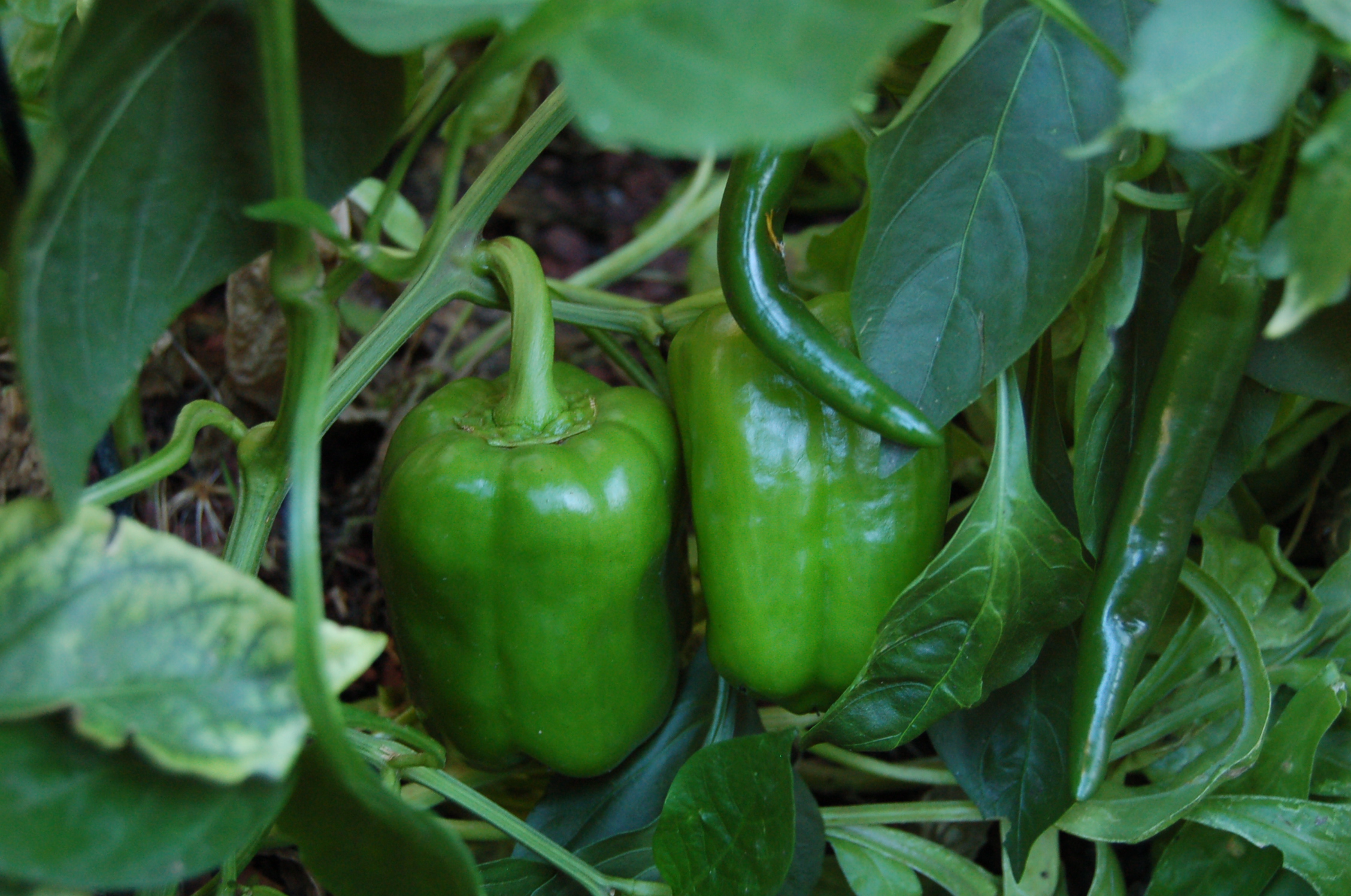
The good thing about gardening is to experience the freedom of being connected to Mother Earth. It is like going back home. Whether you sow a seed or a tiny sprout, nature will show its wonder day after day. Soil, water, sunshine, and the care of the gardener unfold a miracle as the sprout grows, flowers, and produces fruits. Grown from a tiny plot of land at the backyard, these capsicum and chillis are genuinely organic in every sense of the word– no fertiliser, no pesticide, and non-commercial.

Green capsicums (bell peppers) and unripened chillis are grown on a tiny plot of land at the backyard. (Photo: The Green Journo)

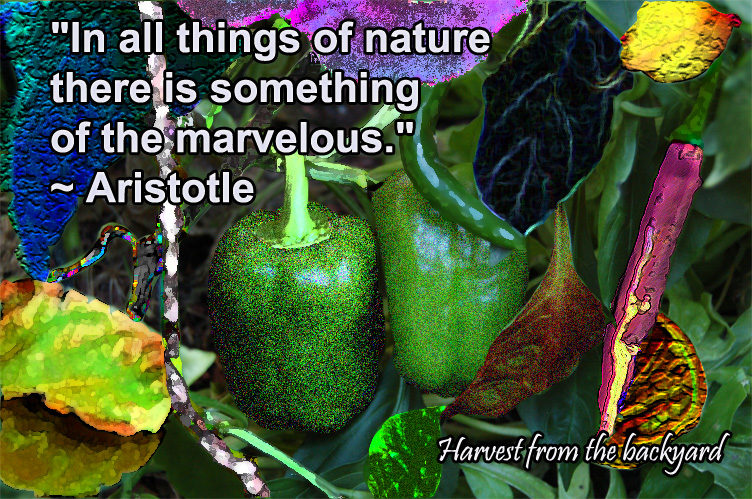
Speaking of Gallery of Re-imagined Objects, green objects can be colourfully re-created. Here’s my re-creation:

A colouful creation (Photoshopped by The Green Journo)

Carbon tax unconstitutional, goes to high court

Mining billionaire Clive Palmer of Queensland Nickel

The carbon tax circus is not yet over.

Mining magnate Clive Palmer announced he will challenge Prime Minister Julia Gillard’s carbon tax to High Court saying it is unconstitutional.

Palmer said his legal advisers who are “all senior counsels with experience in the High Court” advised him to take legal action against the federal government on the ground of discriminating his company Queensland Nickel.  The Age  said his legal advice would be finalised next week and his company would probably lodge documents with the High Court by April.

Palmer said his lawyers advised him there were several grounds under which the carbon tax is unconstitutional. For one, he said his company was getting less compensation under the carbon tax than rivals BHP Billiton and Glencore.

A spokesman for Climate Change Minister Greg Combet, however, denied the claim saying the government was still awaiting audited data from nickel producers that would then be included in the compensation regulations.

The Age also noted Roland Burt, a principal at Macpherson and Kelley Lawyers, who singled out three potential avenues for a challenge. These include “Commonwealth external powers, the federal government’s power to impose taxes on the states, and the issue of whether tax law could be bundled up with other legislation.”

However, Burt doubts the success of the challenge:

”Clive Palmer will have some of the best legal minds in the country at his disposal and they will certainly put a powerful case….’But my guess is the government has thought about it all carefully enough to design it in a way that will probably – but by no means certainly – survive the challenge.

PM Gillard and her camp insisted that the carbon tax was strictly reviewed during its legislative development and has ”taken careful constitutional advice and legal advice at every stage.”

Greg Craven, a law professor and vice-chancellor of the Australian Catholic University, believes the carbon tax was ”inherently complicated” and ”was always going to end up in the High Court”.

It raised questions about the scope of taxation power, the rights of the states, the Commonwealth’s power to make laws binding the states, and the compulsory acquisition of property.

”If you were looking for a law that was born to be challenged, this is it, because there are billions of dollars at stake.

Andrew Bolt, one of Australia’s most influential columnists said, “ Palmer might be right and the carbon tax wrong.”

Blog Link: Asian Correspondent

Sustainable living in small ways

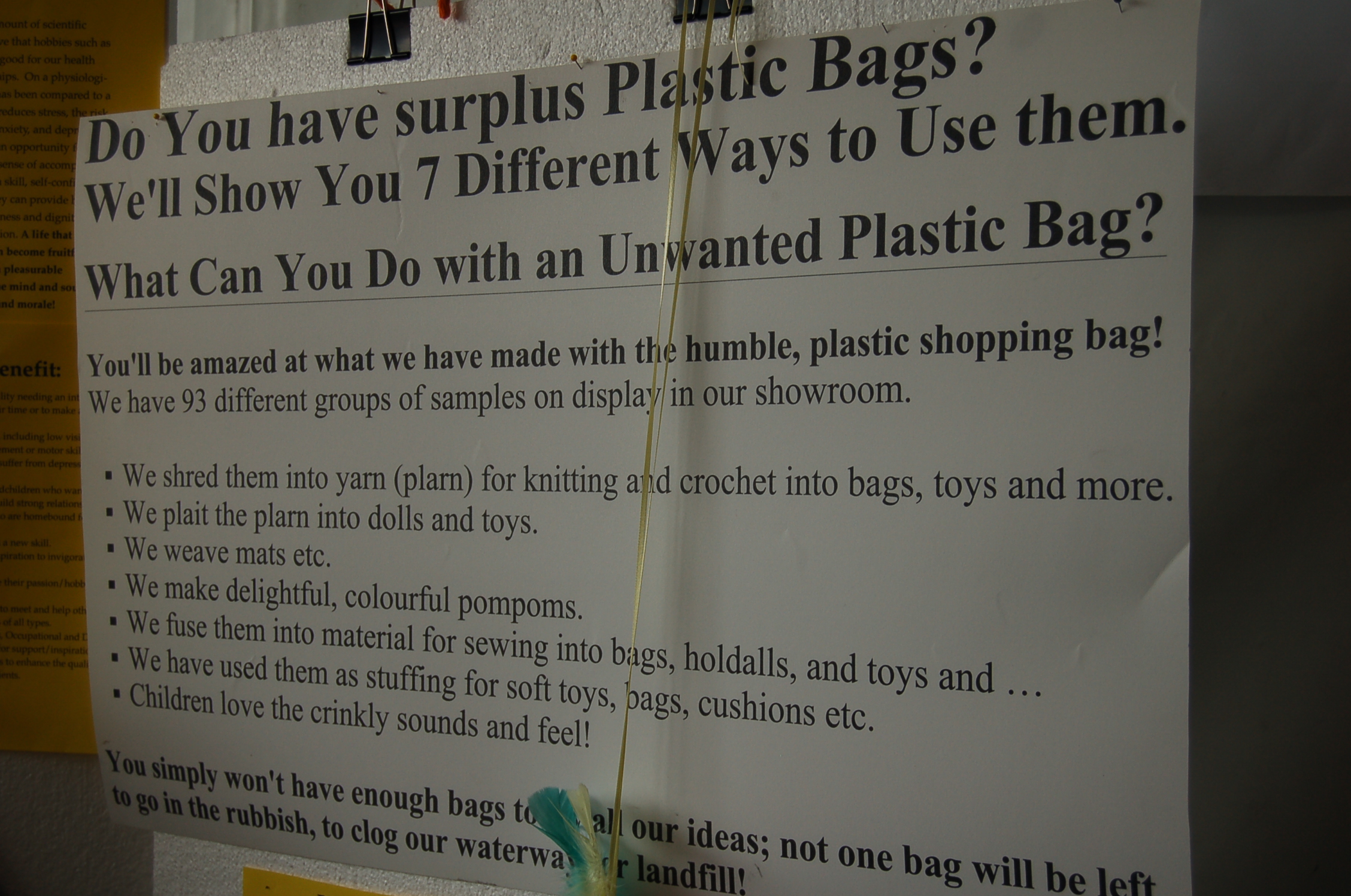
Being Green does not necessary ask you to do big things. You do not need to go on a hunger strike to get your message across to stop Tasmanian old growth forests from being logged or to strip bare in mid-winter to protest animal cruelty. Supporting sustainability can be done in your own kitchen. You probably shop everyday and what comes with your shopping are heaps of shopping bags. What do you do with your plastic bags? Most of the time, these bags are to be re-used as the same bags. But if you want to be more creative, here’s from the Melbourne’s Sustainability Festival 2012.

There are various ways how to re-use plastic bags. You can think much more.

Now, think of the many ways how can you re-create things and imagine what you have created.

So what's yours?

Great Barrier Reef awaits UN verdict

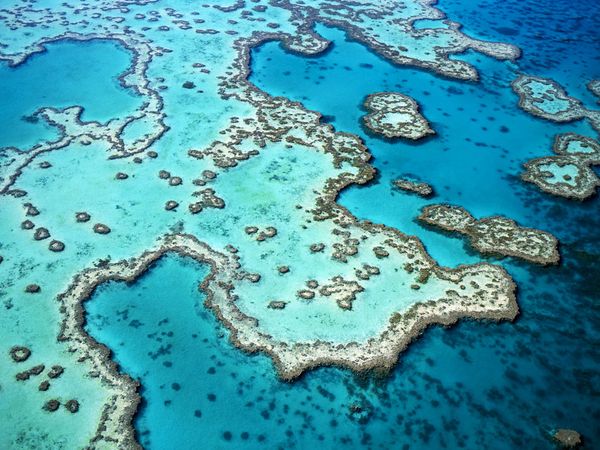
The Great Barrier Reef World Heritage Area covers an area of 348,000 square kilometres and more than 2300 kilometres long

Green activists are expecting to hear the results of investigation on the Great Barrier Reef conducted by the joint mission of the UNESCO World Heritage Centre (WHC) and the International Union for Conservation of Nature (IUCN). The experts visited Australia from March 4-14 to probe into the current park’s environmental conditions, including alleged man-made threats posed by seam gas exploration projects.

The Greenpeace is nearly completing a signup campaign of 15,000 people while GetUp! intensifies it drive to gather a strong 75,000 strong petition to stop developmental aggressions.

“Imagine if the Pyramids were being bulldozed or the Grand Canyon mined – the global community would be furious,” GetUp!, a major environmental activists, said  in an email loop.

GetUp! is trying to construct a simile to compare these World Heritage sites to Australia’s Great Barrier Reef.

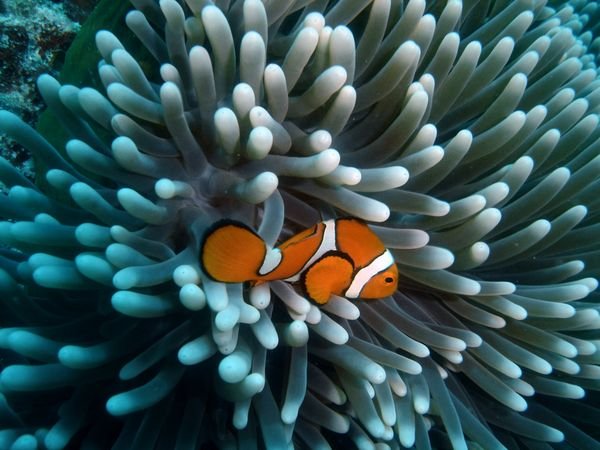
Beautiful marine lives under threat (Photo: National Geographic)

Earlier, the UN team has already warned the Great Barrier Reef is posed “to die a thousand cuts” with various threats including growing population, mining boom, and gas explorations.  The team also intended to re-assess the overall outstanding value of the reefs.

The Australian committee of the IUCN has warned of a tenfold increase in shipping on the World Heritage Site associated with existing and proposed port development projects. Much of it will be going through channels within a marine park far narrower than the English Channel, the Crickey claimed.

The Gladstone Ports Corporation (GPC) approved the project in 2011 allowing  private contractors “to dredge 46 million cubic metres from within the harbour boundaries,  inside the World Heritage area, over the next 20 years…a volume equivalent to 27 Melbourne Cricket Grounds,” GetUp! argued.

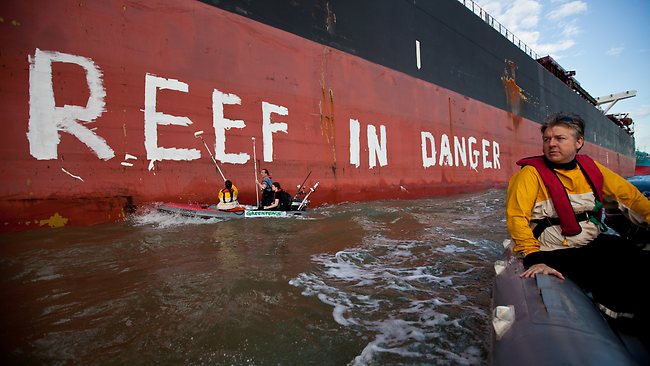
Greenpeace welcomes underwater investigation

 News reports claimed the Federal Government and the Queensland State Government approved the project amid strong protests from local residents. Further, they said the United Nations which holds custody to the Heritage Park was not consulted on the project which is a breach of World Heritage guidelines.

A private law firm for Gladstone commercial fishing businesses warned that the Western Basin Dredging and Disposal Project has significant long term environmental impacts on a national scale.

Ridiculous as it may sound, but the lawyer’s group said the massive dredging activities occurs 24 hours per day, 7 days per week, for about 18 months.  It is estimated that 42,300,000 cubic metres of material is to be dredged over the construction phase which cause turbidity plumes in the Port area. Contaminants are also speculated to spread in the Port area which can destroy the Port’s ecosystems.

The lawyers estimated that dredging will cause the direct loss of around 902 ha of benthic habitat (including 258.8 ha of seagrasses).  An additional 5416 ha of benthic habitat (including 1406 ha of seagrasses) may be indirectly lost in the short to medium term. In summary, the group said close to 1,700 hectares of seagrass will likely be lost and 6,300 hectares of benthic habitat likely to be lost.   There are additional obstructions of the northern Western Basin due to construction and increased vessel traffic, including massive dredges may impede the migratory pathways of marine fauna using The Narrows and the entire Port Curtis region, the lawyers claimed.

Greenpeace intensifies on-site campaign

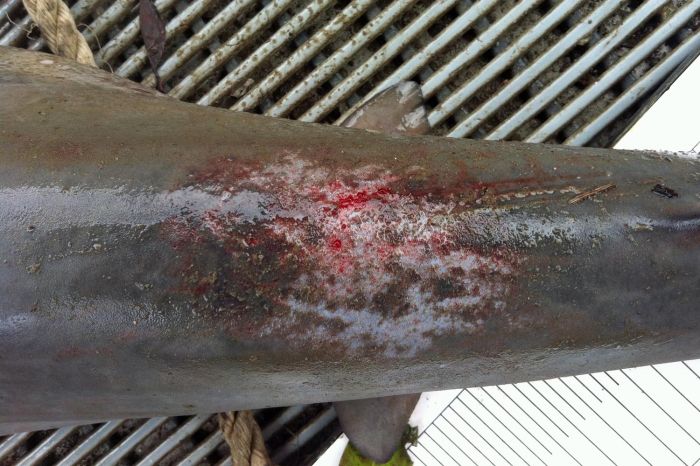
In 2011, a three-week fishing ban was imposed around the Gladstone area after sightings of fishes infected by unknown disease. Barramundi, for instance, were reported to have suffered from ‘sore’ and ‘cloudy’ eyes, while other fish appeared deformed and had bruises

The project is a partnership venture between Santos, Petronas, Total, and KOGAS. Santos is Australia’s largest domestic gas producer while PETRONAS is Malaysia’s national oil and gas company and the second largest LNG producer in the world. French energy major, Total, on the other hand, is the world’s fifth largest publicly traded integrated international oil and gas company; and South Korea’s KOGAS is the world’s largest buyer of LNG.

The partners announced the Gladstone Liquified Natural Gas (GLNG) project creates more than 5000 jobs during construction and about 1000 ongoing positions in the operational phase. They added that the project stimulates businesses and employment opportunities in the Gladstone and Roma regions through increased demand for goods and services.

Santos builds a LNG export facility in Gladstone for commercialised QLD seam gas resources. The facility is expected to  produce 3-4 million tonnes per annum (Mtpa) of LNG with future potential expansion to nominal 10 Mpta. The project is consists of CSG field development; gas transmission pipeline construction; and LNG liquefaction and export facility development.

The facility – built on Curtis Island (Hamilton Point area) – is close to the industrial deepwater port of Gladstone. The Project sources gas from Santos CSG fields around the Comet Ridge and Roma project areas, with gas being transported to the Gladstone LNG facility via subsurface 425 km gas transmission pipeline. Santos is planned to drill and complete the development wells to supply 53000 petajoules (PJ) (140 billion3) of CSG to the proposed LNG facility. There are about 600 wells to be dug prior to 2015 and 1400 or more wells after 2015 (excluding exploration wells). Installation of related infrastructures are constructed including access roads, accommodation camps, water gathering networks, water management facilities, in-field gas gathering networks (to transport gas from the wells to the field compression stations, gas compression stations and pipeline compressor stations).

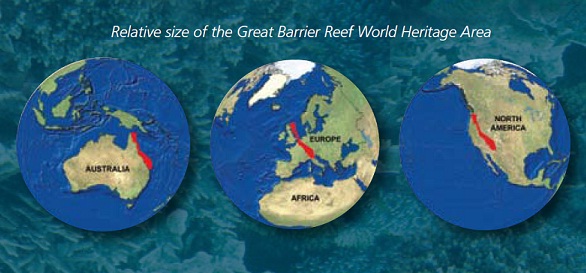
A comparative size on the Great Barrier Reef

The gas transmission corridor is 425 km long underground gas transmission pipeline corridor will accommodate one or more pipelines for the delivery of fas from the CSG resouces to the facilty. Transmission pipelines nominal diametere 650-800 mm.

The Great Barrier Reef World Heritage Area covers an area of 348,000 square kilometres — the equivalent size of Italy or Japan, more than 2300 kilometres long. It extends to the low water mark on the mainland coast along northern Australia. It Includes more than 3000 separate coral reefs, some 900 islands and all the waters within the outer boundaries of the Marine Park.

It is designated as national park in 1975 and listed in the UNESCO world heritage list for its invaluable in 1981

The UN report will be presented to the World Heritage Committee in June, which will then decide whether to list the reef as a World Heritage Site in Danger.

News Link: Asian Correspondent

Australia’s largest living treasure at risk

Forgive the few seconds of ad. This is the most spectacular video shot I have ever found on Australia’s largest living structure– the Great Barrier Reef– which spans more than 1,200 miles (2,000 km) of islands and submerged reefs.

It is a massive water kingdom containing thousands of marine species. It became a national park in 1975 and after six years, it was named as UNESCO’s World Heritage Site. About 33 percent of the area is banned from fishing.

But this heritage site has been at risk — not with natural causes such as climate change but threatened by man-made disaster. Gas exploration and dedging on the sea floor has been going on.

A team from the UNESCO has embarked on a mission to Australia this week to re-assess the outstanding value of the Great Barrier Reef.

Stay tuned for more updates!

Top Five Eco-Movies

Here’s a lighter side of life. I added a page on Eco-Movies  and I want to repost it as a blog entry.

The following movies are my Top Five personal choices. The selection is based on genre, cinematic production, direction, plot, and theme. A film, to be considered excellent, must contain a core message that inspires a viewer to re-think of man’s (or woman’s) relationship to the planet and, if necessary, commands action.

No. 1 – AVATAR 2010 – Directed by James Cameron, it is a landmark sci-fi and futuristic 3D movie in all of its splendour. As excellent as its technical production, its theme has taken viewers to a new dimension of men’s unquenchable greed and conquest beyond the planet Earth. When Earth’s resources are all gone, another planet would be the target for another rampage all in the name of money.

No. 2 – POCAHONTAS 1995 – Walt Disney Productions brings the wisdom of the American Indians in regard to man’s relation to the earth– the mother where all life wells up, nurtured and eventually go back to. The trees and leaves of the grass have their own lives and spirits. Men who chop down the trees for greed show an outright ignorance to the balance and harmony of life.

NO. 3 – LION KING 1994 – The movie shows the beauty and freedom that lies in the wilderness where lions, fowls, zebra and all other animals roam. The most unforgettable quote: “We are all connected in the great circle of life.” It poses a more profound interpretation on the interconnected of all living things in the larger fabric of life.

From the day we arrive on the planet/ And blinking, step into the sun/ There’s more to see than can ever be seen/ More to do than can ever be done/ There’s far too much to take in here/ More to find than can ever be found/ But the sun rolling high/ Through the sapphire sky/ Keeps great and small on the endless round

NO. 4 – WATERWORLD 1995 – “There is no dry land!” laments Mariner (Kevin Costner) after the Earth has been inundated by water caused by the risen sea level. Those who survived the great flood live on boats. Only an orphaned girl who carries the map to Dry Land offers a blink of hope in finding a New Earth.

NO. 5 – AN INCONVENIENT TRUTH 2006 – A documentary which accorded Al Gore a Nobel Peace Prize. Ridiculed by climate sceptics, it became one of the most controversial documentary films of the Energy-Climate Era. Gore warns of global warming caused by excessive man-made carbon emissions.


There are other films seen but they probably occupy the next rankings in the list. Among them are Happy Feet, Soylent Green, and Gorilla in the Mist. Happy Feet is an award-winning animation in 2008 while the two other films were viewed several years earlier. Others are hardly remembered.

If you want to enrich these movie entries, please feel free to leave a reply. Thanks.

Tasmania grapples with forest destruction and job losses

Tasmania is grappling with the paradox of saving its environment in the face of massive job losses. While Green activists are fighting for the protection of old growth forests, thousands of forestry-related jobs have to go. The ABC  reported the state is projected to lose about $1.4 billion dollar from its wood industry while thousands of people have been thrown out of job.

No job vacancy sign posted at a sawmill in Tasmania

For a small state such as Tasmania, livelihood depends on forestry, agriculture and mining. Tasmania is the sixth and smallest state in Australia, an archipelago of more than 300 islands, 240 kilometres (150 miles) south-east of the mainland.

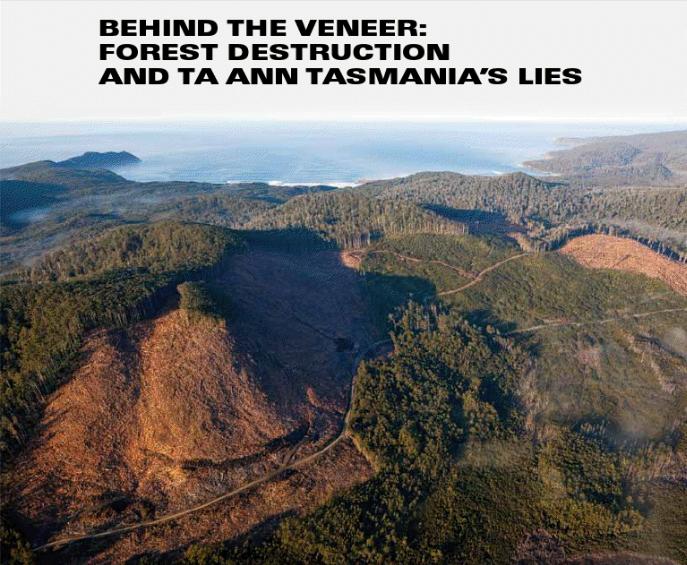
Green activism has intensified in the region over the last few years in the wake of alleged forest destruction made by Malaysia-owned Ta Ann Group. Left-wing Greens have accused the contractor as an exploiter of the state’s old-growth forests. The same contractor, they claim, has ravaged the jungle of Borneo in Sarawak.

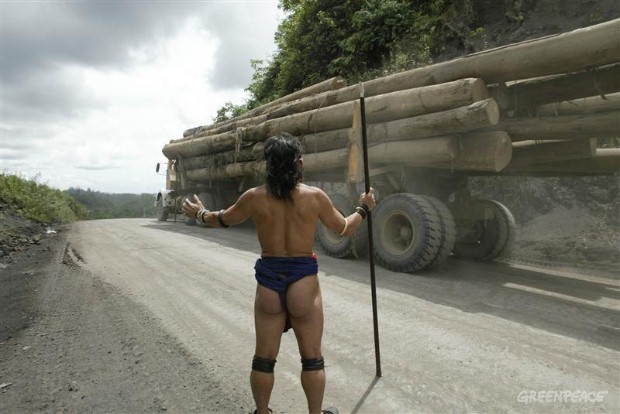
Penan man standing next to a Shin Yang Timber passing truck loaded with logs. (Photo: Sarawak Report)

It is an irony. Ta Ann won an award as an emerging exporter in the Tasmanian Export Exports Awards in 2008 only to alert environmentalists of the impending catastrophe wrought on the state’s old growth forests.

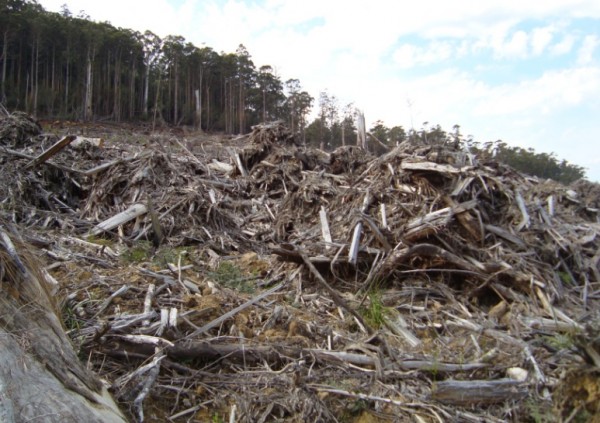
Last year, the Huon Valley Environment Centre (HVEC) accused Ta Ann of receiving wood from old growth forests as defined by the Tasmanian Regional Forest Agreement on at least 35 occasions during 2009-2011. HVEC claimed the contractor is processing wood acquired from the logging of old growth forests, high conservation value forests, and forests with recognised world heritage values in Tasmania.   “Ta Ann’s demand for native forest wood and its large wood supply contract is driving logging in some of Tasmania’s most important and contentious forest areas….  Ta Ann’s operations here in Tasmania are far from eco-friendly and must rank amongst the worst logging practices globally…” HVEC claimed.

Activists have campaigned the government to prevent further logging in the disputed conservation area. The Observer Tree launched a vigil early this year to press Prime Minister Julia Gillard to stop the Ta Ann Group from further logging in the last remaining old-growth forests.

An intesified campaign against Ta Ann in Tasmania (Photo: HVEC)

The Observer Tree is one among the guardians of Tasmanian forests along with the Last Stand which has been involved in direct action and campaigns related to nukes, forests, refugees, human rights, whaling and climate change, among other causes. These groups support similar causes advocated by Friends of the Earth, Kanuguba, Rising Tide, Huon Valley Environment Centre, Still Wild Still Threatened, the Greens and the Wilderness Society, GetUp!, Market Watch, and other civic groups.

In 2011, the Gillard Government came up with a plan to protect Tasmania’s forest by signing a pact that covers the protection 570,00 hectares of forest lands. About 430,000 hectares belong to the high degree of conservation while the remaining 143, 000 hectares was allotted to help the state honour its logging contracts. Gillard also signed a $172 package to fund the transition from native forest to plantation forest.

This historic deal, however, did not stop tensions already disrupting the forestry business. Green activists are apprehensive that Ta Ann’s contract will continue to destroy old growth forests.

Tasmanian forest in ruins

Activists have also directly lobbied consumers and clients of Ta Ann to stop buying logs from the company.

While jobs have to go, however, it becomes clearer that the Government has no option but to kowtow importers to buy Tasmania’s logging industry.

Tasmania’s Deputy Premiere Bryan Green has embarked on a $24,000 trade mission to Singapore, China, and Japan over the past week to promote the state as open for business.

Green said the trade mission was not solely focus on the wood industry but an opportunity to forge stronger trade relations with East Asia.

“We have a robust economy which we need to continue to grow and diversify to attract investment and jobs… The Government has faith in the Tasmanian brand and the opportunities that it can provide in sectors like agriculture, renewable energy, mining and forestry, “ the vice premiere’s website noted.

The Last Stand crew, along with the HVEC and Code Green, welcomed the vice premiere back upon his arrival at the airport. They, however ridiculed the trade mission and created a new name for Ta Ann as the huge walking, talking Pinocchio. The crew said the wood products are far from “eco-friendly” contrary to the advertising claims of Ta Ann.

A Green activists holds a banner to warn Ta Ann's Japanese wood buyers

In an email loop accessed by Asian Correspondent, the crew said:

“Ta Ann, one of Malaysia’s biggest wood cartels is ripping through the Tasmanian wilderness, sourcing wood that comes from the destruction of high conservation value forests and selling it in Japan as ‘eco-friendly’ plywood.”

The group solidifies its resolve to recruit more supporters to write letters to existing and prospective clients of Ta Ann urging them to stop buying wood sourced out from Tasmania’s old growth forests.

News Link: Asian Correspondent