Unknown's avatar

About rowenadelarosayoon

Communications strategist encompassing a broad scope of print and online journalism, public relations, marketing, campaign and developmental writing, research, website planning, social media strategy, and all related areas.

Can Australia stop Japanese whaling?

An International law expert from the National University of Australia said Australia cannot stop the Japanese from whaling in the Southern Ocean and its relentless monitoring activities have no legal ground.

Donald Rothwell told the ABC  that Australia’s surveillance may compromise the country’s claim to sovereignty over the Antarctic.

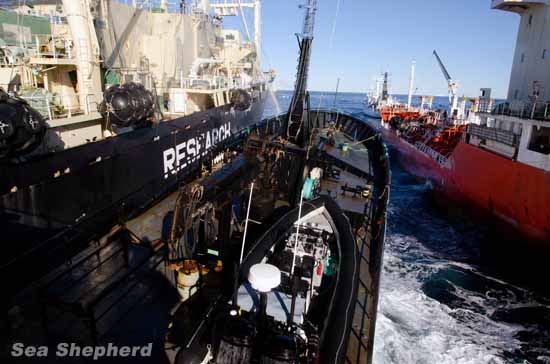
Nisshin Maru rams The Bob Barker in a series of clashes in the Southern Ocean. (Photo: Sea Shepherd)

Nisshin Maru rams The Bob Barker in a series of clashes in the Southern Ocean. (Photo: Sea Shepherd)

Speaking to Lucy Carter, Rothwell asked:

 Well the key issue that really needs to be asked is what is Australia’s capacity from a legal perspective to undertake any form of surveillance or monitoring and ultimately law enforcement against Japanese whalers in the Southern Ocean?

From the international law perspective, it’s really not in doubt that Australia has no capacity under international law to seek to go and enforce the provisions of the whaling convention against the Japanese whalers.

Japan, for one, does not recognize Australia’s sovereignty beyond its Exclusive Economic Zone and will not bow to any pressure from the International Whaling Commission (IWC) to impose a prolonged and “unnecessary” whaling moratorium.

The Japanese Ministry of Foreign Affairs, along with other previous Japanese governments, made this point clear long time ago. The Ministry pointed out that Japan “strongly supports the protection of endangered species” but it also needs to defend its research activities which prove that “whales are not endangered.” Japan maintains its position as responsible and that that it uses a comprehensive approach to whaling and sustainable use of marine resources.

The Ministry argued that from the 1980’s, whale species were abundant again following IWC’s measures to protect marine species in the 1960s and 1970s. During those times, several whale species were over-harvested and effective measures to protect the endangered species were urgently called for. Japan said IWC “did an outstanding job on this subject in the mid-1970′s to protect blue whales and other endangered species, and Japan highly appreciates its effort.”

This year, Japan’s Minister for Agriculture Forestry and Fisheries, Yoshimasa Hayashi,  informed the IWC that the Japanese fleet would be operating anywhere between waters south of Africa, and south-east of New Zealand.  He added that he had issued “special permits” to send the fleet to take up to 935 Antarctic minkes,  50 fin whales, and 50 humpbacks.

Yushin Maru and the Kyo Maru No.1 transfer whales to the Nisshin Maru factory ship, Southern Ocean/ Dec 21, 2005

Yushin Maru and the Kyo Maru No.1 transfer whales to the Nisshin Maru factory ship, Southern Ocean/ Dec 21, 2005

Norway, Iceland aid Japanese whale imports

In defiance to the IWC, Norway and Iceland are helping Japan to import tonnes of whale meat this year.

Washington DC-based Animal Welfare Institute (AWI) announced a statement it has obtained new documents showing Norway is playing a key role in Iceland’s massive exports of whale to Japan.

Iceland is shipping the bulk of whale meat and blubber to Japan’s Kyodo Senpaku Kaisha Ltd via Norway. Kyodo is implicated in the controversial whaling within Australia’s Southern Ocean Whale Sanctuary.

Kyodo Senpaku Kaisha announced in December last year that it would begin imports of Norwegian whale meat in 2014. The company said the imports will be sold “in order to help subsidize future Japanese scientific whaling efforts.”

Norway’s Environment Agency granted Reine-based Lofothval two permits to send whale products to Japan. One shipment of 5,000 kg is identified as whale meat only from Lofothval, while a second shipment is identified as a re-export of 5,000 kg of Icelandic minke whale meat and blubber, AWI claims.

Another Norwegian company, Myklebust Trading AS,  also sought government’s permission to ship up to 34,381 kg of minke whale products to the Toshi International Company in Japan. This would be the second shipment from Myklebust to Toshi since 2013, AWI said. Statistics shows that 14.1 metric tons of whale meat were imported from Iceland into Norway in February 2013.

AWI said anti-whaling countries are enraged with the latest Japanese whale imports that will soon spark protests before the International Court of Justice which is expected to issue a ruling this year on a case filed by Australia calling for Japan to stop whaling.

Taiji vows to uphold whaling tradition

The iconic whales at the entrance of Taiji (Photo: Japan Focus.org)

The iconic whales at the entrance of Taiji (Photo: Japan Focus.org)

Taiji, a small town in southeastern Japan, notorious for its tradition of marine mammal slaughter, has forged community alliance to support the long-held tradition of whaling. This township stubbornly insists that “whales have no national borders, they live in deep seas, and  migrate freely across and through the waters of national jurisdiction, hence different people have different views about the whales.”

The general perception of whale in Taiji is that whale is part of the marine food resources, and whaling is no different from hunting and farming.

Japan, like Norway, Denmark, Russia, and Iceland treats whale meat as food, and where the consumption of marine food resources exceed the consumption of land animal meat.

It is believed that Japan and Iceland have the longest life expectancy — possibly attributed to people living a lifestyle of a balanced diet coming from the sea.

In its Declaration on Traditional Whaling (2006), summit attendees denounced the “double standard” given by conservationists to criticize whaling as a cruel act.

Among the many points of the Declaration,

It is a double standard by giving a name to a particular whale” (read – dolphin!) and treating the issue on the individual animal basis while promoting culling of over-populated wildlife (kangaroo, deer, and camel) by treating the cull issue on a species basis for the sake of preservation of species and not focusing on its aspect of cruelty.

Australia’s relentless surveillance

Sea Shepherd Australia’s (SSA) Operation Relentless is out in the Southern Ocean to disturb the Japanese whalers. SSA reported last week it located the three Japanese vessels and took footage of one ship carrying three slaughtered minke whales.
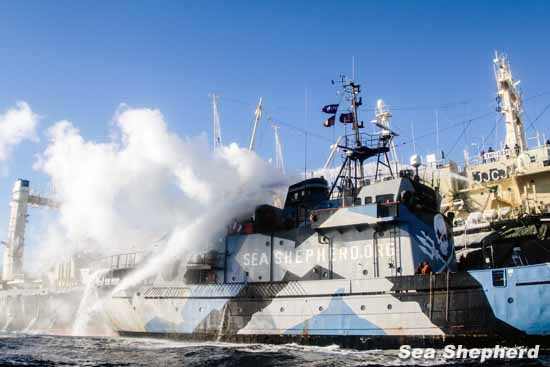
The Steve Irwin exchanges water bombs with a Japanese vessel.

The Steve Irwin exchanges water canons fires with a Japanese vessel.

The Japanese Yushin Maru No.3 also pursued The Bob Barker, but it stopped the chase when The Bob Barker crossed Australia’s EEZ, 200 miles of Macquarie Island. The harpoon ship stopped one mile outside the zone, the SSA Captain Peter Hammarstedt reported.

The Steve Irwin and The Sam Simon have been patrolling the Southern Ocean Whale Sanctuary in pursuit of the Nisshin Maru. SSA said the Japanese vessels have been running for more than a week with little likelihood of being able to stop to poach whales.

SSA Chairman Bob Brown, for the first time, was in high spirits and satisfied with the support of the Federal Minister for the Environment, Greg Hunt. Brown said Hunt has been contacting the Japanese authorities over the impending invasion of the Australian Whale Sanctuary, which includes the EEZ, by the harpoon ship.

“Once again Sea Shepherd has seen the Japanese whaling fleet’s tactics thwarted. But we are mindful that the fleet is publicly committed to killing another 931 Minke Whales as well as 50 Fin Whales and 50 Humpbacks,”

Blog Link: The Green Journal at Asian Correspondent

Sea Shepherd chases Jap vessels with bloody whales

An action-packed adventure awaits the Southern Seas. Sea Shepherd Australia’s mission to chase the Japanese whale hunters started with a bang. Re-blogging yesterday’s story:

Former Greens Senator and now Sea Shepherd Australia (SSA) chairman, Bob Brown, spoke in Hobart Monday to confirm the Sea Shepherd Fleet has located all five Japanese whale poaching vessels, including the Japanese factory ship, the Nisshin Maru, inside the Southern Ocean Whale Sanctuary (SOWS).

SSAThree SSA vessels – The Steve Irwin, The Bob Barker, and The Sam Simon – are now pursuing the Japanese whaling fleet. Their mission is to drive them away from the target poaching grounds, disrupt their hunt, prepare to shut down their whale-killing operations, and to ultimately send them back home.

The Steve Irwin’s helicopter first located the Nisshin Maru at 64°44′ S, 162°34′ W, in New Zealand’s sovereign waters in the Ross Dependency Antarctic region, and inside the internationally recognised SOWS.

SSA_2

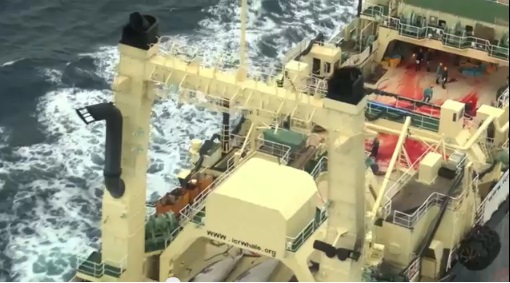
Sea Shepherd claims it has obtained footage and images of three dead protected minke whales on the deck of the Nisshin Maru, taken at the time the factory ship was first located. A fourth whale, believed to be a minke, was being butchered on the bloodstained deck.

SSA managing director, Jeff Hansen, said, the Southern Ocean has been tainted by illegal whaling activities. He said, “No one will ever know the pain and suffering these playful, gentle giants went through from the time the explosive harpoon ripped through their bodies to the time they drew their last breath in a red sea full of their own blood. ”

The group denounced the blood stains on the deck of the Japanese vessel and called it a barbaric act. Captain of The Steve Irwin, Sid Chakravarty, said, “When ‘science’ requires you to grotesquely bloat up the bodies of protected whales, stroll across a deck smeared with their blood, hauling their body parts with hooks and chains, and discarding their remains over the side, then that ‘science’ has no place in the 21st Century.

SSA_3

“The Nisshin Maru is an out-and-out butcher ship and a floating butchery has no place in the Southern Ocean Whale Sanctuary. Sea Shepherd will remain relentless in driving these fake, desperate and subverting ‘scientists’ back to Tokyo.”

Captain of The Bob Barker, Peter Hammarstedt, said,

Once again, the Japanese government has shown flagrant disregard for international law by continuing their illegal whale hunt while the world patiently awaits a decision from the International Court of Justice. The Japanese government’s dishonourable attempt the skirt the legal process is an insult to the cooperation demonstrated by people around the world, dedicated to enacting conservation laws out of a shared recognition for the need for environmental protection.

Blog Link: The Green Journal @ Asian Correspondent

2013 in review: And looking forward to a greater 2014!

The Green Journal kicked off and finished neatly in 2013 – thanks to its growing readership and supporters like you!

Not mentioned in this report, however, is the growing recognition of this platform by campaign leaders not only in Australia but leaders in the international community.

This year, The Green Journal is aiming higher to serve its purpose. Thank you all and have a great 2014!

The WordPress.com stats helper monkeys prepared a 2013 annual report for this blog.

Here’s an excerpt:

A New York City subway train holds 1,200 people. This blog was viewed about 6,900 times in 2013. If it were a NYC subway train, it would take about 6 trips to carry that many people.

Click here to see the complete report.

Arctic oil wells up, Russia sends home 30 activists

Tasmania awaits the homecoming of Colin Russell, 59, one of the 30 Arctic activists detained and freed by Russian authorities.

The Russian Parliament passed amnesty laws before Christmas absolving a range of minor felons, including 30 Greenpeace activists known as the Arctic 30. As New Year draws near, the immigration department also ordered to issue exit visas so that former detainees can go home.

Colin Russell is free at last and is expected to be home in Tasmania for the New Year. (Photo: AAP)

Colin Russell is free at last and is expected to be home in Tasmania for the New Year. (Photo: AAP)

Twenty-eight Greenpeace protestors representing 18 nationalites – Americans, Canadians Britons and Australians, to name a few– and two freelance journalists were seized at the Prirazlomnoye platform on September 18 by Russian commandos. They boarded on the Arctic Sunrise to protest against drilling in the ice capped region, but were intercepted, captured, and charged of piracy, then reduced to hooliganism. If convicted, they could be locked up for at least seven years in jail.

The pardon came at a time when Russia’s first Arctic offshore field Prirazlomnoye started pumping oil in the remote waters of the Pechora Sea. Gazprom Neft announced on December 20 that oil production has begun with an average of 10.6 million barrels of oil per day, close to its current capacity. Gazprom expected an initial production of 12,000 barrels per day in 2014 and the first tanker is likely to be loaded with oil in the first quarter of next year.

Already an owner of the world’s largest natural gas reserves and a growing presence in the oil sector, Gazprom also aims to produce 6 million tons of crude per year (120,000 barrels per day) at the site by 2021.

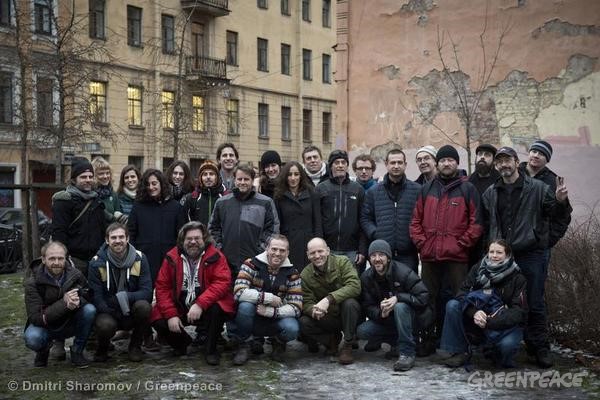
The Arctic 30 in St. Petersburg awaiting trial on charges of hooliganism.

The Arctic 30 in St. Petersburg awaiting trial on charges of hooliganism.

Prirazlomnoye’s estimated oil reserves stand at 72 million tons — a small field that would be responsible for just 1 percent of Russia’s daily production and be depleted in about two decades, the Reuters reported.

Prirazlomnoye deposit is Russia’s first Arctic offshore exploration project, which marks the start of establishing of a large hydrocarbon hub in the region. The Prirazlomnoye oil deposit lies 60 km offshore in the Pechora Sea. The announcement also marks Russia’s long-planned effort to turn the vast oil and natural gas riches believed to be buried in the frozen waters into profits for its ambitious government-run firms. Gazprom also stressed it has rights to 29 other fields it planned to exploit in Russia’s section of the Arctic seabed.

But both Gazprom and the Kremlin view the field as a stepping stone in a much broader effort to turn the Arctic into the focus of future exploration that makes up for Russia’s declining oil production at its Soviet-era Siberian fields, according to AFP.

The Arctic region is seen as an important source of potential growth for Russia, the world’s largest oil producer, in the next decade, with global oil majors including ExxonMobil, Eni and Statoil clinching deals to enter the Russian Arctic. Russian President Vladimir Putin sees the Arctic offshore riches are of a strategic importance for the country.

Control over energy fields in Russia’s section of the Arctic is split between Gazprom and its state-owned rival Rosneft — an oil producer that wants to break Gazprom’s grip on the natural gas market. Rosneft is said to be partnering in the region with U.S. major ExxonMobil and has smaller deals signed with Italy’s ENI and Norway’s Statoil, the AFP report further added.

Gazprom sees overall investments into the project at about 200 billion rubles ($6 billion), of which half had already been spent with the bulk accounting for a special ice-proof platform.

Conservation groups react

Dima Litvinov, the first of the Arctic 30 to leave Russia for Finland said his freedom is not the end, but just a beginning.

Gazprom's Polarstar platform (Photo: Gazprom.ru)

Gazprom’s Polarstar platform (Photo: Gazprom.ru)

“ They (Gazprom) may have celebrated when our ship was seized, but our imprisonment has been a disaster for them. The movement to save the Arctic is marching now. Our freedom is the start of something, not the end. This is only the beginning. The oil companies are moving north, the world’s climate is changing, the biggest struggles still lie ahead of us.”

Greenpeace said all efforts to protect the last frontier of pristine resources will be exerted and the fight is not yet over. One of its campaign platforms to gather support is Save the Arctic.

Last year, the World Wildlife fund (WWF) released a joint report that seeks to find solution in the event of an oil spill in the region. It said that harsh conditions in Russia’s Pechora Sea coupled with an inadequate oil spill response plan mean that Gazprom would not be able properly respond to an oil spill in the Arctic

A comprehensive study and joint report was released last year by the WWF, Greenpeace, Hydrometcentre of Russia, SOI, AA RI, SRC Risk Informatics. The title of the report: “Simulation of the behaviour of oil spill in the course of OIRFP “PRIRAZLOMNAYA“ Operation Assessment of the possibility of emergency response related to oil spills.

The experts reviewed tens of thousands of possible scenarios and concluded that the area of possible contamination covers over 140,000 square kilometers of open water, as well as over 3,000 kilometers of coastline. The area at risk also includes three protected areas located 50-60 km from the Prirazlomnaya oil platform: the Nenetsky natural reserve, as well as two wildlife preserves, Vaigach and Nenetsky. These reserves are home to walruses and countless species of birds. Gazprom does not include any funds for animal rescue in its oil spill response plan.

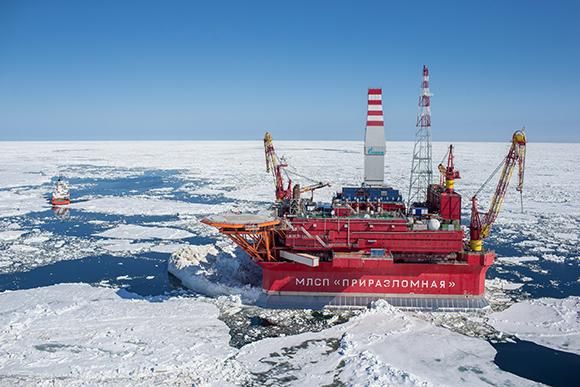
 Gazprom's Prirazlomnaya platform in the Arctic (Photo: Gazprom)


Gazprom’s Prirazlomnaya platform in the Arctic (Photo: Gazprom)

Gazprom’s Technology

Gazprom defended its Prirazlomnaya as a unique platform designed and built in Russia on Gazprom orders. In a press statement, it said it uses technology designed to work in extreme conditions, conforms to the strictest safety requirements and is capable of withstanding maximum ice pressure. Specification of the materials used are comprehensively detailed to ensure Prirazlomnaya is oil-spill-free.

Blog Link: The Green Journal at Asian Correspondent

Whale hunters, pirates up for another Antarctic clash

The annual whale hunt season has arrived in the Southern Seas, which usually starts in December and lasts up to summer, around June. The “notorious Japanese whalers” embarked on their expedition early this month undeterred by the expected interception of the relentless anti-whaling group Sea Shepherd Australia (SSA). The whale activists launched the 10th Antarctic Defence Campaign (ADC), dubbed “Operation Relentless.”

This year expects more violent vessel clashes between the Japanese and the anti-whaling ”pirates”. SSA claims itself to be a defender of the Southern Ocean and all life forms it contains.

Last year, the 5000-ton My Bob Barker was severely damaged when the 8000-ton Nisshin Maru collided with it. The two groups clashed in exchanges that have seen stink bombs thrown at Japanese crew and water jets trained on protesters.

SSA’s “Operation Zero Tolerance” was able to limit the whalers’ haul to a record low of 103 Antarctic minke whales.

Foreign governments have criticised Japan’s whale hunts, alleging violation of the International Whaling Commission’s ban for commercial whaling which it introduced in 1986. Although Tokyo defended its whaling on grounds of scientific research, activists said “research whaling” is a cover up for commercial whaling that is banned under an international agreement. Tokyo also said the practice of eating whale is part of Japanese culinary tradition, and therefore the whales are studied as part of a bid by its whaling research institute to prove their populations can sustain commercial whaling.

NM-rams-BB-into-Sun-Laurel © Sea Shepherd/ Glenn Lockitch 2013
Japanese-owned Nisshin Maru rams the Bob Barker into the Sun Laurel. Pic: Glenn Lockitch.

Amid international outcry, two Japanese whaling ships and a surveillance vessel left on December 8 for the annual hunt in the Antarctic Sea. The three ships departed from the western port of Shimonoseki to join other ships to hunt up to 935 Antarctic minke whales and up to 50 fin whales through March, The Kyodo News reported.

The news agency said the Fisheries Agency had kept secret the departure date of the whaling fleet as a precaution against Sea Shepherd.

In Australia, three ships left Williamstown in Victoria and Hobart Port in Tasmania: The Steve Irwin ,The Sam Simon, and The Bob Barker departed to sail southward to confront the sea hunters. In the nine previous ADCs, SSA has saved over 4,500 protected whales from illegal slaughter.

20130904_123428
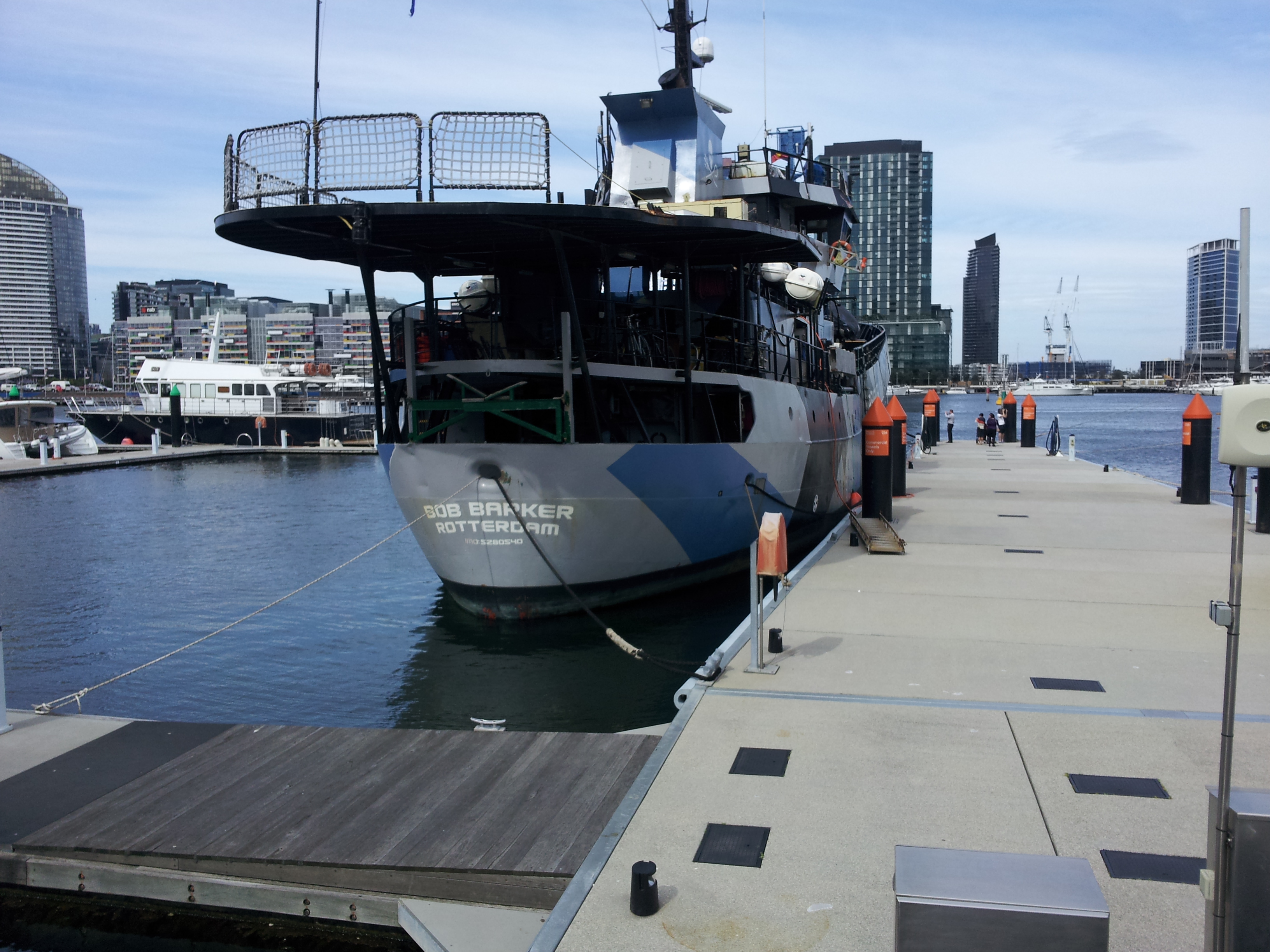
My Bob Barker docks at Docklands in Melbourne for public viewing. Pic: R. Yoon/The Green Journal.

Managing Director of SSA Jeff Hansen said the crew on the ships carry with them the hope, the aspirations, and the expectations of people from across the world who hope to see the end to the annual slaughter.

Captain of The Bob Barker Peter Hammarstedt of Sweden also stated the Japanese whale poaching fleet heading to the south is an offence to an international community waiting on the ruling of the International Court of Justice in The Hague. “Sea Shepherd will now, again, head south as the only authority acting to restore law and order to the Southern Ocean Whale Sanctuary,” the captain added.

Captain of The Steve Irwin, Siddarth Chakravarty of India expects that within a week, he and his crew will be with the whales and will not return until peace has been restored in the Southern Ocean Whale Sanctuary.

This year, over 100 volunteers from 24 countries around the world join Operation Relentless to guard the gates of the southern sanctuary and to uphold the 1986 ban on commercial whaling.

Sea Shepherd Global Director,Alex Cornelissen of Netherlands said, “Like all poachers we encounter in our global campaigns, we will deal with the whalers the same way we always do: Relentlessly.”

Blog Link: The Green Journal at Asian Correspondent
Santos to pay the price for contaminating Pilliga forest

The New South Wales Land and Environment Court is prosecuting for the first time an oil and gas company for spilling a toxic gas waste into the forest killing acres of trees.

The Sydney court is expected to announce its verdict on Santos Ltd. after the New Year. Santos is prosecuted this week for 10,000 liters of coal seam gas spill in the great inland of the Pilliga Forest, northwest of Sydney, in June 2011 without reporting it as required by law. Santos is the first-ever to be prosecuted under 1991 forest law.

Santos-rally

Community groups form a blockage to denounce Santos and the risks associated with fracking (Photo: Supplied)

On Wednesday, the company pleaded guilty on the spill and three counts of failing to file accurate environmental reports. Each charge carries a maximum fine of AU$110,000. Santos is also ordered to pay an additional AU$110,000 for the costs of the investigation and prosecution. The court’s prosecutor, Stephen Rushton, said the penalty serves as deterrence for others to follow.

Santos, acquired Eastern Star Gas July 2011 for AU$626 million. ESG ran a water treatment plant in the Pilliga forest. The polluted water spilled into the forest in June 2011, killing 77 percent of the trees in a 1.75 hectare area, the prosecution said.

The Wilderness Society claims that the senior management of Santos at the time knew about the June 2011 spill, but tried to cover it up. The Society said the court proceedings would then be a test for NSW Government regulation of the coal seam gas industry.

Wilderness Society Newcastle Campaign Manager Naomi Hogan said Santos deserves the maximum penalty for the cover up and that any penalty should be a serious deterrent to other companies.

The Society notes that communities across NSW are watching the ruling closely, as this court case exposes the reality of the water pollution and environmental damage associated with coal seam gas fracking operations.

The damage considered in this case was just from a handful of wells, yet now residents of north-west NSW are facing Santos’ plans for 850 production wells across the Pilliga and Narrabri region, the Society adds.

Local farmers had to report the toxic spill to the media before Santos took action, according to the Society, and this is ”a scary prospect to think that community members will have to continue to monitor coal seam gas pollution if gas fields expand across the north west as planned by Santos and the NSW Government.”

pilliga forest

Community leaders inspect the affected area of the Pilliga Forest (Photo: Supplied)

The Pilliga is considered the last great inland forest, home to many threatened species including the koala and Pilliga mouse. It’s part of the Murray Darling basin, Australia’s largest food bowl, and a major recharge zone for the Great Artesian Basin, an essential source of water for Outback Australia.

About 40 community members blockaded Santos’ Pilliga forest operations on Tuesday and another 25 protests outside the court on Wednesday. Dozens more protested outside Santos offices in Gunnedah and Narrabri.

Santos has always insisted people needs education when it comes to understanding the processes and benefits of fracking.

Drawing from its rich history for 40 years, Santos has been fracking for natural gas from sandstone in the Cooper Basin in outback South Australia. The gas is piped thousands of kilometres to Adelaide, Brisbane and Sydney.

Anti-whaling ship departs from Melbourne

A brief announcement from my mail box:

Melbourne based Sea Shepherd ships set to depart for Operation Relentless

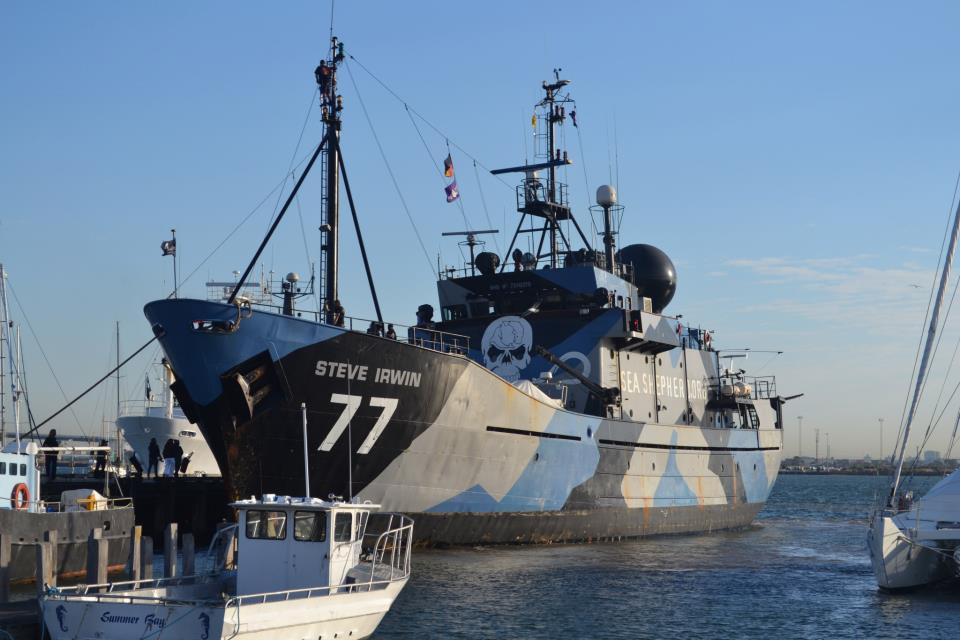
Sea Shepherd ships, The Steve Irwin and The Sam Simon will depart Williamstown on Monday 16th December.

The crew of 100 from 24 nations are ready to confront the Japanese whale poachers and halt their planned illegal slaughter of more than a 1,000 whales. The proposed kill includes 935 protected Minke, 50 endangered Fin and 50 Humpback Whales.

We have invited all of our supporters to come down to see the ships and crew head off on this critical mission to defend the great whales of the Southern Ocean.

When: Monday 16th of December. Press Conference at 9am (The Sam Simon will depart at 5:30am and The Steve Irwin at 12pm).

Where: Sea Shepherd Australia Operations Base – Seaworks, 2 Ann Street, Williamstown, Victoria.

Who: Captain Siddharth Chakravarty, Captain Adam Meyerson and Sea Shepherd Australia Managing Director, Jeff Hansen. Others in attendance include Sea Shepherd crew and hundreds of local supporters

For background on Operation Relentless please see the new campaign website:

http://www.seashepherd.org.au/relentless/

(Photo: Sea Shepherd flagship, Steve Irwin)

(Photo: Sea Shepherd ship, My Steve Irwin)

Court rules out ACT’s marriage equality, conscience vote urged

The Australian Marriage Equality (AME) is calling for a federal conscience vote following a High Court’s ruling on Thursday quashing the Australian Capital Territory’s (ACT) Marriage Equality Act.

ACT enacted a same sex marriage law in October, Australia’s first state ever to pass the highly-debated legislation; but the said court ruled out its validity. The state law did not meet the provisions under the Commonwealth Law.

AME Deputy Director Ivan Hinton-Teoh and Chris Hinton-Teoh are among the first couples who got married last week in Canberra. (Photo: AME)

Twenty-seven couples from the GLTB community tied the knot in Canberra last week hoping the court will uphold their vows.  The ruling dashed their honeymoon on Thursday.

AME is now pressing for a new legislation through a conscience vote. National Director Rodney Croome said in a press release today the federal government has indicated that it is possible to legislate a new law on marriage equality through a conscience vote. He said the possibility has been indicated by Liberal leader, Malcolm Turnbull.

A separate press release also said four Liberal state premiers support the federal Coalition’s conscience vote, including Barry O’Farrell (NSW), Denis Napthine (VIC), Colin Barnett (WA) and Campbell Newman (QLD). The press release said the premiers have all urged the federal parliament to deal with the issue.

Croome added “if Coalition leaders as conservative as Colin Barnett can see the importance of a marriage equality conscience vote, Tony Abbott has no excuses”.

“With four Liberal premiers telling Abbott that community attitudes are changing and a marriage equality conscience vote is a no-brainer he’d be unwise not to listen.”

AME Deputy Director Ivan Hinton-Teoh, who married his husband, Chris Hinton-Teoh, under the overturned ACT law, said that in the absence of a timetable for federal reform the states and territories should continue to endeavour to allow same-sex couples to marry.

The federal Labor Party allows a conscience vote on marriage equality. Prime Minister Tony Abbott has earlier said a Coalition conscience vote is a matter for the Coalition party room to decide.


Ashleigh Watson and Narell Majic who got married this week comfort each other after the High Court ruling. (Photo: AME)

 ACT Government

The ACT Government is disappointed with the ruling and pledged to re-legislate for civil unions but not same-sex marriage.

The High Court cannot uphold the ACT same sex marriage law as it lacks the validity of marriage defined under Commonwealth Law.

Marriage Act of 1961 provides provision for the union of man and woman. This provision defines marriage.

Today the High Court decided unanimously that the Marriage Equality (Same Sex) Act 2013, enacted by the Legislative Assembly for the Australian Capital Territory, cannot operate concurrently with the federal Marriage Act 1961. The Court held that the federal Parliament has power under the Australian Constitution to legislate with respect to same sex marriage, and that under the Constitution and federal law as it now stands, whether same sex marriage should be provided for by law is a matter for the federal Parliament.

The Court held that “marriage” in s 51(xxi) of the Constitution refers to a consensual union formed between natural persons in accordance with legally prescribed requirements which is not only a union the law recognises as intended to endure and be terminable only in accordance with law but also a union to which the law accords a status affecting and defining mutual rights and obligations. “Marriage” in s 51(xxi) includes a marriage between persons of the same sex.

The Marriage Act does not now provide for the formation or recognition of marriage between same sex couples. The Marriage Act provides that a marriage can be solemnised in Australia only between a man and a woman and that a union solemnised in a foreign country between a same sex couple must not be recognised as a marriage in Australia. That Act is a comprehensive and exhaustive statement of the law of marriage.

Because the ACT Act does not validly provide for the formation of same sex marriages, its provisions about the rights of parties to such marriages and the dissolution of such marriages cannot have separate operation and are also of no effect.

The Court held that the whole of the ACT Act is of no effect. Read HERE

State Legislations

Bills drafted on state levels should be worked out to meet the provision of the Commonwealth Law. Same-sex marriage bills have been tabled in five states but overturned. WA drafted the latest bill yesterday. At Federal level, same sex legislations have been scheduled for deliberations, but similarly voted down.

The GLTB believes the issue is now at a tipping point. It is just a matter of time while the concept of morality itself is radically shifting.

Largest port to kill the Barrier Reef

The “Asian Century” has arrived in Queensland. The world’s largest port will rise soon that will pave the link between the Australian state and Asian market– India in particular.

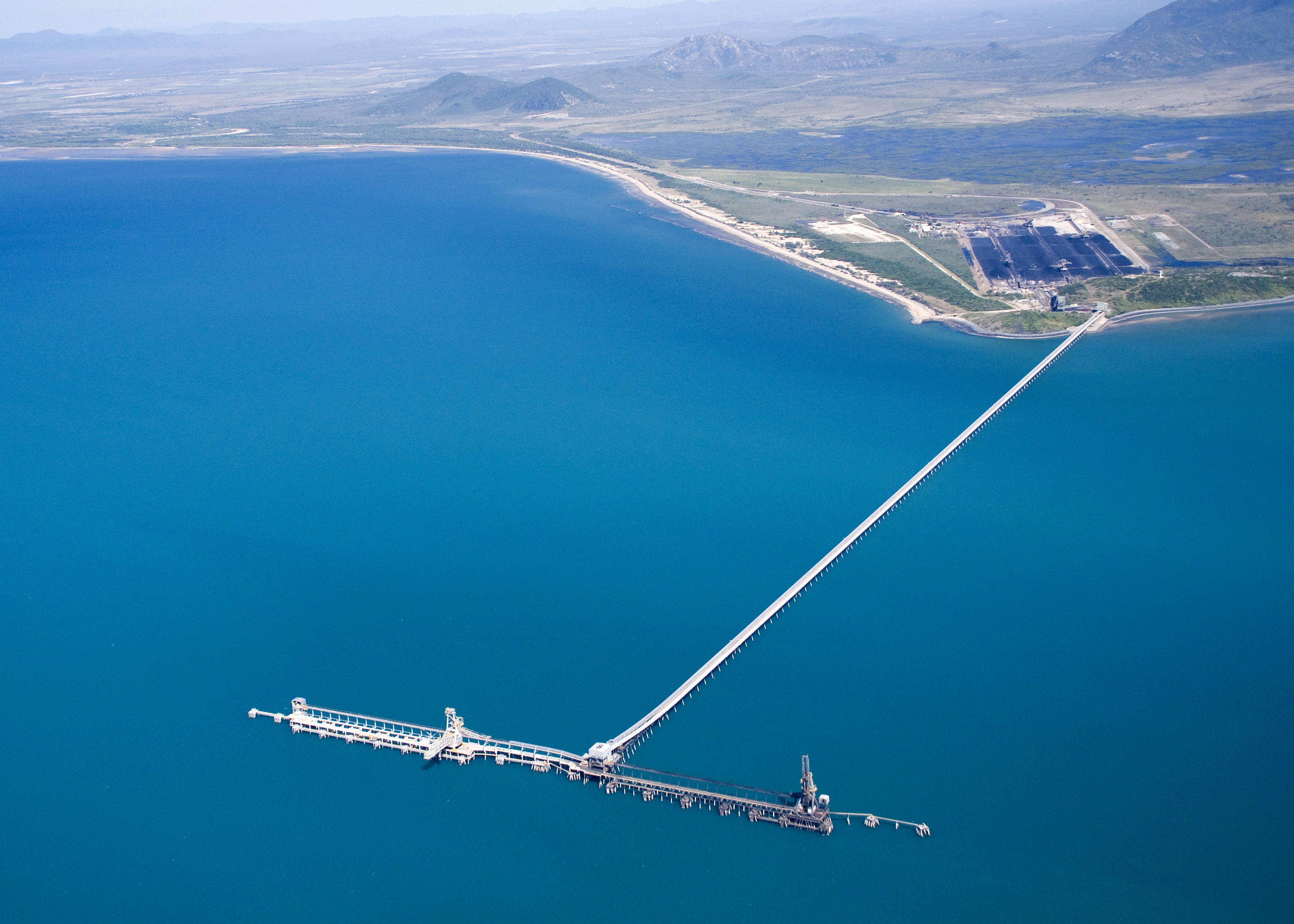
Aerial view Abbot Point T2 and T3

Aerial view Abbot Point T2 and T3

The Federal government gave the green light to the massive expansion of three major port terminals at Abbot Point, 26 km north of Bowen in Central Queensland– positioned to become one of the world’s largest industrial sea ports.

The approval gives Adani Enterprises Pty. Ltd. and GVK, among other mining companies, a breakthrough in the multi-billion coal industry which will exploit the potential of the coal-rich Galilee Basin.

Adani’s most recent performance at T0

Environment Minister Greg Hunt announced the decision on Tuesday after a ”rigid assessment” and the project’s environmental impacts. After a long delay, the minister approved four Queensland projects under the National Environmental Law, including the capital dredging program for the proposed Terminals 0, 2 and 3 at the Port of Abbot Point, the Adani T0 project, the Arrow Liquefied Natural Gas Facility on Curtis Island, and the Arrow Gas Transmission Pipeline to Curtis Island. The terminals will provide the necessary infrastructure to accommodate the ”bullish” coal industry within the Galilee Basin.

The approval of Terminal 0 (T0) is sure to boost Adani’s ambitious prospect to ship the coal to India. “Coal from this project will predominantly service the Indian market,”  Adani admitted. The group acquired the terminal for about two billion Australian dollars under a 99-year lease in 2011. T0 is estimated to have a 70 metric tonnes per annum mtpa (35 mtpa x two stages) handling capacity. T2 will be built by an Australian-own company, while T3 will be undertaken by GVK.

But the New York Times reported Adani bought the port in 2011 for 1.8 billion Australian dollars taking advantage of the area still recovering from a series of floods.

 “Abbott Point is our contribution to India’s global ambitions,” said Gautam Adani, chair of Adani. Adani. “An Indian billionaire and real estate magnate, runs the largest private sector coal importer in India, a country hungry for energy resources. He already has other investments in Queensland….”

The T0 alone is projected to generate  a financial value of A$ 1.4 – 2.8 billion annually in gross revenue which will contribute significantly to the Queensland and Australian economy. It will directly benefit Bowen locality and the wider Whitsunday region, Adani said in its presentation paper earlier this year.

Estimated employment stands at 500 jobs in construction and 200-250 jobs in operation, while it provides opportunity for expansion of permanent working population at the Port of Abbot Point. This projection, however, is based on the estimated export of thermal coal from Adani’s Carmichael Coal Mine and Abbot Point Coal Terminal 0 projects.

GVK, on the other hand, will undertake the expansion of  T3  port facilities and Galilee Basin coal assets including the Alpha, Alpha West and Kevin’s Corner coal projects. It will also construct a rail connection to the Abbot Point Port. “Together with the previously received clearances for the Alpha mine, the rail to Abbot Point ,GVK Hancock has solidified its leading position in the Galilee Basin of Queensland, Australia, ” the company said in a press release.

GV Sanjay Reddy, Vice Chairman  of the GVK Power & Infrastructure Limited, said the approval will enable the “provision of billions of tonnes of high quality, low sulphur, low ash, and cleaner burning coal for consumption in the Indian and Asian market.” He added, “this approval takes our projects in to the final stageof project development and we look forward to successfully developing and consolidating our position as the leading Indian infrastructure development company.”

The North Queensland Bulk Ports Corporation  (NQBC) has been commissioned as the port authority responsible for managing the project.

The extensive industrial projects along the eastern coast of Queensland. The darker blue line sketches the boundary of the world heritage area (Image: Fight for the Reef)

State Premier strengthens economic ties with India

The Galilee Basin is strengthening the economic ties between Queensland and India. Premier Campbell Newman admitted the potential of the region which could be a bigger contributor to Queensland’s economy than the coal seam gas industry.

Newman had visited Adani’s operation in India and believes in the export potential of the region. Further, he considers a long-term strategic business partnership with Indian companies. Mining Australia quoted him as saying, “They want coal to come for their thermal power stations day in, day out, week in, week out, month after month, for not 10 years or 20 years or 50 years; they want it to come for 70 to 100 years” .

On Gautam Adani, Newman is mesmerized with his business empire-building enthusiasm: “He owns the power lines, he owns the retail, he wants that coal. Now, the current coal price is not really a big thing in his calculations,” Newman said. “What he wants is supply security, and he wants to get that supply chain cost down as low as possible.”

Environmental concerns

Greenpeace lambasts the dredging and dumping of industrial waste into the vicinity of the reef.

Environmental groups, however, are enraged with the developments.

The terminals will require dredging of about three million cubic meters of sediments from the bottom of the sea. Local communities and environmental groups are outraged on how and where would the dredging spoils be dumped. The long-term effect after the area after the mining projects is also a matter of concern.

Hunt said he made an agreement with the Gladstone Ports Authority that they will not dispose of up to 12 million cubic metres of spoil within the Marine Park, but will instead use the material for land infill.

Hunt and Newman are already under fire from Green groups. The WWF, for one, is now pressing the Great Barrier Reef Marine Park not to issue a permit to the NQBPC to dump the dredge spoil into the reef waters.

The WWF-Australia, in partnership with the Australian Marine Conservation Society, has also launched a nationwide and international campaign, Fight for the Reef, that educates people about the implication of the large-scale industrialization of Australia’s east coast- more significantly its impact on the world-listed heritage site – the Great Barrier Reef.

PETA lauds India, UK and the finale of animal circus

Baby boomers and Gen Xs may remember the fond memories of going to the circus to see elephants, lions, and bears do their tricks. Gone are those days and, now, new generations may never see such entertainment again. Animal activists say the industry has to close shop soon.

Animal advocates worldwide are crying “enough!” and are calling for a more compassionate world where animals must be treated more sensibly — without violence, pain, and suffering.

Reese Witherspoon and Robert Pattinson promote their movie, Water for Elephants, in Sydney.

People for the Ethical Treatment of Animals (PETA) Australia lauds the landmark victories of UK and India, which announced the ban of exotic circus animals.

The UK Government recommended the total ban of wild animals in circuses by 2015, and further review on the classification of circus animals will continue. The government committee said wild animal circuses have become a sunset industry. PETA Australia said this “is a sure indicator that we’re moving closer to an end to the abuse of animals by cruel circuses around the globe.”

A scene from the box office hit, Water for Elephants

Earlier this year, PETA India and Animal Rahat released the results of a nine-month undercover investigation of more than a dozen circuses that travelled across India. PETA Australia described the findings as “shocking”.

Authorised by the Animal Welfare Board of India (AWBI), the investigation documented cruelty to elephants. According to the AWBI report, many of the circus operators kept elephants in lamentable conditions: almost constantly chained, routinely and violently abused with bull hooks and other weapons. The Board has produced photographs of animals with open wounds, eye and foot conditions, and other severe medical problems.

The report added that trainers were sometimes drunk while interacting with the animals, and none of the circuses had permanent full-time veterinarians present on the days of inspection as required by Indian law.

An elephant is getting ready to perform at an Indian circus. (Photo: AFP/ News Ltd)

Following headlines of abuse around the world and pressure from animal rights groups, the AWBI confirmed it has “decided to stop registration of elephants for performance … in view of huge cruelties and abuse”. PETA India said this is a move that will effectively mean an end to the captivity of elephants in India’s circuses. It also indicate support for an eventual ban on the use of all animals in circuses in India.

The AWBI is now preparing to seize old and injured elephants named in PETA India’s report for possible rehabilitation.

“This tremendous victory for elephants in India – along with the recent British decision to ban all wild animals in circuses by 2015 – is a sure indicator that we’re moving closer to an end to the abuse of animals by cruel circuses around the globe,” PETA Australia said.

In Australia, there is a strong advocacy against entertainment animals, both nationwide and all across states. One of the studies on Australia’s performing arts industry also confirmed that traditional circuses are part of the dying nomadic settlers’ industry.  ”Australia’s last nomadic settler community and the only travelling entertainment continued its cultural role unabated for over 150 years”, the study said. However, it is time for the industry to give way to the rise of animal activism, as well as to the changes in financial, social and environmental conditions of the time.

Part of the activism is caused by a list of incidents involving Australian circus animals as well as sad tales of elephants in circuses around the world.

At the forefront of the advocacy also include: Animals Australia; Human Society International Australia; RSCPA (Victoria) and other states; and Animal Justice Party, to name a few.

Blog Link: The Green Journal at Asian Correspondent