New species found in Skullbone Plains,Tasmania

From the email loop circulated by the Tasmanian Land Conservancy which was dropped into my inbox today:

The recent Bush Blitz at our fabuolous Skullbone Plains reserve has been a tremendous success — with between 520 to 550 species of plants and animals collected during the week.

Phil Hurle, Australian National Botanical Gardens preparing specimens collected from Skullbone Plains (Photo: TLC)

Now that the fieldwork is now over, the team of 20 scientists are back in their labs identifying the specimens. This can often take many months, if not years to complete. Each specimen will be painstakingly described and documented before being entered into the collection of the Tasmanian Museum and Art Gallery and the Tasmanian Herbarium, as well as other museums, universities and herbaria around Australia. They will be carefully preserved and made available for research.

A recent exhibit of the Australian National Botanical Gardens

Why the Blitz ? There are many plants and animals still to be discovered by science. There are an estimated 566,398 species in Australia – but three-quarters of this biodiversity is yet to be identified. Forty-five per cent of continental Australia and over 90 per cent of our marine area have never been comprehensively surveyed by scientists.

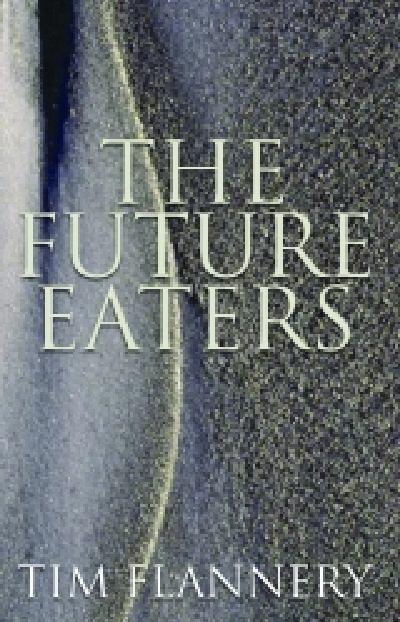
Published by Reed Books Australia, 1994

Interesting stuff. I have just read the introduction of Tim Frannery”s book, The Future Eaters, which brings into light how the waves of settlement and immigration have changed Australia’s biodiversity. Many of the native animal and plant species have become extinct in the course of influx of foreign species and foreign environmental practices.

Sustainable living in small ways

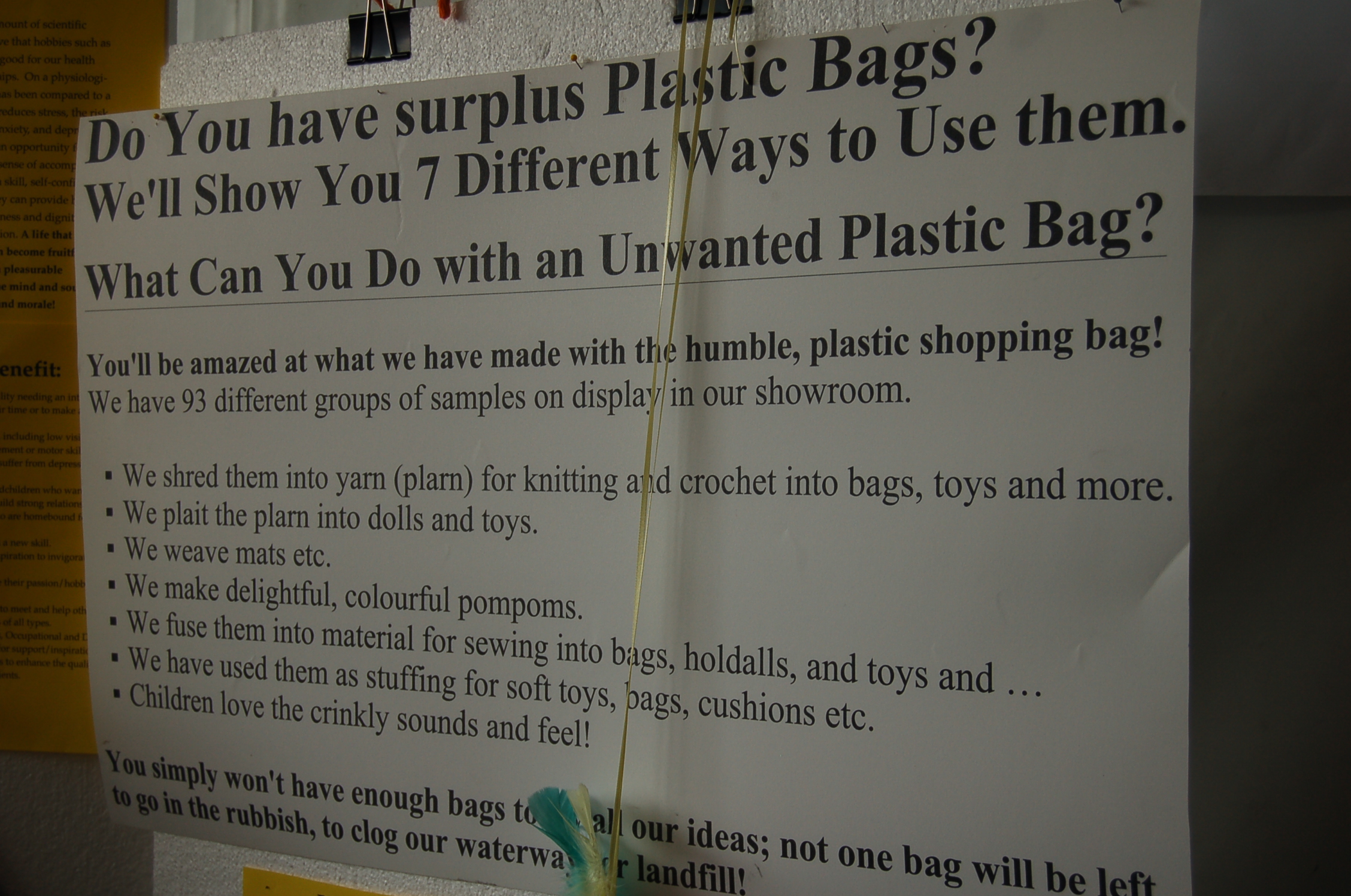
Being Green does not necessary ask you to do big things. You do not need to go on a hunger strike to get your message across to stop Tasmanian old growth forests from being logged or to strip bare in mid-winter to protest animal cruelty. Supporting sustainability can be done in your own kitchen. You probably shop everyday and what comes with your shopping are heaps of shopping bags. What do you do with your plastic bags? Most of the time, these bags are to be re-used as the same bags. But if you want to be more creative, here’s from the Melbourne’s Sustainability Festival 2012.

There are various ways how to re-use plastic bags. You can think much more.

Now, think of the many ways how can you re-create things and imagine what you have created.

So what's yours?

Great Barrier Reef awaits UN verdict

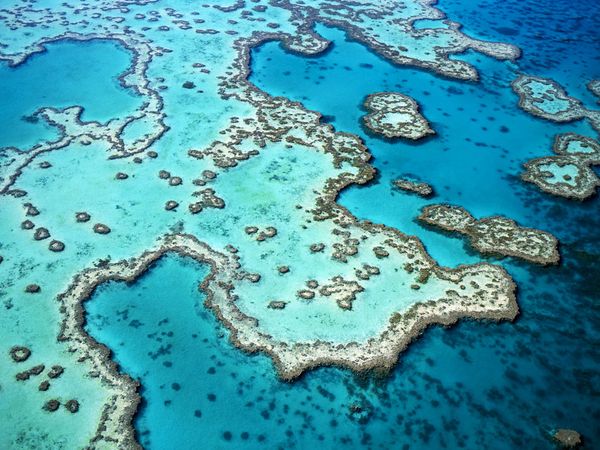
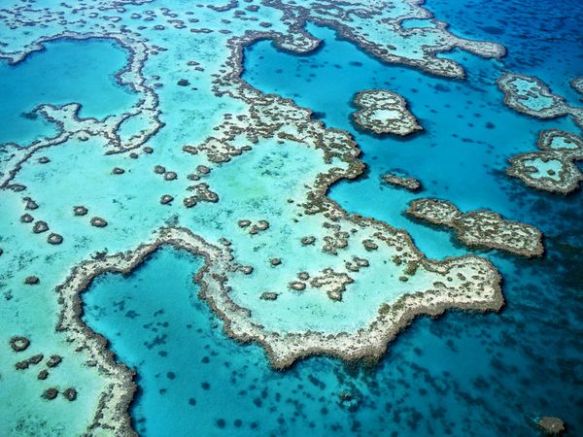
The Great Barrier Reef World Heritage Area covers an area of 348,000 square kilometres and more than 2300 kilometres long

Green activists are expecting to hear the results of investigation on the Great Barrier Reef conducted by the joint mission of the UNESCO World Heritage Centre (WHC) and the International Union for Conservation of Nature (IUCN). The experts visited Australia from March 4-14 to probe into the current park’s environmental conditions, including alleged man-made threats posed by seam gas exploration projects.

The Greenpeace is nearly completing a signup campaign of 15,000 people while GetUp! intensifies it drive to gather a strong 75,000 strong petition to stop developmental aggressions.

“Imagine if the Pyramids were being bulldozed or the Grand Canyon mined – the global community would be furious,” GetUp!, a major environmental activists, said  in an email loop.

GetUp! is trying to construct a simile to compare these World Heritage sites to Australia’s Great Barrier Reef.
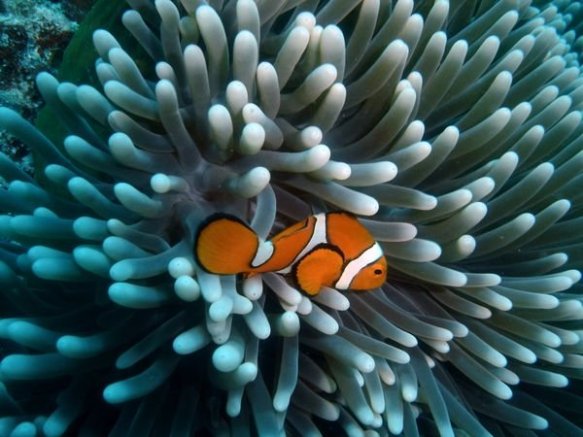
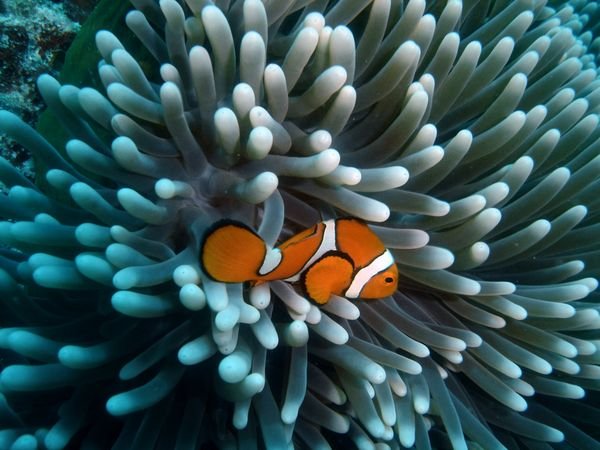
Beautiful marine lives under threat (Photo: National Geographic)

Earlier, the UN team has already warned the Great Barrier Reef is posed “to die a thousand cuts” with various threats including growing population, mining boom, and gas explorations.  The team also intended to re-assess the overall outstanding value of the reefs.

The Australian committee of the IUCN has warned of a tenfold increase in shipping on the World Heritage Site associated with existing and proposed port development projects. Much of it will be going through channels within a marine park far narrower than the English Channel, the Crickey claimed.

The Gladstone Ports Corporation (GPC) approved the project in 2011 allowing  private contractors “to dredge 46 million cubic metres from within the harbour boundaries,  inside the World Heritage area, over the next 20 years…a volume equivalent to 27 Melbourne Cricket Grounds,” GetUp! argued.
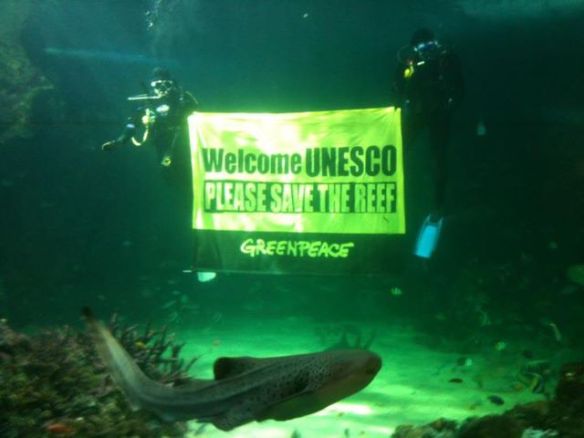
Greenpeace welcomes underwater investigation

 News reports claimed the Federal Government and the Queensland State Government approved the project amid strong protests from local residents. Further, they said the United Nations which holds custody to the Heritage Park was not consulted on the project which is a breach of World Heritage guidelines.

A private law firm for Gladstone commercial fishing businesses warned that the Western Basin Dredging and Disposal Project has significant long term environmental impacts on a national scale.

Ridiculous as it may sound, but the lawyer’s group said the massive dredging activities occurs 24 hours per day, 7 days per week, for about 18 months.  It is estimated that 42,300,000 cubic metres of material is to be dredged over the construction phase which cause turbidity plumes in the Port area. Contaminants are also speculated to spread in the Port area which can destroy the Port’s ecosystems.

The lawyers estimated that dredging will cause the direct loss of around 902 ha of benthic habitat (including 258.8 ha of seagrasses).  An additional 5416 ha of benthic habitat (including 1406 ha of seagrasses) may be indirectly lost in the short to medium term. In summary, the group said close to 1,700 hectares of seagrass will likely be lost and 6,300 hectares of benthic habitat likely to be lost.   There are additional obstructions of the northern Western Basin due to construction and increased vessel traffic, including massive dredges may impede the migratory pathways of marine fauna using The Narrows and the entire Port Curtis region, the lawyers claimed.
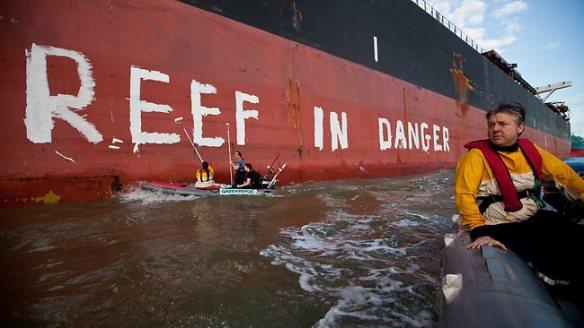
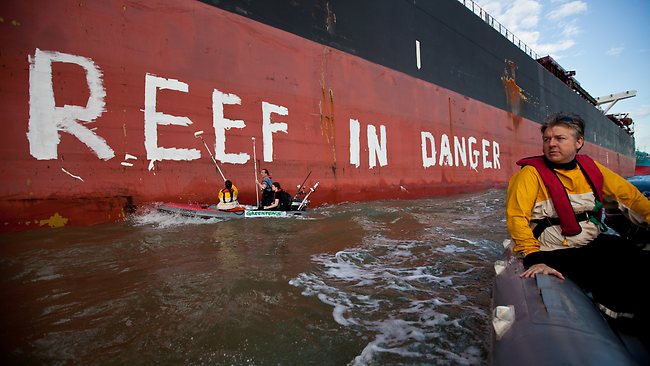
Greenpeace intensifies on-site campaign

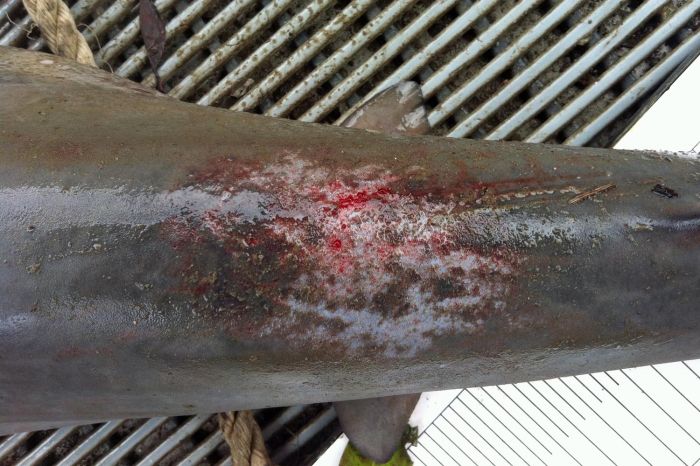
In 2011, a three-week fishing ban was imposed around the Gladstone area after sightings of fishes infected by unknown disease. Barramundi, for instance, were reported to have suffered from ‘sore’ and ‘cloudy’ eyes, while other fish appeared deformed and had bruises

The project is a partnership venture between Santos, Petronas, Total, and KOGAS. Santos is Australia’s largest domestic gas producer while PETRONAS is Malaysia’s national oil and gas company and the second largest LNG producer in the world. French energy major, Total, on the other hand, is the world’s fifth largest publicly traded integrated international oil and gas company; and South Korea’s KOGAS is the world’s largest buyer of LNG.

The partners announced the Gladstone Liquified Natural Gas (GLNG) project creates more than 5000 jobs during construction and about 1000 ongoing positions in the operational phase. They added that the project stimulates businesses and employment opportunities in the Gladstone and Roma regions through increased demand for goods and services.

Santos builds a LNG export facility in Gladstone for commercialised QLD seam gas resources. The facility is expected to  produce 3-4 million tonnes per annum (Mtpa) of LNG with future potential expansion to nominal 10 Mpta. The project is consists of CSG field development; gas transmission pipeline construction; and LNG liquefaction and export facility development.

The facility – built on Curtis Island (Hamilton Point area) – is close to the industrial deepwater port of Gladstone. The Project sources gas from Santos CSG fields around the Comet Ridge and Roma project areas, with gas being transported to the Gladstone LNG facility via subsurface 425 km gas transmission pipeline. Santos is planned to drill and complete the development wells to supply 53000 petajoules (PJ) (140 billion3) of CSG to the proposed LNG facility. There are about 600 wells to be dug prior to 2015 and 1400 or more wells after 2015 (excluding exploration wells). Installation of related infrastructures are constructed including access roads, accommodation camps, water gathering networks, water management facilities, in-field gas gathering networks (to transport gas from the wells to the field compression stations, gas compression stations and pipeline compressor stations).
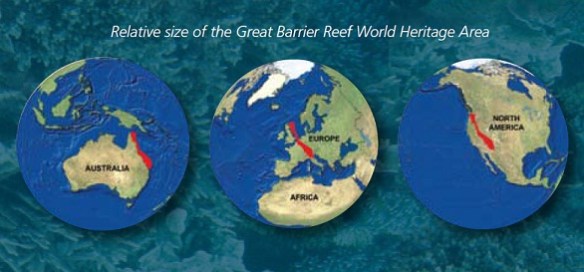
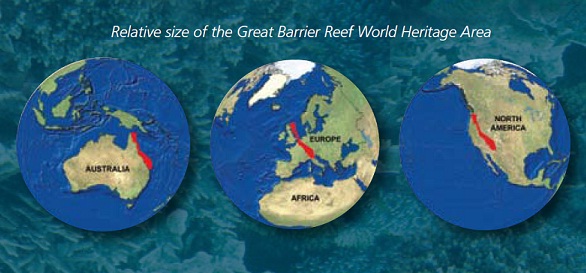
A comparative size on the Great Barrier Reef

The gas transmission corridor is 425 km long underground gas transmission pipeline corridor will accommodate one or more pipelines for the delivery of fas from the CSG resouces to the facilty. Transmission pipelines nominal diametere 650-800 mm.

The Great Barrier Reef World Heritage Area covers an area of 348,000 square kilometres — the equivalent size of Italy or Japan, more than 2300 kilometres long. It extends to the low water mark on the mainland coast along northern Australia. It Includes more than 3000 separate coral reefs, some 900 islands and all the waters within the outer boundaries of the Marine Park.

It is designated as national park in 1975 and listed in the UNESCO world heritage list for its invaluable in 1981

The UN report will be presented to the World Heritage Committee in June, which will then decide whether to list the reef as a World Heritage Site in Danger.

News Link: Asian Correspondent

Top Five Eco-Movies

Here’s a lighter side of life. I added a page on Eco-Movies  and I want to repost it as a blog entry.

The following movies are my Top Five personal choices. The selection is based on genre, cinematic production, direction, plot, and theme. A film, to be considered excellent, must contain a core message that inspires a viewer to re-think of man’s (or woman’s) relationship to the planet and, if necessary, commands action.

No. 1 – AVATAR 2010 – Directed by James Cameron, it is a landmark sci-fi and futuristic 3D movie in all of its splendour. As excellent as its technical production, its theme has taken viewers to a new dimension of men’s unquenchable greed and conquest beyond the planet Earth. When Earth’s resources are all gone, another planet would be the target for another rampage all in the name of money.

No. 2 – POCAHONTAS 1995 – Walt Disney Productions brings the wisdom of the American Indians in regard to man’s relation to the earth– the mother where all life wells up, nurtured and eventually go back to. The trees and leaves of the grass have their own lives and spirits. Men who chop down the trees for greed show an outright ignorance to the balance and harmony of life.

NO. 3 – LION KING 1994 – The movie shows the beauty and freedom that lies in the wilderness where lions, fowls, zebra and all other animals roam. The most unforgettable quote: “We are all connected in the great circle of life.” It poses a more profound interpretation on the interconnected of all living things in the larger fabric of life.

From the day we arrive on the planet/ And blinking, step into the sun/ There’s more to see than can ever be seen/ More to do than can ever be done/ There’s far too much to take in here/ More to find than can ever be found/ But the sun rolling high/ Through the sapphire sky/ Keeps great and small on the endless round

NO. 4 – WATERWORLD 1995 – “There is no dry land!” laments Mariner (Kevin Costner) after the Earth has been inundated by water caused by the risen sea level. Those who survived the great flood live on boats. Only an orphaned girl who carries the map to Dry Land offers a blink of hope in finding a New Earth.

NO. 5 – AN INCONVENIENT TRUTH 2006 – A documentary which accorded Al Gore a Nobel Peace Prize. Ridiculed by climate sceptics, it became one of the most controversial documentary films of the Energy-Climate Era. Gore warns of global warming caused by excessive man-made carbon emissions.


There are other films seen but they probably occupy the next rankings in the list. Among them are Happy Feet, Soylent Green, and Gorilla in the Mist. Happy Feet is an award-winning animation in 2008 while the two other films were viewed several years earlier. Others are hardly remembered.

If you want to enrich these movie entries, please feel free to leave a reply. Thanks.

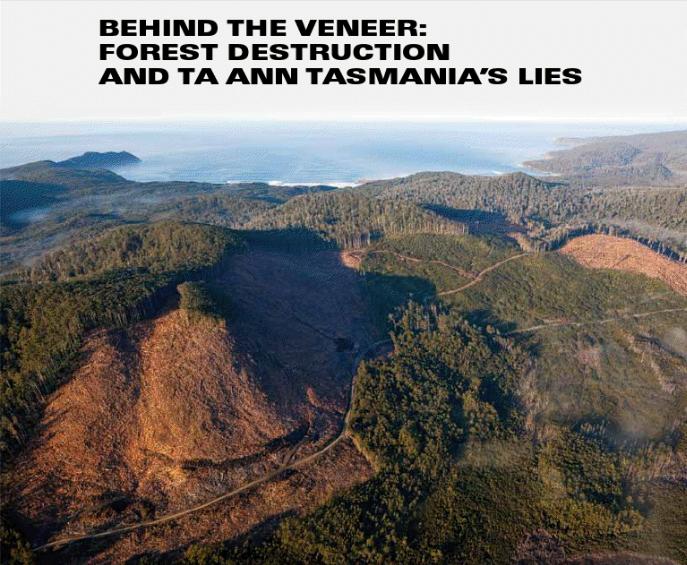
Tasmania grapples with forest destruction and job losses

Tasmania is grappling with the paradox of saving its environment in the face of massive job losses. While Green activists are fighting for the protection of old growth forests, thousands of forestry-related jobs have to go. The ABC  reported the state is projected to lose about $1.4 billion dollar from its wood industry while thousands of people have been thrown out of job.

No job vacancy sign posted at a sawmill in Tasmania

For a small state such as Tasmania, livelihood depends on forestry, agriculture and mining. Tasmania is the sixth and smallest state in Australia, an archipelago of more than 300 islands, 240 kilometres (150 miles) south-east of the mainland.

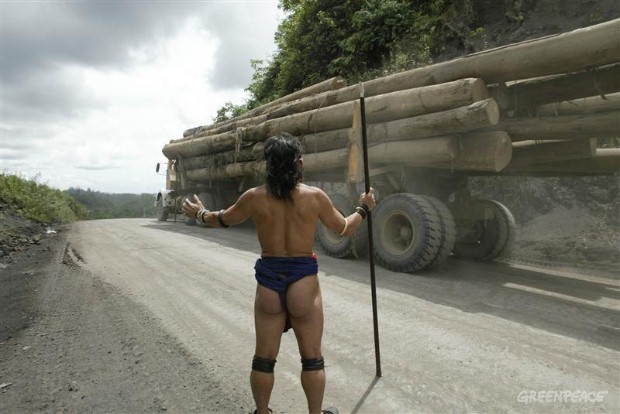
Green activism has intensified in the region over the last few years in the wake of alleged forest destruction made by Malaysia-owned Ta Ann Group. Left-wing Greens have accused the contractor as an exploiter of the state’s old-growth forests. The same contractor, they claim, has ravaged the jungle of Borneo in Sarawak.

Penan man standing next to a Shin Yang Timber passing truck loaded with logs. (Photo: Sarawak Report)

It is an irony. Ta Ann won an award as an emerging exporter in the Tasmanian Export Exports Awards in 2008 only to alert environmentalists of the impending catastrophe wrought on the state’s old growth forests.

Last year, the Huon Valley Environment Centre (HVEC) accused Ta Ann of receiving wood from old growth forests as defined by the Tasmanian Regional Forest Agreement on at least 35 occasions during 2009-2011. HVEC claimed the contractor is processing wood acquired from the logging of old growth forests, high conservation value forests, and forests with recognised world heritage values in Tasmania.   “Ta Ann’s demand for native forest wood and its large wood supply contract is driving logging in some of Tasmania’s most important and contentious forest areas….  Ta Ann’s operations here in Tasmania are far from eco-friendly and must rank amongst the worst logging practices globally…” HVEC claimed.

Activists have campaigned the government to prevent further logging in the disputed conservation area. The Observer Tree launched a vigil early this year to press Prime Minister Julia Gillard to stop the Ta Ann Group from further logging in the last remaining old-growth forests.

An intesified campaign against Ta Ann in Tasmania (Photo: HVEC)

The Observer Tree is one among the guardians of Tasmanian forests along with the Last Stand which has been involved in direct action and campaigns related to nukes, forests, refugees, human rights, whaling and climate change, among other causes. These groups support similar causes advocated by Friends of the Earth, Kanuguba, Rising Tide, Huon Valley Environment Centre, Still Wild Still Threatened, the Greens and the Wilderness Society, GetUp!, Market Watch, and other civic groups.

In 2011, the Gillard Government came up with a plan to protect Tasmania’s forest by signing a pact that covers the protection 570,00 hectares of forest lands. About 430,000 hectares belong to the high degree of conservation while the remaining 143, 000 hectares was allotted to help the state honour its logging contracts. Gillard also signed a $172 package to fund the transition from native forest to plantation forest.

This historic deal, however, did not stop tensions already disrupting the forestry business. Green activists are apprehensive that Ta Ann’s contract will continue to destroy old growth forests.

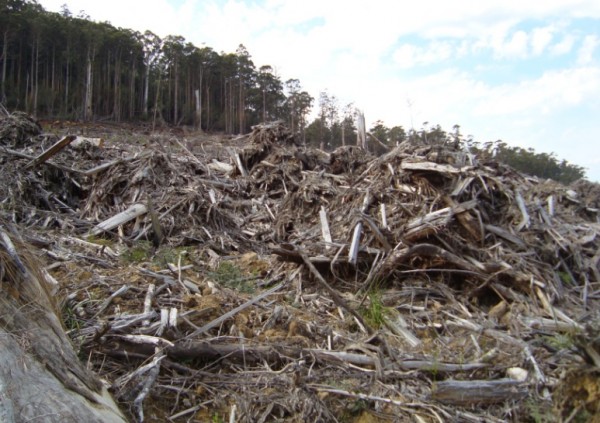
Tasmanian forest in ruins

Activists have also directly lobbied consumers and clients of Ta Ann to stop buying logs from the company.

While jobs have to go, however, it becomes clearer that the Government has no option but to kowtow importers to buy Tasmania’s logging industry.

Tasmania’s Deputy Premiere Bryan Green has embarked on a $24,000 trade mission to Singapore, China, and Japan over the past week to promote the state as open for business.

Green said the trade mission was not solely focus on the wood industry but an opportunity to forge stronger trade relations with East Asia.

“We have a robust economy which we need to continue to grow and diversify to attract investment and jobs… The Government has faith in the Tasmanian brand and the opportunities that it can provide in sectors like agriculture, renewable energy, mining and forestry, “ the vice premiere’s website noted.

The Last Stand crew, along with the HVEC and Code Green, welcomed the vice premiere back upon his arrival at the airport. They, however ridiculed the trade mission and created a new name for Ta Ann as the huge walking, talking Pinocchio. The crew said the wood products are far from “eco-friendly” contrary to the advertising claims of Ta Ann.

A Green activists holds a banner to warn Ta Ann's Japanese wood buyers

In an email loop accessed by Asian Correspondent, the crew said:

“Ta Ann, one of Malaysia’s biggest wood cartels is ripping through the Tasmanian wilderness, sourcing wood that comes from the destruction of high conservation value forests and selling it in Japan as ‘eco-friendly’ plywood.”

The group solidifies its resolve to recruit more supporters to write letters to existing and prospective clients of Ta Ann urging them to stop buying wood sourced out from Tasmania’s old growth forests.

News Link: Asian Correspondent

Darwin’s pessimism and Flannery’s hope

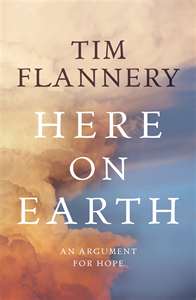
Published in 2010, the year when the author reaped the distinguished award as Australian of the Year, Tim Flannery’s book, Here on Earth: an Argument for Hope, offers a ray of hope in salvaging the last remaining species of the planet and in regaining the lost functioning of the Earth’s life-support systems.

Published by The Text Publishing Company, Vic 2010

The battle to avert an impending apocalype is to resuscitate Gaia– derived from John Lovelock’s theory that all organisms and their inorganic surroundings on Earth are closely integrated to form a single and self-regulating complex system, maintaining the conditions for life on the planet. This self-support system, however, has been imperiled by men’s greed. Flannery argues that men have waged war against nature. Men have turned Gaia-killers. Among the notable examples is detailed in Rachel Garlson’s book, Silent Spring. The book inllustrates the entent of how capitalists have murdered birds and other species when DDT was used as pesticide in the US in the 1950’s. Certainly, there are other human follies that destroyed the life support systems of the earth such as through massive carbon emissions and wanton logging. Although many NGOs have convened and proposed solutions, the inactivity of many advanced nations are delaying the action that help avert an impending apocalypse.

Flannery outlines the theories of Charles Darwin and Alfred Russell Wallace focussing on the origin of species, the concept of natural selection and the survival of the fittest. Species evolve through time and they differentiate through time and according to their environment; and those who adapt well survive and those who do not perish.

The survival of the fittest in the animal kingdom that has prevailed throughout history. The war is not only man against man but man against nature. Darwinian theory is devoid of morality and spirituality.

Time has changed though. There is a universal awakening that believes only love and compassion can save what is remaining on earth. Flannery is offering the wisdom of ancient past. Only love can heal humanity and can perhaps bring back the life-support system of Gaia.

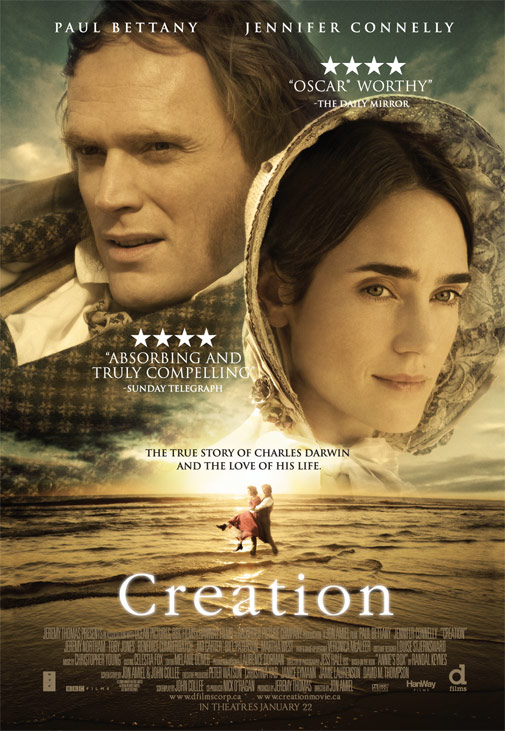
Meanwhile, I picked a DVD from the video shop to see a movie related to Darwin, and lucky enough I got this: CREATION

Paul Bettany as Charles Darwin

Opened in 2009, Creation portrays Darwin as a man who suffered anguish resulting from his work and discovery. A responsible family man, he knew however, that although “there is no God’, the church and religion hold the fabric of society together. He was haunted by the death of species such as a tiny bird which could be eaten and consumed by worms so that that the food chain will continue. From decomposed species give life to plants and so on. The death of his child pushed him to see phantoms and led his body to exhaustion.

If Darwin’s remarkable contribution to science is to be reckoned with, indeed, the entire humanity is plagued into an abyss of pessimism. Flannery’s book, however, takes flight uplifting the spirit offering the world with new-found hope.

More about the movie:

Creation is a psychological, heart-wrenching love story starring Paul Bettany (A BEAUTIFUL MIND, MASTER AND COMMANDER: THE FAR SIDE OF THE WORLD) as Charles Darwin, the film is based on “Annie’s Box,” a biography penned by Darwin’s great-great-grandson Randal Keynes using personal letters and diaries of the Darwin family. We take a unique and inside look at Darwin, his family and his love for his deeply religious wife, played by Jennifer Connelly (A BEAUTIFUL MIND, REQUIEM FOR A DREAM), as, torn between faith and science, Darwin struggles to finish his legendary book “On the Origin of Species,” which goes on to become the foundation for evolutionary biology. The film co-stars Toby Jones (FROST/NIXON, INFAMOUS) and Jeremy Northam (GOSFORD PARK, AMISTAD), and was produced by Jeremy Thomas (THE LAST EMPEROR, SEXY BEAST) at Recorded Picture Company with BBC Films and Ocean Pictures. From director Jon Amiel (“The Singing Detective,” ENTRAPMENT) and writer John Collee (MASTER AND COMMANDER: THE FAR SIDE OF THE WORLD) comes CREATION. Source: http://creationthemovie.com/

Further research on climate debates

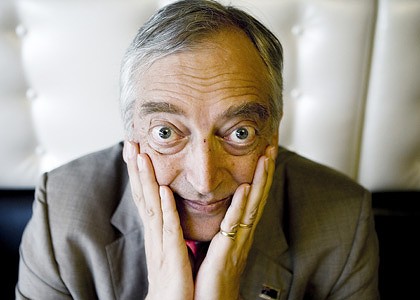
There’s an Interesting email forwarded by GetUp! about a video of notorious climate change skeptic Lord Christopher Monckton mapping up a conspiracy to seize Rupert Mordoch’s media as a strategic platform to advance anti-left-wing climate agenda.

The nefarious climate change skeptic, Lord Christopher Monckton

I also revisited a video of Bob Carter interviewed by Murdoch’s media puppet, Andrew Bolt. What an interesting business-media conspiracy to deny fossil-fuel-induced global warming.

Climate Change – Is it a science debate or a political debate?

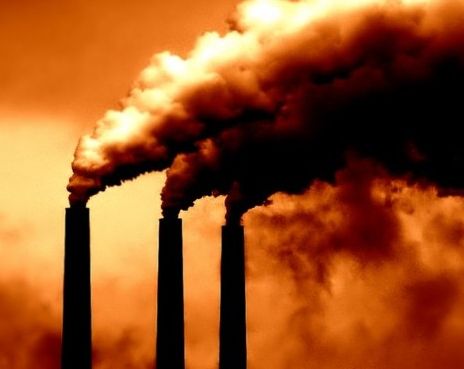
Carbon pollution contributes to man-made environmental disaster, any doubt?

I attempt to gather a list of prominent scientists who are either ‘convinced’ or ‘unconvinced’ on the issue. According to a UK-based columnist Nick Collins of The Telegraph, most skeptical scientists are less prominent and authoritative than those scientists convinced on the issue of global warming. This is based on the number of research and scientific papers published.

The Conversation, a scholarly publication, said many research scholars from the Australia National University have had received death threats and abusive phone calls from the right-wingers and Murdoch’s media because of their stand on the issue.

Clive Hamilton, who wrote Scorchers: The Dirty Politics of Climate Change (2007), claims that Australian sceptics belong to the “Greenhouse Mafia” (credited to Guy Pearce) comprising of lobbyists “plucked from the senior ranks of the APS, where they wrote briefs and Cabinet submissions and advised ministers on energy policies.” They are the links between Government and fossil-fuel businessmen who finance the political machine of the Liberal Party in partnership with the Murdoch’s media. Hamilton adds that Australia’s stand on the issue (during the Howard Government) was mainly influenced by the US which champions a market-based economy.

Political powershift under the Labor Government overturned the decades-long greenhouse mafia energy policies. The right-wings fought a bloody fight to prevent the passage of a carbon tax, but overruled. It is a new era!

These denialists comprised of the bloody rich and powerful capitalists. They own big businesses including the media. If you are caught up in between the ‘convinced’ and ‘unconvinced’ groups, look beyond the politicking and explore the credentials of each scientist from both camps.

I have not done one article this month but I will do so as soon as I can get enough good stuff.

Heatwave threatens Australia’s wildlife

Australia’s famous New Year’s eve fireworks at the iconic Sydney Harbour Bridge made another landmark spectacle to impress the world. But after the pyrotechnics have died down, the country-continent faces the reality of dealing with the temperatures soaring to over 40 degrees Celsius.

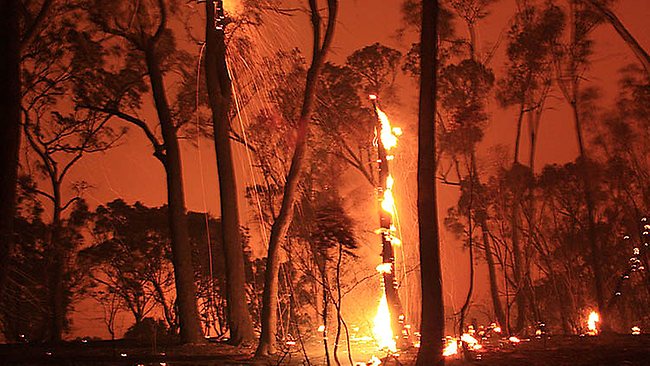
The Black Saturday flares up in Victoria (News Ltd)

The heatwave spreads throughout Victoria and South Australia. Melbourne and Adelaide started the year with day time high of 40 degrees Celsius and will remain at 30 level until tomorrow, AAP reported. Sydney and Brisbane are reported to have a more tolerable levels at around 26- 28 degrees Celsius, while Perth will experience around 31-degree.

Holiday-makers who are heading to the bush in the southern states are warned not to put up campfires. Fire and safety authorities have already issued bushfire alert warnings to caution residents and tourists to be bush-fire-ready.

A total fire ban has been issued in many regions in Victoria including tourist destinations such as the Southern Grampians, Apollo Bay, Warnambool, and other southwestern areas. The fire ban strictly disallows campers to build a campfire during the night while frolickers are also not allowed to light up a barbecue grill.

Two years ago, the bush fire famously called the Black Saturday razed 450,000 ha (1,100,000 acres) in Victoria sending residential, agricultural, and touristic areas into ashes. Affected areas included Kinglake and Whittlesea, Marysville, Central Gippsland, Beechworth, and to as far as the old gold town of Bendigo bringing to a total of 170 districts affected.

In 2006, the Grampians National Park was engulfed by another massive bushfire which burnt 130,000 hectares — or 47 per cent of the park.

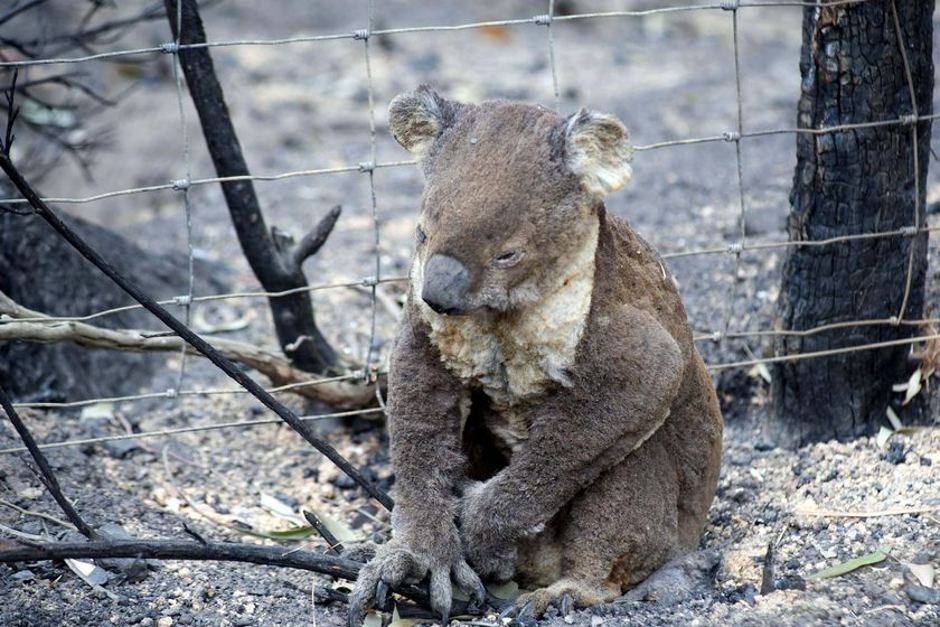
Sam the koala became famous around the world after this photo was taken during the Victorian bushfires. (Reuters)

The Royal Society for the Prevention of Cruelty to Animals estimated that over a million of animals have perished in these bushfires. Other wildlife species have suffered from severe burns. Koalas and kangaroos which inhabit most of the bush habitat are most affected while the Leadbeater’s Possum, Victoria’s faunal emblem, is under further threat to extinction.

This koala became homeless after the fire (News Ltd)

South Australia is reported to have issued total fire ban on 13 districts out of 15.

Victorian Fire Services Commissioner Craig Lapsley urged people—especially campers— to take extra care amid extreme heat conditions. He said most of the earlier fires started with campfires.

News Link: Asian Correspondent

Gas or waste to power Canberra Hospital

Australia’s Capital Territory (ACT) could be one of the champions of eco-friendly energy sources. The ACT Government is now endorsing a cost-efficient power generator to service its public hospital using gas or waste.

A major signpost at TCH

The Canberra Times reported over the weekend that AECOM, a professional infrastructure consultant, has advised the Government-run Canberra Hospital to use gas or waste generator to power its facilities.

A gas generating plant will cost $48 million to service three buildings. This option will help the hospital to save $28.1 million over 20 years, the report said. Gas is the cheapest power source while a pollution-to-energy generator fetches up to $209 million.

Gas can emit up to 24,000 tonnes of greenhouse gases a year slashing a significant amount of emission from traditional power sources of 72 million tonnes a year.

The hospital needs basic power to produce hot and cold water while a more advanced facility will provide onsite electricity.

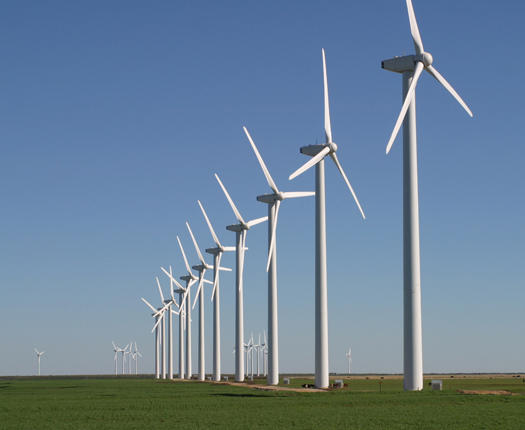
Other eco-friendly energy sources are also being explored like solar and wind. However, the hospital compound does not have enough space for the infrastructure. The gas and waste power generators, if approved, will likely be constructed underground connected with cables. The onsite generator will be constructed north of the hospital wing to ensure its flues will not intervene with rescue helicopters.

Windpower generators are also considered but its feasibility is under study.

The paper also reported that Act Chief Minister and Health Minister Katy Gallagher will continue to consult with the community to ensure the viability and sustainability of the project. The Minister is vouching for the proposed alternative energy sources noting that the money saved will be used instead to finance health care for Canberra’s growing population.

 The Canberra Hospital prides itself as the region’s major public hospital, providing specialist and acute care to more than 500,000 people. TCH is a tertiary level health facility, and a teaching hospital of the Australian National University (ANU) Medical School.

Source: Asian Correspondent